
Where to Stay in Plovdiv: Best Areas & Hotels
Where to stay in Plovdiv: the Old Town for atmosphere, Kapana for nightlife, the centre for a first visit, and cheaper beds by the station. Euro prices.
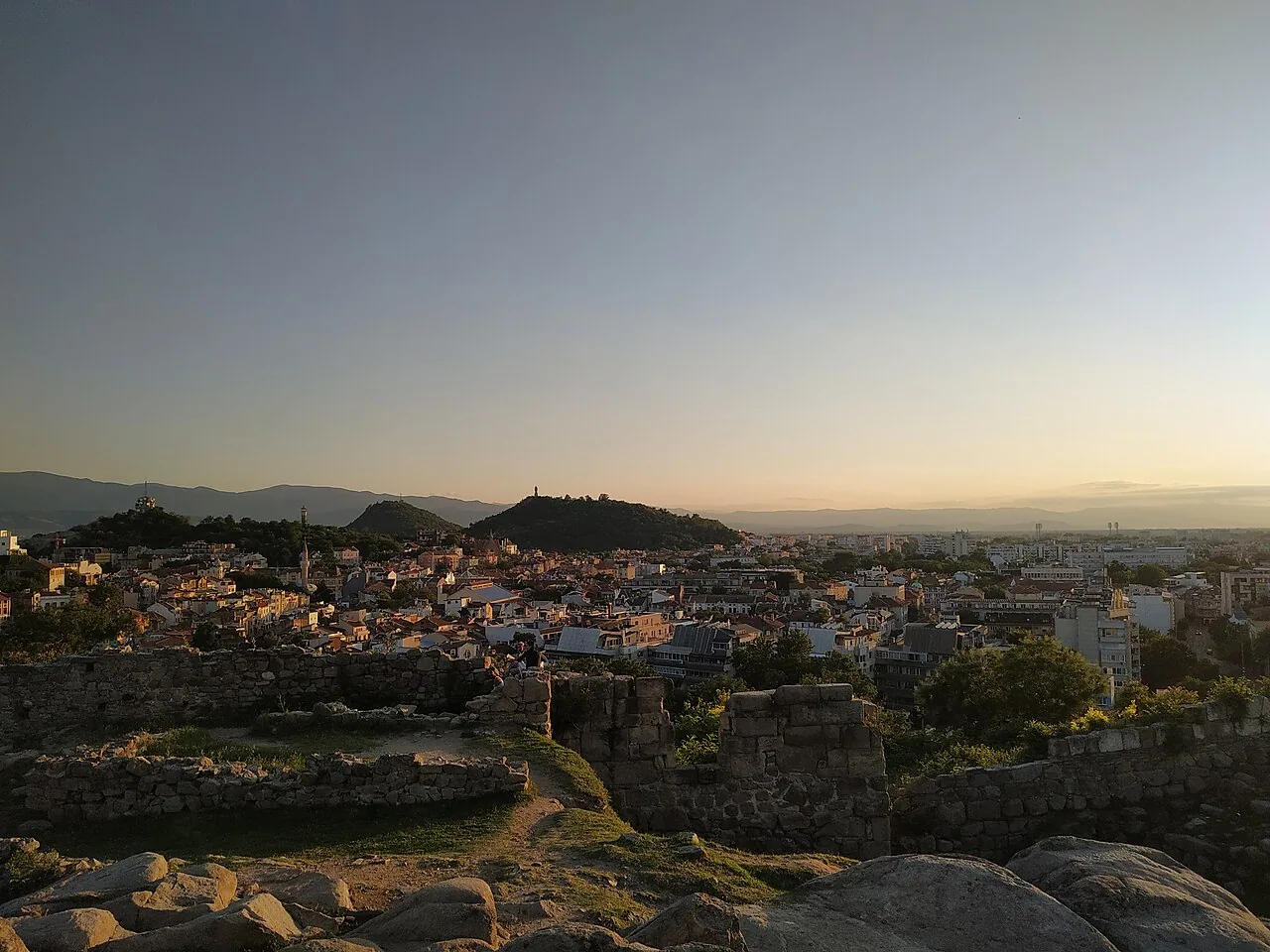
For a first visit, base yourself in the centre, on or just off the pedestrian main street, where the Roman sights, the shops and the restaurants are all a flat five-minute walk apart. Want atmosphere over convenience? Sleep in the Old Town among the painted Revival mansions. Here for the nightlife? Kapana, the little grid of bars and cafes, puts you in the middle of it. And if you’re counting cents, the blocks around the train and bus stations are cheaper and still only a ten-minute walk from the action.
Here’s the thing most Plovdiv guides overcomplicate: the historic core is tiny. The Old Town, Kapana, the main street and the Roman ruins all sit within about fifteen minutes of each other on foot, so which district you pick changes the feel of your trip far more than the logistics. The choice comes down to the atmosphere you want to wake up to rather than how far anything is, and what follows weighs each area on exactly that, with honest trade-offs and real euro prices now that Bulgaria is on the euro.
The short version
- First visit, easy and central: the centre, around the Knyaz Alexander I pedestrian street and Dzhumaya Square.
- Atmosphere and photos: the Old Town, in a guesthouse among the Revival houses (accept the cobbles and the hill).
- Cafes, bars, a night out: Kapana, the creative quarter.
- Cheapest beds, still walkable: near the train and bus stations, just south of the centre.
- Skip for a short trip: the outer residential districts (Trakia, Kyuchuk Parizh, Karshiyaka) unless you have a car and a reason.
The Old Town: atmosphere over convenience
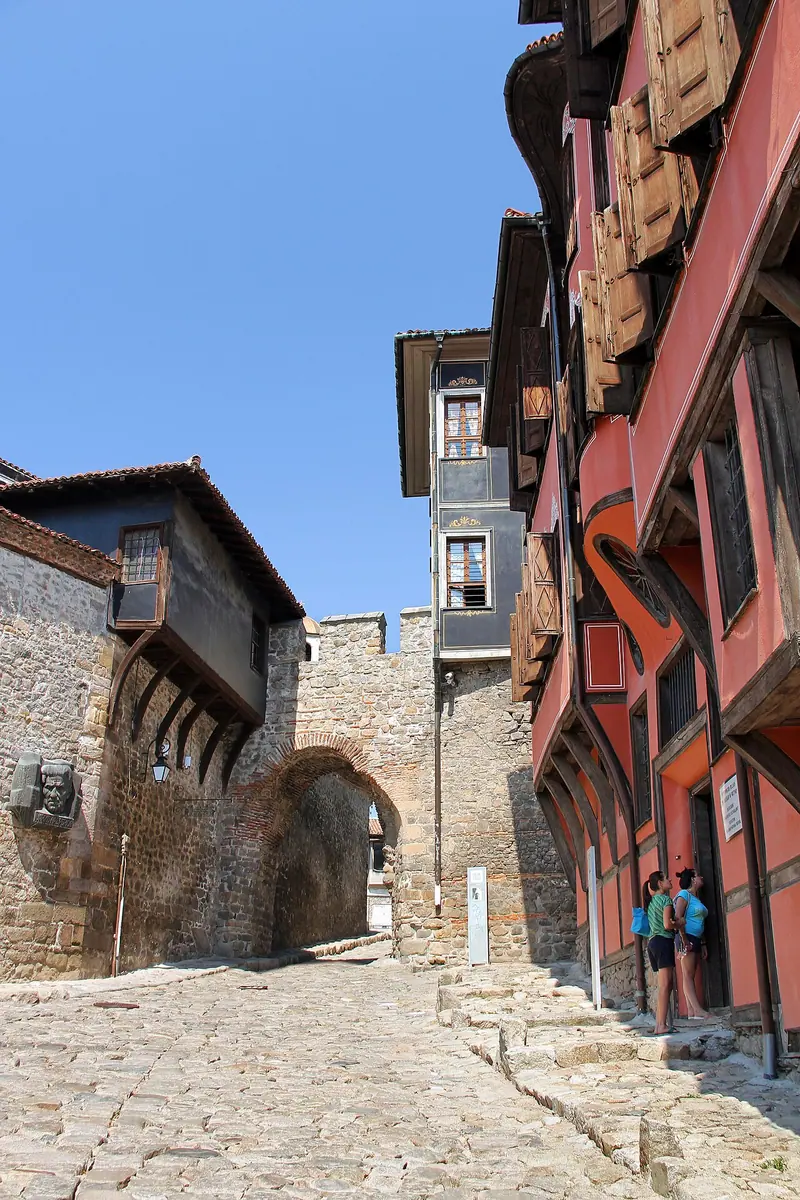
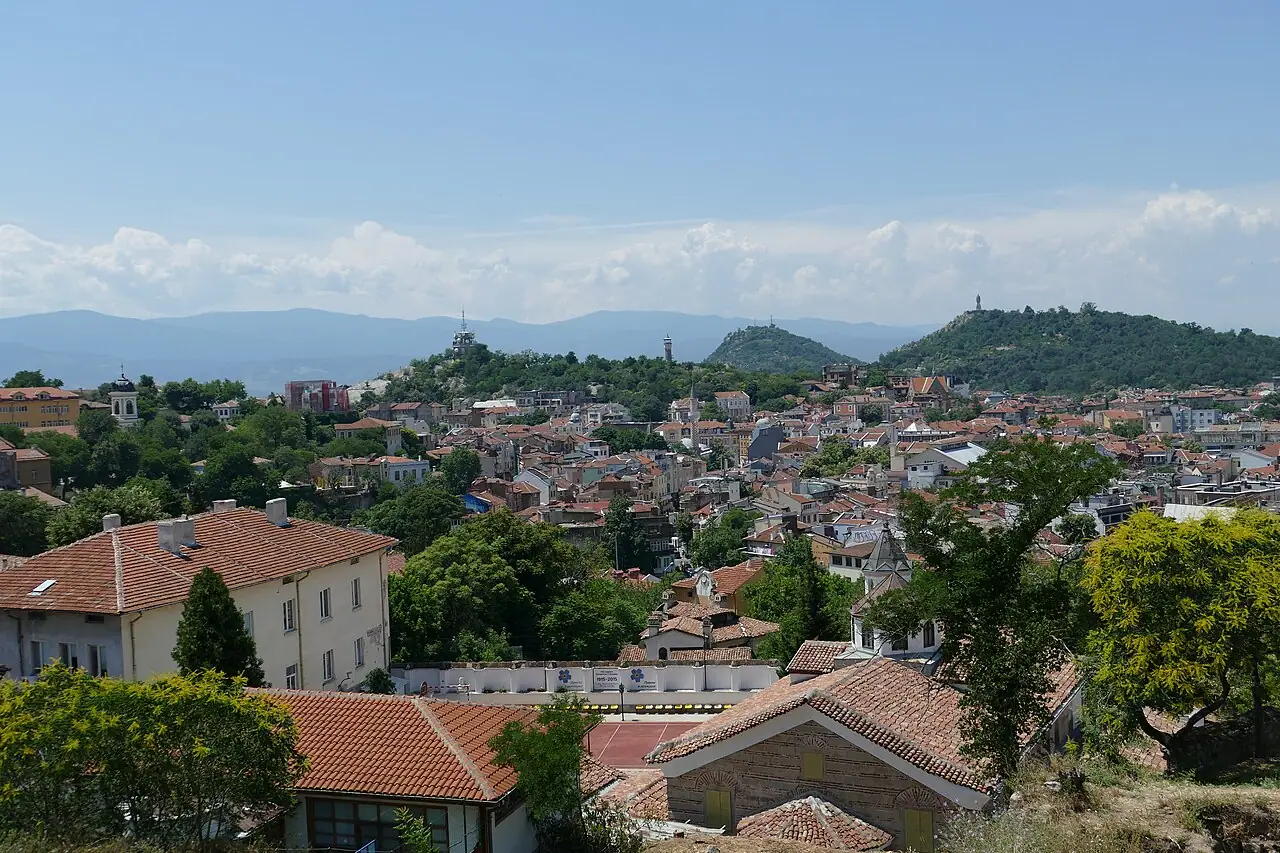
If you want Plovdiv at its most photogenic, that’s where to sleep. The Old Town climbs the hills in a tangle of cobbled lanes lined with 19th-century National Revival mansions, their timbered upper floors jutting over the street in deep blues, ochres and rose. There’s no big chain hotel strip up here, by design; instead you get small guesthouses and boutique rooms inside restored period houses, often run by the family that owns them. Waking up to that and stepping straight out into the museum-quarter is a genuine treat. The catch is supply: there are only so many of these places, and the good ones fill fast in summer, so you’ll want to book well ahead if your dates land near a festival or the autumn International Fair.
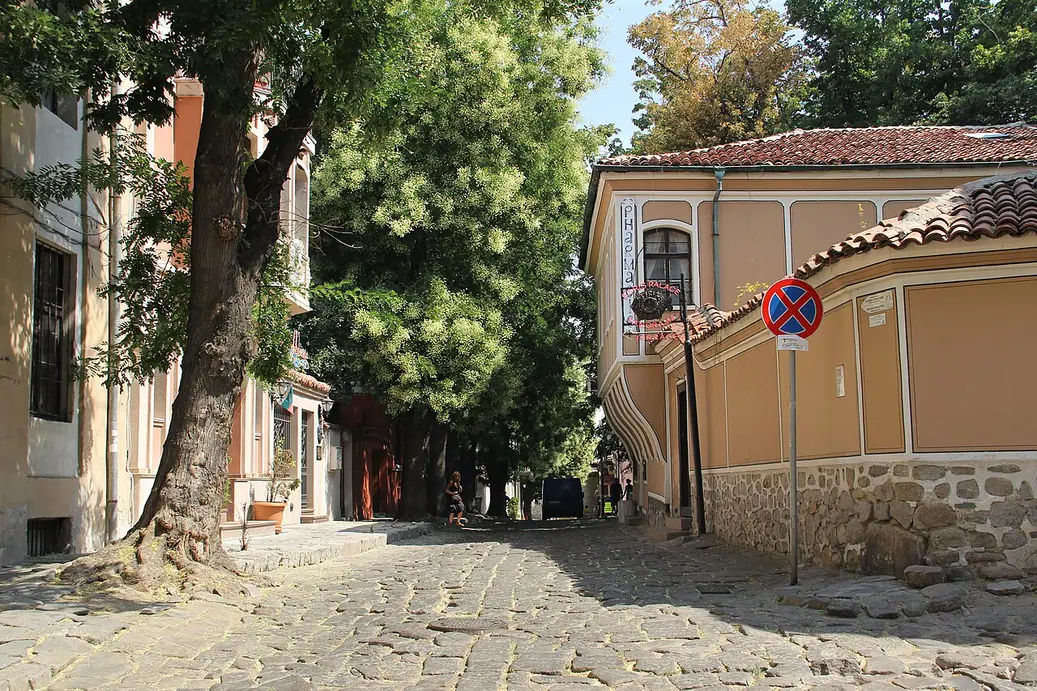
The trade-off is real and worth spelling out. Those lanes are steep and cobbled, which is charming with a daypack and a nuisance with a wheeled suitcase, a stroller or dodgy knees. Cars barely fit and parking is a headache, so you’ll want to arrive light and be ready to walk the last stretch uphill. It’s the pick for couples and heritage-minded travellers on a two-night stay; it’s the wrong call if you’re hauling luggage between early buses. For what is actually on your doorstep up here, see our guide to the things to do in Plovdiv, which walks the Old Town and the Roman sights in order.
Kapana: the creative quarter for a night out
Just below the Old Town and off the main street sits Kapana, meaning “the trap”, named for its knot of narrow lanes. It was the old artisans’ quarter and, over the last decade, it has become the city’s hub for third-wave coffee, craft-beer bars, small restaurants, galleries and street art. Most of its streets are pedestrian, so evenings spill out onto the terraces. Base yourself here and you can roll out of dinner and into a wine bar without ever getting in a taxi - that’s the whole point of sleeping in Kapana.
That energy is also the catch. Kapana is more about ambience than landmark sights, and the same bars that make it fun can make a front-facing room noisy on a Friday or Saturday night. If you sleep lightly, ask for a room off the main lanes or bring earplugs. It suits couples, solo travellers and anyone who rates a good dinner and a drink over an early night. For where that night out can lead, our things to do in Plovdiv guide covers the Kapana scene in more detail.
The centre and the main street: the easy first-timer base
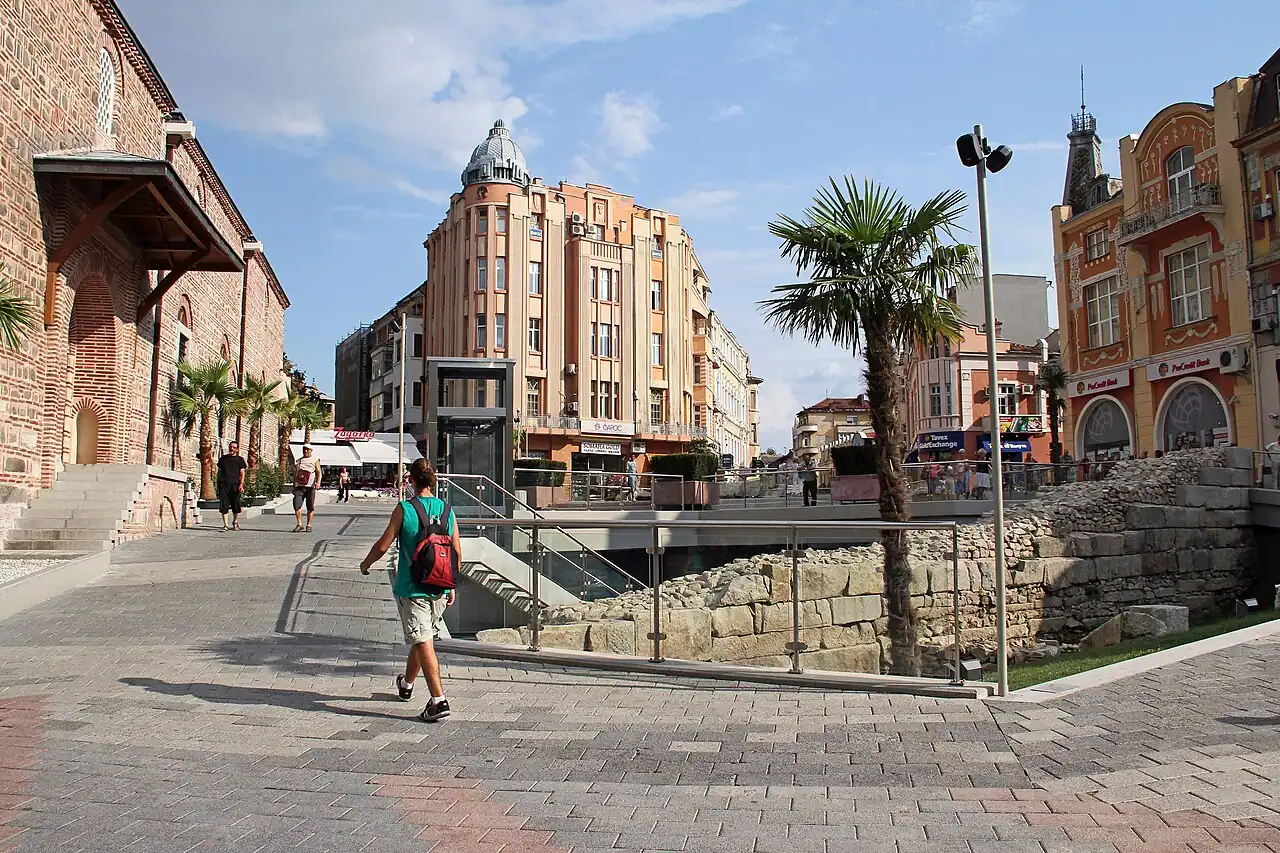
For most people on a first visit, the centre is the smart, low-stress choice. The spine of it’s Knyaz Alexander I, the long pedestrian street where Plovdiv strolls in the evening, running down from Dzhumaya Square (where the curved end of the Roman stadium is sunk into the pavement) toward the post office and the park. It’s flat, it’s easy to orient in, and it has the widest range of actual hotels, from comfortable three-stars to the city’s larger mid-range places, rather than only guesthouses.
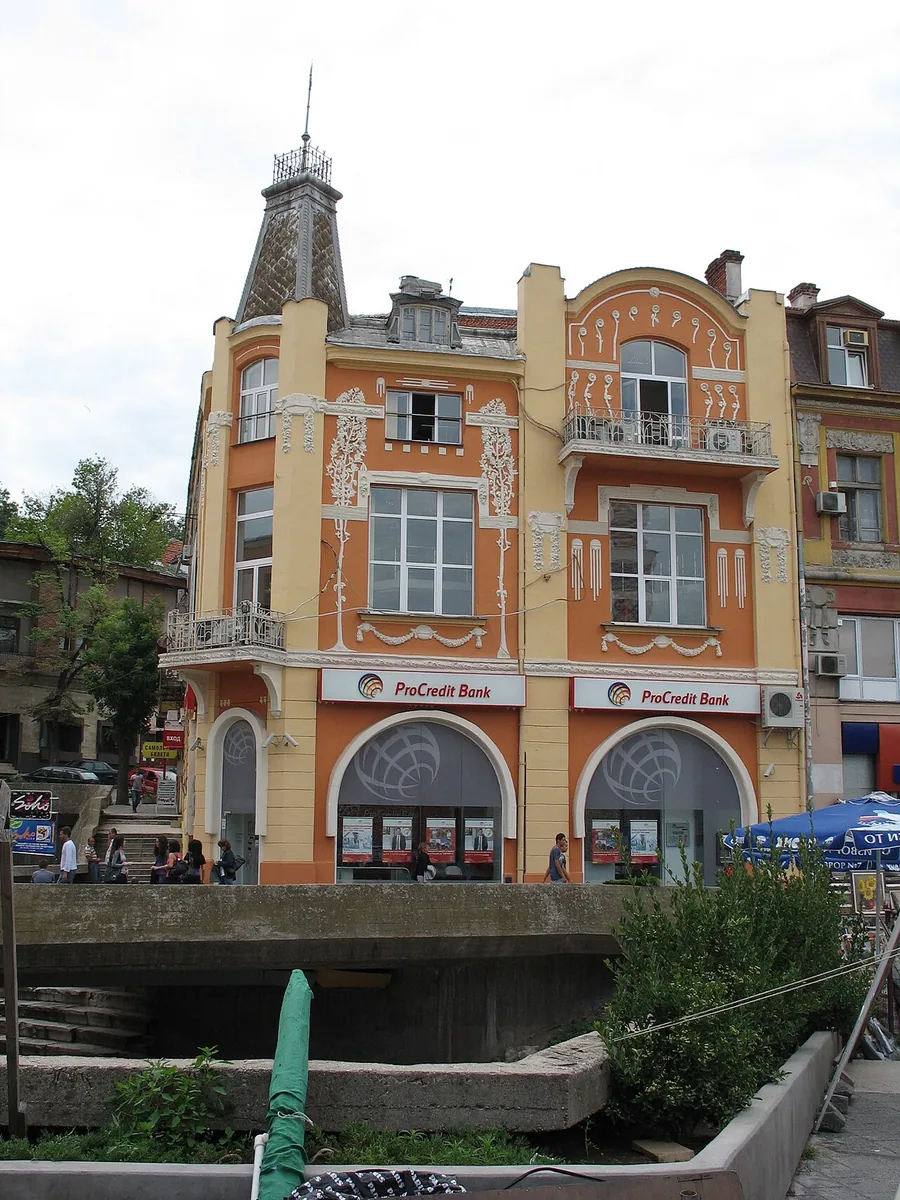
From a room in or just off this street you can walk to the Roman theatre, the Old Town gates and Kapana in the time it takes to finish a coffee, and you never touch a hill until you choose to climb one. It’s the least “distinctive” of the three central areas, which is exactly the point: you trade a bit of character for the easiest possible logistics. Families, first-timers and anyone arriving by car or train will find it the path of least resistance.
Cheaper beds near the station
If your budget is tight, look at the blocks just south of the centre around the train station and the neighbouring Yug (South) bus station. This is where the cheaper hotels and hostels cluster, and it’s genuinely handy if you’re catching an early train or a bus onward to the coast or the Rhodopes. The walk up to Dzhumaya Square and the main street is only about ten to fifteen minutes.
The honest trade-off is that these streets are ordinary, workaday and not remotely scenic, a bit like the station district of most cities. There’s nothing to worry about here, you just save money in exchange for a duller doorstep. If you’re here to sleep between journeys rather than to soak up the setting, that’s a fair deal. If atmosphere is the whole point of your trip, spend a little more and move closer to the core.
The outer residential districts (Trakia to the east by the ring road, Kyuchuk Parizh to the south, Karshiyaka across the Maritsa river) are cheaper still and where locals actually live, but they put you a real commute from the sights. Skip them for a short sightseeing trip unless you have a car and a specific reason to be out there.
Getting around, and do you need a car?
You don’t need a car in Plovdiv, and for the Old Town you actively don’t want one. Everything in this guide is walkable: from the main street you reach the Old Town, Kapana and the Roman sights in about fifteen minutes on foot, mostly car-free.
Most visitors reach Plovdiv from the capital, which is straightforward: it’s about a 1 hour 30 drive, a 2-hour bus or a slower, scenic train from Sofia, compared in our guide on getting from Sofia to Plovdiv. Almost everyone flies into Sofia Airport rather than Plovdiv’s small seasonal one, then continues by road or rail. If you’re still torn between the two cities, our Sofia or Plovdiv comparison lays out which to give more nights.
What it costs, and how to book
Plovdiv is still cheap by Western European standards even after the switch to the euro on 1 January 2026. As a rough guide, a budget room or hostel runs from around 20 to 40 euro a night, a comfortable mid-range three or four-star sits somewhere around 45 to 60 euro, and the city’s top hotels climb to roughly 90 to 130 euro. Treat those as ballparks: Old Town guesthouses and peak summer dates (especially during festivals) run higher, and you should confirm the real figure on your own booking. Dual euro-and-leva price tags were mandatory until 8 August 2026 and have since ended, at the fixed rate, fixed at 1.95583 leva to the euro, so keep a rough conversion in mind. Expect a small nightly tourist tax per person, from a few cents to under a euro depending on the hotel’s rating, usually settled at check-out.
The method is simple: pick the neighbourhood first, using the guide above, then compare on price and reviews within it rather than across the whole city. For the Old Town, check how far the guesthouse is from where a taxi can actually drop you, because the last stretch is often on foot uphill. For the centre or Kapana, filter for somewhere a couple of minutes from the main street. Do that and Plovdiv rewards you with a walkable, characterful base for the kind of money that barely covers a bunk further west. If Plovdiv is one stop on a bigger loop, our 7-day Bulgaria itinerary shows how it links to Sofia and the coast, and for the capital end our guide to where to stay in Sofia does the same job there.
Good to know
Room rates and the small nightly tourist tax are shown in euro (Bulgaria joined the eurozone on 1 January 2026; fixed 1.95583 leva = 1 euro), dual price tags were mandatory until 8 August 2026 and have since ended, so expect euro only on the bill. Prices are seasonal and vary by hotel - confirm the current rate on your own booking.
Details checked: July 17, 2026
Read also

Cities · 10 min read
Bulgaria's Spa Towns: Velingrad, Hisarya & More
Verified · August 31, 2026Compare Velingrad, Sandanski and Hisarya: water temps, climate, Roman walls, when to go year-round, and real 2026 spa-hotel rates.

Cities · 12 min read
Where to Stay in Pamporovo: Hotels & Chalets
Verified · August 22, 2026Pamporovo hotels, chalets and apartments by lift base: Malina vs Studenets, why "renovated" is not "new", and how to price a bed.

Cities · 14 min read
2 Days in Sofia: The Perfect Weekend Itinerary
Verified · August 20, 2026A 2-day Sofia itinerary for a Friday-to-Sunday trip: Nevsky, Serdica, Boyana Church, real euro prices, and what actually fits in one weekend.

Cities · 9 min read
Where to Stay in Burgas: Best Areas & Hotels
Verified · August 10, 2026Where to stay in Burgas: city centre for a first visit, Sea Garden for beach and park, Lazur for quiet value, or Sarafovo by the airport.