
Bulgaria's Spa Towns: Velingrad, Hisarya & More
Compare Velingrad, Sandanski and Hisarya: water temps, climate, Roman walls, when to go year-round, and real 2026 spa-hotel rates.
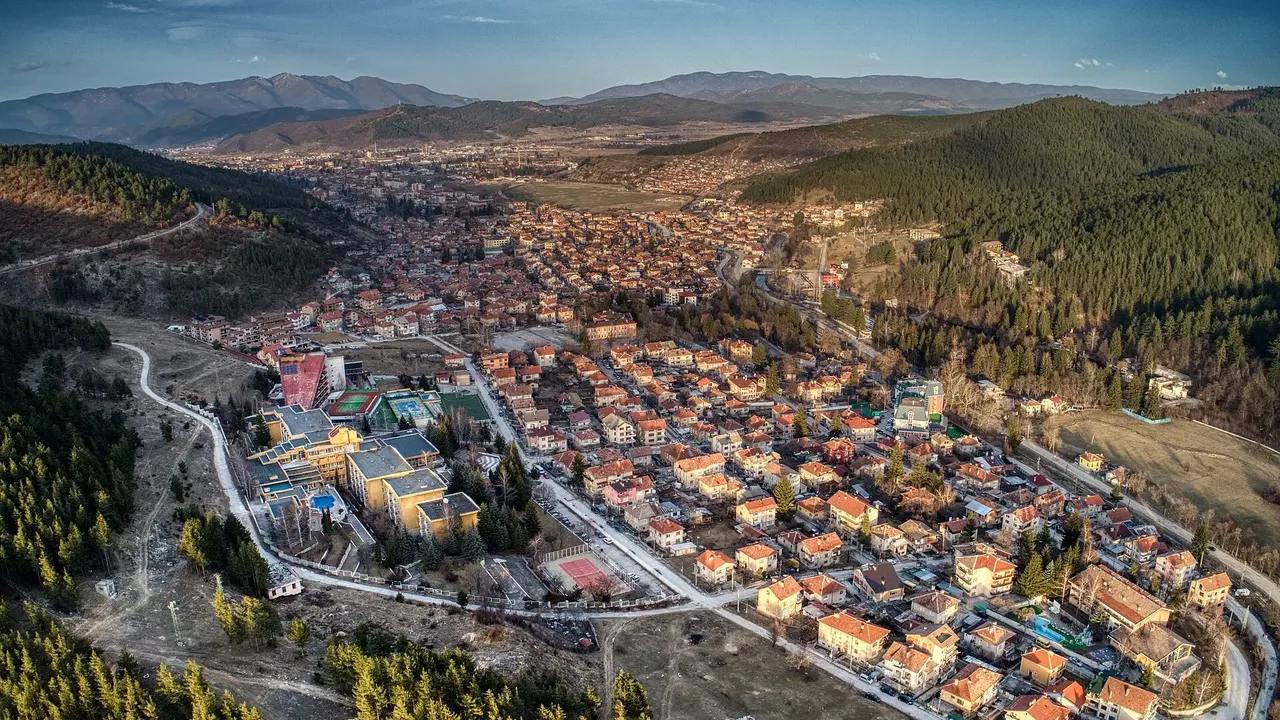
Pick Velingrad for the densest mineral-water offer in the Rhodopes, Sandanski for mild winter sun and respiratory climate, and Hisarya when you want Roman walls between soaks. All three run year-round; the decision is which town matches your week, not whether Bulgaria “has spas”.
The Ministry of Tourism counts more than 550 known sources with 1,600 springs nationwide, feeding 38 balneological resorts. That figure is a stock count, not a booking tip. What you’ll actually buy is a bed in a spa hotel whose pools are filled from a local spring - and those hotels cluster in a handful of towns that feel nothing like each other.
Three towns, three jobs
Treat them as different products sold under the same “spa” label:
| Town | Best for | Water (published ranges) | Climate cue | From the big cities |
|---|---|---|---|---|
| Velingrad | Deep soak weeks, many hotel pools, Rhodope setting | 28-91°C (hottest in Kamentsa) | Jan average +1.8°C | 130 km Sofia / 80 km Plovdiv |
| Sandanski | Mild winters, lung-friendly air, wine side-trips | 80 springs, 42-81°C | Yearly average +14.7°C, 240 m | ~157 km Sofia; ~20 km to Greece |
| Hisarya | Roman ruins + thermal water on the same walk | 16 natural + 6 drilled springs | Jan average 1.1°C | 40 km north of Plovdiv |
Those temperatures and distances come from Welcome.bg destination pages (checked 31 August 2026). Hotel day tickets and treatment menus change by property - there’s no national entry price list you can trust from afar.
How Bulgarian spa towns work on the ground
Foreign visitors often expect a public leisure complex with a fixed ticket. In practice most mineral pools sit inside spa hotels and balneology centres. You’ll book a room that includes pool access, or you’ll phone the hotel about a day pass. Several towns still function partly as medical resorts: doctors, prescriptions, rehabilitation programmes. That’s useful if you need it; it also means “spa hotel” here can mean half-board and a treatment card, not only candles and a cocktail bar.
The honest move is to read what the room rate includes before you arrive. Pool-only day access exists in places, but operators rarely publish a stable public tariff online - ask the property for your dates, and treat any blog number as stale.
Quick pick: who books which
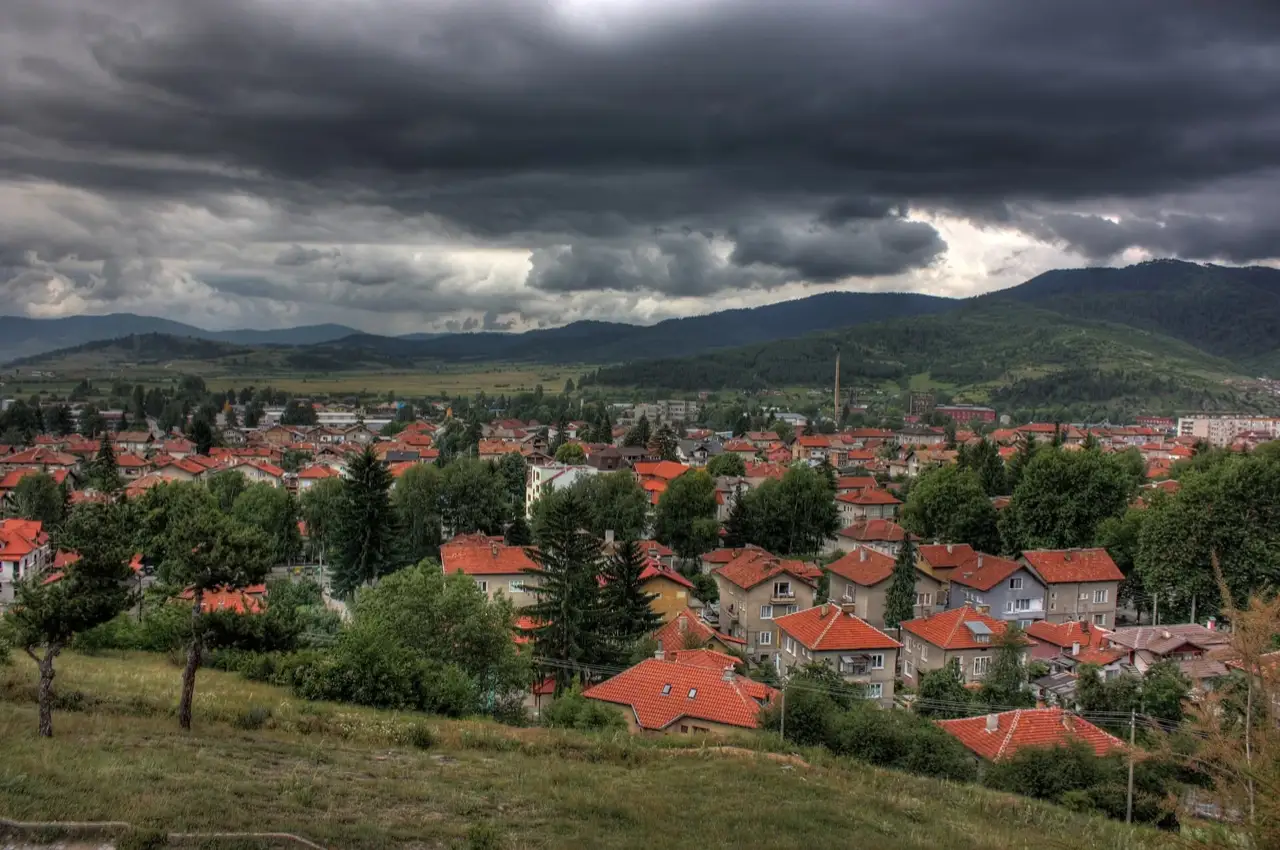
Book Velingrad when the week is about water variety and you want the classic “spa capital” density: more than 40 hotels and holiday homes, 22 open and covered mineral pools on the Welcome.bg count, and water that spans cold-to-scalding across neighbourhoods.
Book Sandanski when winter mildness matters, or when you plan to pair soaks with Melnik wine cellars on the same southern corridor. Locals call it Bulgaria’s warmest town; the published yearly average is +14.7°C at 240 m.
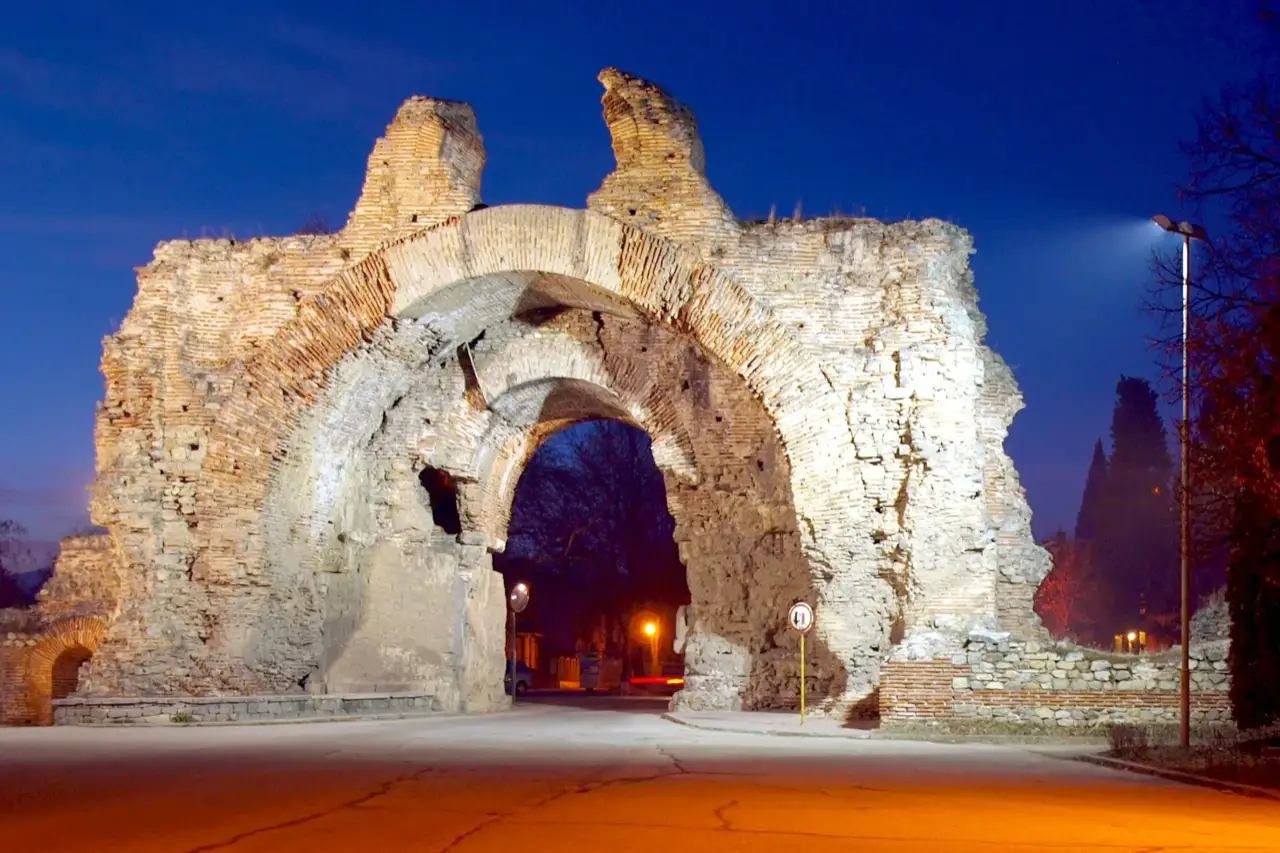
Book Hisarya when you want Camels at night, the amphitheatre by day, and a wall walk after the soak - Roman Diocletianopolis and mineral water on the same short circuit.
Ski-and-spa combinations belong in a different article: Bulgaria in winter covers Bansko, Borovets, Pamporovo and how spa weeks sit beside the lifts. This page stays on the towns themselves.
Velingrad: volume and mountain water
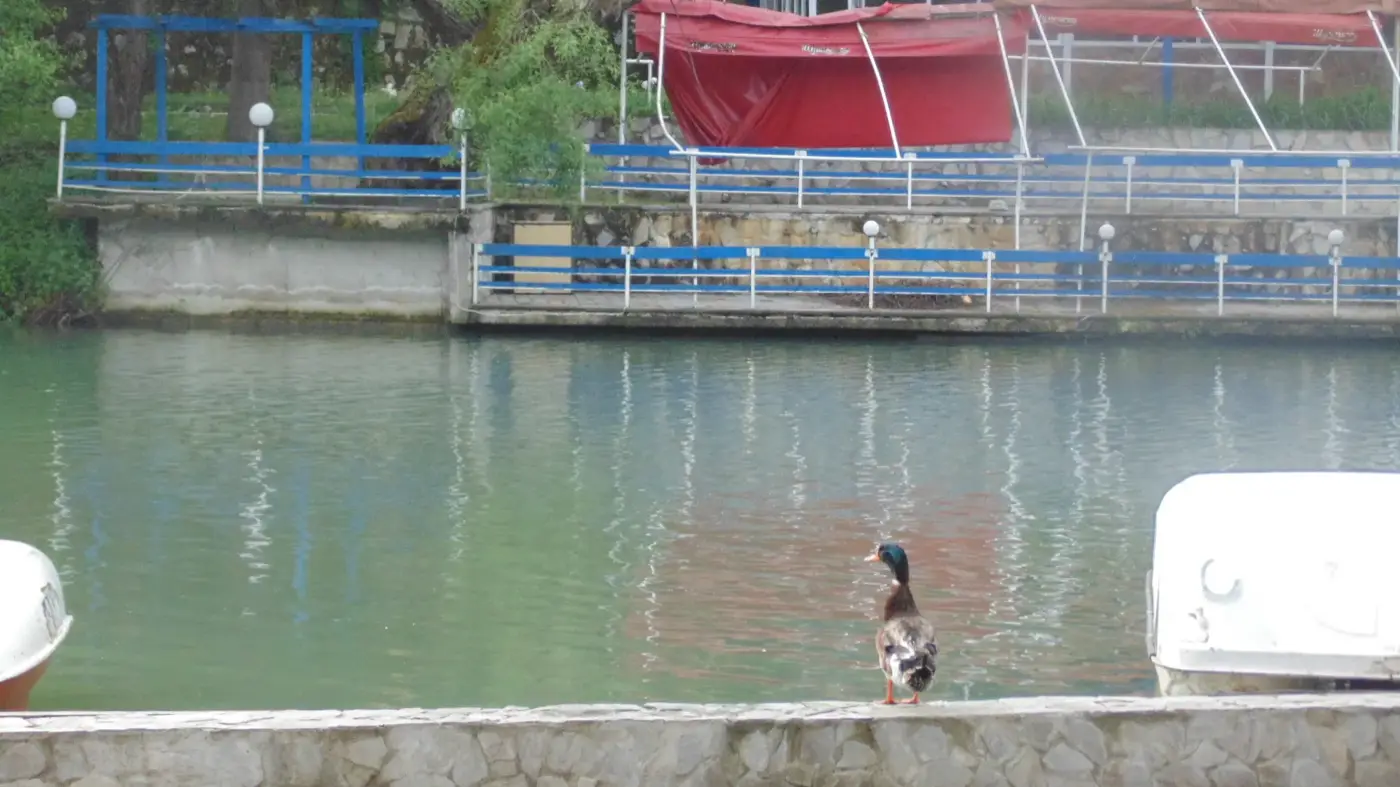
Velingrad is the Rhodope answer to “where is the water densest?” Welcome.bg ranks it first in Bulgaria for abundance and diversity of mineral waters. Temperatures run 28°C to 91°C; the Kamentsa quarter holds the hottest. The Kleptuza karst spring - the largest in the country on that page - pushes 600 to 1,200 litres a second into two ponds in the middle of town. January averages +1.8°C, so winter soaks are steam against cold air, not tropical patio weather.
What you shouldn’t expect from this umbrella page is a hotel-by-hotel ranking. Velingrad’s stock is large enough that the right property depends on whether you need medical balneology, a quiet adults pool, or a family hotel with outdoor basins. Compare inclusions, then lock dates - weekends fill with domestic guests even in shoulder months.
Sandanski: sun, lungs and the Greek border road
Sandanski sits on the Struma corridor about 157 km from Sofia and roughly 20 km from the Greek border, at 240 m. Welcome.bg lists 80 springs between 42°C and 81°C, and flags the Mediterranean-influenced microclimate as suitable for lung-disease treatment. That medical framing is why the town still feels like a health resort first - it’s never a party town.
For a concrete bed-and-breakfast sample from an operator (not a national average): Interhotel Sandanski sells a weekday SPA package with breakfast at 351 EUR for a double room over 3 nights - 117 EUR per night for the room - for Sunday-Thursday stays of 3-5 nights. The hotel publishes that rate for 01 April-31 May 2026; the same double-room 3-night price appears again on the autumn weekday PDF for 13 September-29 October 2026, and the hotel issues a new PDF for each season. Checked 31 August 2026: the spring window is already closed; autumn is still ahead. The same hotel’s summer Holiday package with breakfast is 118 EUR per night for a double room on a five-night stay and 105 EUR from six nights, in the summer window, 29 May to 12 September 2026; from 13 September 2026 the off-season rate applies. A single room is 92 EUR. The property states it reserves the right to change prices; always re-check the live offer for your dates - it won’t stay static. The hotel advertises three mineral pools, one of them thermal at 38°C.
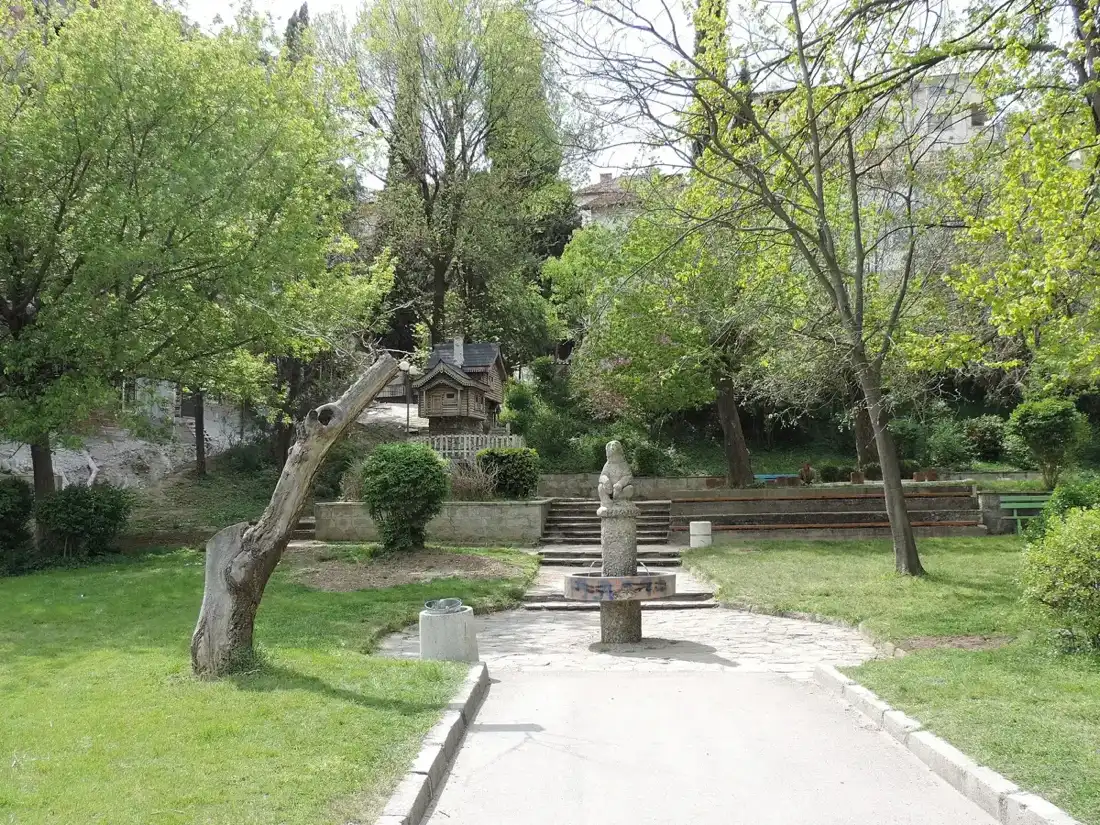
If you’re already heading south for wine, Sandanski is the practical overnight that keeps you off a long same-day drive. Melnik is a short hop east of the corridor; use the Melnik page for the town and cellars, and keep this page for the thermal base.
Hisarya: Camels at night, amphitheatre by day
Hisarya sits 40 km north of Plovdiv and about 180 km east of Sofia. Welcome.bg counts 16 natural mineral springs and 6 drilled wells. In 293 CE Emperor Diocletian gave the settlement city status as Diocletianopolis. The fortification wall still runs 2,327 m, up to 11 m high in places, with the southern gate known as the Camels standing 13 m. The European Historic Thermal Towns Association page for Hisarya matches that wall length, notes 44 towers and about 30 hectares inside the circuit, and describes 22 mineral springs - the same total as 16+6.
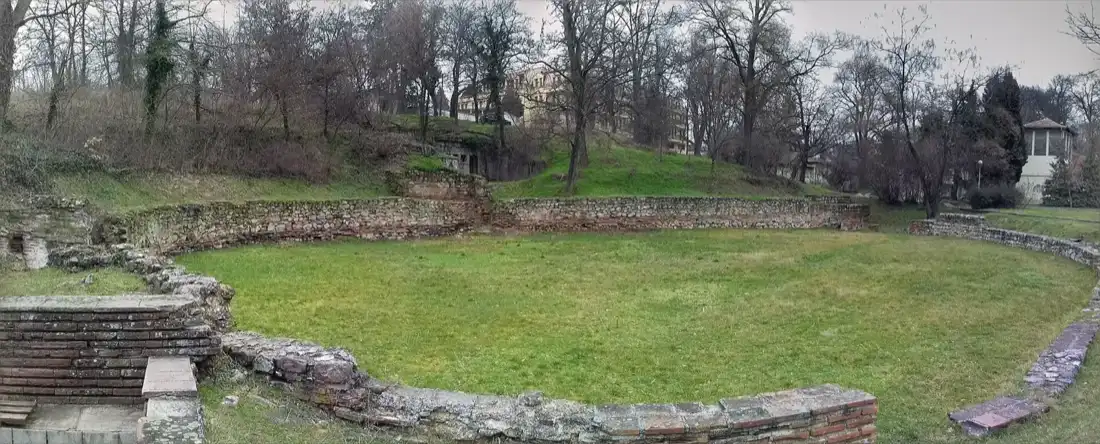
A workable day route here is short and local: soak mid-morning, walk the amphitheatre of Diocletianopolis while the light is good, then take the wall circuit and save the illuminated Camels gate for after dark. That is the product - mineral water and Roman archaeology on one walkable loop, not a culture stop bolted onto a distant spa hotel.
EHTTA also calls the Roman thermae the only “working” ancient baths in Bulgaria. That is their wording; treat it as an EHTTA claim and confirm opening arrangements on site, because archaeological sites change access rules. For day-trip logistics from Plovdiv, Plovdiv day trips and Plovdiv sights cover the city base - Hisarya is the thermal add-on 40 km north.
When to go
Unlike the Black Sea strip, these towns don’t shut for winter. Seasonality is about hotels and crowds, not about whether the water’s hot.
- November-March: quietest foreign tourism, strongest “Bulgarian weekend spa” feel, lowest shoulder rates in many hotels. Sandanski’s mild air is the comfort pick; Velingrad and Hisarya are colder at night (Jan averages near freezing). Pair with skiing only if you’re ready for mountain roads - details in Bulgaria in winter.
- April-June and September-October: the sweet spot for outdoor pools without Black Sea peak pricing. Weekdays beat Friday arrivals.
- July-August: still workable, especially Hisarya as a Plovdiv heat escape, but spa hotels fill with domestic holidays. Book early; don’t assume empty thermal halls.
For the wider month-by-month picture across coast, mountains and cities, see best time to visit Bulgaria. Spa weeks are the rare product that stays sensible in every season.
Getting there from Sofia and Plovdiv
Car is the flexible option. Velingrad is a Rhodope road from both Sofia (130 km) and Plovdiv (80 km). Sandanski sits on the A3/E79 Struma corridor south of Sofia (~157 km). Hisarya is an easy northbound hop from Plovdiv (40 km). Motorway stretches need an e-vignette; driving in Bulgaria has the current rules.
Bus links exist to all three from Sofia and/or Plovdiv, but schedules and ticket sites shift - check the day before, and build slack if you have a timed hotel check-in. Without a car, Hisarya-from-Plovdiv and Sandanski-from-Sofia are the simpler public-transport stories; Velingrad works too, but you’ll thank a hotel shuttle or taxi for the last stretch with luggage.
Flying into Sofia covers Velingrad and Sandanski; Plovdiv Airport is the natural gate for Hisarya when that airport’s schedule fits your dates.
Rooms and what a spa hotel includes
The commercial product is almost always the overnight package: breakfast or half-board, mineral pool access, sometimes a set of balneology procedures. Day spas exist, but they’re secondary and poorly published online. Before you pay:
- Confirm whether outdoor and indoor pools are included for your room category.
- Ask whether medical procedures need a doctor’s note or a separate ticket.
- Check weekend versus weekday rates - domestic demand spikes Friday-Sunday.
- Re-read cancellation rules; spa towns sell refundable and non-refundable packages side by side.
Euro prices since 1 January 2026 make the bill easy to read for UK, eurozone and North American visitors. What still varies is the package itself - it’s easy to misread. Two hotels a street apart can sell “SPA” as free pool entry or as a paid treatment card - the difference shows up only in the fine print.
Which week to book
Match the town to the week you actually have.
A five-night Velingrad stay suits people who want many pools and a mountain-town rhythm without inventing a cultural itinerary every afternoon. A Sandanski base suits winter travellers who dislike freezing pavements, and anyone combining thermal water with Melnik. A Hisarya long weekend from Plovdiv suits travellers who refuse to choose between ruins and mineral water.
You don’t need all three on one trip. Bulgaria’s spa map is wide enough that one well-chosen town beats a rushed circuit of hotel lobbies. Pick the job, then the town - and leave the Black Sea resorts for a different holiday. It’s that simple.
Photos
Admission and opening hours
- Admission price
- Sample operator rate (Interhotel Sandanski, weekday SPA package with breakfast, double room): 351 EUR for 3 nights (= 117 EUR per night for the room). Valid windows published for that rate: 01.04-31.05.2026 and 13.09-29.10.2026 (same double-room 3-night price on the autumn PDF). As of 31 Aug 2026 the spring window is closed; autumn still ahead. Holiday package with breakfast: double room 118 EUR per night for 5 overnights, 105 EUR from 6 nights, single 92 EUR, in the 29 May-12 September 2026 summer window; off-season rates apply from 13 September 2026. Municipal and hotel day-spa tickets are not published as a national tariff - ask the property; prices change by season.
- Opening hours
- Spa towns run year-round. Hotel spa centres keep their own hours; confirm pool and treatment slots with the property. Interhotel Sandanski publishes spa opening notes on its site - check before a day visit.
Checked 31 August 2026. Bulgaria uses the euro since 1 January 2026. Hotel packages change; Interhotel Sandanski states it reserves the right to change prices. Confirm on the hotel page for your dates.
Details checked: August 31, 2026
Read also

Cities · 12 min read
Where to Stay in Pamporovo: Hotels & Chalets
Verified · August 22, 2026Pamporovo hotels, chalets and apartments by lift base: Malina vs Studenets, why "renovated" is not "new", and how to price a bed.

Cities · 14 min read
2 Days in Sofia: The Perfect Weekend Itinerary
Verified · August 20, 2026A 2-day Sofia itinerary for a Friday-to-Sunday trip: Nevsky, Serdica, Boyana Church, real euro prices, and what actually fits in one weekend.

Cities · 9 min read
Where to Stay in Burgas: Best Areas & Hotels
Verified · August 10, 2026Where to stay in Burgas: city centre for a first visit, Sea Garden for beach and park, Lazur for quiet value, or Sarafovo by the airport.

Cities · 9 min read
Where to Stay in Borovets: Hotels by the Lifts
Verified · August 8, 2026Where to stay in Borovets: hotels advertised right at the gondola, the Hotel Samokov naming trap, and when the real town of Samokov is worth the drive.