
Things to Do in Plovdiv: Complete Guide
The best things to do in Plovdiv: the Roman Theatre, the Stadium under the main street, the Old Town, Kapana and Nebet Tepe, with hours and euro prices.
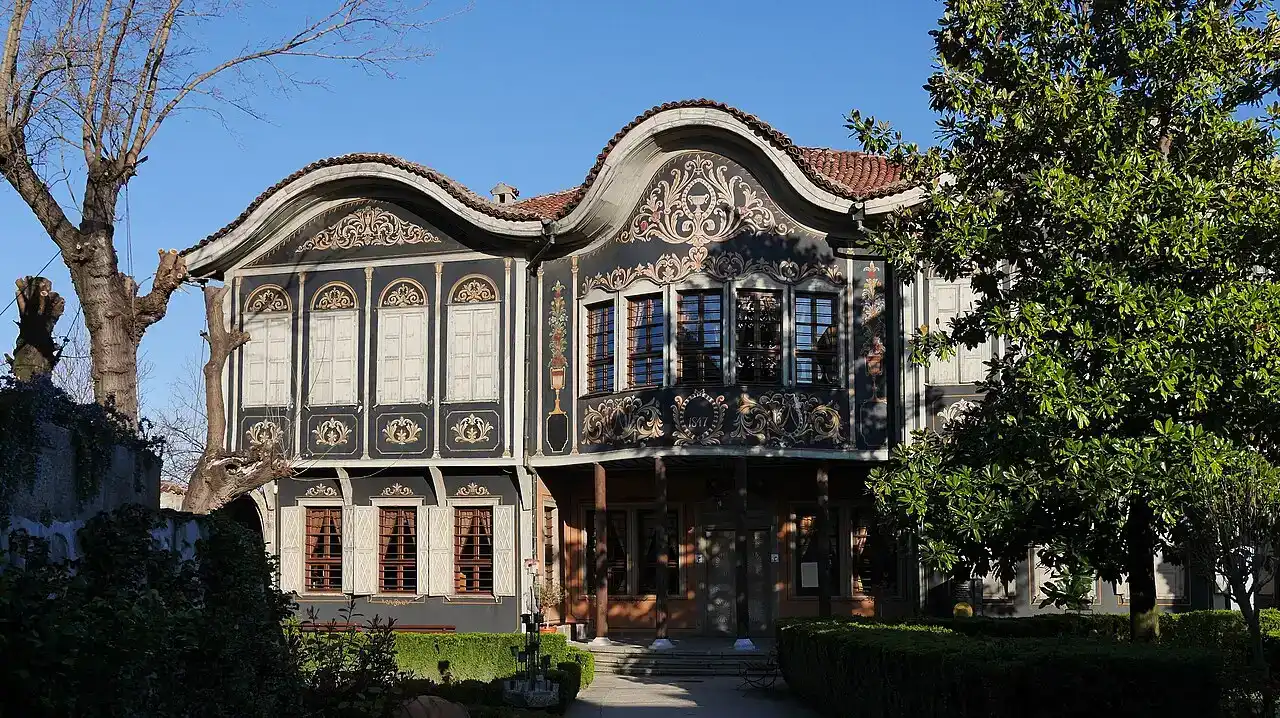
The best things to do in Plovdiv sit on and around three hills in the compact old core: watch the sun set over the city from the Thracian ramparts of Nebet Tepe, sit in a working 2nd-century Roman theatre, and find the curved end of a Roman stadium wedged under the main shopping street. Plovdiv is often called the oldest continuously inhabited city in Europe, with roughly 8,000 years of history, and unlike a museum town it wears all of it at once: Thracian walls, Roman marble, painted Revival mansions, and the buzzing Kapana arts quarter, all within a 20-minute walk. One practical note first: Bulgaria switched to the euro on 1 January 2026, so the prices below are in euros, though ticket desks still print both euros and the old leva.
Two days is plenty to do it justice, and it pairs naturally with the capital. This guide runs sight by sight, with hours, prices and why each one matters; for a ready-made schedule that turns the same list into an actual weekend, see our 2-day Plovdiv itinerary. Building a longer trip, our 7-day Bulgaria itinerary slots Plovdiv in as day three, our guide to the best things to do in Sofia covers the other end of the A1, and Sofia or Plovdiv helps if you’re still deciding between the two.
How many days do you need in Plovdiv?
One full day covers the headline sights, because they cluster tightly on and below the Old Town hills. Two days is the sweet spot: it lets you slow down for the museum-houses, an unhurried evening in Kapana, and a sunset climb up Nebet Tepe without marching. Plovdiv is also an easy day trip from Sofia, about 1 hour 30 minutes each way by car, so plenty of people see it in a long day and regret not staying the night; our Sofia to Plovdiv transport guide compares the train, the bus and the drive.
The whole centre is walkable and mostly car-free. From Dzhumaya Square you can reach the Roman theatre, the stadium, the Old Town gates, and Kapana in the time it takes to finish a coffee, though the Old Town’s lanes run steep and cobbled, so pack shoes with grip.
The Roman Theatre: a 2nd-century venue that still sells tickets
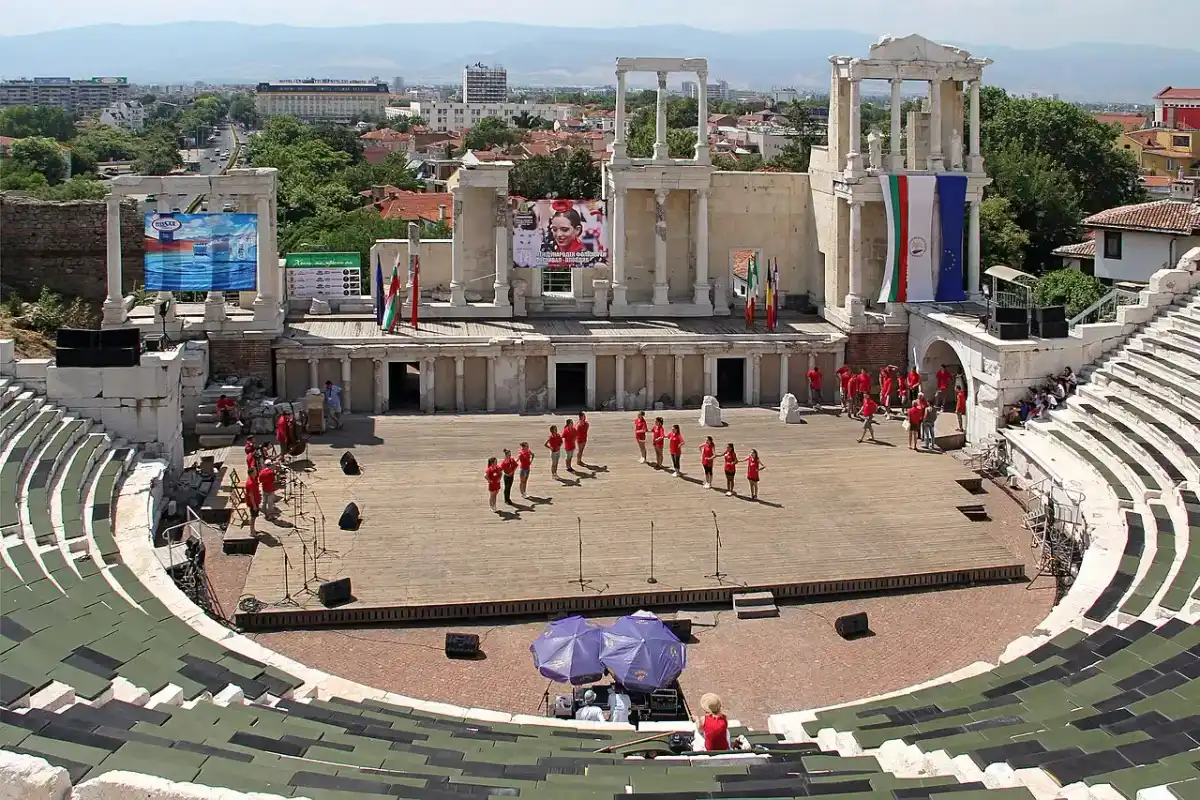
Start with the sight everyone comes for: a working 2nd-century Roman theatre cut into the saddle of two hills, the Rhodope mountains filling the view behind the stage. It seated five to seven thousand people under Emperor Trajan, and it hasn’t fully retired, the summer Opera Open season puts opera, ballet and concerts on that same stage from late June into early September, so a night ticket beats any daytime photo if your dates allow it.
By day the theatre is cheap and quick to see: roughly 09:30 to 18:00, April to October, shorter in winter, tickets around 2.50 to 3 euros for adults (students about half, under-7s free), though it can shut early on performance days, so check before you climb. Our full guide to the Plovdiv Roman Theatre and ancient sites has the 1972 landslide that uncovered it, how to catch a summer show, and the stadium, forum and basilica mosaics nearby that this section leaves out.
The Roman Stadium hiding under the main street
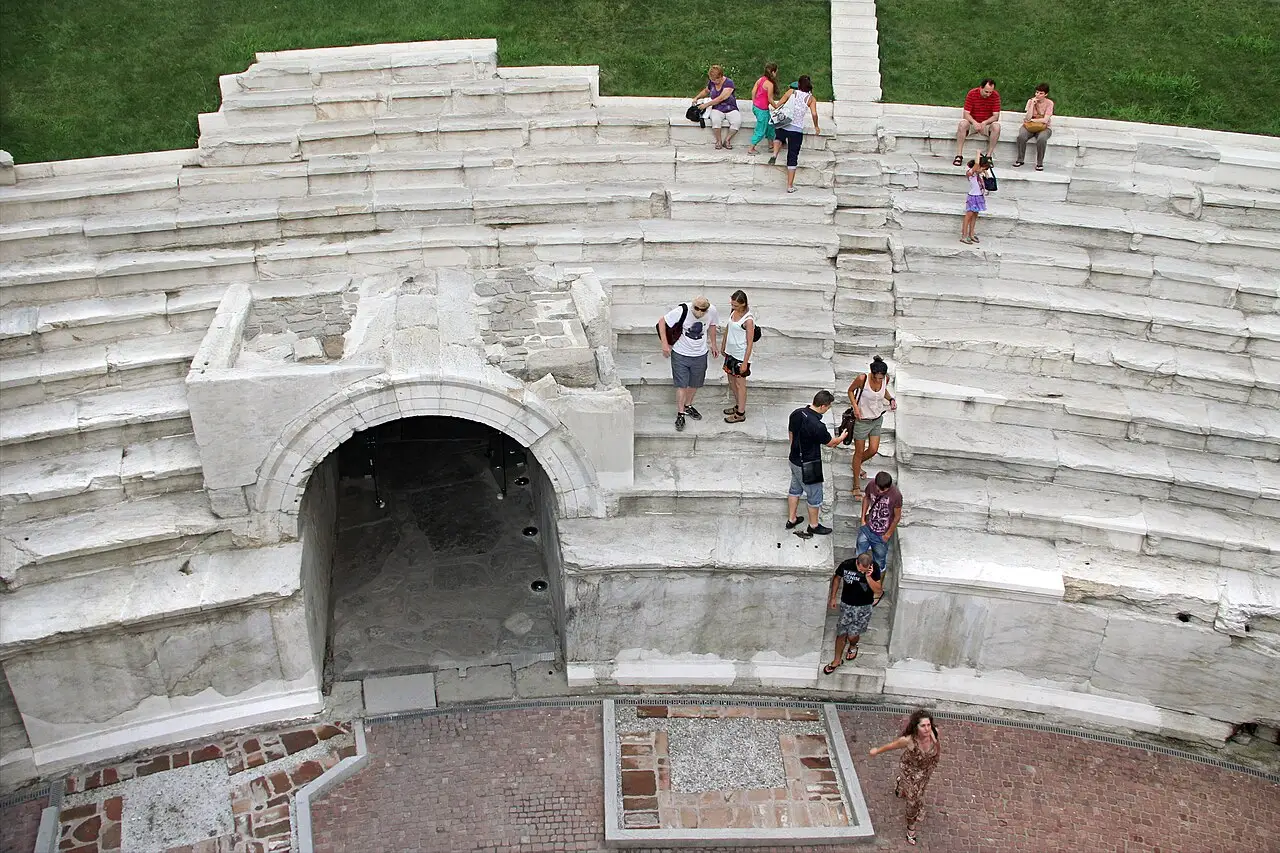
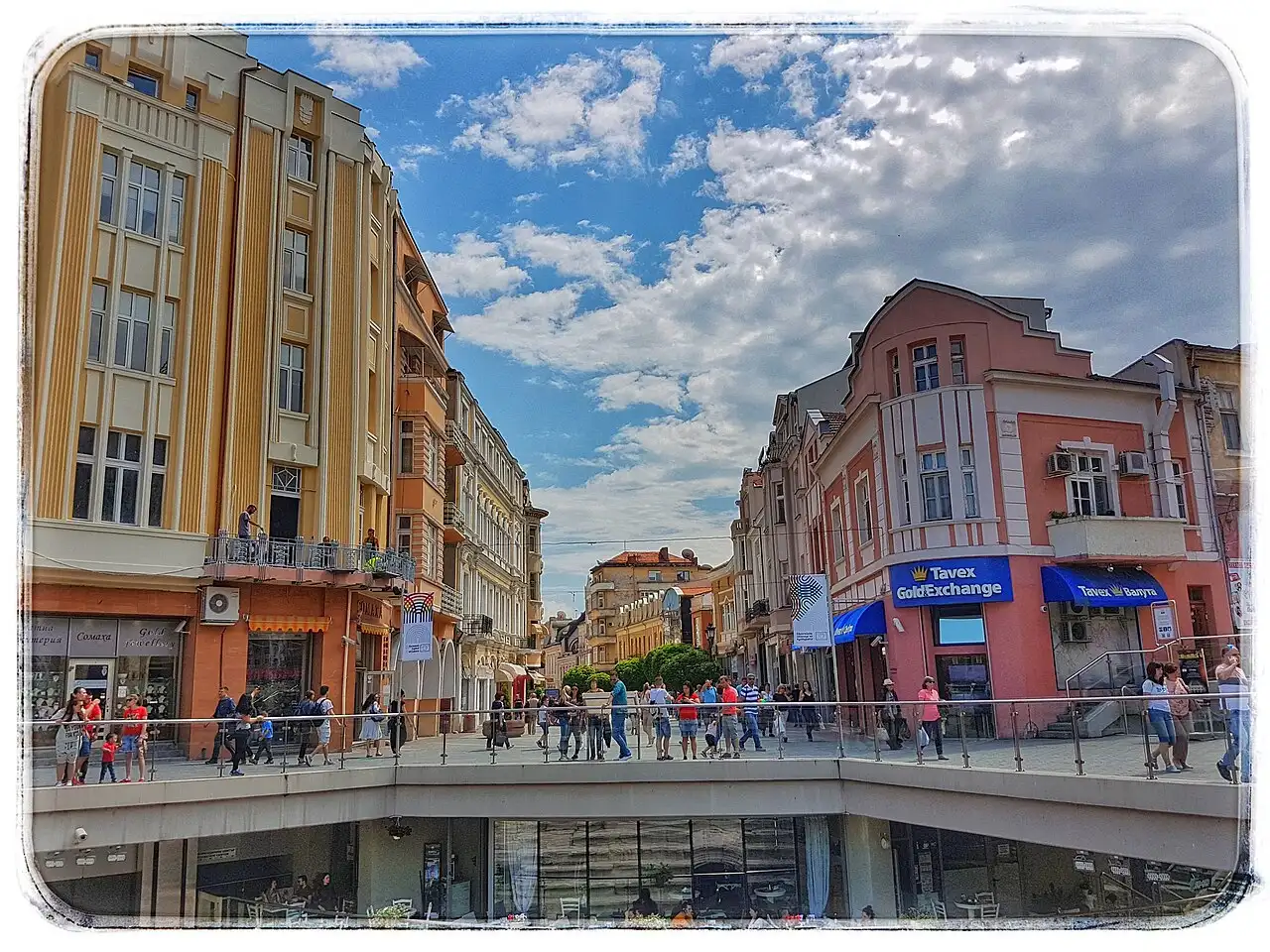
This one catches people off guard, because nobody expects a Roman stadium to interrupt a shopping street. Follow Knyaz Alexander I, the pedestrian spine of the modern centre, and at Dzhumaya Square the paving gives way to a sunken bowl of white marble: the exposed curve of the Stadium of Philippopolis, raised under Hadrian in the 2nd century AD. Only this rounded end shows; the other 240 metres of track run on, invisible, beneath the shops and cafes above, and in its prime the whole structure packed in up to 30,000 spectators for games modelled on Delphi.
Looking down from the square costs nothing, any hour of the day or night. A smaller indoor section near the Dzhumaya Mosque, reached through an underpass and occasionally showing a short film on the ancient games, charges a modest fee on its own separate hours. Either way it’s a strangely low-key brush with antiquity: shoppers and coffee drinkers carry on past a 30,000-seat stadium without breaking stride.
Above the same square sit the Dzhumaya Mosque, a 15th-century Ottoman building still in use, and the old clock tower, a reminder that Plovdiv spent five centuries under Ottoman rule between the Romans and the Revival.
The Old Town: painted mansions and museum-houses
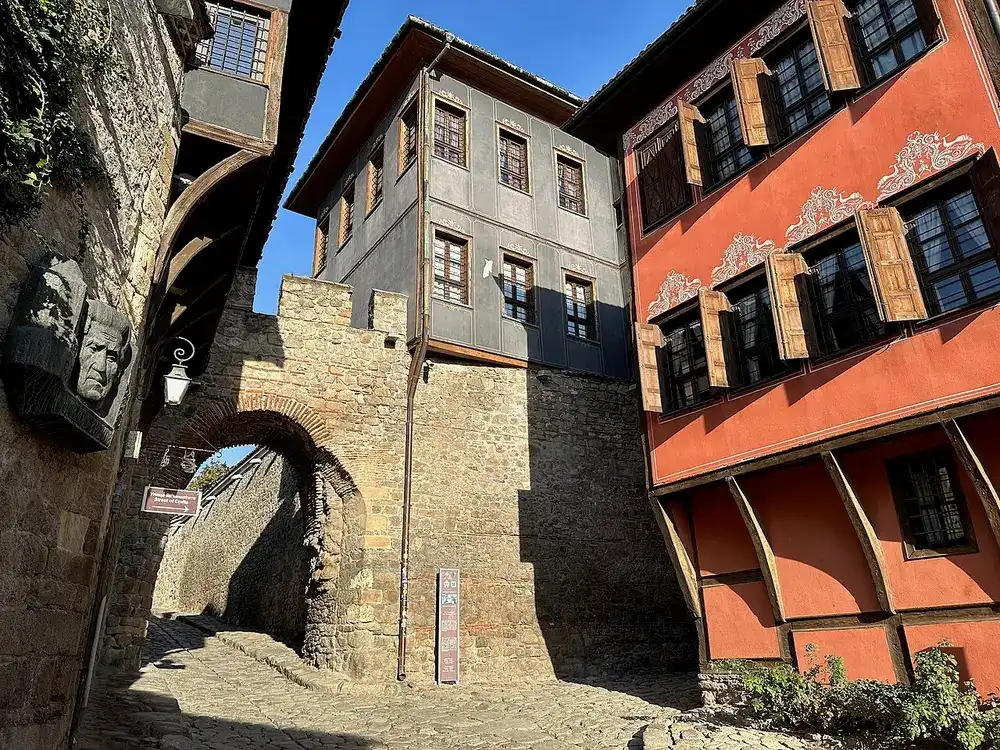
The stadium sits at the foot of the Old Town, a hillside stacked with 19th-century National Revival houses: jettied upper floors, carved wooden ceilings, facades in deep blue, ochre and rose, built by the merchants who got rich during Bulgaria’s cultural reawakening. A handful of the grandest now operate as small house-museums.
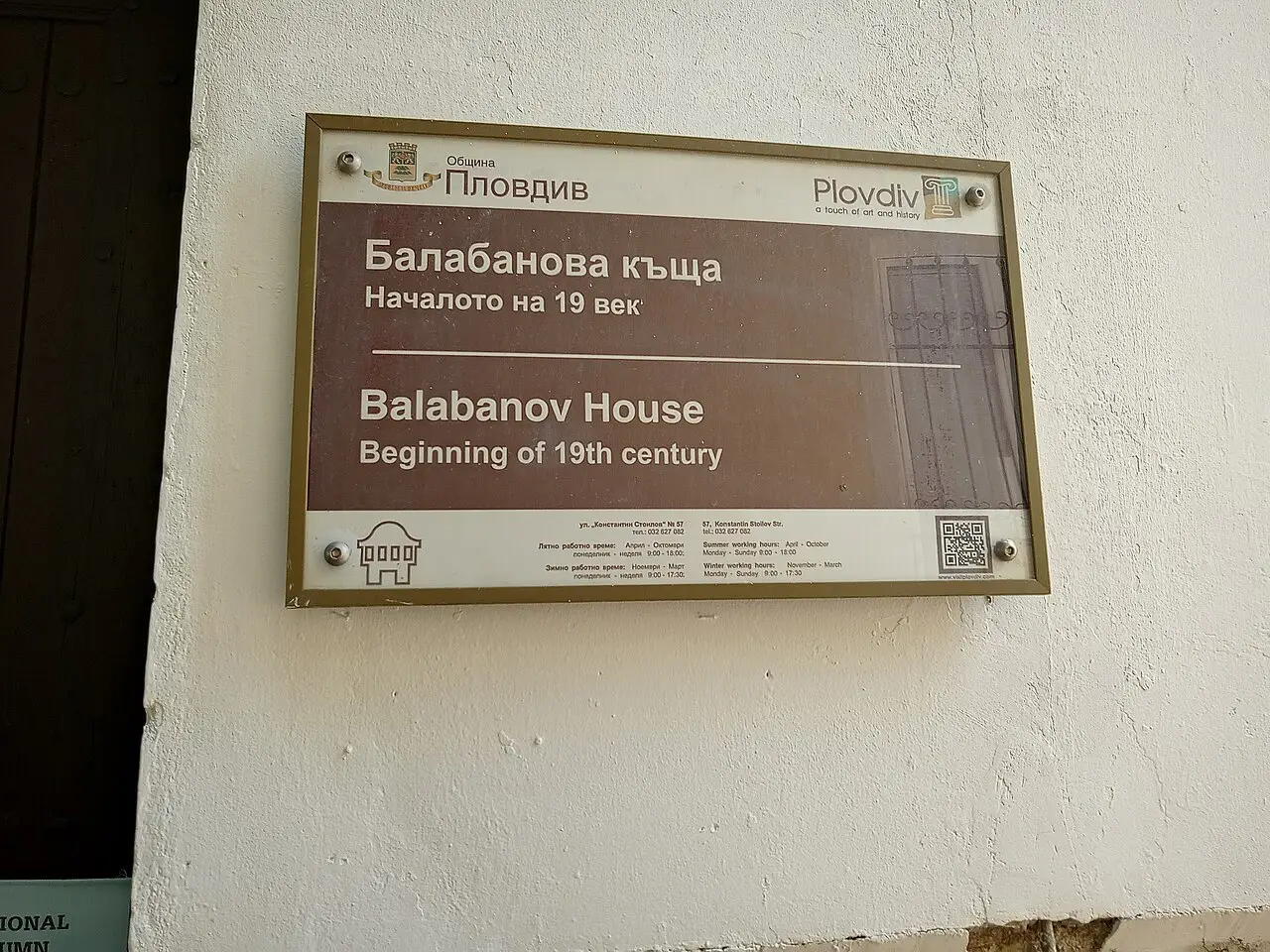
Three are worth the ticket: Hindliyan House for the hand-painted walls and marble bathroom, Balabanov House for period rooms and rotating art shows, and the dark-blue Kuyumdzhieva House, home to the Regional Ethnographic Museum around its own courtyard garden. Single entry runs about 3.50 euros a house, but the combined ticket for up to five Old Town sites, about 10.75 euros, earns its cost back after the second door (under-7s free, students roughly half price).
Between the house-museums, look out for the Hisar Kapia, a Roman-era gate rebuilt in medieval times, framing what might be the prettiest lane in the whole quarter. Skip every interior and just wander gate to gate, and you’ve still had the best of it, free of charge.
Nebet Tepe: where the whole city began, and the best sunset
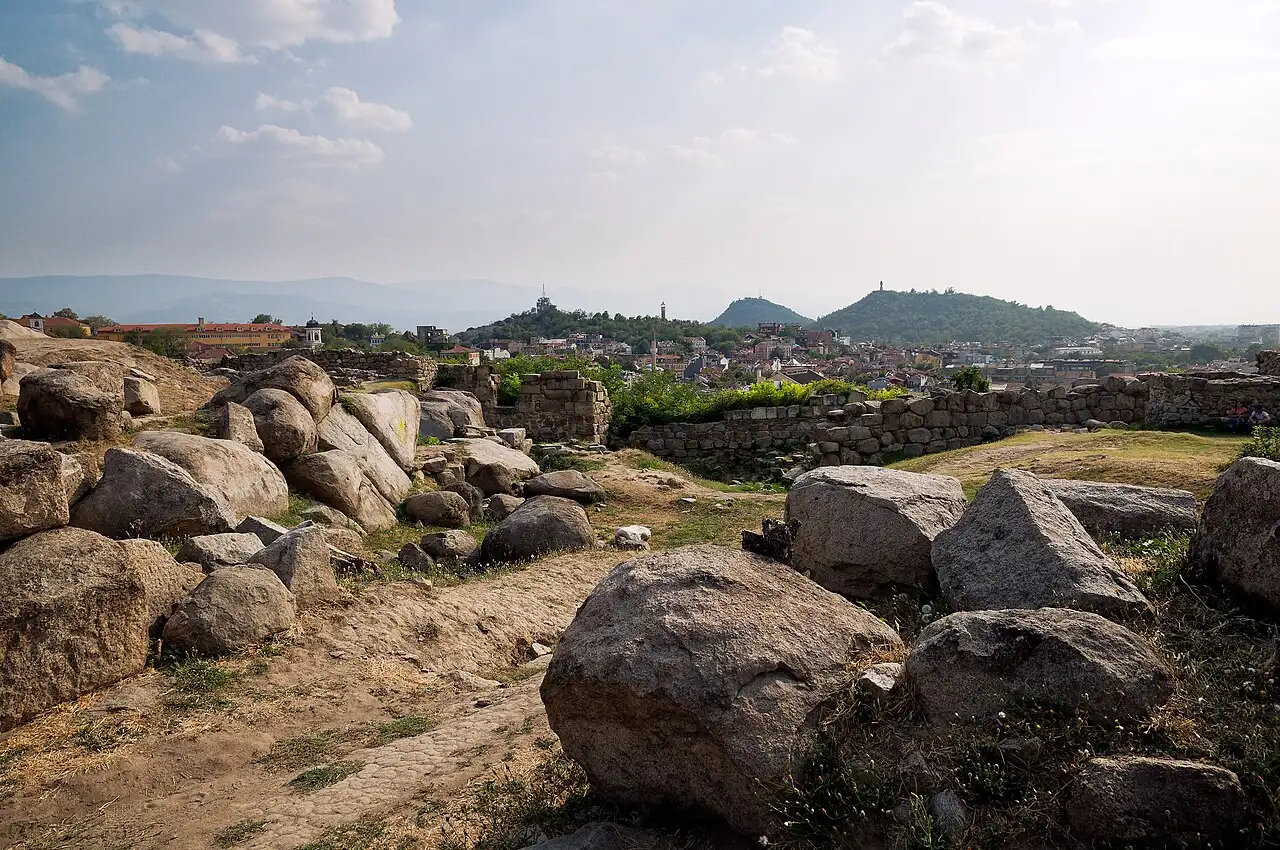
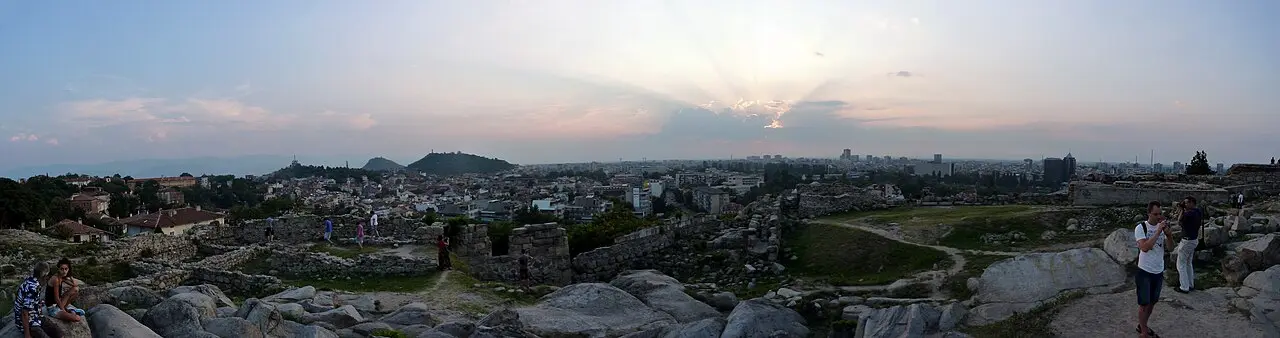
The lanes eventually run out of houses to climb past, and what waits at the top is Nebet Tepe, quite literally the spot where Plovdiv began. This summit has been lived on for something like six thousand years, and the grey granite you scramble over here belonged to the Thracian stronghold of Eumolpias, 4th to 3rd century BC, with Roman masonry added on later. No gate, no ticket, no fixed hours, just an open hilltop ruin.
Time it for late afternoon rather than midday. The view runs from the rooftops below out across the plain, and once the sun drops the whole scene turns gold, which is exactly why a small, friendly crowd gathers here on any clear evening with a beer and a camera rather than any real solitude on offer.
Kapana: the arts quarter for food, bars, and browsing
Ruins done, head downhill into Kapana, the quarter that supplies whatever pulse modern Plovdiv has. The name translates as “the trap,” a nod to lanes tangled enough to lose a visitor, and for generations it housed blacksmiths, tanners and other artisans before standing derelict for decades. Galleries, coffee roasters, craft-beer bars and small kitchens moved back in from around 2015 onward, a revival that gathered real speed once Plovdiv held the title of European Capital of Culture in 2019.
Timing matters here more than up in the Old Town: by day it’s a pleasant but fairly quiet detour, while evening fills every terrace and lets the street art actually catch the light. This is where to eat, drink and buy something handmade rather than mass-produced, and a few times a year Kapana Fest turns the entire grid into an open-air street party.
Where to eat, and what to try
Plovdiv sits in the Thracian Plain, Bulgaria’s main wine region, so a glass of local red or a dry white belongs on the table. Order a shopska salad (tomato, cucumber, roasted pepper, and a heap of grated white sirene cheese), grilled kebapche, and for breakfast the flaky cheese pastry banitsa. Kapana and the top of the main pedestrian street have the highest concentration of good places, from wine bars to grills, and the bill lands well below Western European levels even now that the country is on the euro. In late November the Old Town’s Revival houses turn into tasting rooms for a weekend at the Young Wine Festival.
The main street itself, Knyaz Alexander I, is where Plovdiv strolls in the evening, so grab an outdoor table, order a rakia to start, and watch the city go by.
Getting to Plovdiv and around
Plovdiv is one of the easiest trips in Bulgaria. Sofia sits about 143 kilometres away on the A1, which works out to roughly 1 hour 30 minutes of driving. Without a car, frequent buses run from Sofia’s Central Bus Station and take about 2 hours for around 6 to 9 euros; the train is a little slower at about 2 hours 30 to 2 hours 45 but cheap and scenic. Most visitors fly into Sofia Airport (SOF) and continue from there, since Plovdiv’s own airport has only limited seasonal flights. If you’re arriving with luggage or as a group and want the door-to-door option, a fixed-price transfer from Sofia Airport straight to your Plovdiv hotel takes the guesswork out.
Once you’re here, almost everything is a walk: the Old Town, the Roman sights, Kapana and the main street sit inside a loose 15-minute circle. Deciding where to sleep inside that circle is its own question, our where to stay in Plovdiv guide breaks down the areas, but the Old Town or Kapana puts every sight above on your doorstep. Plovdiv also makes the natural base for the nearby Valley of Roses around Kazanlak, an hour away and at its best during the June Rose Festival. The classic half-day out, though, is Bachkovo Monastery, Bulgaria’s second-largest, about 30 km south into the Rhodopes and easily paired with the cliff-top Asen’s Fortress - full options for Bachkovo, Kazanlak and more are in our day trips from Plovdiv guide. In winter it doubles as the gateway to the Rhodope slopes: Pamporovo is only about an hour and a half south, close enough to ski as a day trip and still sleep in the city. Wine travellers can make the city their tasting base for our Bulgaria wine route, which links the Kapana bars to the Thracian Valley cellars, Melnik and the Rose Valley. And if Plovdiv is one stop on a bigger loop, our Bulgaria itinerary covers how it links to Sofia, Rila, and Veliko Tarnovo, while the easiest add-on from the capital is a day trip to Rila Monastery. East to Burgas and the southern coast is a morning on the A1 rather than Sofia’s all-day haul - train, bus and car are in Plovdiv to Burgas. Plovdiv is also where the monastery route drops the car after Rila, Rozhen and Bachkovo - a one-way from Sofia, not another day trip out of the city.
Photos
Read also

Cities · 10 min read
Bulgaria's Spa Towns: Velingrad, Hisarya & More
Verified · August 31, 2026Compare Velingrad, Sandanski and Hisarya: water temps, climate, Roman walls, when to go year-round, and real 2026 spa-hotel rates.

Cities · 12 min read
Where to Stay in Pamporovo: Hotels & Chalets
Verified · August 22, 2026Pamporovo hotels, chalets and apartments by lift base: Malina vs Studenets, why "renovated" is not "new", and how to price a bed.

Cities · 14 min read
2 Days in Sofia: The Perfect Weekend Itinerary
Verified · August 20, 2026A 2-day Sofia itinerary for a Friday-to-Sunday trip: Nevsky, Serdica, Boyana Church, real euro prices, and what actually fits in one weekend.

Cities · 9 min read
Where to Stay in Burgas: Best Areas & Hotels
Verified · August 10, 2026Where to stay in Burgas: city centre for a first visit, Sea Garden for beach and park, Lazur for quiet value, or Sarafovo by the airport.