
Valley of Roses (Kazanlak): Festival & Guide
The Valley of Roses in Bulgaria: the June Rose Festival, rose oil, the UNESCO Thracian tomb at Kazanlak, prices in euros, and how to get there.
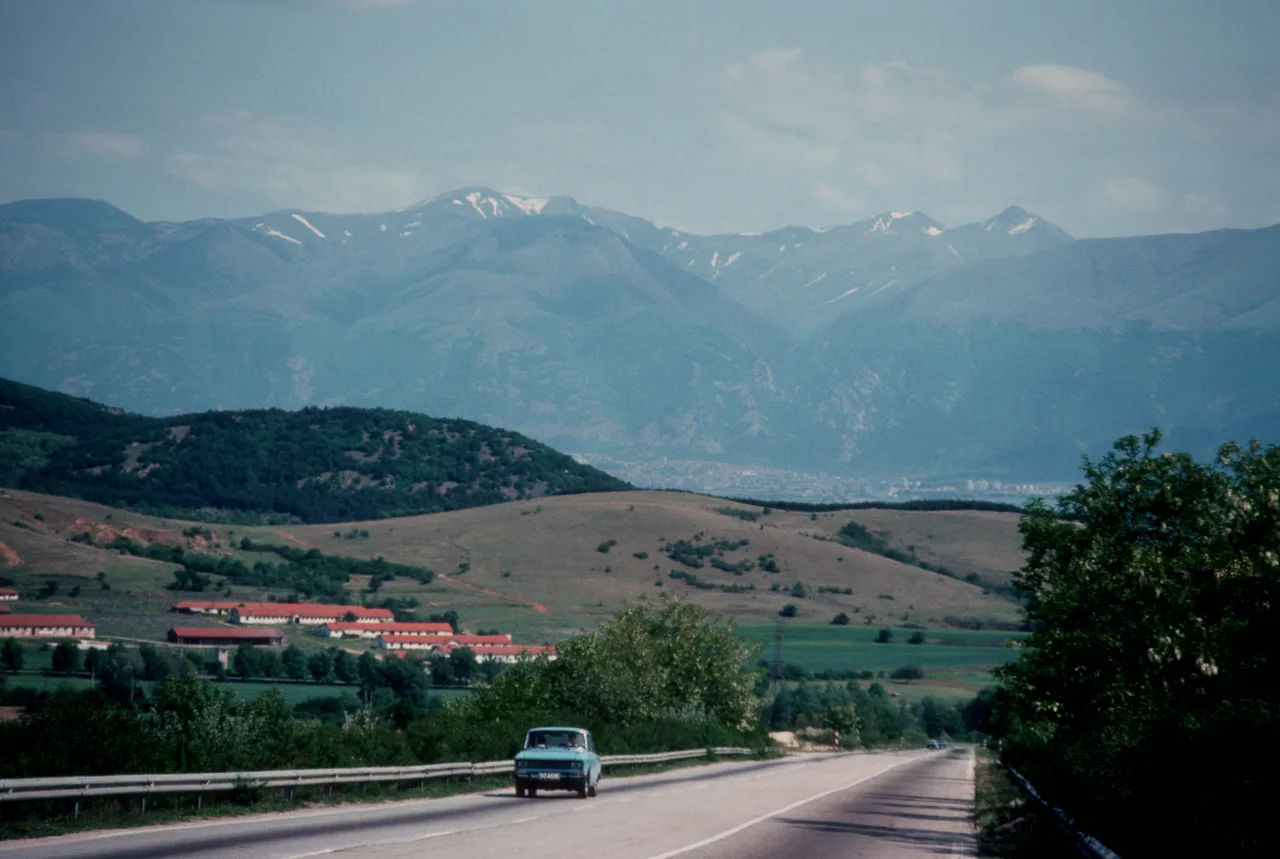
The Valley of Roses is the strip of central Bulgaria around Kazanlak where most of the country’s famous rose oil is grown, and the best time to see it’s the first weekend of June, when the Rose Festival fills the town with parades, folk costumes and dawn petal-picking. Bulgaria produces close to half the world’s rose oil, and this valley is where it comes from. Add a UNESCO-listed Thracian tomb, a one-of-a-kind Rose Museum and easy trips from Plovdiv, and you have a day or two that most people never plan and always remember.
Timing is the whole trip. The petals are picked at dawn, while the oil is still in them, and what puts the oil there in the first place is a wet, mild May and June - locals will tell you the rain in those two months is what makes or breaks the crop. Come for the first weekend of June and you get the parade and fields that are still being worked; come much later and you’re looking at stems.
Where is the Valley of Roses, and why roses?
The valley runs east to west between two mountain ranges: the high wall of the Balkan range (Stara Planina) to the north and the softer Sredna Gora hills to the south. Kazanlak sits at its heart, with Karlovo anchoring the western end. That geography isn’t scenery for its own sake, it’s the whole reason the roses are here. The mountains trap moisture and shelter the fields, and the valley gets the wet, mild May and June (locals will tell you the rain in those two months is what makes or breaks the crop) that the Damask rose needs to build up its oil.
The flower is Rosa damascena, the oil-bearing Damask rose, and Bulgarians have been distilling it here since roughly the 17th century. It’s not a rose you would put in a vase. The blooms are small, loosely petalled and pale pink, grown in long hedgerows rather than showy beds, and their value is almost entirely in the scent. Bulgaria produces close to half the world’s rose oil, and the “Bulgarian Rose Oil” name has been a protected trademark since 1994.
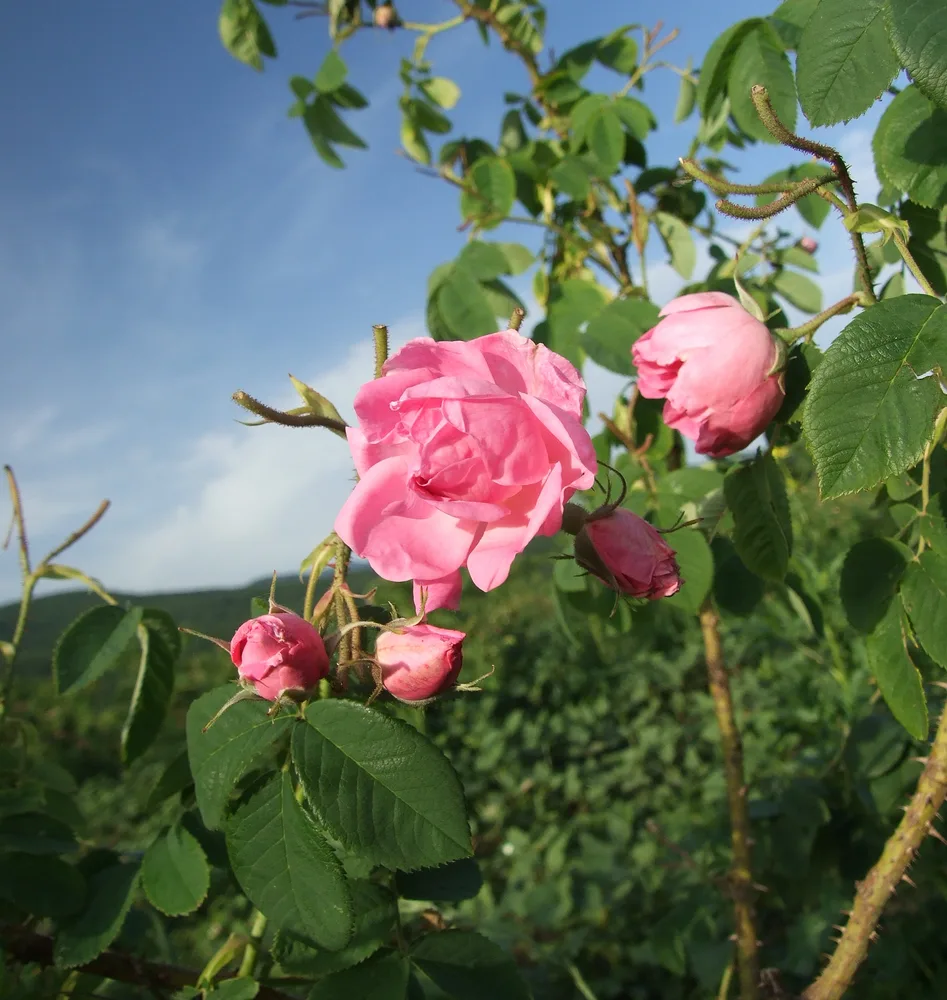
The economics explain why the oil is worth more than its weight in gold. It takes around 3,000 kg of hand-picked petals to make a single kilogram of rose oil (some estimates run to 5,000 kg for the red-flowered variety). That is why the whole valley mobilises for a few short weeks each spring, and why “rose picking” is a real, physically demanding harvest rather than a photo op.
When to go: the harvest and the festival
Timing is the one thing you can’t fudge here. The rose harvest runs roughly from early May to around 20 June, and the flowers are picked at dawn for a hard chemical reason: petals gathered between about 4:00 and 10:00 in the morning hold far more oil than the same flowers cut in the afternoon heat. If you want to see the fields actually being worked, you have to be there in the harvest window and you have to be up early. This is the single most common mistake, people arrive in July expecting rose fields in full bloom and find bare hedgerows.
The Rose Festival in Kazanlak is the reason most travellers time a visit at all. It has been held every year since 1903, making it a tradition of well over a century, and it lands on the first weekend of June. In 2026 the main days run 5 to 7 June (Friday to Sunday). Two things are worth planning around:
- The rose-picking rituals happen early on the Saturday and Sunday mornings in villages just outside town, usually Enina and Kran. Locals in traditional dress pick the dew-covered petals to live folk music, and visitors can join in. Get there early (before around 9:00) while the flowers are still fresh; some of the organised rituals need a ticket booked in advance.
- The grand parade is the climax, on the Sunday around midday on Kazanlak’s main square. It runs about an hour and a half, all costumes, floats and folk troupes, led by the crowned Rose Queen (the pageant tradition dates to the 1960s).
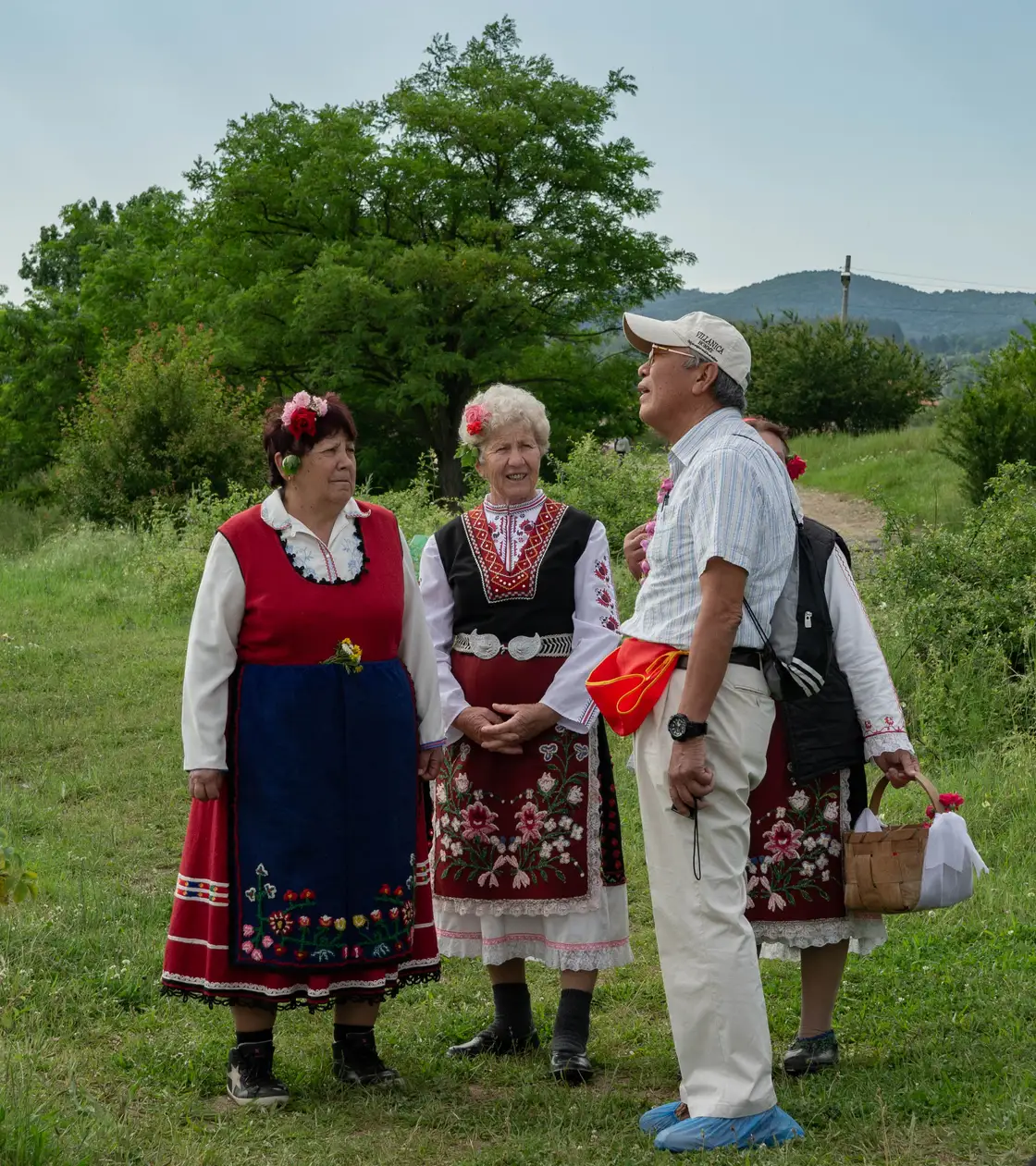
One honest heads-up on the festival: Kazanlak is a small industrial town, not a resort, and its hotels sell out early. Local operators say rooms start going in February. If you leave it late, base yourself in Plovdiv (an hour away and a far better evening) or in nearby Pavel Banya or Stara Zagora, and come in for the day. Even outside festival weekend, any May or early-June morning gets you working fields and distilleries; you just miss the parade.
The Thracian tomb everyone gets wrong
Kazanlak’s other headline sight confuses almost every first-timer, so here’s the deal up front: the original Thracian Tomb is sealed, and what you visit is a full-size, exact replica built right next to it. That’s not a rip-off, it’s the only reason the real thing still exists.
The tomb dates from the late 4th century BC and holds the best-preserved Hellenistic-era paintings in Bulgaria. It was found by chance in 1944 when soldiers digging a shelter broke into it. Inside, a narrow corridor leads to a small antechamber and then a round, domed burial chamber, its ceiling ringed with frescoes: a Thracian ruler and his wife at a funeral feast, reaching for each other’s wrists, with horses, musicians and a chariot race circling above. The colours are down to four pigments (black, red, yellow and white) and are astonishingly intact for their age - that’s why UNESCO put the tomb on the World Heritage list in 1979.
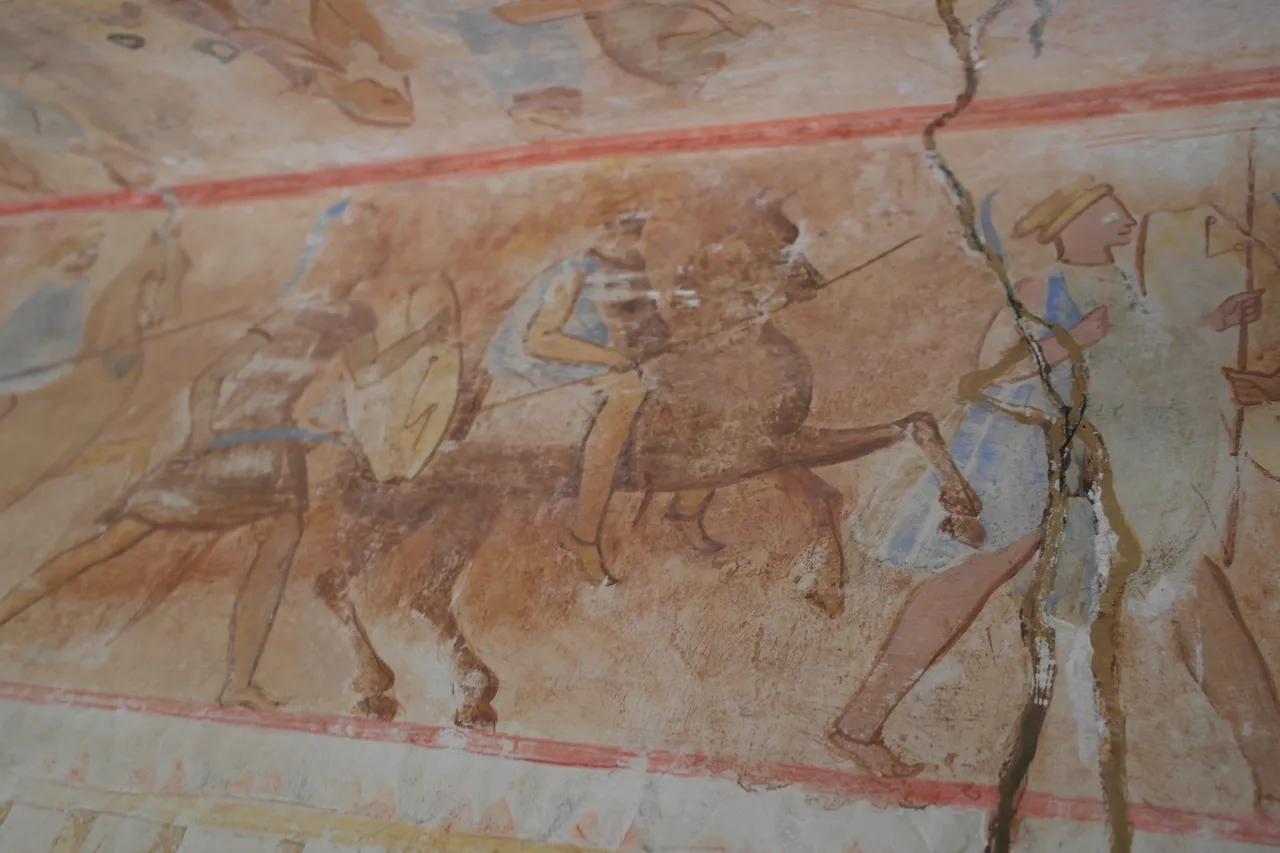
The replica sits in Tyulbeto park on the edge of town and opens daily 09:00 to 17:00; a ticket is about 3 euros (6 leva), with students around 1 euro, and entry is free on the last Monday of the month. Budget twenty minutes or so - it’s small, but the artistry rewards a slow look.
What most guidebooks skip: this single tomb is just the famous corner of a much bigger story. Kazanlak sits in the Valley of the Thracian Rulers, a landscape dotted with more than a thousand burial mounds around the ancient royal city of Seuthopolis. Several other tombs (Golyama Kosmatka, Ostrusha and more) can be visited seasonally out in the fields, and gold finds from them are the highlight of the town’s Iskra History Museum. Our guide to the Thracian tombs of Kazanlak covers which mounds you can enter and where the gold actually is. If you’ve got a car and any interest in the ancient world, the Thracian mounds can easily fill a half-day on their own.
The Rose Museum and where the oil actually comes from
To connect the flower to the famous oil, the one place to go is the Museum of Rose in Kazanlak, the only museum in the world dedicated entirely to rose-growing and rose-oil production. It grew out of a 1967 exhibition and became a full rose museum by 1969; the collection runs across three halls of old copper stills, storage vessels and photographs, and includes a reconstruction of an oil store and the region’s first rose-oil testing laboratory from 1907.
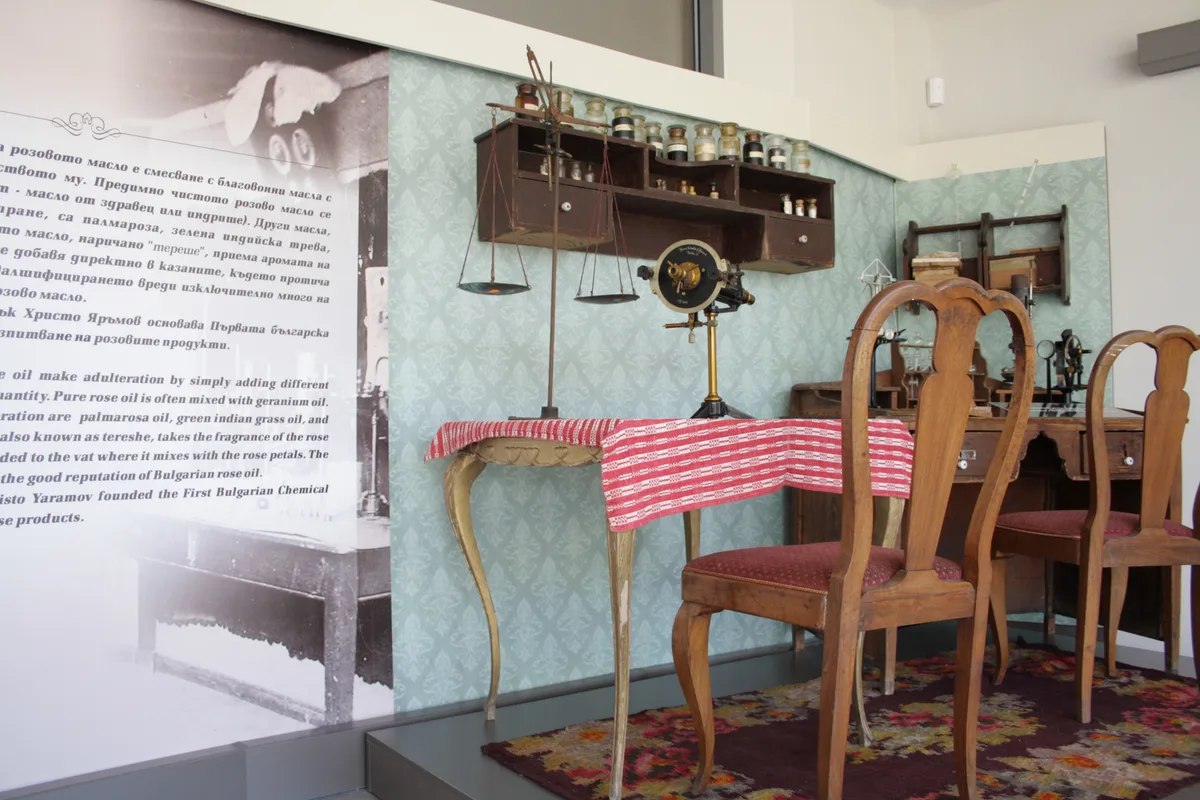
It’s open daily 09:00 to 17:30, and tickets are about 3 euros for adults and 1 euro for students. You’ll want to pair it with a working distillery if you can. Several producers around the valley run tours in the harvest season where you can watch petals go into the still and smell the difference between rose oil and the cheaper rose water that comes off the same process. That contrast, the real oil versus what most souvenir bottles actually contain, is the most useful thing you will learn all trip, and it’ll save you money at the gift stalls.
A quick buyer’s note, since everyone leaves with something: genuine rose oil (rose otto) is sold in tiny vials and is expensive for a reason, given that 3,000 kg of petals go into a single kilo. Rose water, by contrast, is cheap, pleasant and everywhere. Neither is a scam; just know which one you’re paying for.
Prices, euros and practical tips
Bulgaria adopted the euro on 1 January 2026, so you pay in euros now, at the fixed rate of 1 euro to 1.95583 leva. You’ll still see prices quoted in leva in older guides and on some signs (dual price tags were required to 8 August 2026 and have since ended), but those lev figures are just the pre-changeover amounts for reference. Carry a little cash: the museums and rural distilleries take small notes more happily than cards.
Realistic budgeting for the two main sights: the Museum of Rose and the Thracian Tomb replica are each around 3 euros, so the core of a Kazanlak visit costs very little. The bigger cost is time and transport rather than tickets. Prices and opening hours do drift, so treat these as a guide and confirm on the day.
Spend at least a half day in Kazanlak for the Rose Museum and the tomb; make it a full day or an overnight if you want distilleries, the Thracian mounds, or the festival. For photographers, the fields shot best in the soft early-morning light during harvest, which happens to be exactly when the picking is on, so an early start earns its keep twice over.
How to get to Kazanlak
Kazanlak isn’t on the main tourist circuit, so plan the journey rather than winging it.
From Plovdiv is the easy option and the base I would recommend: about 103 km, with buses taking around two hours (roughly two a day) plus one daily train, or about an hour by car. Plovdiv’s old town makes a far nicer evening than Kazanlak itself, so many people day-trip from there. See what else fills a Plovdiv stay in things to do in Plovdiv.
From Sofia it’s about 170 km and three hours each way by bus (around two direct services a day) or train (around four a day). Doable as a long day trip, but an overnight is kinder, and essential over festival weekend when everything books up. New to the country? Start with things to do in Sofia. And for what else is happening around the country that month, see our Bulgaria events calendar.
By car is the most flexible way to work the valley, letting you chain the distilleries, the Rose Museum and the scattered Thracian mounds in a single loop that no bus timetable will match. If you’re renting, our guide to car rental in Bulgaria covers the practicalities.
From the coast (Varna or Burgas) there’s no quick direct route; come via Plovdiv or Stara Zagora, or drive, allowing four to five hours.
Is it worth it, and what to pair it with
If your trip already runs through Plovdiv or central Bulgaria in May or early June, the Valley of Roses is an easy yes: a UNESCO fresco, a genuinely unique museum, and, with any luck, the sight and smell of a harvest that supplies half the world’s perfume houses. Outside that window it is a slower sell, since the fields are bare and the festival is the main event, though the tomb and museum still stand up year-round.
The smart way to fit it in is as a central-Bulgaria pairing rather than a standalone pilgrimage. Base in Plovdiv, take the tomb and Rose Museum in a day, and add the Thracian mounds if the ancient world grabs you. To see how Kazanlak connects to the country’s headline stops, follow the 7-day Bulgaria itinerary; for another slice of living heritage nearby, the frozen-in-time revival town of Koprivshtitsa is on the same central-mountain axis, and for the country’s most famous cultural site, Rila Monastery is the natural companion piece. For something completely different on the ridge straight above Kazanlak, the abandoned communist monument of Buzludzha makes a strange, memorable pairing.
Photos
Admission and opening hours
- Admission price
- Museum of Rose: adult about 3 EUR, student about 1 EUR. Thracian Tomb (the replica): adult about 3 EUR (6 leva), student about 1 EUR (2 leva); free on the last Monday of the month.
- Opening hours
- Museum of Rose 09:00-17:30 daily; Thracian Tomb replica 09:00-17:00 daily.
Bulgaria switched to the euro in January 2026, so pay in euros; old lev figures you still see quoted are just the pre-changeover amounts. Prices and hours change, so confirm on the day, and bring a little cash. During the Rose Festival some events (parade seating, organised rose-picking rituals) need tickets booked ahead.
Details checked: July 5, 2026
Distance
- Sofia ≈170 km · about 3 hours by bus or train Around two direct buses and four trains a day. Easiest as an overnight rather than a same-day round trip, especially during the festival.
- Plovdiv ≈103 km · about 2 hours by bus The closest big city and the most convenient base. Two buses and one train a day; roughly an hour by car.
- Varna No quick direct route from the coast; come via Plovdiv or Stara Zagora, or drive (roughly 4-5 hours).
Read also

What to see · 13 min read
Skiing in Bulgaria vs the Alps: Honest Verdict
Verified · September 13, 2026Bansko's last published 6-day pass was 341 EUR; Livigno's 2026-27 rate is 374.50 EUR. Real lift-pass, terrain and rental numbers, checked Sep 2026.

What to see · 12 min read
Pirin National Park: Vihren, Trails & Lakes
Verified · September 3, 2026Pirin National Park: the Vihren hut road closure, UNESCO peaks, 27 marked trails, glacial lakes and Bansko visitor centre hours.

What to see · 12 min read
Climbing Musala: The Balkans' Highest Peak
Verified · August 29, 2026Climbing Musala, the Balkans' highest peak at 2,925 m: the Yastrebets gondola schedule and price, the real hiking time from the top station, huts and gear.

What to see · 9 min read
Learning to Ski in Bansko: Schools & Lessons
Verified · August 25, 2026Bansko ski lessons: group and private prices in euros from official schools, Banderishka Polyana base, plus the lift pass you still need. Checked 2026.