
Car Rental in Bulgaria: Tips & Where to Book 2026
Car rental in Bulgaria explained: real deposit and insurance traps, the e-vignette you must buy, age rules, driving in the mountains, prices in euro. 2026.
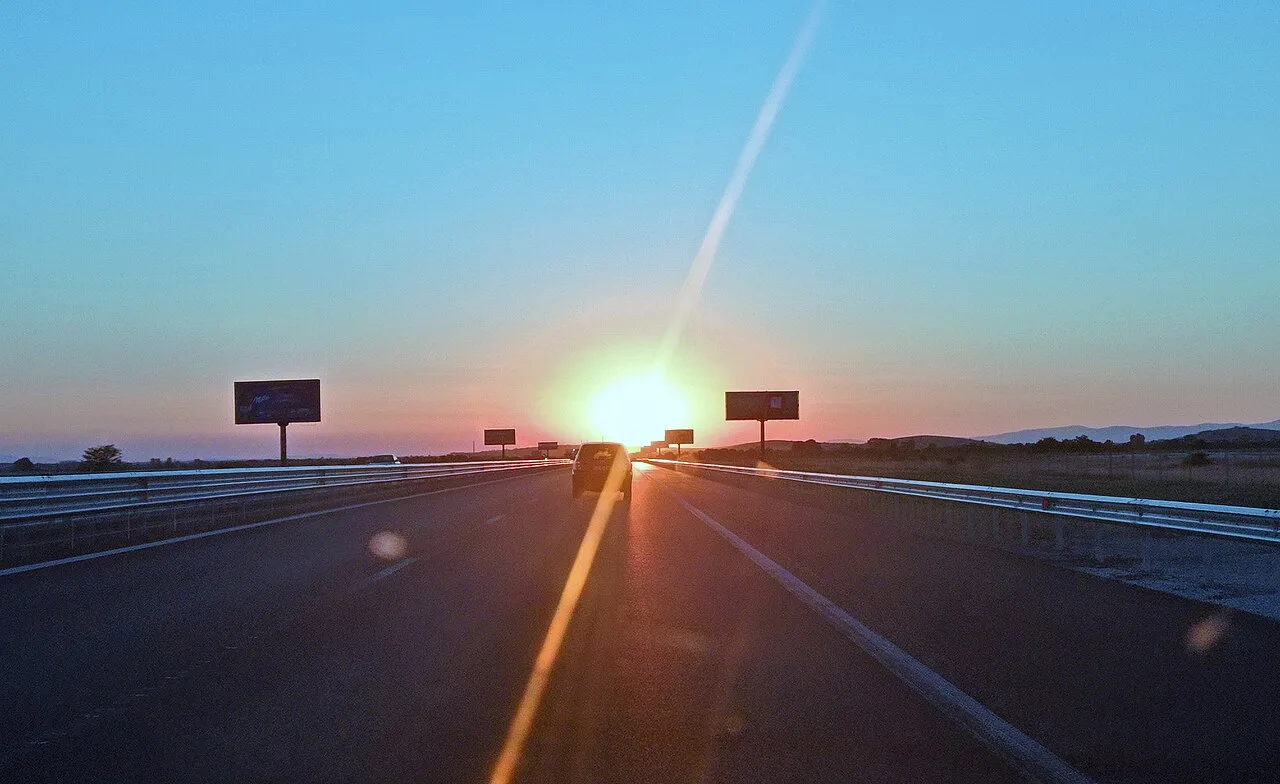
Renting a car is the smart move in Bulgaria the moment you want to leave Sofia, because the mountains, Rila Monastery and the small Black Sea towns are exactly where buses run twice a day and trains crawl. Book through an aggregator that shows the deposit and insurance upfront, budget from roughly 15-25 EUR a day for an economy car off-season, carry a real credit card for the deposit, and buy the electronic vignette on day one. Do that and Bulgaria is one of the easiest and cheapest countries in Europe to drive.
The catch is that the headline “6 EUR a day” you see on comparison sites is never the real number. What actually empties your wallet sits in the small print - the deposit hold, the insurance excess, the e-vignette almost nobody warns you about, the young-driver surcharge, a cross-border fee the moment you glance at a map of Greece or Serbia, and two mountain roads where a cheap car on summer tyres will ruin your week. All the figures below are in euro, the currency Bulgaria adopted on 1 January 2026.
Do you even need a car in Bulgaria?
For Sofia itself, no. The capital has a clean metro, cheap taxis and a walkable centre, and a car is just a parking headache. Skip the rental for your city days and pick it up when you’re ready to leave.
Everywhere else, a car pays for itself. The public-transport gaps are real: reaching the Rila Monastery by bus means one slow daily service or a pricey tour, the Seven Rila Lakes trailhead is awkward without your own wheels, and hopping between the little coastal towns south of Burgas is painful on timetables. A car turns a two-day monastery trek into a relaxed afternoon and lets you actually follow a plan like our 7-day Bulgaria itinerary. The driving is easy too: the motorways are good, distances are short, and almost nowhere worth seeing sits more than a two-hour drive away.
What does car rental in Bulgaria actually cost?
Off-season, an economy car (think Skoda Fabia, Opel Corsa) starts around 15-25 EUR a day and drops lower on longer rentals. In July and August, when the Black Sea coast fills up, the same car can double, and anything bigger, an SUV for the mountains or a seven-seater, climbs faster still. Book two or three weeks ahead for summer - walk-up rates at the airport in August are brutal, and if you don’t book early, you’ll be paying for it.
But the daily rate is only half the picture. Two things decide what a Bulgarian rental really costs you, and neither shows up in the big number: the deposit and the insurance excess. Get those wrong and a “cheap” rental turns into a stressful, expensive one.
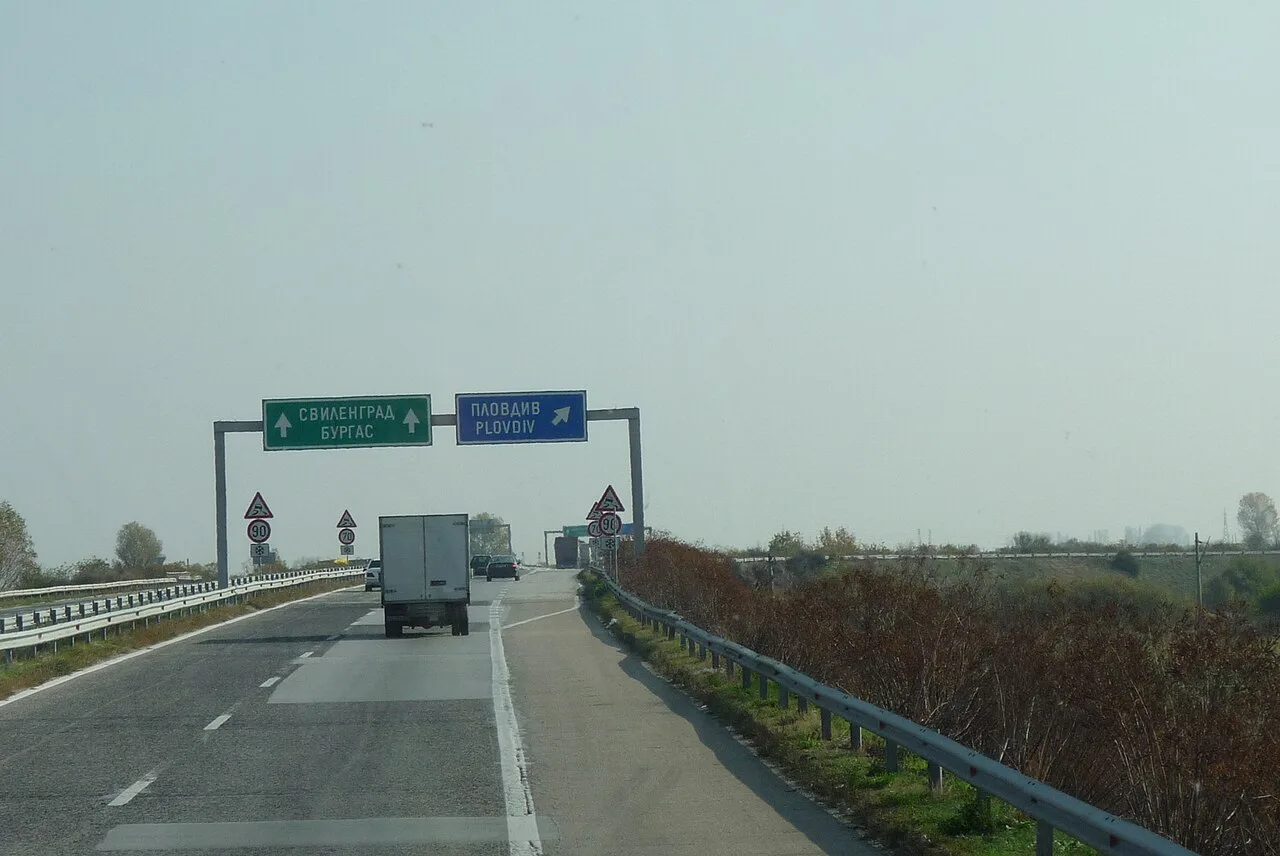
The e-vignette: what a rental might not include
Bulgaria collects its road toll electronically: your number plate is the ticket, not a sticker on the glass, which stopped being a thing in 2019. The obligation reaches further than most visitors expect - it follows you off the motorways and onto most first-class national roads too, and a traffic camera doesn’t care that you didn’t know.
The part specific to a rental is whether yours already has one loaded. Some suppliers bundle an annual vignette into the daily rate; plenty hand you the keys with nothing on the plate, and it’s on you from the first junction. Ask at the desk, and if you’re not covered, buying one takes two minutes on the official portal (web.bgtoll.bg) or its app - before you pull onto a motorway, not after a fine.
For a passenger car up to 3.5 tonnes, the 2026 tiers make this a non-issue money-wise: about 5.30 EUR for a single day, 6.60 EUR for a weekend, 10 EUR for a week, 19.90 EUR for a month and 64.50 EUR for a year, figures that already carry the roughly 30% increase from 1 August 2026. A week’s holiday needs nothing more than the weekly tier. For the complete toll picture, plus the rules that matter to every driver and not just a renter, see our driving in Bulgaria guide.
Deposit and insurance: where the real money hides
Every rental blocks a security deposit on the main driver’s card, and it must usually be a credit card in that driver’s name. Debit and prepaid cards are refused by a lot of suppliers, and turning up at the desk with only a debit card is a classic way to lose your booking. A few local firms accept debit for an economy car, but don’t count on it.
The deposit itself scales with the car: around 100-120 EUR for an economy class, climbing to 400-450 EUR for a premium or luxury car, with broader international ranges going higher for big SUVs. It’s a hold, not a charge, released after you return the car undamaged, but it needs real available credit on your card for the length of the rental.
Then there’s the excess. Bulgarian rentals normally include third-party liability plus a basic collision damage waiver (CDW), which sounds reassuring until you read the deductible. The standard CDW typically leaves you liable for the first 800-2,000 EUR of any damage, and it usually doesn’t cover the tyres, wheels and rims, windscreen and glass, the underside, or the interior at all. On Bulgaria’s patchier rural roads, a cracked windscreen or a kerbed alloy is exactly the kind of thing that happens, and exactly what the basic policy leaves you paying for.
You have two sensible ways to close that gap. The rental desk will sell you a super CDW or full-coverage upgrade that buys the excess down toward zero and adds glass and tyres, often around 25-40 EUR a day, which on a week’s rental is real money. The cheaper route is a standalone car-hire excess policy (from a travel insurer, or bundled with some bank cards like Revolut), which covers you to reclaim the excess for a fraction of that. Whichever you pick, decide before you reach the counter, because the upsell under time pressure at the desk is where people overpay.
Age, licence and the young-driver surcharge
Most suppliers rent to drivers 21 and over who have held a licence for at least a year. Bump up a class and the bar rises: many hold premium cars to 23, and luxury or large vehicles to 25 with five years of experience. If you’re 21 to 23 you can usually still rent, but expect a young-driver surcharge, commonly 6 to 30 EUR a day depending on the company - Top Rent A Car, one of the country’s biggest local chains, charges about 8.40 EUR a day for it, doubles your deposit, and limits you to economy and compact cars.
Paperwork is simple. Bring your physical driving licence, your passport or ID card, and the credit card for the deposit. EU and UK licences are fine as they are; if yours isn’t in the Latin alphabet (many non-EEA licences), carry an International Driving Permit alongside it. Adding a second driver is cheap but not free - budget somewhere around 4-5 EUR a day, sometimes capped near 60 EUR for the whole rental - and that person has to show their licence and ID at the desk too, so don’t plan to swap drivers off the books.
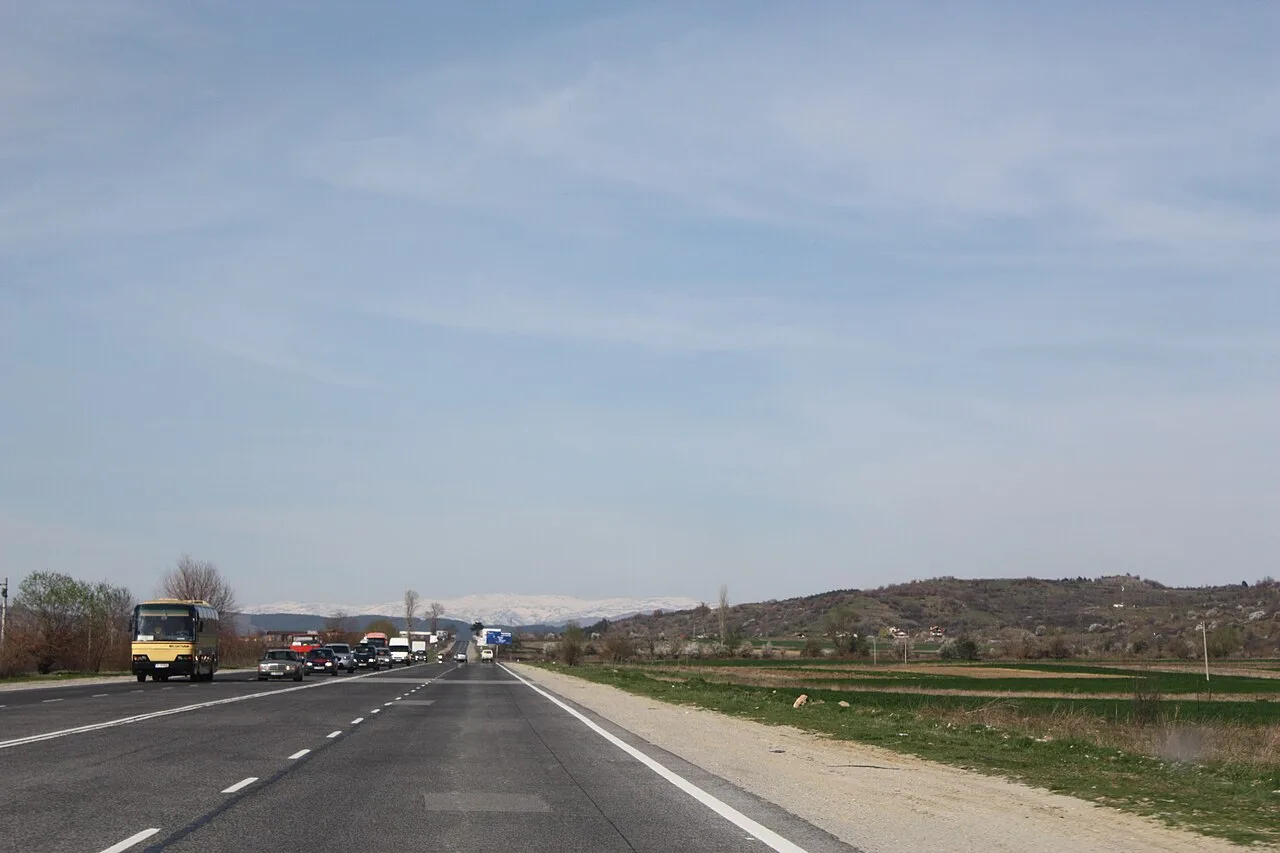
Taking a rental car across the border
Fancy a day trip to Thessaloniki, Bucharest or Belgrade while you’re based in Bulgaria? Most local suppliers will let you, but it’s not something you improvise at a checkpoint. At Top Rent A Car, taking a car into Greece, North Macedonia, Serbia, Romania or the European part of Turkey needs prior approval and a scanned copy of your licence and passport at least one working day before pickup, after which the company issues a power of attorney valid until the end of your rental, capped at 25 days.
None of that is free. The administrative charge runs from roughly 80 EUR for an economy car up to 160 EUR for the largest class, and it covers a single country - add a second border on the same trip and you pay another 50% of that first fee. The security deposit also doubles the moment “going abroad” is ticked, stacking on top of any young-driver doubling above, so a cross-border trip in a small car can mean a deposit north of 400 EUR rather than the 100-120 EUR you’d block staying inside Bulgaria. Terms vary by supplier, so get the exact fee and the paperwork deadline confirmed in writing before you plan the detour.
One-way rentals and the fuel policy
Picking up in Sofia and flying home from Varna, or starting on the coast and finishing in the capital, is normal here, and most suppliers will do it - for a fee that’s worth checking before you book two separate legs as if they were free. The same operator prices a different-city drop-off from around 110 EUR (Burgas to Varna, or Plovdiv to Burgas) up to 190 EUR (Sofia to Varna), and a cross-border drop-off costs a lot more - Varna to Bucharest lands around 350 EUR, Sofia to Thessaloniki around 400 EUR. Returning to a different branch inside the same city is far cheaper, closer to 20 EUR, though a Sofia Airport terminal return can add its own small handling charge on top.
Fuel is simpler and stricter almost everywhere: Bulgarian rentals run full-to-full - you collect a full tank and hand back a full tank, ideally with a receipt to prove it. Miss that and expect a per-litre “missing fuel” charge that sits well above the pump price, plus a flat administrative fee on top of it; together that’s easily 50 EUR or more for a half-empty economy tank, which is exactly why the smart move is topping up at the last station before the return desk, not the first one you happen to pass.
Driving in Bulgaria: mountain roads and the winter tyre law
Motorways are the straightforward part: fast, well-surfaced, and covered by the e-vignette above. Off them, Bulgaria’s best driving roads - up into the mountains, out to the monasteries - are also its slowest: narrower, bendier, and best not rushed. A normal rental copes fine with them in summer; just don’t trust the map’s time estimate for anything that climbs.
Winter changes the arithmetic. The rule runs from 15 November to 1 March, and wants either winter or all-season rubber carrying the M+S mark or the 3PMSF snowflake, or plain summer tyres if the tread is still at least 4 mm deep. Miss that and the fine sits around 26 to 102 EUR - and on an icy mountain road, a car on bald summer rubber is a genuinely bad idea, not just an expensive one. Some suppliers already build this into the price rather than the small print: Top Rent A Car, for instance, fits winter tyres as standard for its own 1 November to 28 February window, a season that starts two weeks ahead of the legal one and ends a day short of it, with snow cables or chains available to buy and keep for a one-off 35 EUR. Don’t assume every company matches that - confirm before you book a winter trip rather than at a mountain checkpoint. The rest of the legal picture - the exact enforcement, the speed cameras, the Sofia low-emission zone - lives on our driving in Bulgaria guide.
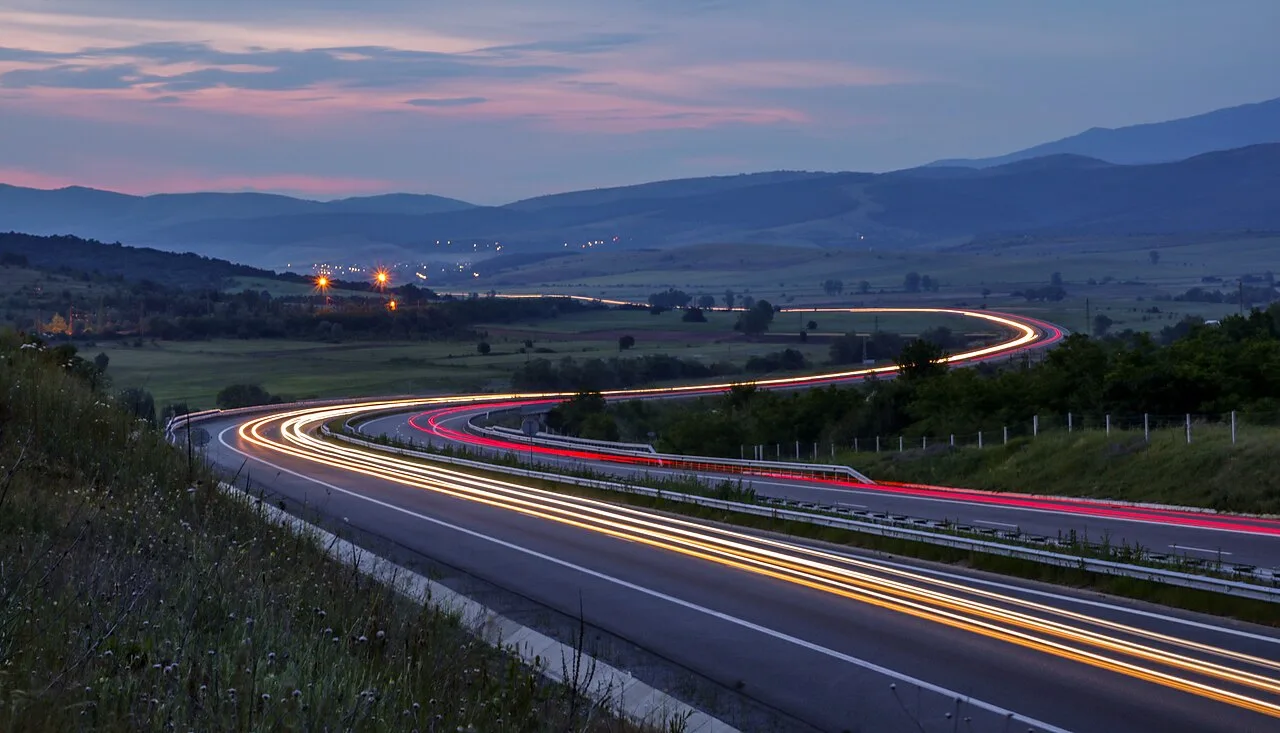
Where should you book?
Sofia Airport (SOF) is the main pick-up point, with desks for the international chains and a stack of local firms in the arrivals halls of both terminals. Plovdiv (PDV) and Varna (VAR) airports have rentals too, and Varna or Burgas make more sense if your trip is only the Black Sea coast and you never touch Sofia. Still weighing up the three? Our airport-by-airport comparison for Bulgaria sets out which one actually suits your route.
On who to book with, the honest answer is to compare rather than walk up. The international brands (Sixt, Europcar, Enterprise) are predictable and reassuring, but Bulgaria’s local suppliers are often noticeably cheaper for the same car, and the catch with the cheapest local names is exactly the deposit-and-excess small print above. The practical middle ground is an aggregator that lists both the chains and vetted local firms and, crucially, shows the deposit and insurance terms before you pay, so you’re comparing the real total, not a teaser rate. Read the excess and the deposit line on the actual offer, not the headline price, and none of the traps above will catch you out.
Add it up and the advice barely changes, it just gets more specific: compare suppliers on an aggregator that shows the deposit and excess before you pay, and if a border crossing or a one-way drop-off is part of the plan, get that fee confirmed in writing at booking rather than at the counter. Budget the vignette, expect the deposit hold, and treat the cross-border and one-way charges as a real line item instead of an afterthought, and the sums still work out firmly in Bulgaria’s favour next to renting almost anywhere else in the EU. If none of that suits a short trip, a private transfer to your hotel - or straight to Bansko - costs little by European standards and skips all of the above entirely; for touring the mountains, the monasteries or the coast, though, a rental car booked with your eyes open remains the best-value way to see the country.
Photos
Admission and opening hours
- Admission price
- Economy cars from roughly 15-25 EUR/day off-season, more in July-August and for SUVs. Deposit blocked on a credit card from about 100-120 EUR (economy) up to 400-450 EUR (premium). Full excess-waiver insurance adds around 25-40 EUR/day; the e-vignette a rental needs runs 5.30 EUR (one day) to about 64.50 EUR (annual), after the 30% rise that took effect on 1 August 2026.
Prices moved to euro when Bulgaria joined the eurozone on 1 January 2026 (fixed 1.95583 leva = 1 euro); dual price tags were mandatory until 8 August 2026 and have since ended, so expect euro only. Rates vary by supplier, season and car class - confirm the deposit, excess and vignette on your own booking before you pay.
Details checked: July 5, 2026
Read also

Entertainment · 10 min read
Plovdiv Young Wine Festival: November 2026 Guide
Verified · October 6, 2026Plovdiv's Young Wine Festival fills Old Town houses on 20-22 November 2026: how the tasting tokens work, hours, which day to go and where to stay.

Entertainment · 13 min read
Bansko Après-Ski: Bars, Mehanas & Nightlife
Verified · October 3, 2026Bansko after the lifts stop at 16:15: Happy End at the gondola, huts on the way down, Old Town mehanas with folk bands and kapama, bars open to 4am.

What to see · 13 min read
Skiing in Bulgaria vs the Alps: Honest Verdict
Verified · September 13, 2026Bansko's last published 6-day pass was 341 EUR; Livigno's 2026-27 rate is 374.50 EUR. Real lift-pass, terrain and rental numbers, checked Sep 2026.

Transport · 12 min read
Sofia to Borovets: 70 km, ~1h, Bus from €5
Verified · September 5, 2026Sofia to Borovets (~70 km, 1-1.5h): public bus via Samokov from ~€5, seasonal shared shuttles from €8/pp, private transfer from ~€79.