
Which Airport to Fly Into for Bulgaria 2026
Sofia, Varna or Burgas? Which Bulgaria airport to fly into for your trip, what each one is good for, and how to get from the plane to the centre. 2026.
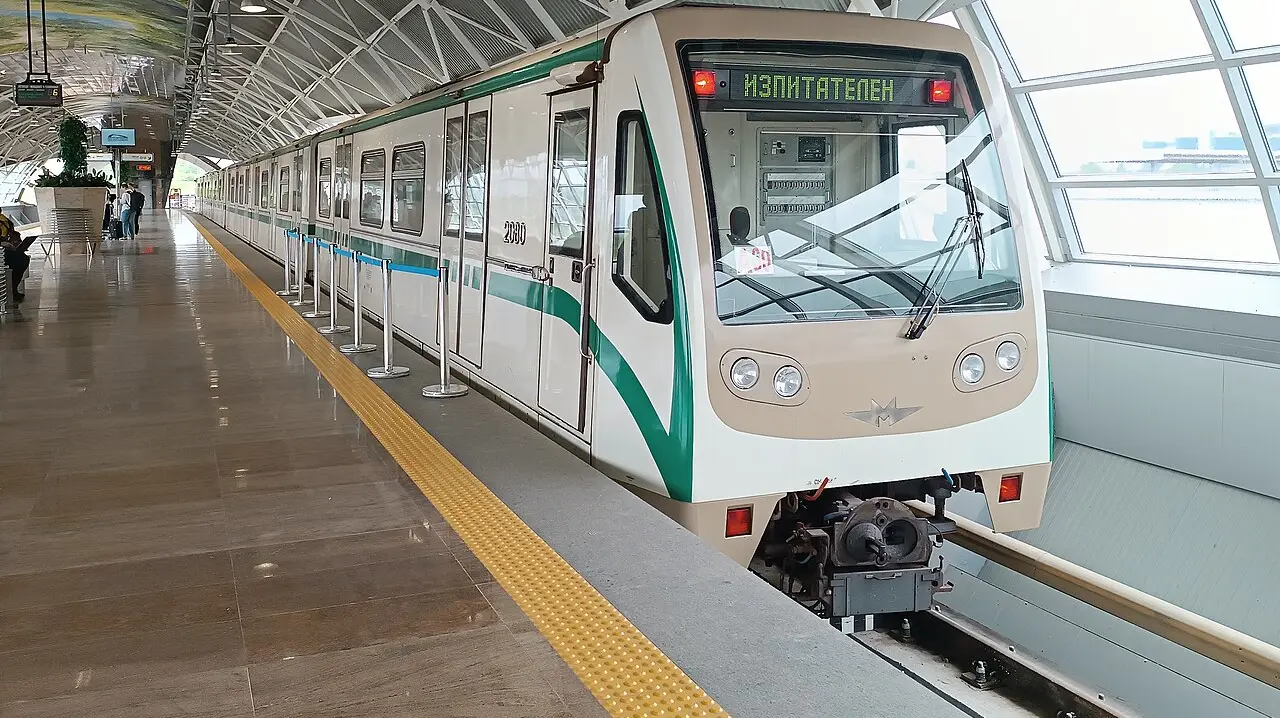
For most trips to Bulgaria, it’s Sofia (SOF) you fly into - the capital’s airport and by far the country’s biggest, with the widest choice of airlines and a metro line that drops you in the centre in under twenty minutes. Fly into Varna (VAR) or Burgas (BOJ) instead only if your holiday is the Black Sea coast and you never need the interior, because those two are seasonal, mostly-summer airports that sit right next to the beaches. Pick the airport that matches where you’re actually going, and you’ll save yourself a long, unnecessary transfer.
That’s the short version. The longer answer depends on your dates, your budget and which half of Bulgaria you want, so here’s how the three airports really compare, who flies where, and exactly how you get from the arrivals hall to your bed.
Sofia (SOF): the default choice
If you’re not sure, book Sofia. It handled 8.4 million passengers in 2025 (up from 7.9 million in 2024, a record year), which is more than four times either coastal airport, and that scale is the point: it has the most routes, the most airlines and the most flights per day, so it’s almost always the cheapest and most flexible way into the country. Both Wizz Air and Ryanair base aircraft here, alongside the national carrier Bulgaria Air, so you get a genuine mix of low-cost and full-service options from across Europe.
Sofia is also the right airport for far more than the city. It’s the launchpad for the mountains and monasteries: Rila Monastery, the ski resort at Bansko and the old towns of the interior all start from here, and it’s where the 7-day Bulgaria itinerary begins. Plovdiv is an easy two hours away by bus or train, so even a trip built around Bulgaria’s second city is usually best flown into Sofia rather than its own tiny airport.
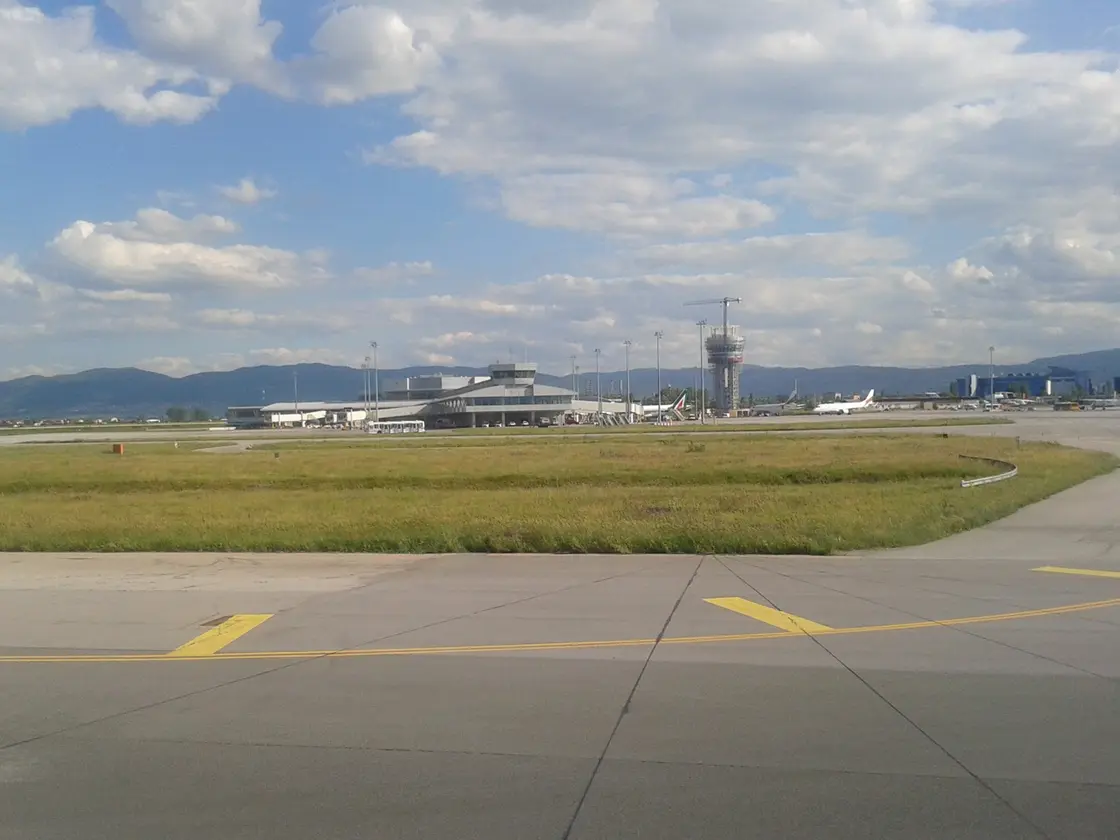
Terminal 1 or Terminal 2? Check before you fly
Sofia has two terminals about 1.5 km apart, and which one you use depends on your airline, not your destination. As a rule of thumb, Terminal 2 (the newer building, opened in December 2006) handles the full-service carriers, while the older Terminal 1 takes most low-cost and charter flights. That split isn’t absolute and airlines do move between them, so the only reliable move is to check which terminal your specific flight uses when you book, rather than trusting a general list.
The two are linked by a free shuttle bus running roughly every 15 to 20 minutes (about a five-minute ride), so a mix-up is fixable but costs you time. This matters most on arrival for one reason: the metro station is at Terminal 2. Land at Terminal 1 and you take the shuttle across to reach it.
Getting from Sofia Airport to the centre
This is where Sofia quietly beats most European capitals. The M4 metro line runs directly from the airport into the city, with the station right by Terminal 2, and it reaches Serdika, the central interchange, in under twenty minutes. No traffic, no haggling, trains from about 05:20 until 23:38 on weekdays (23:46 at weekends). A single ride costs 0.80 euro (1.56 leva) on a card or from the vending machine, and there’s a daily cap of about 2 euro (3.91 leva) on public transport, which is close to a rounding error against a taxi.
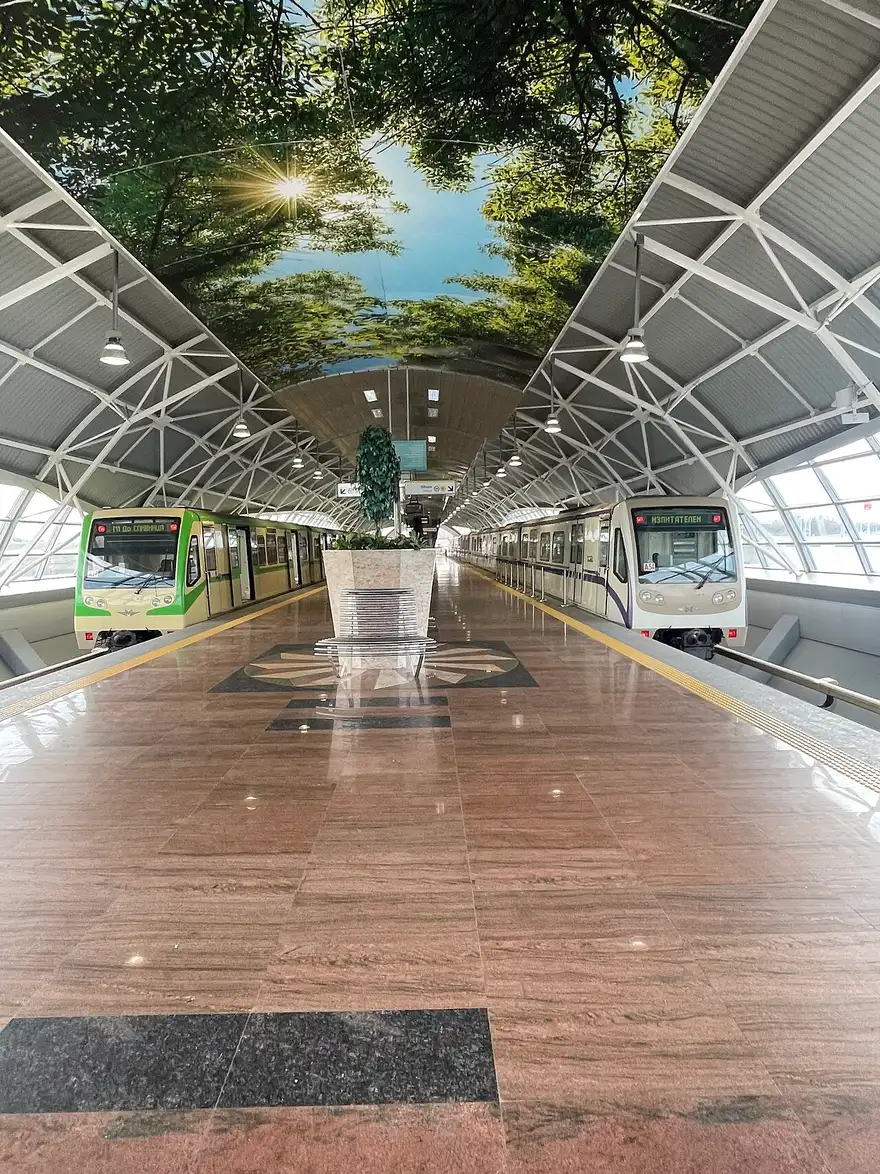
If you land late, have heavy bags or are heading somewhere the metro doesn’t, the two alternatives are the bus and a taxi. Bus 84 runs to the centre (near the City Garden on Gen. Gurko Street) for the same 0.80 euro fare, but it takes around 40 minutes and crawls in traffic, so the metro wins unless your hotel is right on its route. A taxi to the centre runs about 13 to 15 euro (25 to 30 leva) with the airport’s contracted company, and here’s the one warning worth heeding at any Bulgarian airport: use the official taxi desk in arrivals, not the drivers who approach you in the hall. The freelancers are the classic overcharging trap, and skipping them removes the only real hassle at SOF. A pre-booked transfer or car does the same job door to door - our full Sofia Airport transfer guide compares the metro, bus, taxi and private transfer in detail.
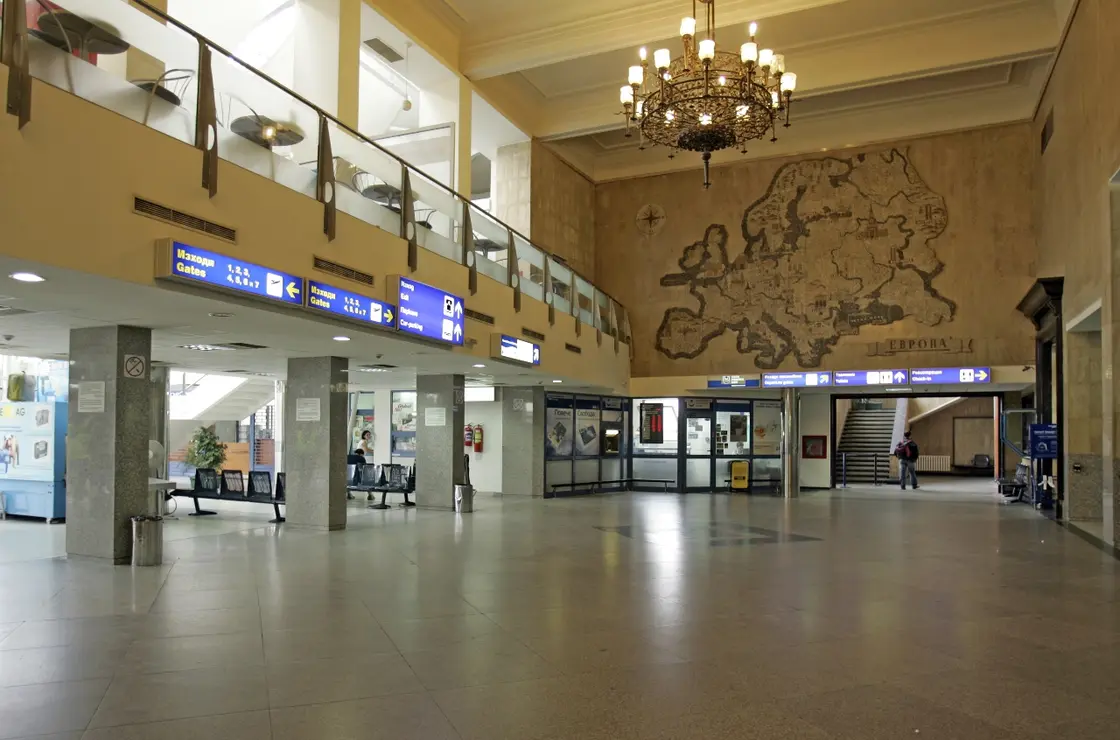
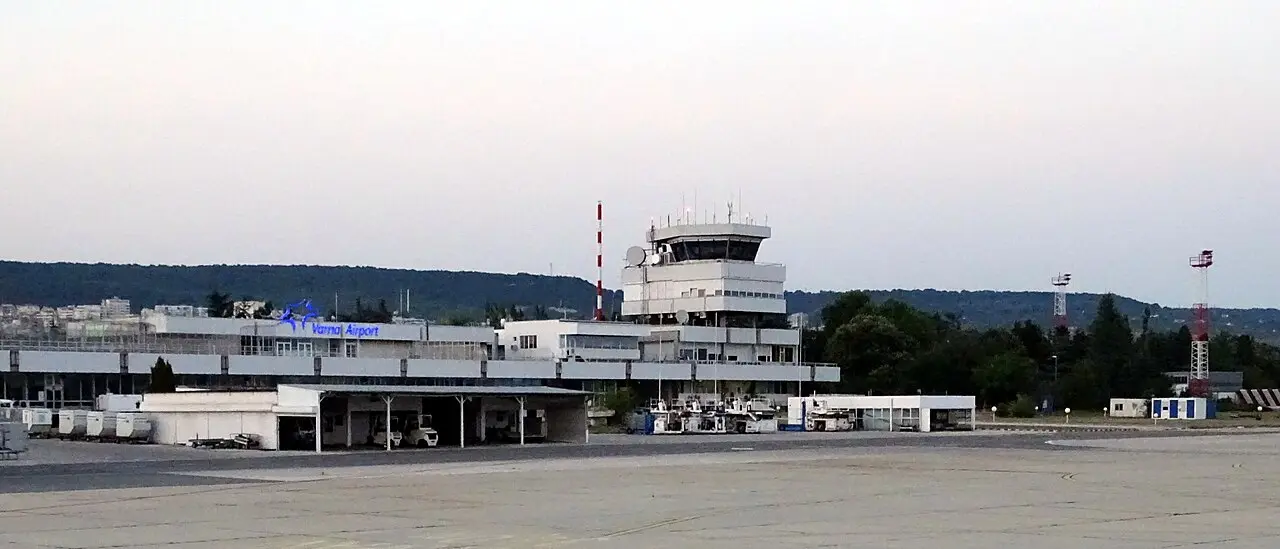
Varna (VAR): the northern coast and the resorts
Varna is the airport for the northern Black Sea coast. It sits about 7.5 km from central Varna near Aksakovo, and it is the natural entry point for the city itself plus the big resort strip at Golden Sands and the wider northeast of the country. It’s smaller than Sofia by a wide margin, at 1.87 million passengers in 2025, but that was a near-20 percent jump on 2024, and the traffic is heavily seasonal: the airport is busy from the end of May to the start of October and much quieter the rest of the year. In practice that means plenty of direct summer flights from across Europe and far thinner options in winter, so it pays to line your flight up with the best time to visit Bulgaria for what you actually want.
Fly into Varna if your trip is built around the coast rather than the capital. You land close to the beaches instead of driving five and a half hours across the country from Sofia, and the city itself earns a couple of days: our guide to Varna covers the Sea Garden, the Roman baths and the world’s oldest gold. If you’re already in the capital and heading east, our guide on Sofia to the Black Sea coast compares the internal flight, the overnight train and the bus. Getting out of the airport is simple, too. Bus 409 runs from the stop at the terminal into the city centre in about 20 minutes, and carries on to Golden Sands in roughly 50 minutes (around 25 km up the coast), stopping at the resorts along the way. For a late arrival or a hotel further out, a transfer or taxi is the easier call.
Burgas (BOJ): the southern coast and the charter capital
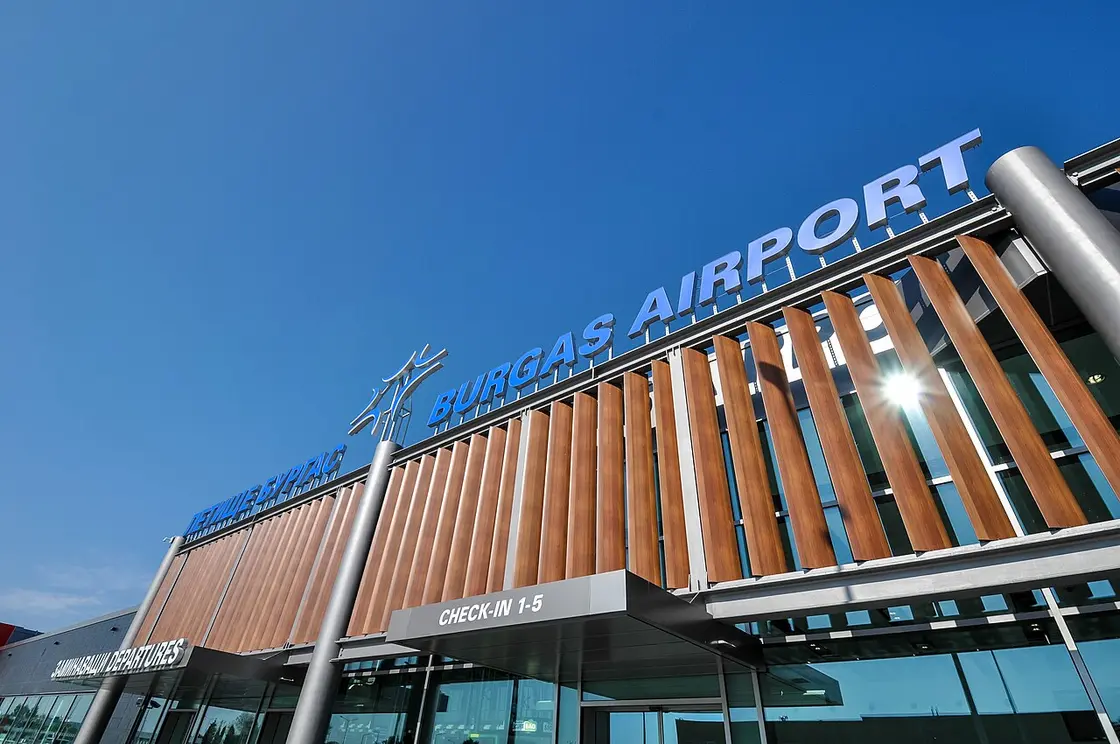
Burgas is Varna’s twin at the southern end of the coast, and it is the most seasonal of the three by some distance. This is Bulgaria’s charter airport: through the summer it fills with holiday flights from the UK, Germany, Poland and Scandinavia (think Manchester, Birmingham, Cologne, Stuttgart and a string of Polish cities), and outside the season it goes quiet. It handled about 1.8 million passengers in 2025 through a single modern terminal, across 51 airlines and 67 destinations, and its two biggest markets were Poland (409,000) and the UK (395,000). If your booking is a package or a charter to the beach, there’s a good chance it lands here whether you chose it or not.
One thing to factor in if you are planning outside high summer: Burgas closed completely for the winter of 2025/26, from the start of November to the end of April, while Fraport rebuilt its runway in a project that ran past 60 million euro. The new runway opened on 29 April 2026 and flights resumed on 1 May, but even in a normal year Burgas thins out to almost nothing by November while Varna keeps flying. Check the published winter schedule before you build an off-season trip around it - our head-to-head on Varna or Burgas works through what that means for choosing a base.
The reason to want Burgas is what sits around it. It’s the closest airport to the southern resorts and old towns: Sunny Beach is about 28 to 30 km away (roughly half an hour by road), and the UNESCO island town of Nessebar and the wooden-house old town of Sozopol are both an easy hop down the coast. The airport is about 10 km from central Burgas at Sarafovo, and bus 15 links it to the city’s South bus station in around 25 minutes; from there, intercity buses fan out along the coast. As at the other airports, for Sunny Beach or a specific hotel with luggage in tow, a booked transfer is usually the least stressful option.
What about Plovdiv?
Bulgaria does have a fourth airport, Plovdiv (PDV), but for most travellers it’s not a real option. It runs only a handful of seasonal low-cost routes, so the schedule is thin and the fares are rarely competitive. Even if Plovdiv is your destination, you will almost always find a cheaper, more convenient flight into Sofia and take the two-hour bus or train across. Treat Plovdiv airport as a lucky bonus if a route happens to line up with your dates, not as a plan.
So which one should you book?
Line the three up and the decision is usually quick:
- Touring the country, the mountains, the capital, or anything inland? Fly into Sofia. The choice of flights, the prices and the metro into town make it the default, and it connects onward to everywhere. If you plan to pick up a car here, skim our guide to driving in Bulgaria first, the e-vignette and 140 km/h limit catch a lot of first-timers.
- Holiday on the northern coast - Varna city, Golden Sands, the northeast? Fly into Varna and land next to the beach instead of driving across Bulgaria.
- Holiday on the southern coast - Sunny Beach, Nessebar, Sozopol? Fly into Burgas, especially on a summer charter.
- A two-centre trip mixing coast and interior? Look at flying into one airport and out of the other (Sofia in, Burgas out, for example). Bulgaria’s airports make this easy, and it saves you doubling back.
One more practical note for 2026: prices you see on the ground are now in euro, since Bulgaria joined the eurozone on 1 January 2026 at a fixed rate of 1.95583 leva to the euro. During the changeover year you’ll still see both currencies on tickets and price boards, so it is worth keeping a rough conversion in your head. For the passport, visa and Schengen side of arriving, our Bulgaria entry requirements guide covers who needs what in 2026.
Whichever airport you choose, the pattern at all three is the same on arrival: there’s a cheap, honest public-transport option (the metro at Sofia, buses 409 and 15 on the coast), and there’s the official taxi desk or a pre-booked transfer when you would rather go straight to the door. Skip the drivers who approach you in the hall, and getting into Bulgaria is genuinely painless. One thing worth sorting before you land so you can buy tickets and call a transfer the moment you step off the plane: your data connection - our guide to the best eSIM for Bulgaria covers whether you even need one and what to buy. Once you’re settled, our 7-day Bulgaria itinerary, the guide to getting around Bulgaria and the Sofia city guide pick up where the plane leaves off.
Photos
Good to know
Public-transport tickets, taxi fares and flight prices are shown in euro (Bulgaria joined the eurozone on 1 January 2026; fixed 1.95583 leva = 1 euro), dual price tags were mandatory until 8 August 2026 and have since ended, so expect euro only. Fares are seasonal and change - confirm the current price and timetable before you travel.
Details checked: July 5, 2026
Read also

Transport · 12 min read
Sofia to Borovets: 70 km, ~1h, Bus from €5
Verified · September 5, 2026Sofia to Borovets (~70 km, 1-1.5h): public bus via Samokov from ~€5, seasonal shared shuttles from €8/pp, private transfer from ~€79.

Transport · 11 min read
Plovdiv to Pamporovo: Bus & Ski Transfer
Verified · September 3, 2026Plovdiv to Pamporovo is about 80 km via Chepelare. Bus from Rodopi station, winter airport transfer, or drive - how to choose.

Transport · 9 min read
Sofia to Sunny Beach: Bus, Train & Transfer
Verified · August 24, 2026Direct coaches Sofia to Sunny Beach year-round (~7h, from ~€21), train only to Burgas, or a fixed private transfer. Times, stops and when each wins.

Transport · 11 min read
Burgas to Sozopol Bus 2026: €3.37, 40-50 Min
Verified · August 21, 2026Burgas South Sector 5 to Sozopol: bus 3.37 euro, about 40-50 min; taxi/transfer about 30-40 min. Buses about every 30 min. Checked Aug 2026.