
Bulgaria Itinerary: The Perfect 7 Days
A first-timer 7-day Bulgaria itinerary: Sofia, Rila Monastery, Plovdiv and Veliko Tarnovo - real distances, drive times, euro prices and how to get around.
Here’s a seven-day loop for a first trip to Bulgaria that hits the country’s cultural core without ever feeling rushed: the capital, its most famous monastery, the old-town charm of Plovdiv and the medieval drama of Veliko Tarnovo. It runs Sofia - Rila Monastery - Plovdiv - Veliko Tarnovo, roughly 610 km all in, and it works with or without a car. The shape is two nights in Sofia (with a day trip out to Rila), two nights in Plovdiv, and two in Veliko Tarnovo. One thing to sort before you arrive: Bulgaria joined the euro on 1 January 2026, so prices are now in euros, not leva. Small tickets, monastery parking and village cafes still love cash, so you’ll want to carry some.
Not sure a week is your number? Seven days is the sweet spot for this route - five means cutting Veliko Tarnovo, and ten lets you add the Black Sea coast or the Rhodope villages. See how many days you need in Bulgaria for the shorter and longer versions, and the transport hub for how the buses and trains actually connect. If you’d rather build your own route, our overview of the best things to do in Bulgaria sorts the whole country into the handful of experiences worth planning around. And if you’d rather trade the cities for peaks, our Rila and Rhodopes route reworks the same week around the Seven Lakes chairlift, Bansko and the Rhodope mountains.
When to come, and how to get around
You’ll want May, June, September or early October. July and August are hot on the Thracian plain around Plovdiv and busy at Rila; the shoulder months give you warm days, clear mountain air and thinner crowds at the fortress and the monastery. For the full month-by-month picture across coast, mountains and cities, see our guide to the best time to visit Bulgaria.
Now the honest bit about transport, because Bulgaria breaks a couple of European habits. Sofia to Plovdiv, the bus beats the train - about 2 hours by frequent coach versus nearly 4 hours on a roundabout rail line. But the Plovdiv to Veliko Tarnovo leg is the weak link: direct buses are thin (roughly one a day) and the train takes over 4 hours with a change, so this is the stretch where a car or a booked transfer really pays off. And Rila Monastery has no reliable scheduled public bus any more (the old service has been on-and-off since 2020), so from Sofia you’ll either drive, take the daily tourist shuttle, or join a tour.
If you want the freedom to stop where you like, a rental car turns the whole route into one flowing week - and it’s the only comfortable way to link Plovdiv to Veliko Tarnovo and to reach Rila on your own clock.
Days 1-2: Sofia
Give the capital two nights and you’ll be surprised how relaxed it’s for a city of its size. Sofia wears its long history lightly: Roman Serdica ruins sit under a glass floor in the metro underpass, Ottoman, Habsburg and Soviet layers stack up within a few streets, and Vitosha mountain rises straight off the end of the boulevards.
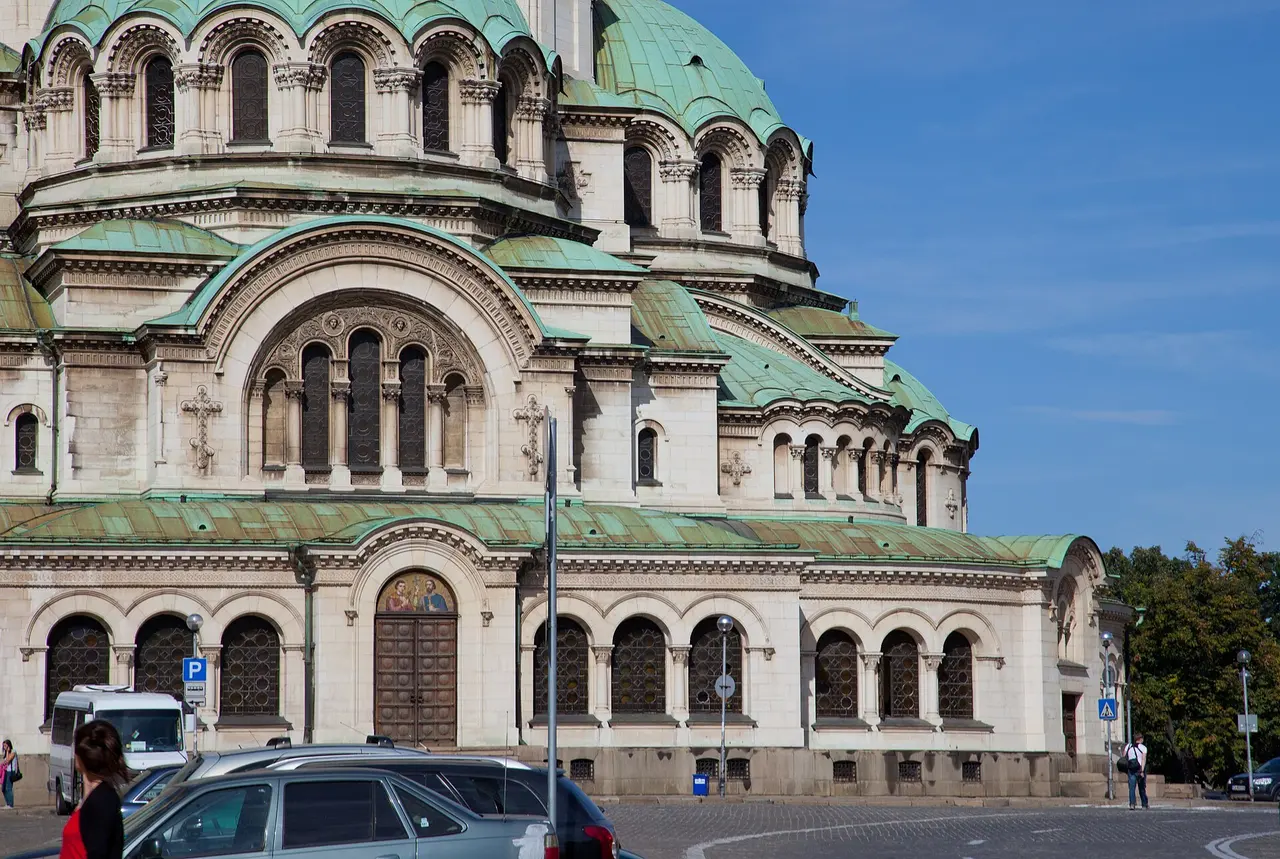
Day one is the centre on foot. Start at the Alexander Nevsky Cathedral (built 1882-1912 to honour the Russian and Bulgarian dead of the 1877-78 liberation war) - one of the biggest Orthodox churches anywhere, free to enter, with a small-fee crypt museum of icons downstairs. From there it’s a short walk to the St George Rotunda, a 4th-century red-brick church that’s the oldest building in the city, and the square where the presidency, the old mosque and the Roman ruins all crowd together. Day two, go up: the metro and a bus get you to the foot of Vitosha, or you point out to the edge of town for the tiny UNESCO-listed Boyana Church, whose 1259 frescoes are shown in timed 10-minute slots to protect them.
For a full breakdown of the capital - opening hours, ticket prices and how to time the Boyana frescoes - see our guide to the best things to do in Sofia. Sofia is also the launchpad for the trip’s single best half-day, so plan your Rila run for day two or three.
Day 2 or 3: Rila Monastery
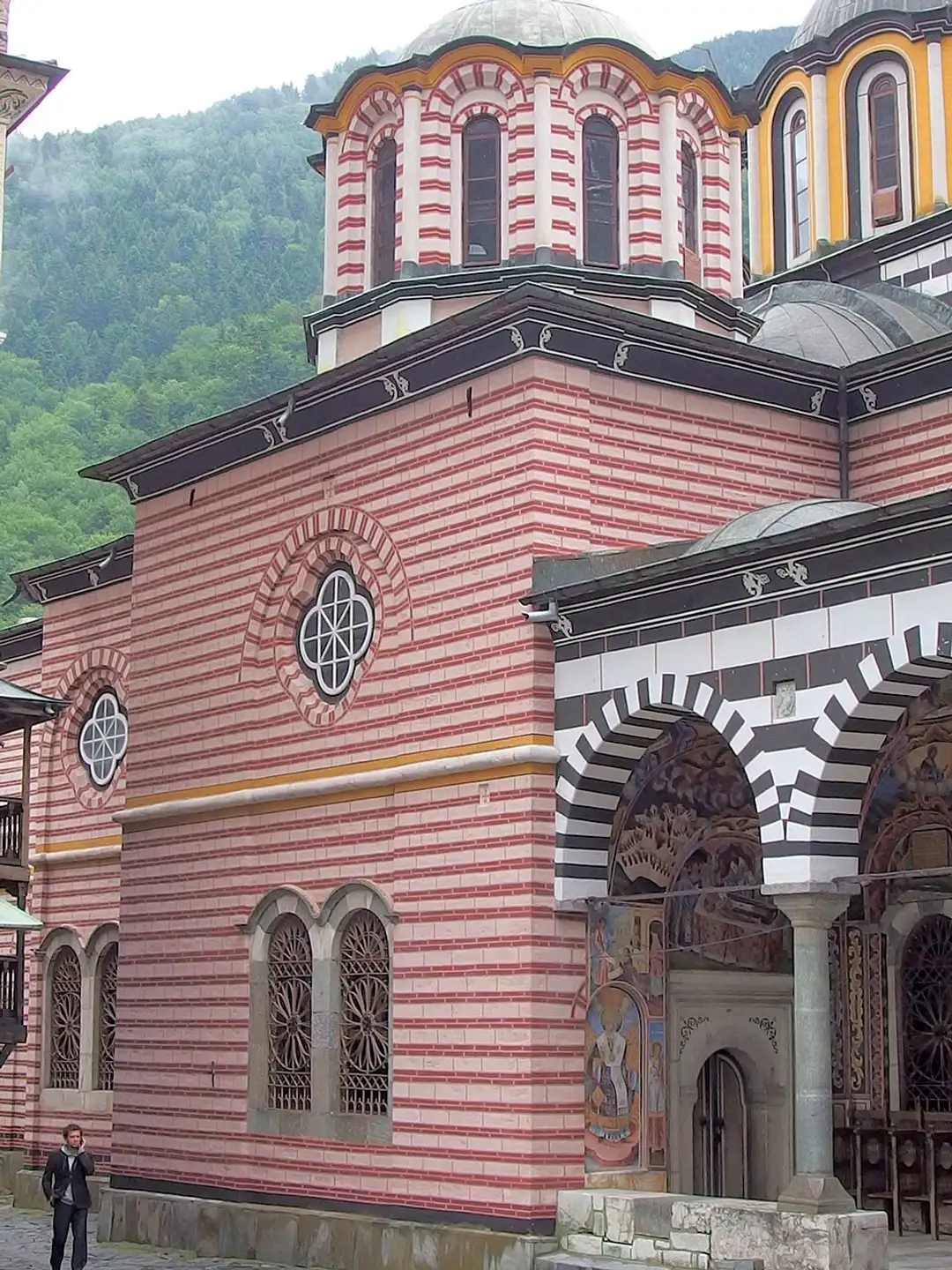
Set aside a full day for Rila, the most photographed place in Bulgaria and worth every frame. It sits about 120 km south of Sofia, a 2 to 2.5 hour drive up into the Rila mountains via the A3/E79. Founded in the 10th century around the hermitage of St Ivan of Rila and rebuilt after an 1833 fire, it’s a UNESCO World Heritage Site - and the moment you step through the gate into the courtyard, the black-and-white striped arches and the frescoes crowding the Church of the Nativity explain the fuss.
Entry to the courtyard and church is free. You pay only for the extras: the history and ecclesiastical museum (about €4, home to the astonishing hand-carved Rafail’s Cross), and Hrelyu’s Tower, the ethnographic rooms and the Revival-era guest quarters (around €2.50 each; a combined ticket runs roughly €10-12). Museum hours are usually 08:30-16:30, later on summer weekends - check on arrival, as they shift by season. Parking is about €2.75, or free on the roadside just before the lot. It’s a working monastery, so cover shoulders and knees.
Getting there without a car: the daily tourist shuttle (operators such as Traventuria leave central Sofia around 09:00 and return early evening) is the simplest option, or take a guided tour that often bundles in the frescoed Boyana Church on the way. Don’t rely on a scheduled public bus - it hasn’t run dependably for years. If you’re fit and have the appetite, the Seven Rila Lakes can be tacked on to the same day, but it makes for a long 12-hour push; most people do the monastery alone and enjoy the mountain lunch. Our full guide to visiting Rila Monastery covers the shuttle, the driving route and every ticket in detail.
On the day you leave Sofia for Plovdiv you can even fold Rila in as a stop - it’s a detour off the southbound road rather than a straight line, but it saves a backtrack if you’re driving. With more time, the Revival house-museums of Koprivshtitsa make an easy day out of the capital off the Sub-Balkan road, and a good taste of the same painted-timber architecture before Plovdiv.
Days 3-5: Plovdiv
From Sofia it’s about 145 km to Plovdiv - two hours by bus, or a straightforward drive on the A1 motorway. Two nights here’s right, because Plovdiv rewards slow wandering more than a tick-list.
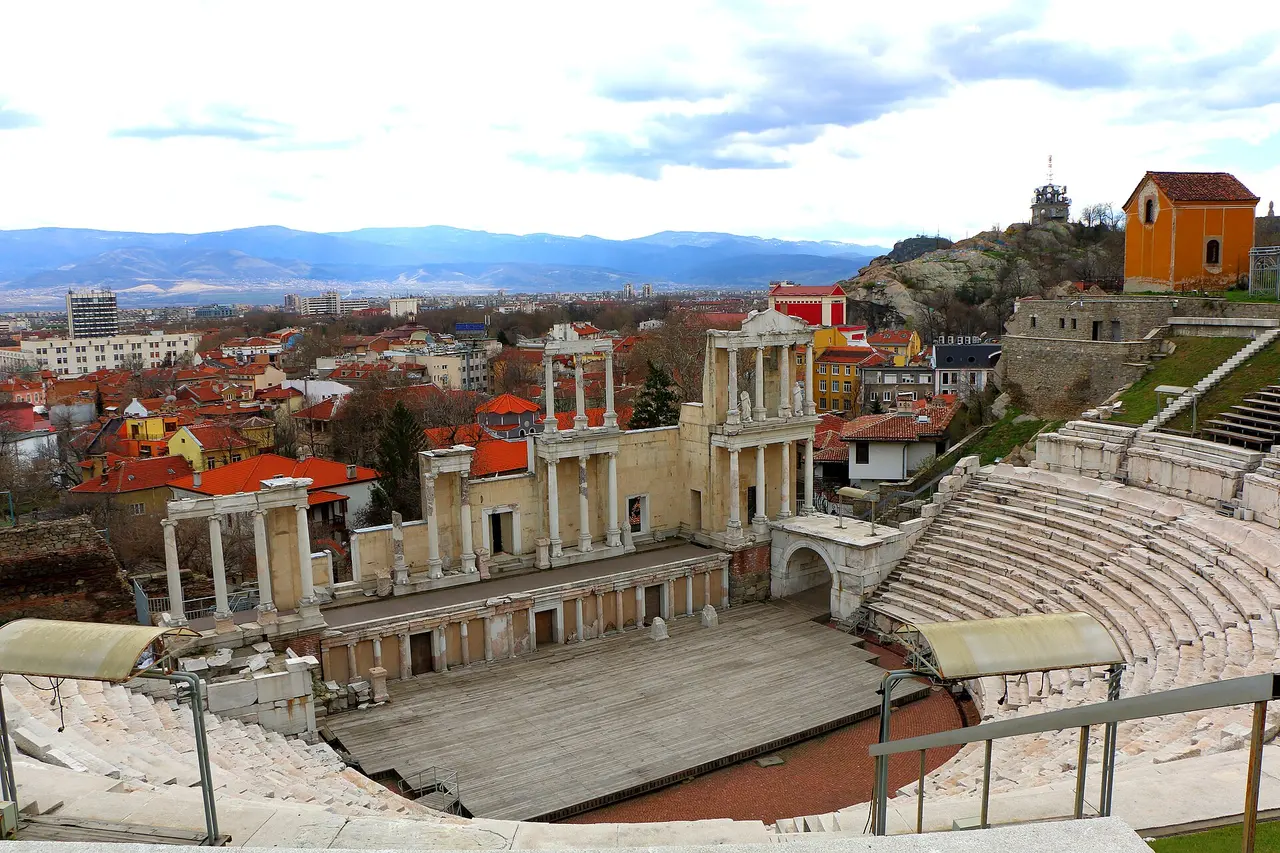
The headline is the Roman Theatre of Philippopolis, built under Trajan in the early 2nd century and one of the best-preserved ancient theatres in the world. It was lost for centuries and only rediscovered in 1972 after a landslide - and it’s no ruin behind a rope: it still stages concerts and opera for a few thousand people under the stars. Around it climbs the Old Town, a national reserve of 18th and 19th-century Bulgarian Revival mansions with painted, overhanging timber facades - the Balabanov and Kuyumdzhioglu houses are the ones to step inside. Climb Nebet Tepe for the Thracian-era ruins and the sunset view over the rooftops.
Then come back down to earth in Kapana - “the Trap” - a grid of tight lanes that was a craftsmen’s quarter and is now the city’s creative heart: galleries, small-batch coffee, mural-covered walls, wine bars and some of the best casual food in the country. Plovdiv was European Capital of Culture in 2019, and Kapana is where that energy still lives. Give yourself an evening here with no plan. For the sights in walkable order, with hours and ticket prices, see our full guide to the best things to do in Plovdiv; and when you’re hungry, the restaurant directory has our Plovdiv picks. With two nights here you also have room for a day out to the Valley of Roses around Kazanlak, an hour north and unmissable if your trip falls in the June festival window.
Days 5-7: Veliko Tarnovo
This is the leg that earns a car. Plovdiv to Veliko Tarnovo is around 190 km over the Balkan range - roughly 2.5 to 3 hours by car, but a real chore on public transport (thin direct buses, a slow train with a change). If you’re carless, this is the day to pre-book a private transfer rather than fight the timetables.
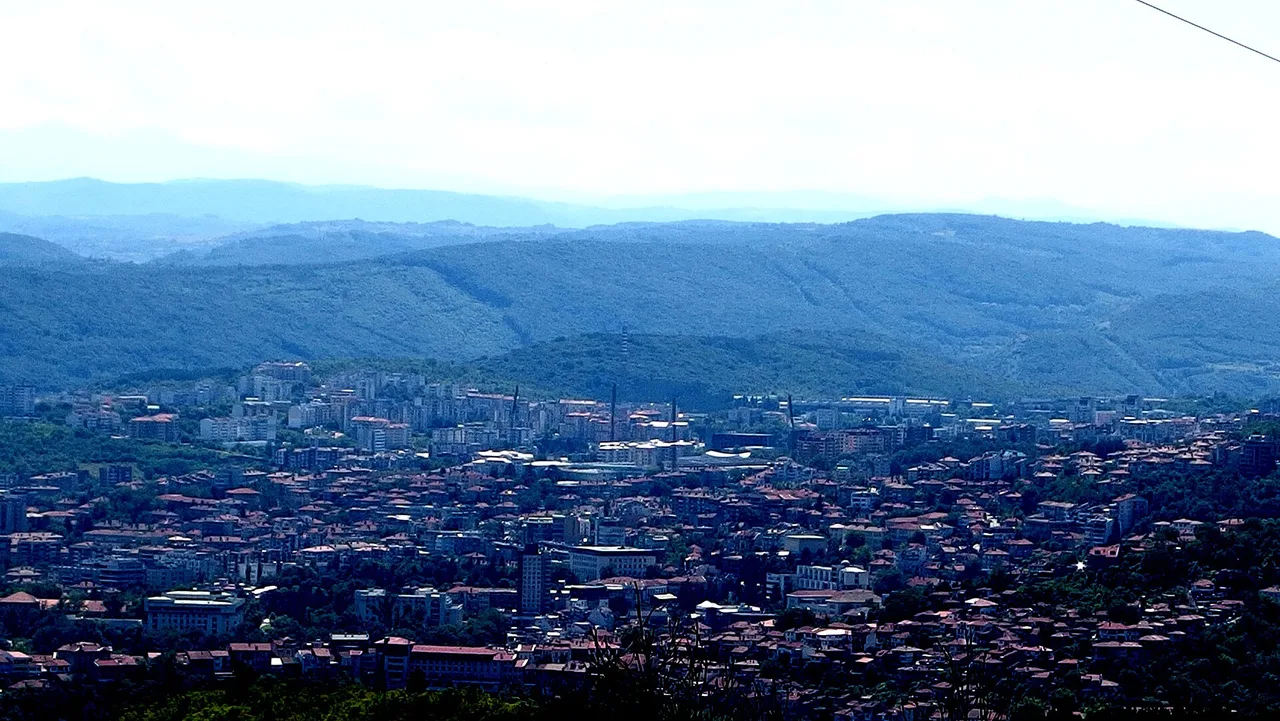
Veliko Tarnovo is the payoff: the medieval capital of the Second Bulgarian Empire (1185-1393), a town of stone houses stacked up the cliffs of the Yantra river gorge, all of it watched over by Tsarevets fortress on its own hill. Adult entry to the fortress is €7.67 (about 15 leva), and in summer it stays open into the evening - roughly until 20:00, with shorter hours in winter, so check the season; walk up through the restored gate to the Patriarchal cathedral at the top for the full sweep of the gorge.
Here’s a detail worth getting right, because a lot of guides get it wrong: the famous “Sound and Light” show over Tsarevets is not a nightly event. This laser-and-bells spectacle runs on national holidays, on a handful of pre-announced dates, or when a tour group books and pays for it. On free holiday nights you watch from Tsar Asen I Square at the foot of the hill. So don’t plan your trip around catching it - check the official dates for your visit, and treat it as a bonus if the timing lands.
Spend your two mornings on the Samovodska Charshia craft street, the Asen dynasty monument above the river, and a half-day out to the frescoed churches and old mansions of Arbanasi village, ten minutes away by taxi. For the fortress hours, the sound-and-light show and the best viewpoints in walkable order, see our full guide to Veliko Tarnovo.
Day 7: Back to Sofia, or onward
From Veliko Tarnovo it’s about 220 km back to Sofia - roughly 3 to 3.5 hours by car and well served by frequent buses if you’re flying out of the capital. Start reasonably early and you’ll have time to drop a rental car and make an afternoon or evening flight.
If you’d rather not double back, Veliko Tarnovo also opens the door east. The Black Sea coast (Varna is about 3 hours on) makes a natural extension if you’ve more days, and it’s where this route would grow into a ten-day trip - the UNESCO old town of Nessebar is the one coastal stop worth building the extra days around, though quieter Sozopol, just south of Burgas, makes an easy swap if you want an old town with its own beaches attached. In winter, swap the coast for the mountains and add a few days skiing in Bansko, about two hours south of Sofia - and in the same far-southwest corner, the tiny wine town of Melnik pairs a night of rock-cellar reds with the sand pyramids and Rozhen Monastery. And if you have a car and a taste for the far corners, the Belogradchik rocks and fortress in the northwest are a spectacular add-on, best done as an overnight loop out toward Vidin and the Danube. For any of these, see our planning guides.
Renting a car and getting around
You can do this whole itinerary on buses plus the Rila shuttle, and plenty of people do - Sofia to Plovdiv is easy, and Sofia, Plovdiv and Veliko Tarnovo all have coach links back to the capital. But a rental car transforms the two weak spots (reaching Rila on your own time, and the cross-country Plovdiv-Veliko Tarnovo leg) and lets you pull over at a roadside monastery or a viewpoint whenever you feel like it. A few practical notes:
- Money. Bulgaria is on the euro since January 2026, so no more lev maths - but keep cash for the Rila museum tickets, monastery parking, small-town cafes and the odd rural fuel stop, where cards can be patchy. If you want the full picture on cards, ATMs and dual pricing, see what the euro switch changed for visitors.
- Roads. The A1 (Sofia to Plovdiv) and A3 (toward Rila) are good motorways; the Plovdiv to Veliko Tarnovo crossing of the Balkan range is two-lane and slower, so plan modest average speeds and don’t rush the passes.
- Vignette. Bulgaria uses an electronic vignette for motorways - and some rental cars come with one, but plenty don’t, so ask at pickup and buy your own in two minutes if it’s not covered, or you’ll be fined at a camera. Our full guide to renting a car in Bulgaria covers booking, the vignette and the deposit rules in full.
Prefer to skip the driving entirely? A mix of intercity buses and a couple of private transfers (the airport pickup and the Plovdiv to Veliko Tarnovo hop) gives you a hands-free week. Either way, this is the classic Bulgaria first week - a capital, a mountain monastery, an old town and a medieval citadel - and seven days is exactly enough to enjoy each one without watching the clock.
Flying OTP then BOJ/VAR instead? Switch to the longer Romania-Bulgaria itinerary.
Route day by day
- Days on the road
- 7
- Distance
- ≈610 km
- Budget from
- 65 EUR
- Best season
- May, June, September, October
The route at a glance
-
Sofia
Route startstop ≈2880 min
Days 1-2. The relaxed capital - Roman ruins under the metro, the gold-domed Nevsky cathedral, and Vitosha mountain on the skyline. Your base for the Rila day trip.
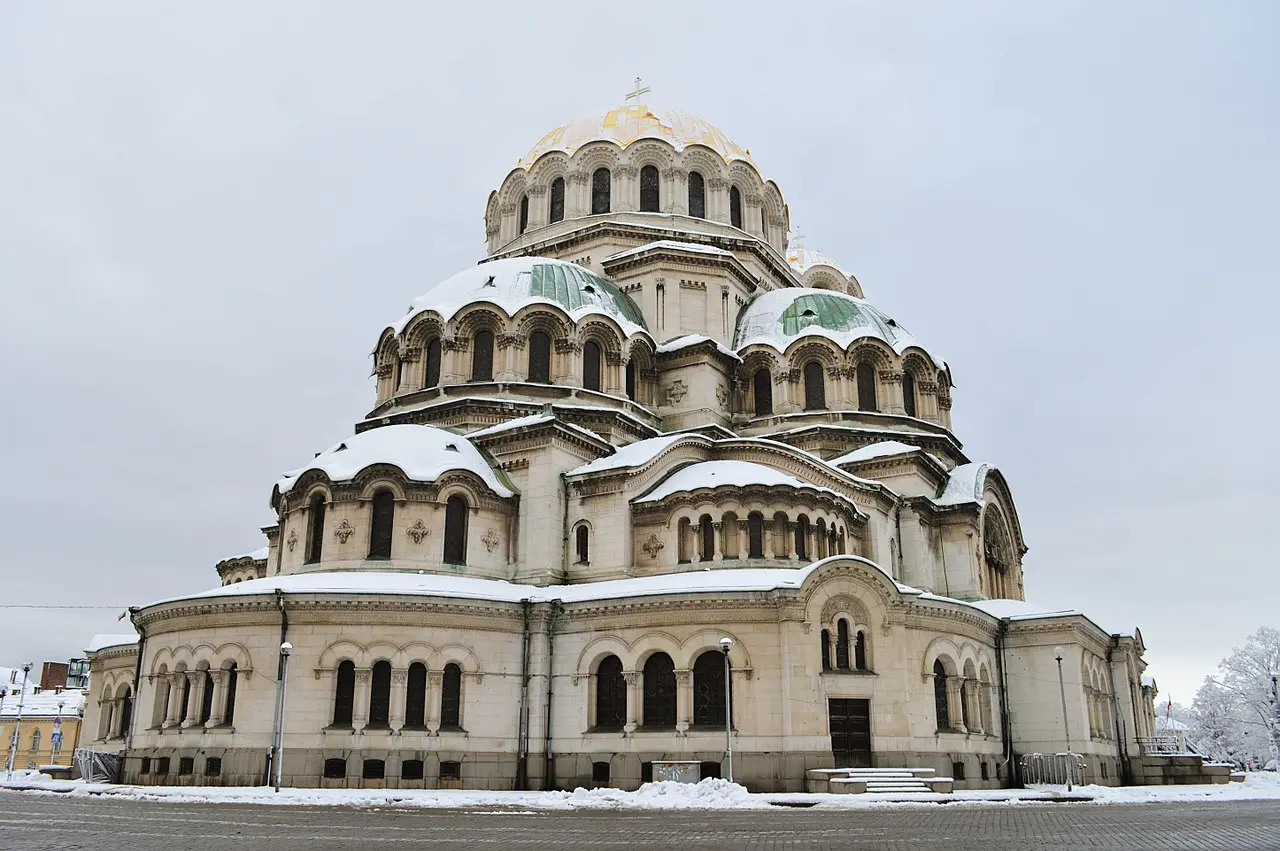
Photo: Francisco Anzola / Wikimedia Commons, CC BY 2.0 ( source ) -
Rila Monastery
120 km from the startstop ≈240 min
Day 2 or 3, day trip from Sofia. Bulgaria's most famous monastery - striped arches, a fresco-covered church and a mountain setting. Free to enter the courtyard.
Photo: Mark Ahsmann / Wikimedia Commons, CC BY-SA 4.0 ( source ) -
Plovdiv
265 km from the startstop ≈2880 min
Days 3-5. Europe's oldest continuously lived-in city: a Roman theatre still in use, Revival mansions across the Three Hills, and the Kapana creative quarter.
Photo: Juan Antonio F. Segal / Wikimedia Commons, CC BY 2.0 ( source ) -
Veliko Tarnovo
460 km from the startstop ≈2880 min
Days 5-7. The medieval capital, houses stacked on the gorge of the Yantra and the great Tsarevets fortress crowning the hill above it.
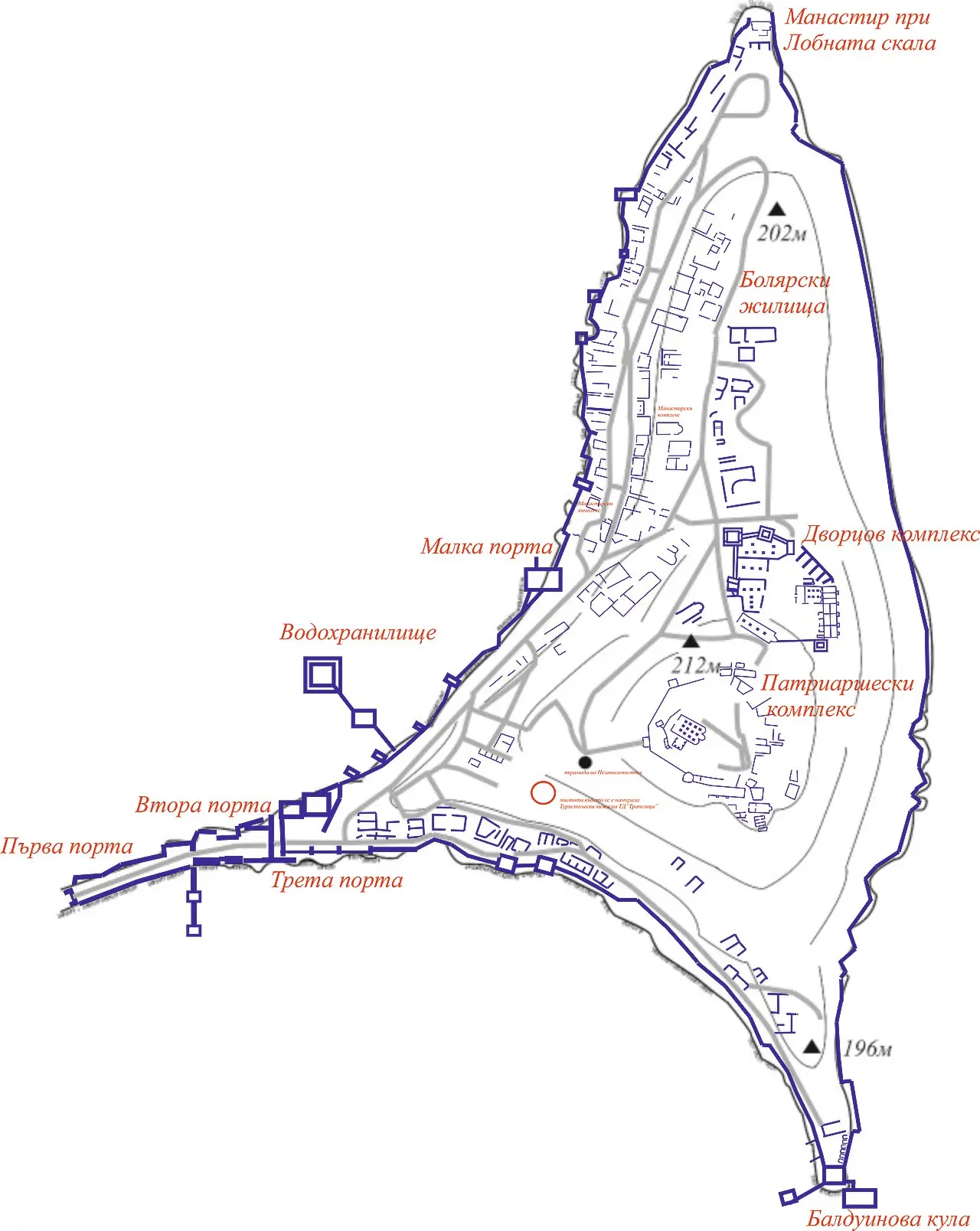
Photo: MalevE93 / Wikimedia Commons, CC BY-SA 4.0 ( source )
Route map
The map with stops loads on click - to keep the page lightweight.
The map didn’t load. Check your connection and refresh the page.