
Koprivshtitsa: Bulgarian Revival Town Guide
Koprivshtitsa in a day: the six Revival house-museums worth your time, the April Uprising story, and how to get there from Sofia or Plovdiv.
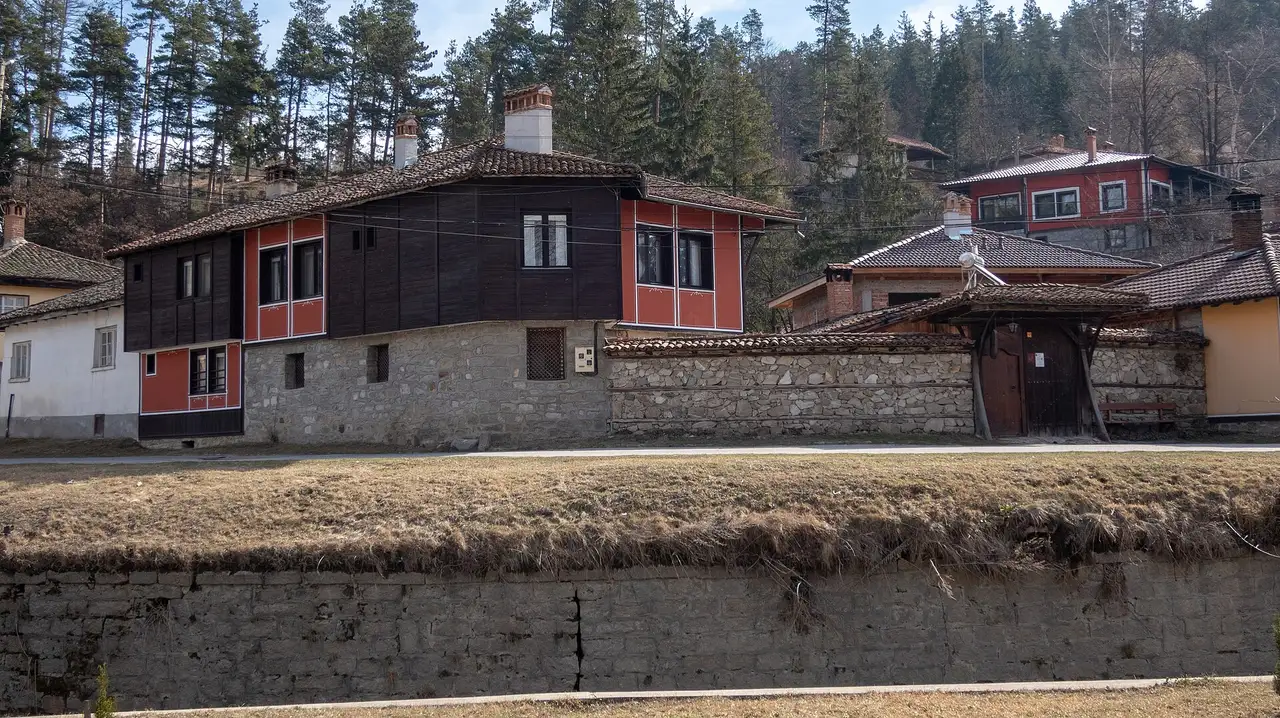
Koprivshtitsa is the best-preserved of Bulgaria’s National Revival towns, a cluster of some 380 protected 19th-century houses set in a green fold of the Sredna Gora mountains, about 110 km east of Sofia. This is where the April Uprising against Ottoman rule broke out first, on 20 April 1876, and the town has barely changed its face since: painted timber mansions with carved ceilings and overhanging oriels, cobbled lanes, and little stone bridges over the Topolnitsa stream. You come for the six house-museums and the history behind them, and one long day covers it, though the town is quiet and pretty enough that a night here’s no hardship. Prices below are in euros, because Bulgaria joined the eurozone on 1 January 2026, though small places still take cash first.
The one thing to plan is the getting there, which is fiddlier than the distance suggests (the railway station sits several kilometres out of town). The honest way in is by road from either Sofia or Plovdiv, and once you arrive the six house-museums and the 1876 uprising story behind them do the rest. If Koprivshtitsa is one leg of a bigger trip, it slots onto the 7-day Bulgaria itinerary as an easy day out from the capital.
How long do you need in Koprivshtitsa?
One full day is plenty. The town is small, everything is walkable, and the six museum-houses cluster within a 15-minute stroll of the central square, so you can see the highlights, walk the lanes, and still have lunch without rushing. The catch is transport: if you come by public transport from Sofia you lose time at both ends, so an early start matters.
Stay a night and the town changes character. The day-trip coaches leave by late afternoon, and after that Koprivshtitsa empties out to its 2,400 residents and the cobbled streets go quiet. If you like the idea of a Revival guesthouse with a wood-carved ceiling and a mountain morning, this is one of the better places in Bulgaria to do it. Either way, wear proper shoes; the lanes are steep, uneven river-stone cobbles.
The April Uprising: why this town matters
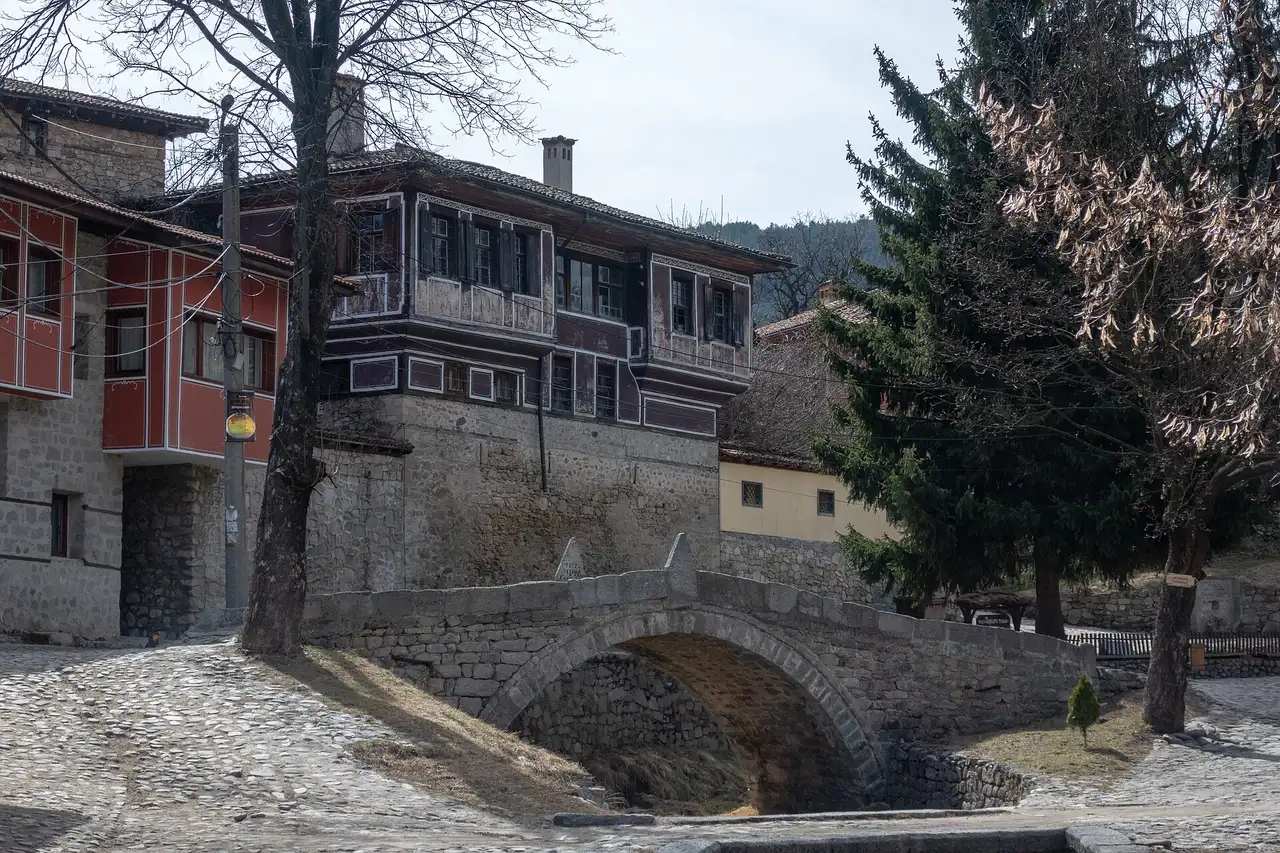
Koprivshtitsa isn’t just a pretty museum village; it’s where modern Bulgaria’s fight for independence began. On 20 April 1876 (2 May by the modern calendar), the local revolutionary committee, led by the 25-year-old Todor Kableshkov, was forced to act ahead of schedule when Ottoman police came to arrest him. The rebels rose, and by tradition the first shot of the whole April Uprising was fired here, at the little stone Kalachev Bridge near the centre, now known as the Bridge of the First Shot.
Kableshkov is said to have sent word of the rising to the committee in nearby Panagyurishte in a note remembered as the “Bloody Letter” (Kravavo pismo). The uprising itself was crushed within weeks and cost Kableshkov and many others their lives, but the brutal Ottoman reprisals that followed drew in the European powers and led, two years later, to the Russo-Turkish war and Bulgaria’s liberation. For Bulgarians this small town carries an outsized weight, which is why the house-museums here are national shrines as much as architecture. The events are re-enacted in the streets each year on 1 May.
Two of the uprising’s leaders were sons of the town. Georgi Benkovski (1843-1876), a former tailor turned revolutionary, raised and led a mounted band known as the “Flying Detachment” that carried the revolt across the region; his bust stands in the garden of his old timber house. And the poet Dimcho Debelyanov (1887-1916), a later Koprivshtitsa son who died in the First World War, is buried by the town church, his grave marked by a much-loved statue of a grieving mother waiting for a son who never comes home.
The six house-museums
The Directorate of Museums runs a set of memorial and ethnographic houses, and a single combined ticket covers six of them. Buy it and you can dip into each as you walk the town rather than paying at every door. These aren’t roped-off period rooms so much as the actual homes of the people who made 19th-century Bulgaria, which is what gives them their charge. If you only have time for a few, prioritise Oslekov, Lyutov, and one of the revolutionary houses (Kableshkov or Benkovski).
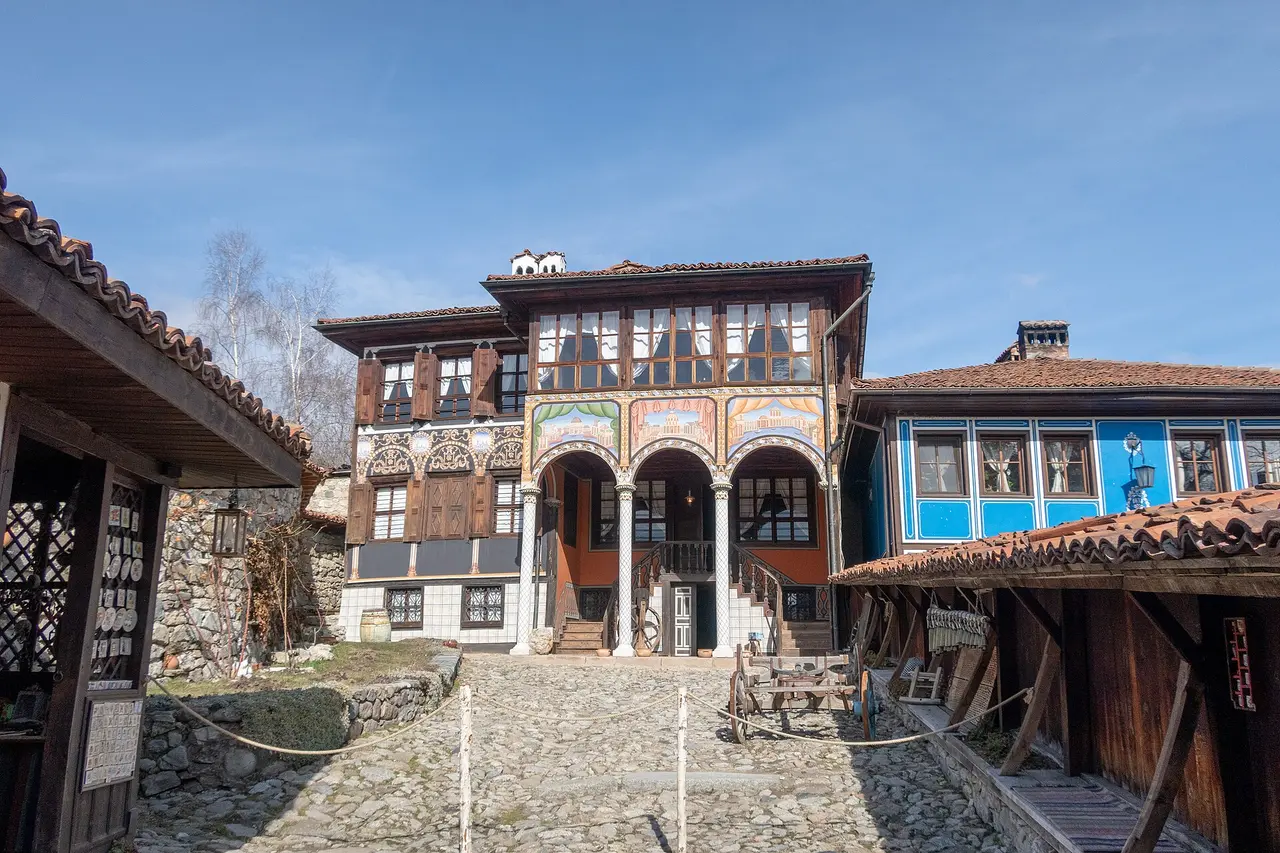
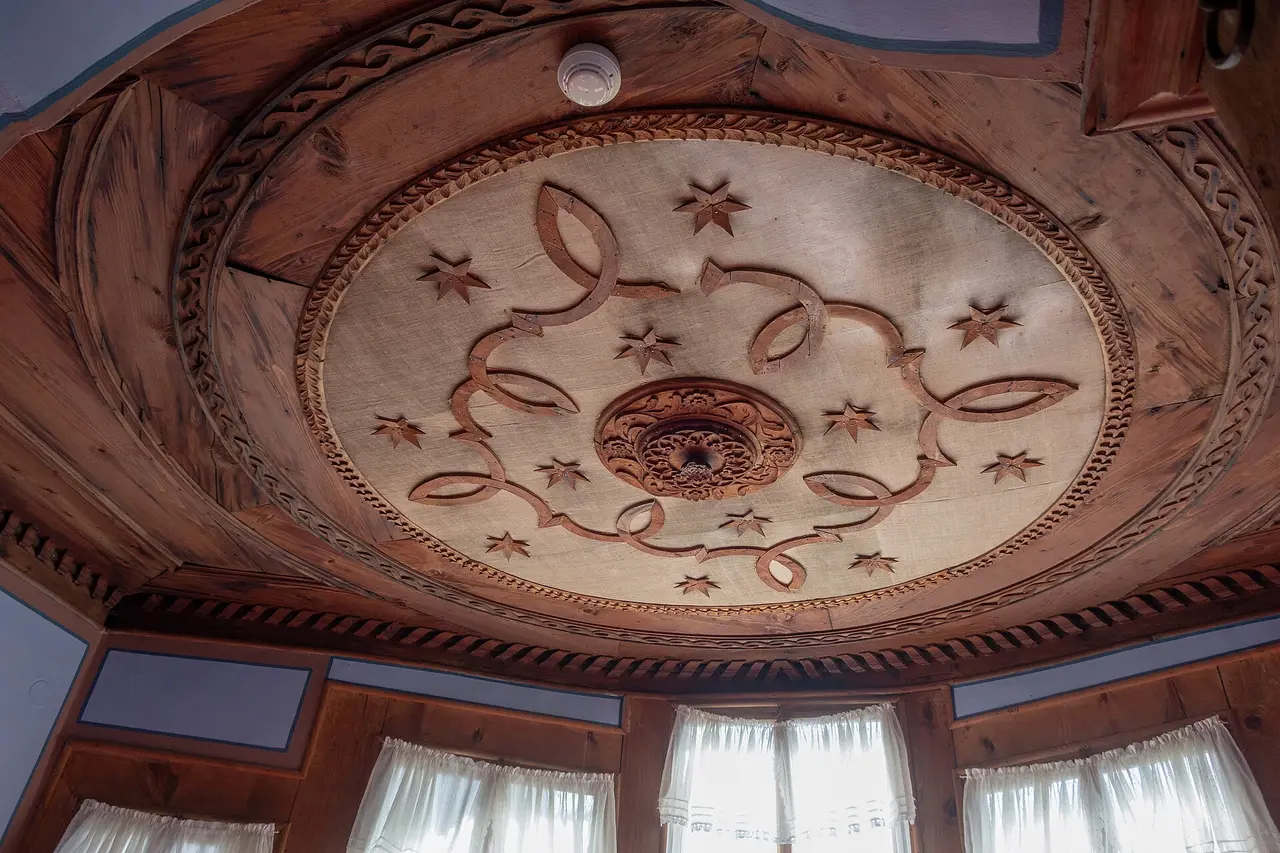
The Oslekov House (built 1853-1856) is the showpiece and the one nobody should skip. A wealthy merchant built it, and it wears its money well: a triple-arched, colonnaded porch painted with murals of European cities, a symmetrical facade, and inside, timber ceilings carved into sunbursts. The owner was arrested and executed after the 1876 uprising. Today it’s the town’s ethnographic museum, strong on the frieze-textile trade that made Koprivshtitsa rich. Note that Oslekov is privately run and may need its own ticket alongside the combined one; check at the door.
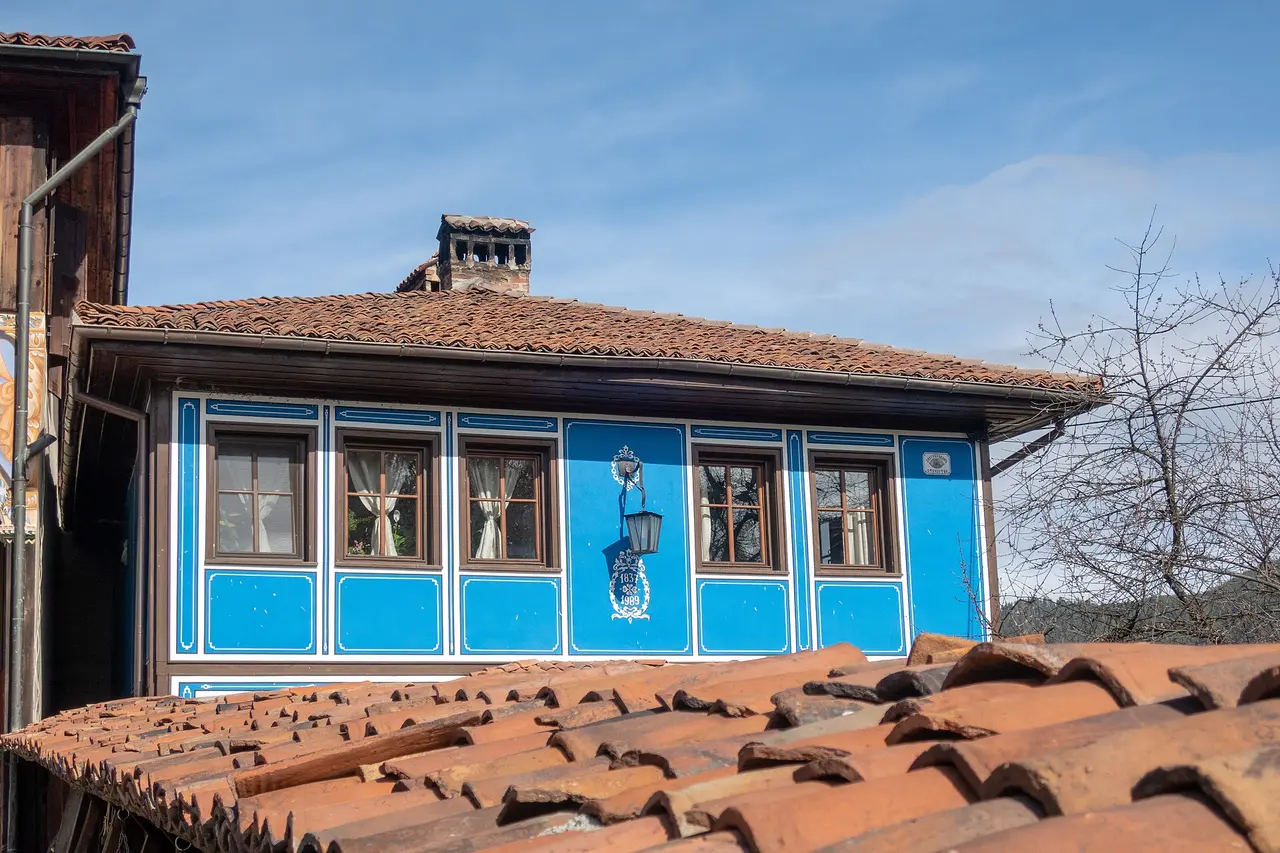
The Lyutov House (1854) is the one I would put second, and to my eye it has the prettiest facade in Koprivshtitsa: a sky-blue mansion topped by a curved, wave-shaped baroque pediment and covered in “alafranga” wall paintings, little framed landscapes of imaginary European cities that a well-travelled merchant class liked to show off. Inside there’s an ethnographic display on the local wool and felt trade. It’s the house people photograph most, and the painted gable is worth looking at closely.
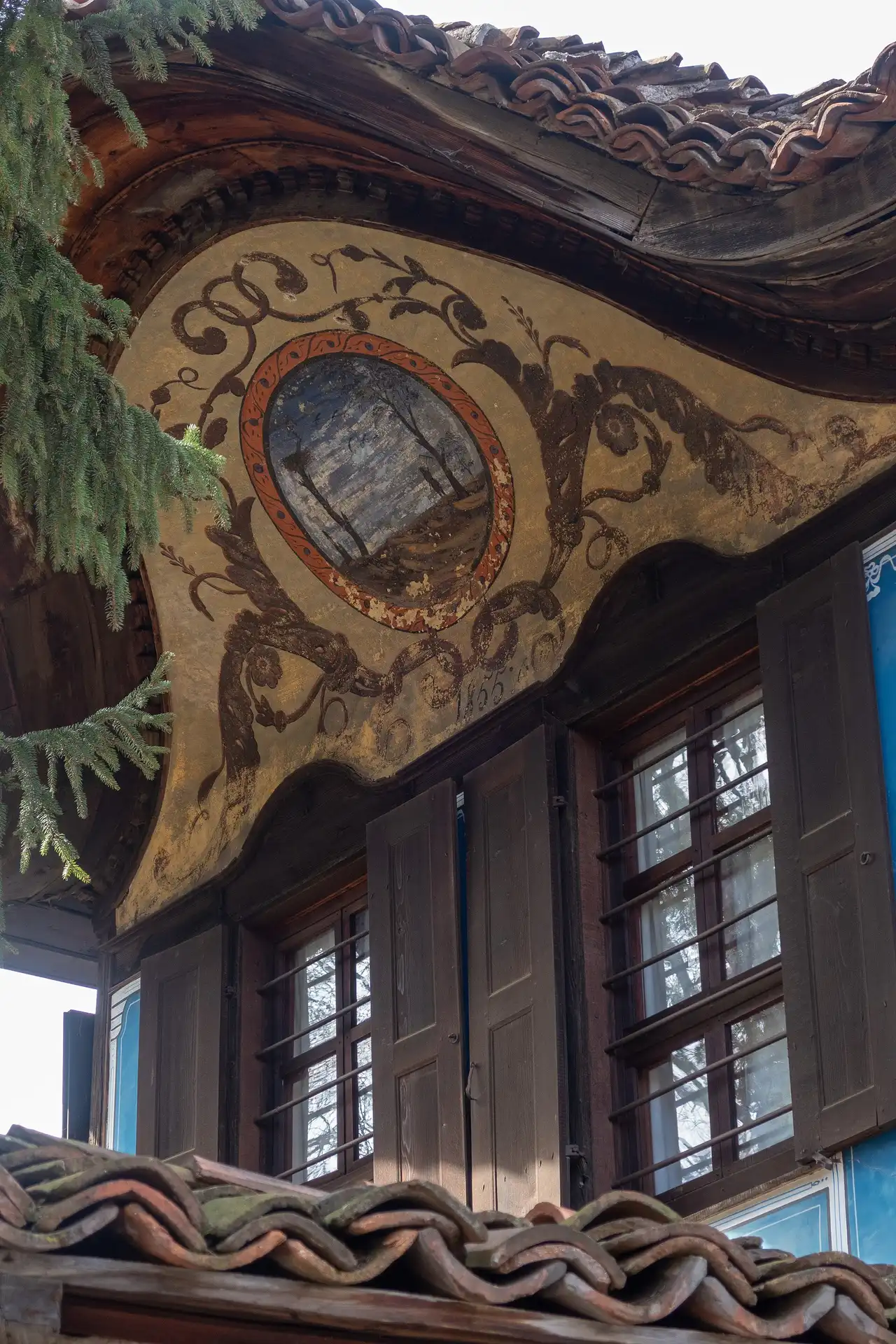
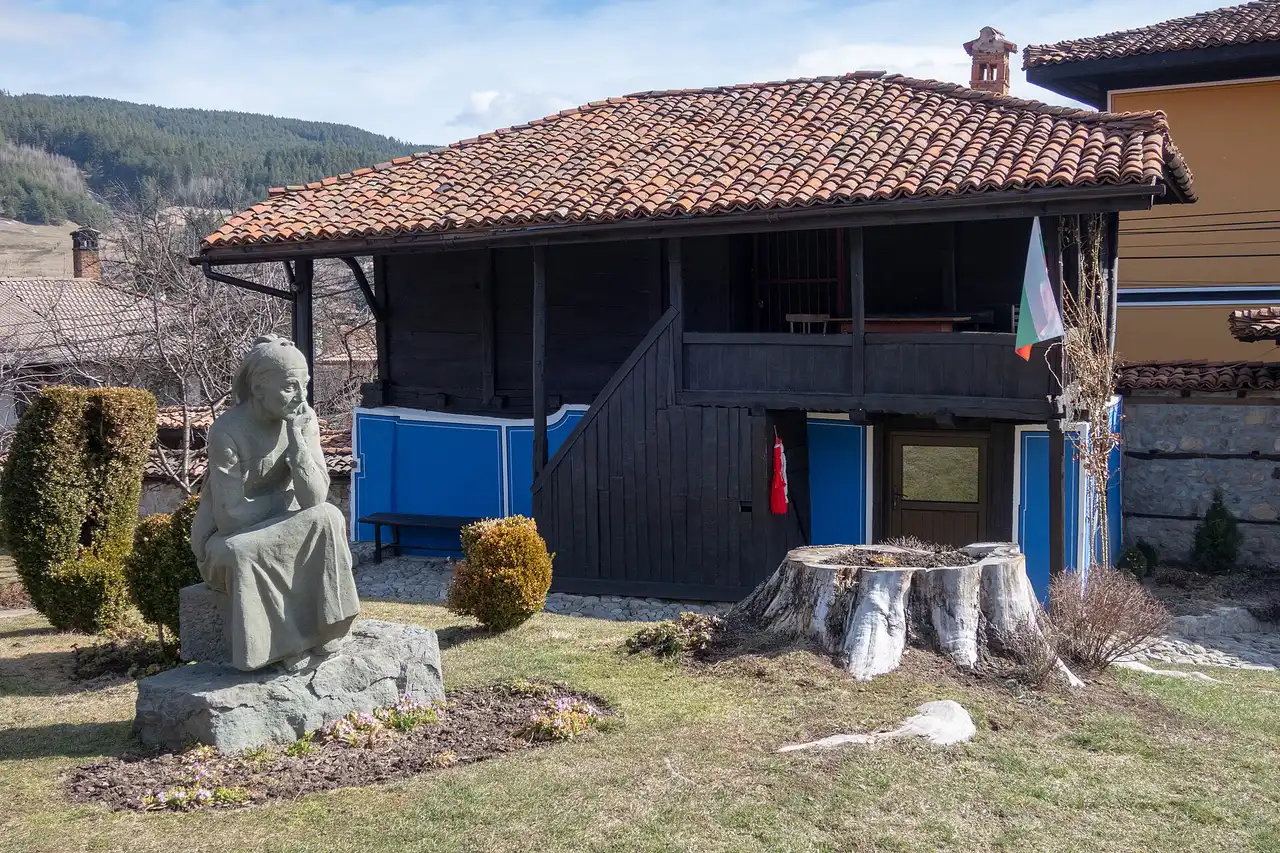
The revolutionary houses are smaller and simpler, and their pull is the story rather than the decor. The Todor Kableshkov House (1845) was home to the man who lit the uprising. The Georgi Benkovski House is an all-timber building with the leader’s bust in the yard. The Lyuben Karavelov House is a complex of buildings honouring the writer and revolutionary Lyuben Karavelov and his brother Petko Karavelov, who served four times as prime minister of the newly free Bulgaria; look for the bronze portrait reliefs set into the courtyard walls. The Dimcho Debelyanov House (1830), the poet’s childhood home near the church, rounds out the six.
Tickets and opening hours
The official prices come from the Directorate of Museums (set by decree in late 2025, so they are current for 2026): the combined ticket for all six museums is 10 euros for adults and 5 euros for students and pensioners, a single museum is 5 euros (3 euros reduced), and a family ticket for the six houses is 20 euros. A guided tour of all six adds another 20 euros, and there’s a free-entry day on the last Monday of each month. Audio guides in several languages are available for hire.
Hours run roughly 9am to 5:30pm, a little longer in summer and shorter in winter. Individual houses can take a day off during the week (often a Monday or Tuesday), and small museums sometimes close at short notice, so if there’s one house you specifically want, confirm on the day at the tourist information office on the main square, pl. “20-ti April,” or with the Directorate of Museums. Treat all prices and times as a guide checked in July 2026 rather than a guarantee.
Beyond the museums: just walking the town
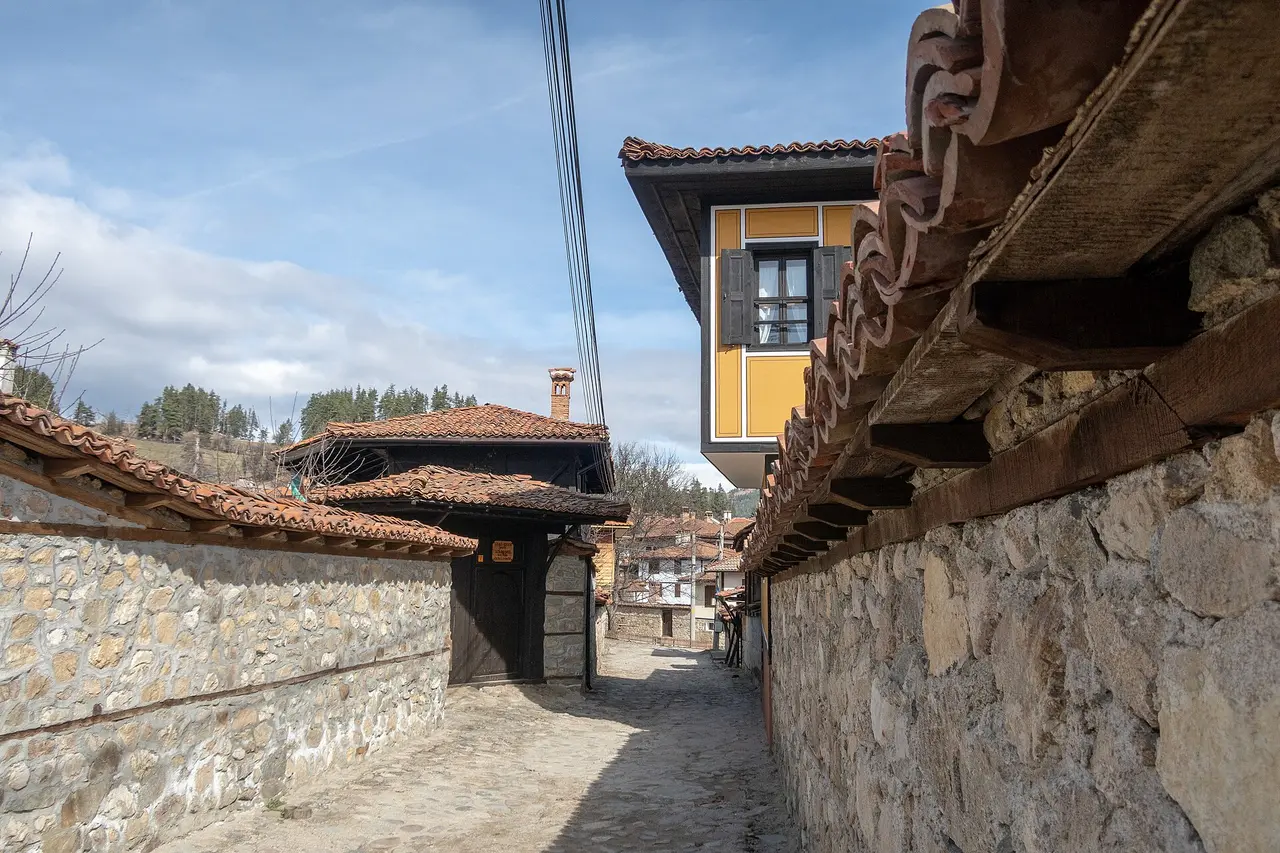
Half the pleasure of Koprivshtitsa isn’t inside any museum. The town is an architectural reserve, which means the whole place is protected, and the streets between the big houses are worth an hour on their own. Follow the Topolnitsa stream and its little humpbacked bridges, climb a lane or two for a view over the tiled roofs to the pine hills, and look at the ordinary houses: the deep-red and blue paintwork, the studded gates, the oriels jutting out over the walls.
If your timing is very lucky you might catch the National Festival of Bulgarian Folklore, held on the Voyvodenets meadow above the town. It is one of the country’s great traditional-music gatherings, listed by UNESCO as a model of heritage safeguarding, but it only happens roughly once every five years (the last edition was in August 2025, drawing thousands of performers), so most visitors won’t overlap with it. There’s no festival most summers, so do not plan a trip around it without checking the year.
How to get to Koprivshtitsa from Sofia
The town is about 110 km east of Sofia, and the honest summary is: driving is easiest, the train works if you plan the shuttle, and the bus is a distant third. It is also the one day trip from Sofia that genuinely works by rail, which is why it ranks where it does among the day trips out of Sofia.
By car is the simplest option, roughly 1.5 to 2 hours via the Sub-Balkan road that skirts the Sredna Gora. A car also frees you to arrive early, before the day-trippers, and to leave when you like. It is the move I would recommend if you can manage it.
By train is the classic budget route and part of the experience, but with one big catch. Bulgarian Railways (BDZ) runs direct trains from Sofia in about 1 hour 40 minutes to 2.5 hours, for around 5 euros. The problem is that Koprivshtitsa station is about 7 to 9 km from the town itself, out in the hills. A shuttle van meets each arriving train and runs passengers into town (a short ride, a euro or two, cash), and back down for departures, but you’re tied to that connection, so note the return times when you arrive and don’t miss the last one.
By bus is unreliable. Direct coaches from Sofia’s central bus station are infrequent (a couple a day at most, and some sources say none in low season), so unless you can confirm a departure that suits you, treat train or car as the dependable options. If you’re flying into Sofia and want to skip the logistics entirely, a door-to-door transfer takes you straight to your guesthouse.
Getting there from Plovdiv, and where it fits
From Plovdiv the town is about 90 km away and reachable by car in roughly 1.5 hours, but public transport is awkward: there’s no clean direct bus, and by train you change at Karlovo. If you’re based in Plovdiv without a car, it’s often simpler to route via Sofia or to join an organised day tour. With a car, though, Koprivshtitsa pairs naturally with the Sredna Gora and the Sub-Balkan valleys.
However you come, Koprivshtitsa is best treated as a focused day rather than a rushed stop. It works beautifully as a break between the two big cities on the 7-day Bulgaria itinerary, or as a slower counterpoint to Sofia if you want a day out of the capital. And if the painted-house architecture gets under your skin, the other great Revival old town, Veliko Tarnovo, does the same trick on a grander, cliff-top scale in the north of the country.
Photos
Read also

Cities · 10 min read
Bulgaria's Spa Towns: Velingrad, Hisarya & More
Verified · August 31, 2026Compare Velingrad, Sandanski and Hisarya: water temps, climate, Roman walls, when to go year-round, and real 2026 spa-hotel rates.

Cities · 12 min read
Where to Stay in Pamporovo: Hotels & Chalets
Verified · August 22, 2026Pamporovo hotels, chalets and apartments by lift base: Malina vs Studenets, why "renovated" is not "new", and how to price a bed.

Cities · 14 min read
2 Days in Sofia: The Perfect Weekend Itinerary
Verified · August 20, 2026A 2-day Sofia itinerary for a Friday-to-Sunday trip: Nevsky, Serdica, Boyana Church, real euro prices, and what actually fits in one weekend.

Cities · 9 min read
Where to Stay in Burgas: Best Areas & Hotels
Verified · August 10, 2026Where to stay in Burgas: city centre for a first visit, Sea Garden for beach and park, Lazur for quiet value, or Sarafovo by the airport.