
Melnik: Bulgaria's Smallest Town & Wine
Melnik, Bulgaria: the smallest town in the country, its rock-cut wine cellars, the sand pyramids, and Rozhen Monastery, plus how to get there.
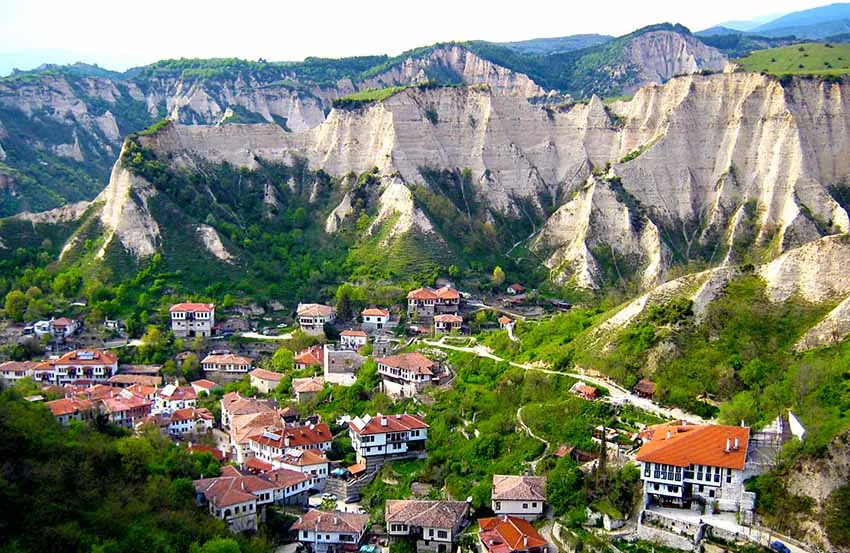
Melnik is the smallest town in Bulgaria, a single street of white Revival mansions wedged into a gorge of pale sandstone pyramids in the far southwest, and it earns its “town” title on history rather than headcount: fewer than 400 people live here now. You come for three things - the local red wine that has been made here since at least 1346, the strange eroded pyramids that wall the valley in, and Rozhen Monastery a few kilometres up the road. Give it an overnight rather than a rushed day trip, because the whole point of Melnik is to taste wine in a cellar cut into the rock and not have to drive afterwards.
The honest truth about getting here is the one thing to sort in advance: it’s a car or a transfer, because one bus a day is not a plan. Prices are in euros, since Bulgaria joined the eurozone on 1 January 2026, though the family cellars here still run largely on cash. If Melnik is one stop on a bigger loop, it pairs naturally with the mountains west of it and slots onto the 7-day Bulgaria itinerary.
Is Melnik worth visiting?
Yes, if you understand what it is: not a big sightseeing town but a tiny, atmospheric one built around wine and rock. At its 18th-century peak Melnik had around 1,300 houses, some 70 churches and roughly 20,000 people; today it’s an architectural reserve with 96 of its buildings listed as cultural monuments, and the permanent population has shrunk to a few hundred. That collapse is exactly what makes it feel the way it does - a grand old wine town shrunk to a village, with mansions far bigger than its handful of residents would ever need.
The setting does half the work. Melnik sits at about 440 metres in the southwestern Pirin mountains, and the town has no room to sprawl because the sandstone pyramids press right up to the back gardens. Wander the one main lane in an hour, climb to a viewpoint, drop into a cellar, and you have the measure of the place. What you shouldn’t do is treat it as a two-hour photo stop; the town rewards a slow evening far more than a quick lap.
The wine: why Melnik exists
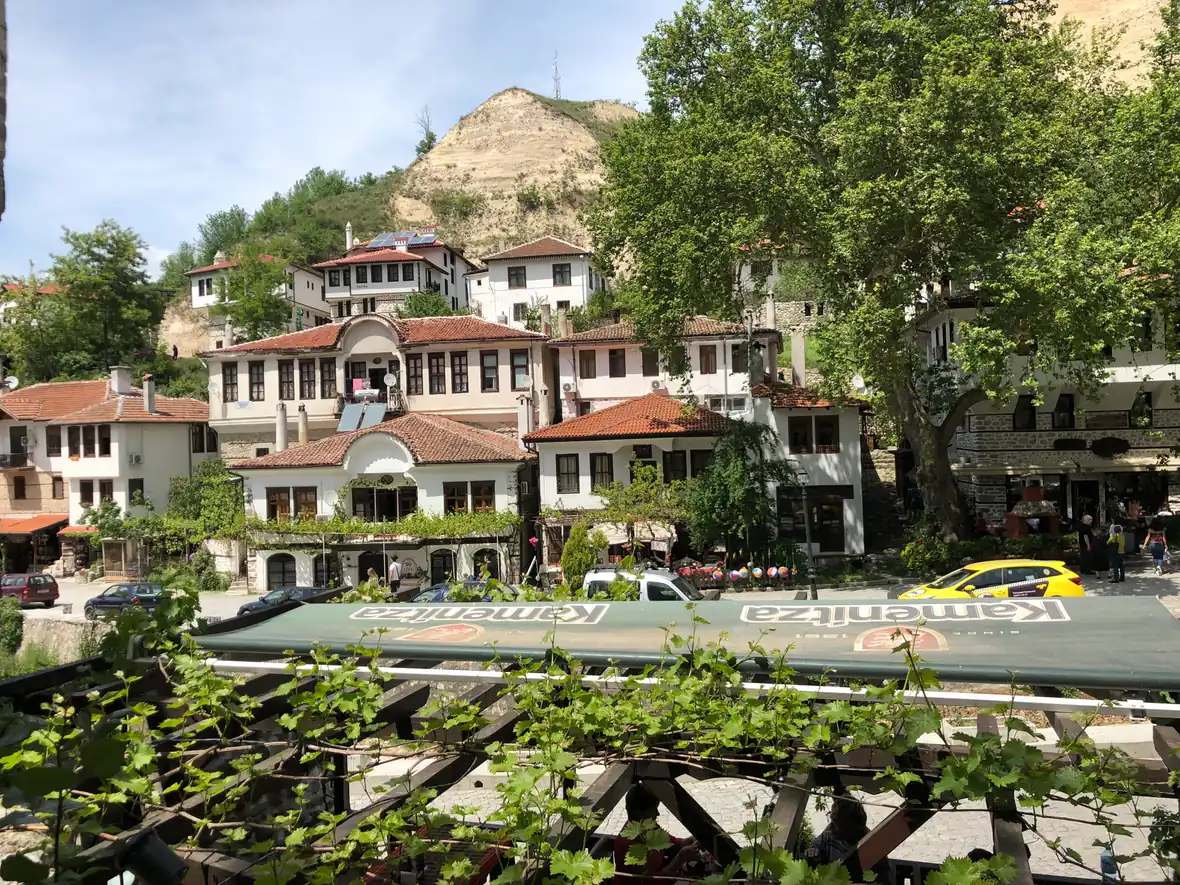
Wine is the reason there was ever a town here at all. Melnik has produced strong red wine since at least 1346, the year it first shows up in the records, and the grape behind it’s a genuine local: the Broad-leaved Melnik Vine (Shiroka Melnishka Loza), which ripens late and makes a dark, tannic red that ages well. The town’s other claim, repeated on every tasting-room wall, is that this wine was reportedly a favourite of Winston Churchill’s - treat that as a good story rather than a documented fact, but locals will pour it with conviction.
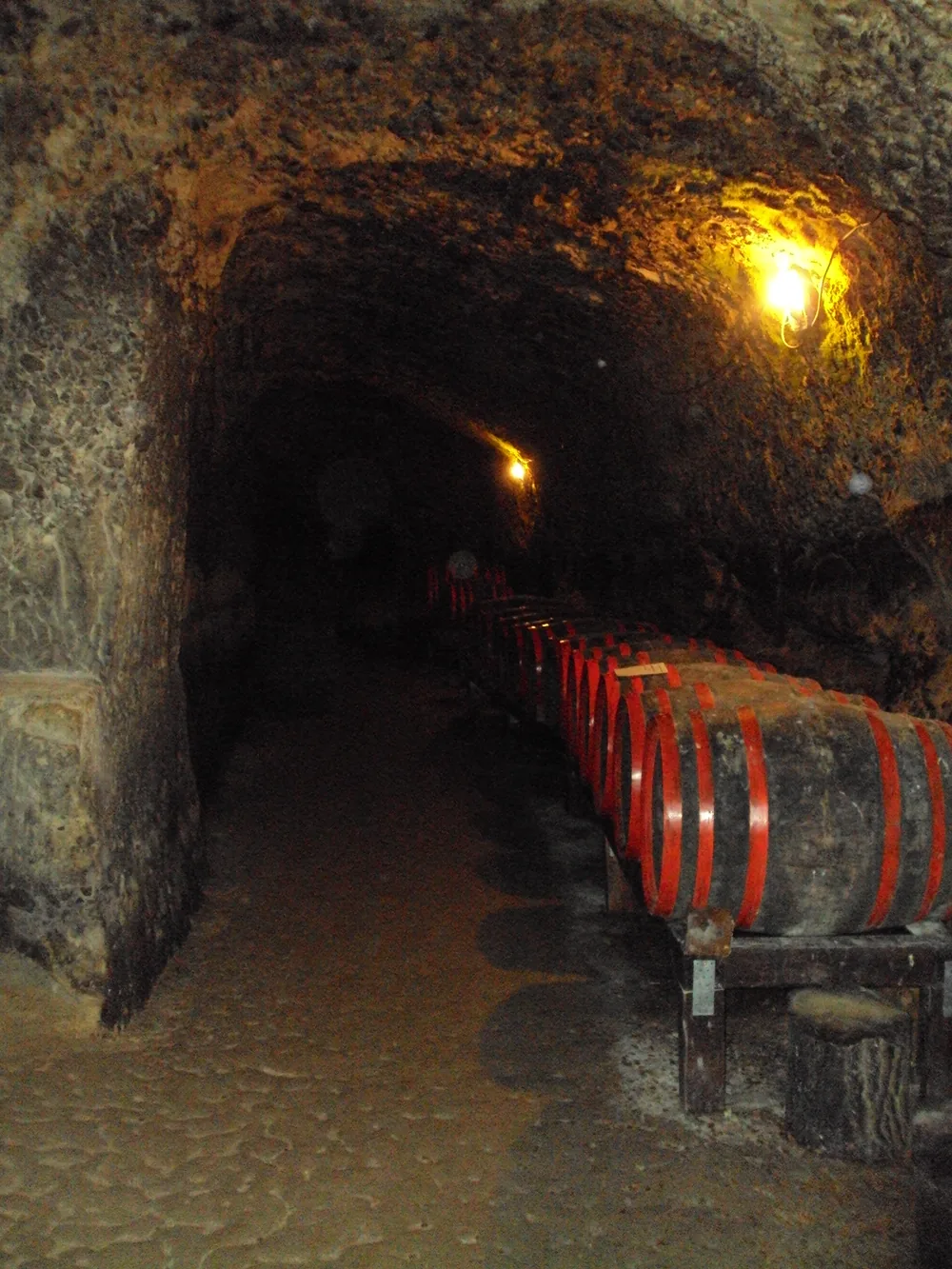
What’s unusual, and worth understanding before you visit, is how the wine is stored. Melnik’s cellars are dug straight into the sandstone as cool tunnels, which hold a steady temperature year-round without any machinery. The most famous of them belongs to the Kordopulov House (below), but small family cellars all over town offer tastings, and the standard move is simply to walk the lane, step into whichever one is open, and try a glass or two of the local red and a shot of rakia. It’s informal, cheap, and the whole reason to stay the night.
If you want a proper modern winery with a tour, Villa Melnik sits near the village of Harsovo about 7 km south of town. It’s a family operation working the local grapes - look for its Melnik 55 (an earlier-ripening cross also called Early Melnik) alongside the traditional Broad-leaved Melnik. Tours and tastings run by prior arrangement, so book ahead and confirm the hours rather than just turning up. For the grapes, the cellars and which wineries to book, see our Melnik wine guide.
Kordopulov House: the great wine mansion
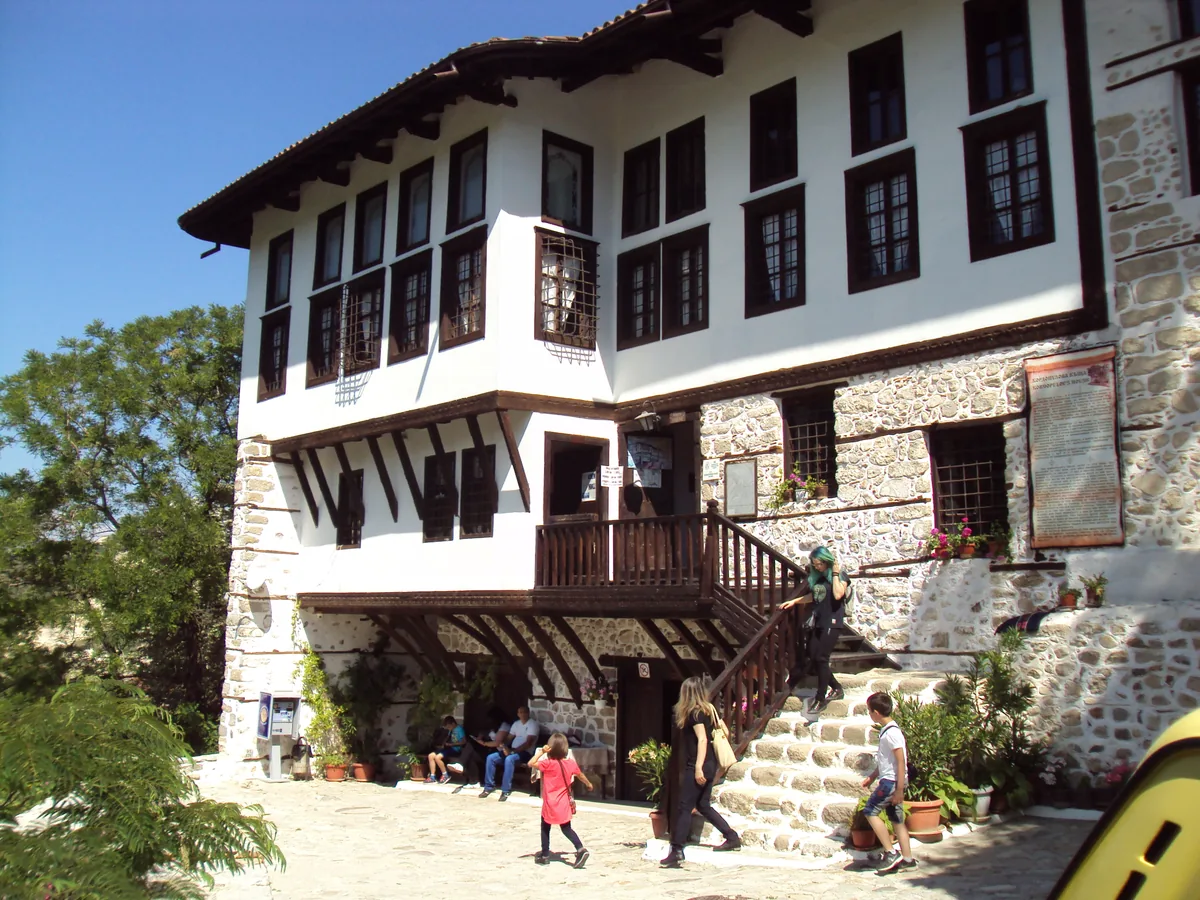
If you see one building in Melnik, make it the Kordopulov House. Built in 1754 for a wealthy Greek wine merchant, it’s the largest Revival-era house in Bulgaria and the Balkans - three storeys plus a basement, with a bay-windowed living floor above and the working wine operation below. Upstairs there’s a room with stained glass and a carved ceiling mixing Bulgarian, Greek and Ottoman motifs; the house was restored between 1974 and 1980 and now runs as a private museum that draws around 30,000 visitors a year.
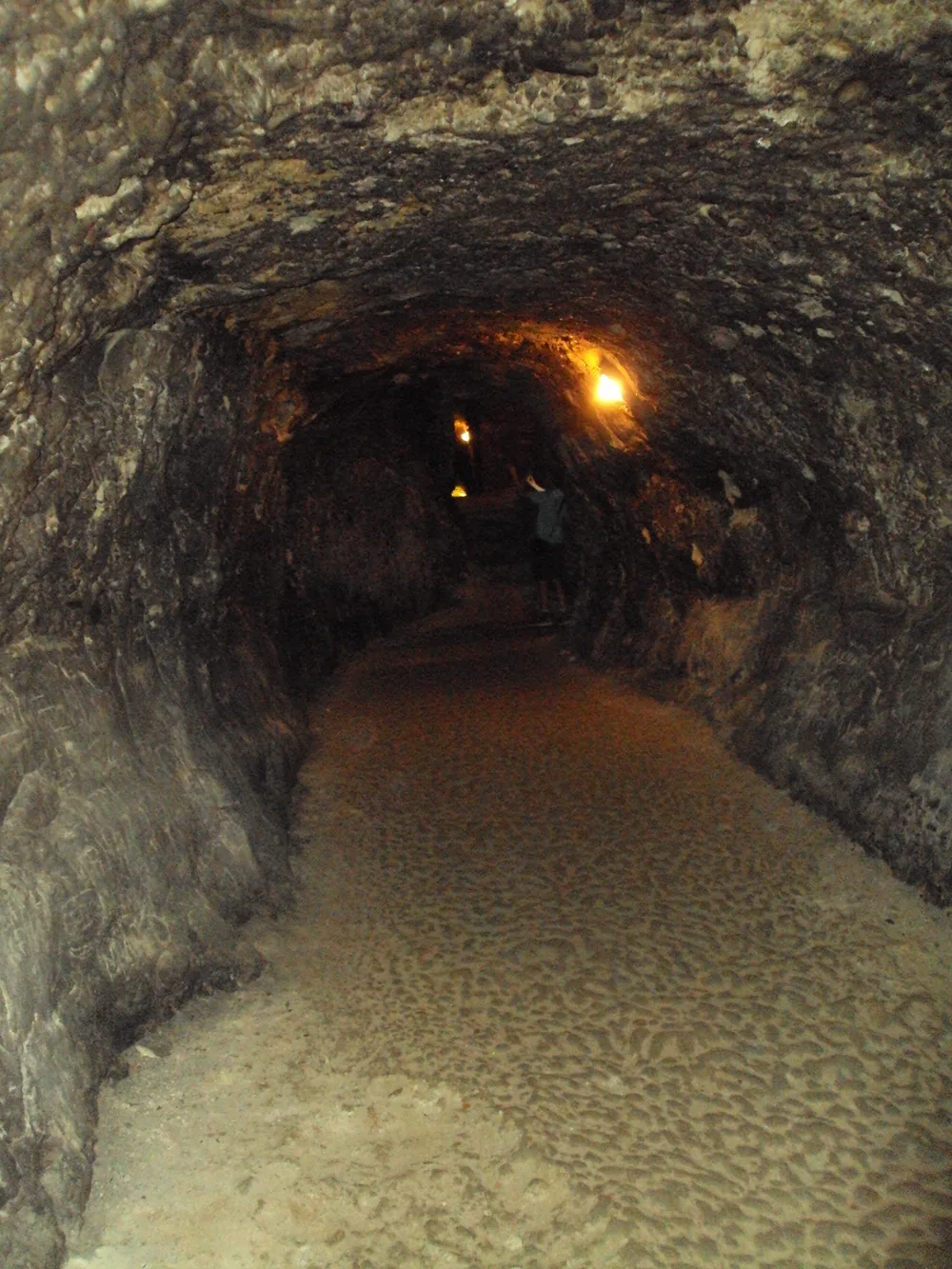
The reason to go, though, is underground. The cellar is a tunnel cut about 150 metres into the rock, cool and dark, built to hold up to 300 tonnes of wine - the single largest barrel here takes 12.5 tonnes on its own. Walking that long stone tunnel, past the great casks with their red iron hoops, is the clearest possible picture of how much wine this “smallest town” once moved. Entry is a small charge and usually includes a tasting; because prices shifted with the euro changeover, confirm the current fee on the door rather than trusting an old number online.
The sand pyramids
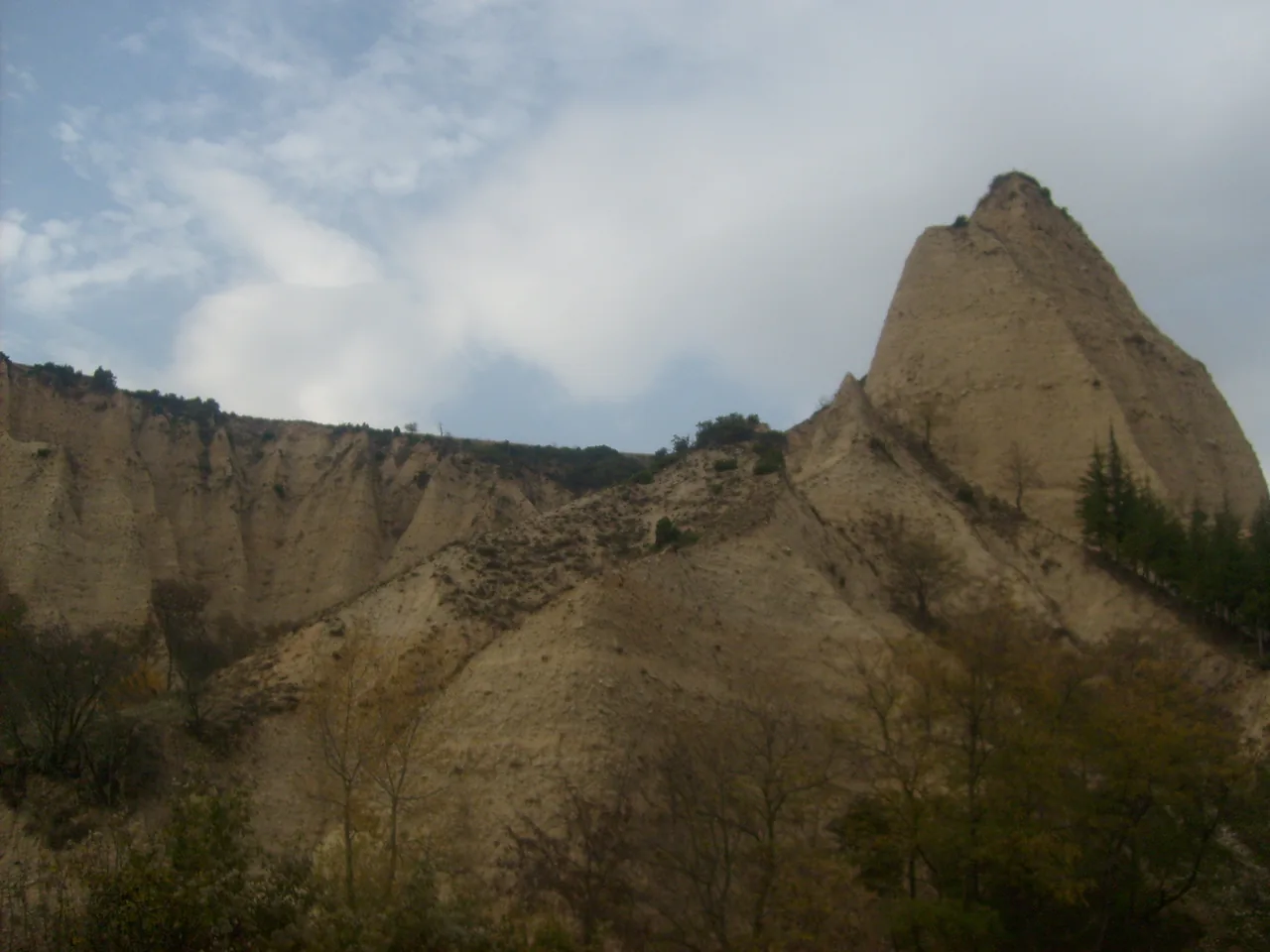
The pale spires that hem the town in are the Melnik Earth Pyramids, and they’re a proper natural landmark, protected since 1960. Rain and the Melnishka river have cut the soft sandstone and conglomerate into cones, obelisks, giant mushrooms and blade-like ridges that reach up to 100 metres at their tallest, spreading over roughly 17 km² around the town and the villages beyond. Their colour shifts from yellow to a reddish tint depending on the light, and they make the best sunset in this corner of Bulgaria.
You don’t need a guide or a serious hike to enjoy them. The simplest way is the trail that climbs from town toward the Saint Nicholas plateau and the ruins of the Despot Slav Fortress - a steep but short path of about 20 minutes up to a plateau that opens onto the whole gorge and the Pirin peaks behind. Despot Alexius Slav was the independent noble who ruled Melnik in the early 13th century, when the town was at its height, and his crag-top fort is now little more than fragments; the reason to climb is the view, not the stones. Wear real shoes, take water, and go in the softer light of morning or late afternoon.
Rozhen Monastery
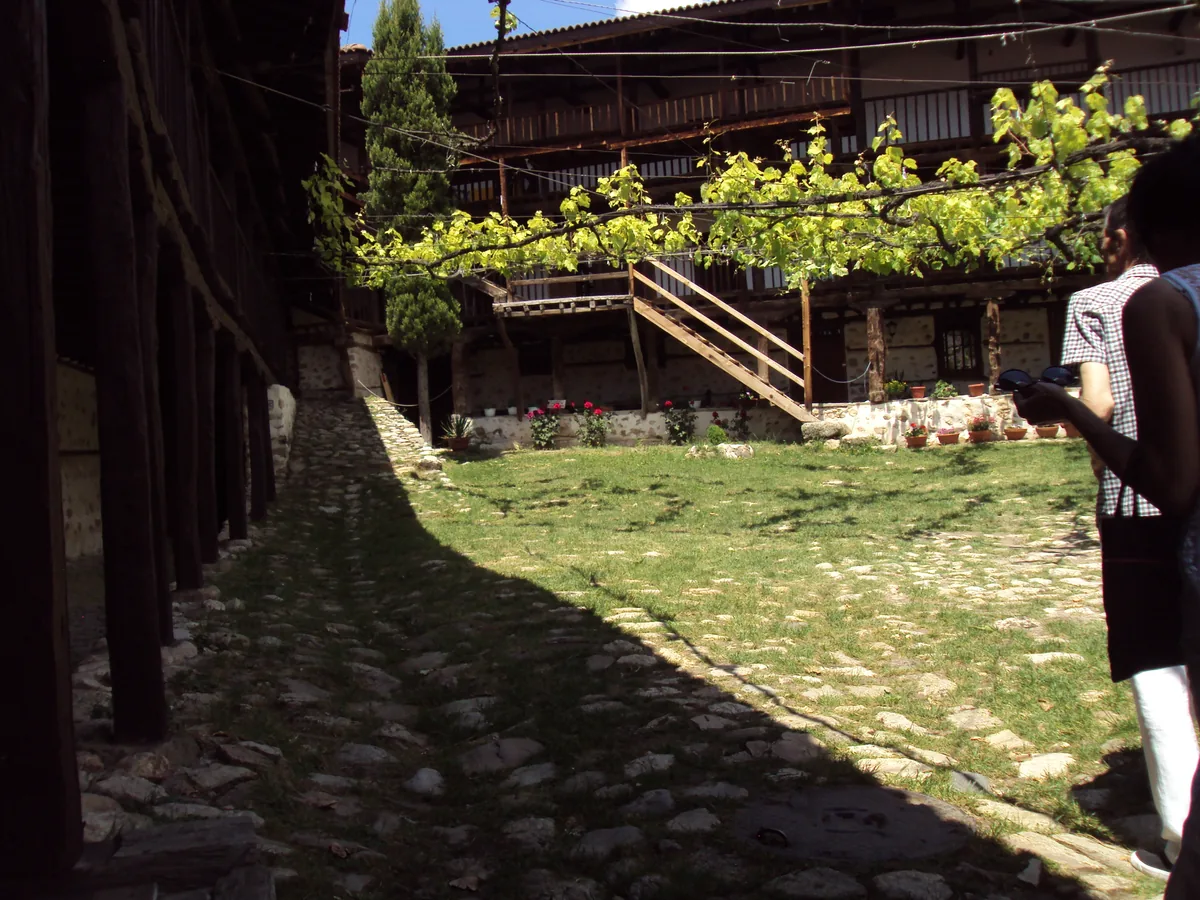
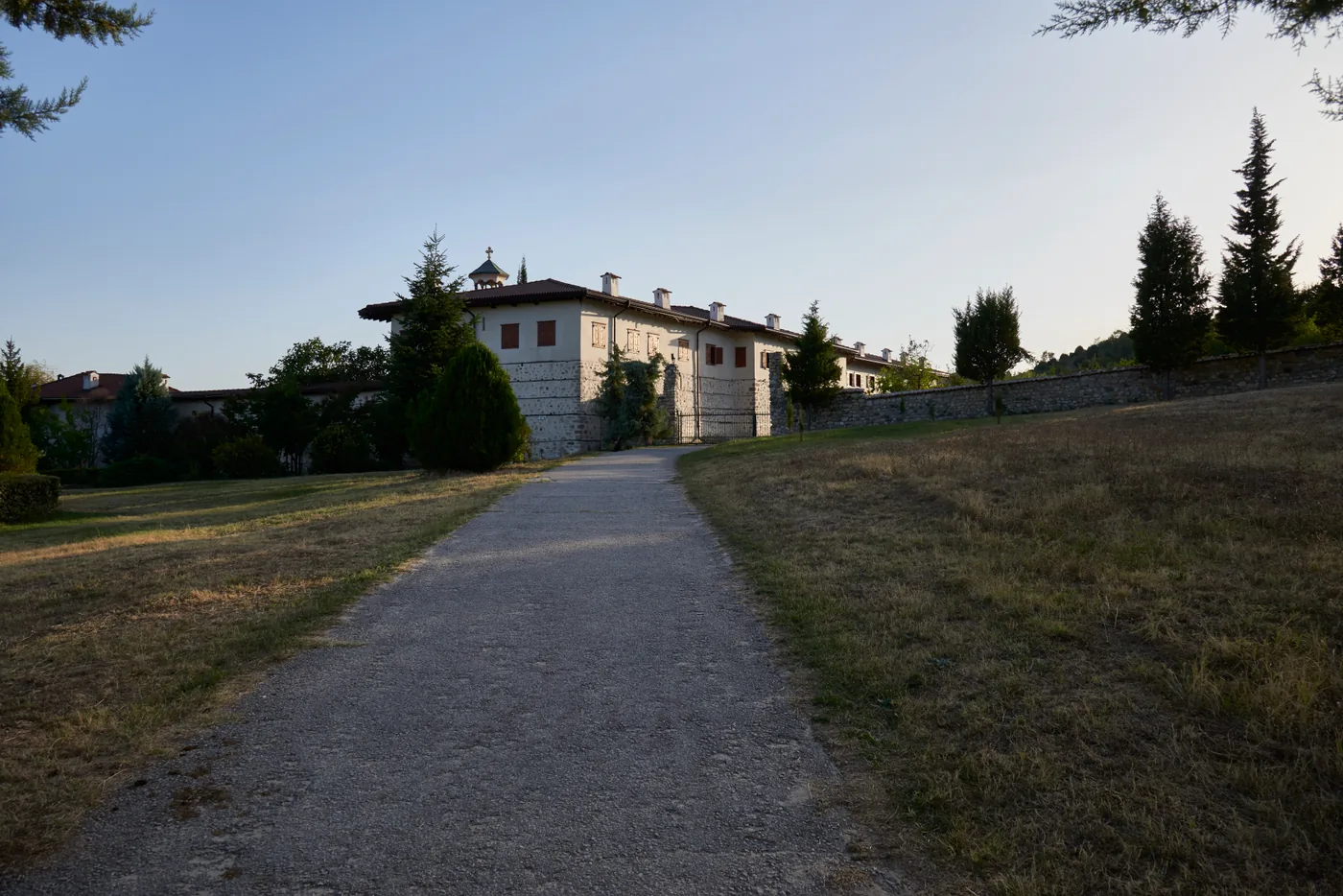
Six kilometres northeast of Melnik, tucked among the same pyramids, Rozhen Monastery is the largest monastery in the Pirin mountains and the obvious half-day pairing with the town. Dedicated to the Nativity of the Mother of God, it goes back to at least the 13th century; its church was painted in 1597, with the south facade added in 1611, and the walls still carry faded but glowing frescoes over an arcaded courtyard hung with vines. In the churchyard nearby lies the grave of the revolutionary Yane Sandanski. Melnik and Rozhen together sit on Bulgaria’s UNESCO tentative list, and it shows.
Getting there is easy with wheels and awkward without. By car it’s a 10-minute drive; on foot there is a marked trail through the pyramids that takes a couple of hours one way and is a lovely walk in good weather. What doesn’t work is public transport - buses do not run to the monastery gate, so if you’re carless, either walk the trail or fold Rozhen into a tour. Entry is free, and photography isn’t allowed inside the church, so leave the camera in your bag once you step through the door.
How to get to Melnik from Sofia
Here’s the part to plan around: Melnik is badly served by public transport, so the realistic options are your own car, a private transfer, or an organized tour.
By car is the easiest by far, roughly 2 hours 15 minutes from Sofia. You head south on the A3 “Struma” motorway down the Struma valley, then turn off toward Sandanski and up into the hills to Melnik; the road distance works out around 175 km. A car also unlocks Rozhen Monastery and the Villa Melnik winery, which are a pain to reach otherwise, so if you can drive here, do.
By bus exists but barely. There’s a single direct service a day, taking about 3 hours 45 minutes, and the timing is the catch: the usual pattern has the bus reaching Melnik in the afternoon and leaving again very early the next morning, which effectively forces an overnight. That’s no bad thing here - staying over is the right way to do Melnik anyway - but check the current timetable before you commit, because a once-daily bus leaves no room for error.
By train is not worth it: there’s no direct line, so you would ride to Sandanski or Damyanitsa and still need onward transport into the hills. If you’re flying into Sofia and want to skip the bus-station logistics entirely, a private transfer takes you door to door with luggage, and a full-day tour from Sofia typically bundles Melnik with Rozhen (and often the Rupite hot springs) if you would rather not drive.
Where to stay and what’s nearby
Stay in the old town, in one of the family guesthouses along the lane, and the whole point of Melnik falls into place: you can taste the local red in a rock cellar in the evening and walk back to your room in five minutes. Rooms are good value even on the euro, and an overnight turns a long drive into a proper stop rather than a tick-box.
From Melnik the natural moves are back into the Pirin. The ski town of Bansko is the region’s other anchor and an easy add-on in the same mountains, and Bulgaria’s single most famous sight, Rila Monastery, lies north of here toward Sofia and outshines even Rozhen for scale. If you are threading the country together, Melnik works as the far-southwest corner of the 7-day Bulgaria itinerary, which links it up with Plovdiv and the capital. Wine is the real thread, though, and Melnik opens our Bulgaria wine route, which carries on through Rozhen to the Thracian Valley cellars around Plovdiv and the Rose Valley. However you fit it in, come for the wine, stay for the night, and let the pyramids do the rest.
Photos
Read also

Cities · 10 min read
Bulgaria's Spa Towns: Velingrad, Hisarya & More
Verified · August 31, 2026Compare Velingrad, Sandanski and Hisarya: water temps, climate, Roman walls, when to go year-round, and real 2026 spa-hotel rates.

Cities · 12 min read
Where to Stay in Pamporovo: Hotels & Chalets
Verified · August 22, 2026Pamporovo hotels, chalets and apartments by lift base: Malina vs Studenets, why "renovated" is not "new", and how to price a bed.

Cities · 14 min read
2 Days in Sofia: The Perfect Weekend Itinerary
Verified · August 20, 2026A 2-day Sofia itinerary for a Friday-to-Sunday trip: Nevsky, Serdica, Boyana Church, real euro prices, and what actually fits in one weekend.

Cities · 9 min read
Where to Stay in Burgas: Best Areas & Hotels
Verified · August 10, 2026Where to stay in Burgas: city centre for a first visit, Sea Garden for beach and park, Lazur for quiet value, or Sarafovo by the airport.