
Nessebar: The UNESCO Old Town on the Black Sea
Nessebar old town guide: the UNESCO churches, wooden Revival houses, ticket prices in euros, and how to get there from Burgas, Varna and Sunny Beach.
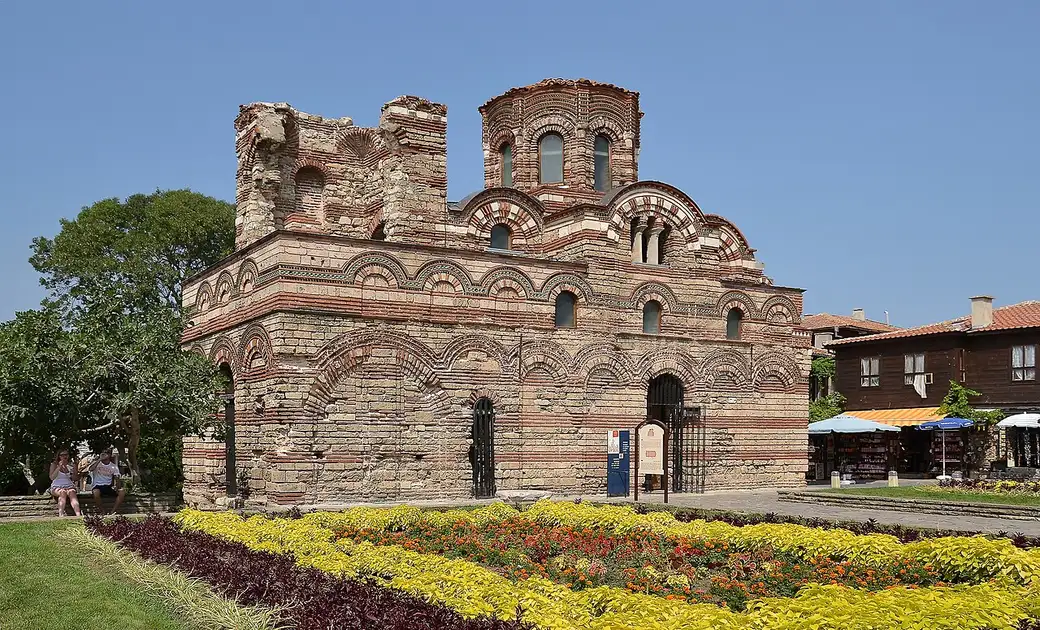
Nessebar is a small Bulgarian town on the Black Sea whose old quarter, packed onto a rocky peninsula, has been a UNESCO World Heritage Site since 1983. The draw is the churches: around forty medieval ones survive here, wholly or in part, along cobbled lanes lined with wooden houses that lean out over the sea. You can see the whole peninsula on foot in half a day, so most people come as a day trip from the beach resorts, though the old town is at its best early in the morning or after the coach crowds leave.
The churches are the whole point - around forty medieval ones, some roofless shells, a few still frescoed - and knowing which handful to prioritise is what saves a half-day here from blurring together. Tickets are in euros now (Bulgaria switched on 1 January 2026), and the town is an easy hop from Burgas, its airport, Varna or Sunny Beach. If Nessebar is one stop on a bigger trip, it slots onto the 7-day Bulgaria itinerary as the coastal leg.
What makes Nessebar special?
Two things: the setting and the churches. The old town sits on a rocky peninsula, once an island, tied to the mainland by a narrow man-made causeway barely 400 metres long. Everything historic is out on that spur; the modern town, the hotels and the bus station are back on the mainland. That separation is why the old quarter still feels like a place apart rather than a resort suburb.
The town is genuinely old. It began as a Thracian settlement, then became a Greek colony founded by Dorians from Megara at the start of the 6th century BC, known as Mesembria. Rome took it in 72 BC, Khan Krum brought it into the Bulgarian state in 812, and it changed hands repeatedly between Byzantium and Bulgaria before falling to the Ottomans in 1453. Each of those chapters left something on the rock, which is exactly why UNESCO listed it under the criteria for a unique testimony to a lost civilisation and an outstanding example of building traditions layered over centuries.
The churches: which ones are worth it
You’ll hear that Nessebar has “forty churches”, and the number holds up: roughly forty survive wholly or partly in and around the old town. Don’t expect forty working churches, though. Some are museums, some are art galleries, a couple are still active, and several are dramatic roofless ruins you simply walk up to. The style that made the town famous is Byzantine and post-Byzantine masonry: alternating bands of pale stone and red brick, blind arcades, and inset discs of green-glazed ceramic that catch the light. Here are the ones to make time for.
Christ Pantocrator, the picture-postcard one
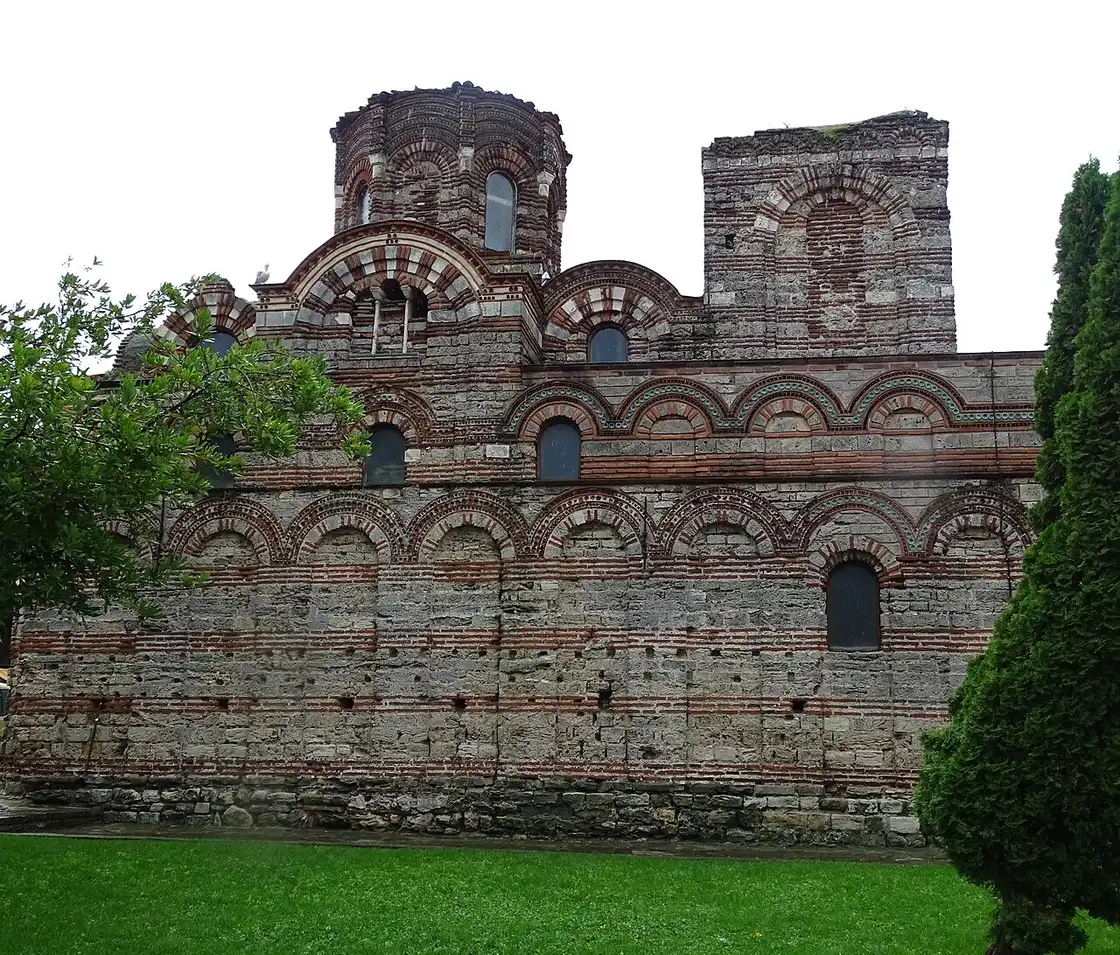
If you’ve seen one photo of Nessebar, it’s probably this. The Church of Christ Pantocrator dates from the 13th to 14th century and is celebrated for the sheer showiness of its outside: four-colour brick-and-stone banding, rows of blind arches, a frieze of ceramic rosettes, and even a swastika-meander motif running along the wall (an ancient sun symbol here, nothing to do with the 20th century). It sits right on the main lane and now works as an art gallery. Walk a full circle around it; the decoration changes on every face.
St Stephen, the one with the frescoes
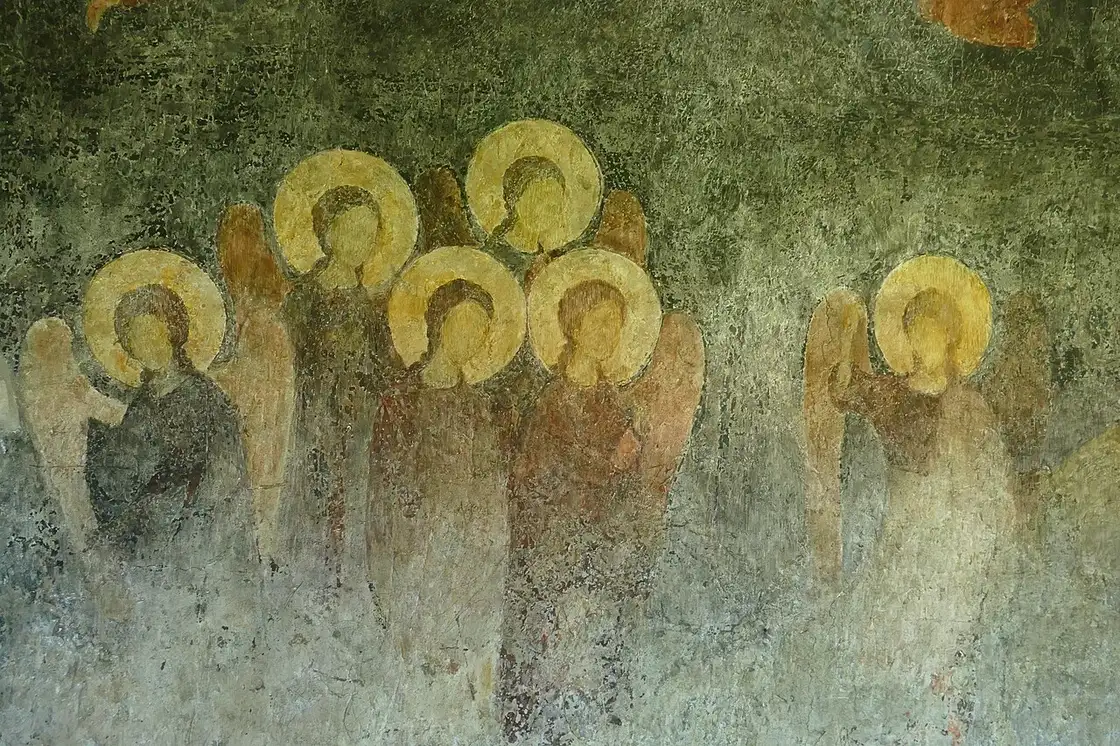
The Church of St Stephen, also called the New Metropolitan Church, is the one to actually go inside, and it’s ticketed for good reason. The core is 11th century, extended and reworked between the 16th and 18th centuries, and the plain stone shell hides an interior almost entirely covered in frescoes: hundreds of painted figures across the walls and vaults, layered over several centuries of repainting. It’s dim, cool and crowded with saints, a complete contrast to the bare ruins outside. This is where the modest entry fee is genuinely worth paying.
St John Aliturgetos, the ruin on the sea
Down on the southern shore, the Church of St John Aliturgetos is the most romantic wreck in town: a 14th-century church, roofless and open to the sky, standing on a terrace above the water with the richest exterior decoration of the lot. The name means “unconsecrated”, and the story is that it was never formally sanctified. Come here at the end of the day; the low sun on the striped stone and the sea behind it’s the best free view in Nessebar.
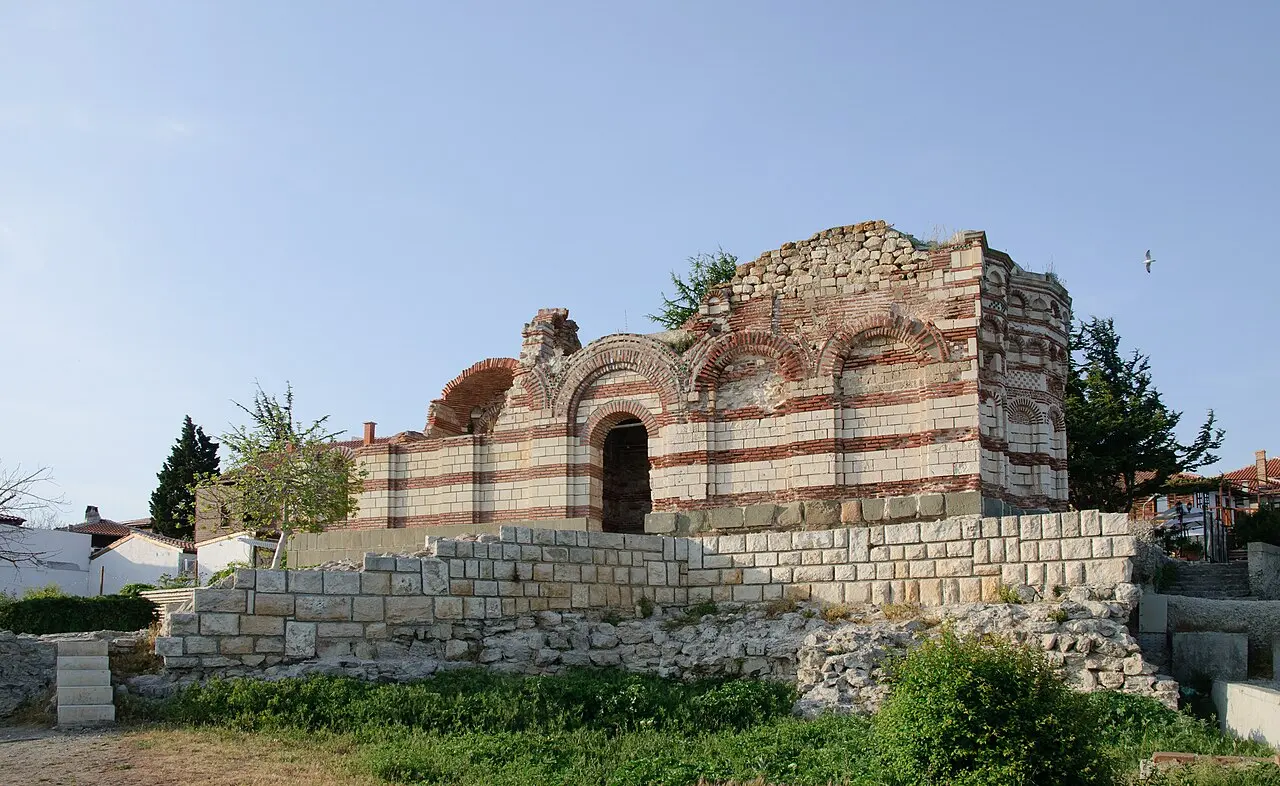
The rest reward a slow wander. The Church of St John the Baptist (10th to 11th century) is one of the best-preserved and still stands solid on a square in the middle of the old town. The Old Metropolitan Church of St Sophia (late 5th to early 6th century) is a huge, roofless early-Christian basilica in the centre, floodlit at night and free to walk into. Scattered between them are St Paraskeva, the Archangels Michael and Gabriel, St Theodore and more, most of them small and half-ruined, all of them free from the outside.
Tickets, hours and how long you need
Half a day is enough to walk the whole peninsula, which is only about 850 metres end to end. If you want to go inside the ticketed churches and the museum without rushing, give it most of a day.
The museum authority sells tickets object by object, with prices now posted in euros (checked July 2026; always reconfirm on the day, as museums adjust rates and seasonal hours). The Archaeological Museum at the entrance to the old town is 4.60 euros for adults and 2.30 euros for children; the Church of St Stephen is the same, 4.60 euros adult / 2.30 euros child. If you plan to see several sites, the combined pass to all the museum objects is 17.90 euros for adults and 8.69 euros for children, which pays off from about the fourth site onward. Opening is generally from around 09:00, with closing sliding later in high summer and earlier in winter, so treat any single posted time with suspicion and check the board at the gate.
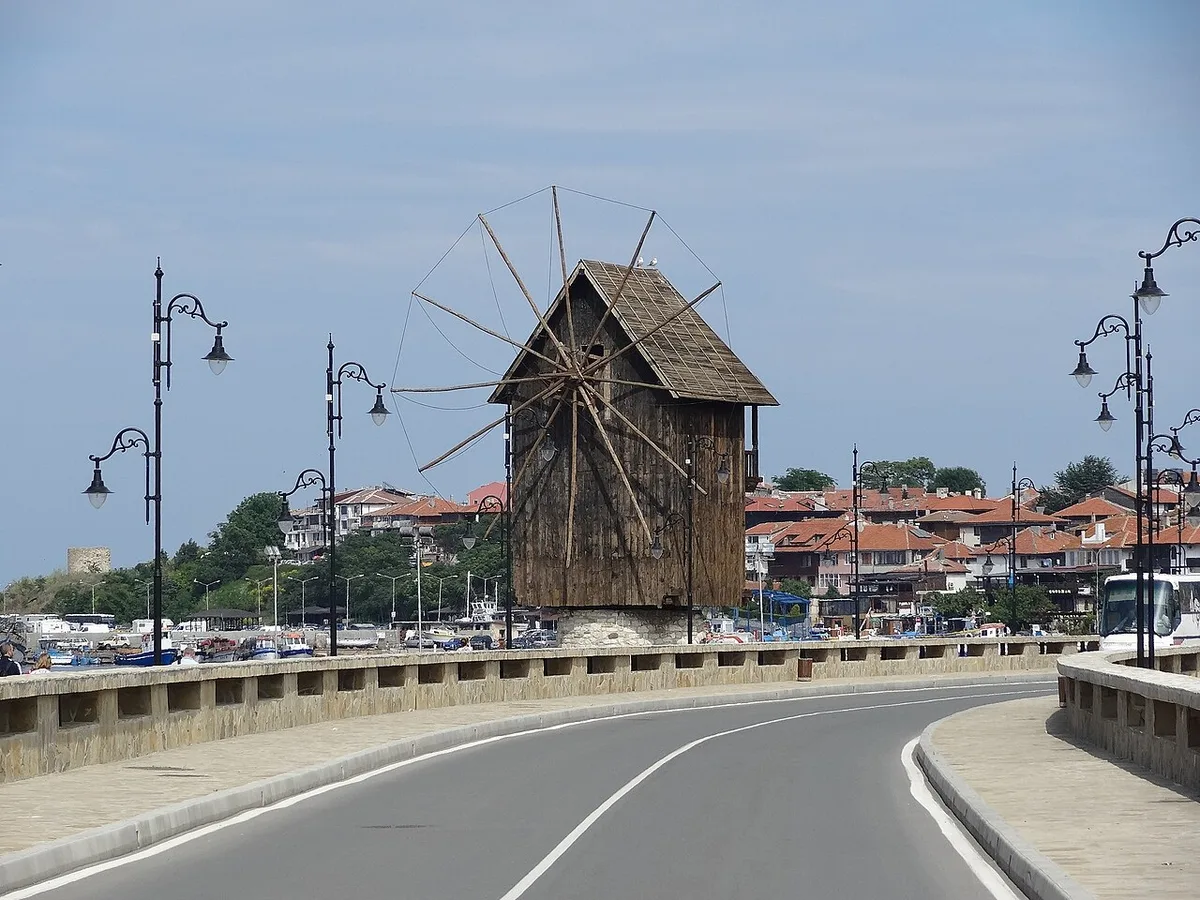
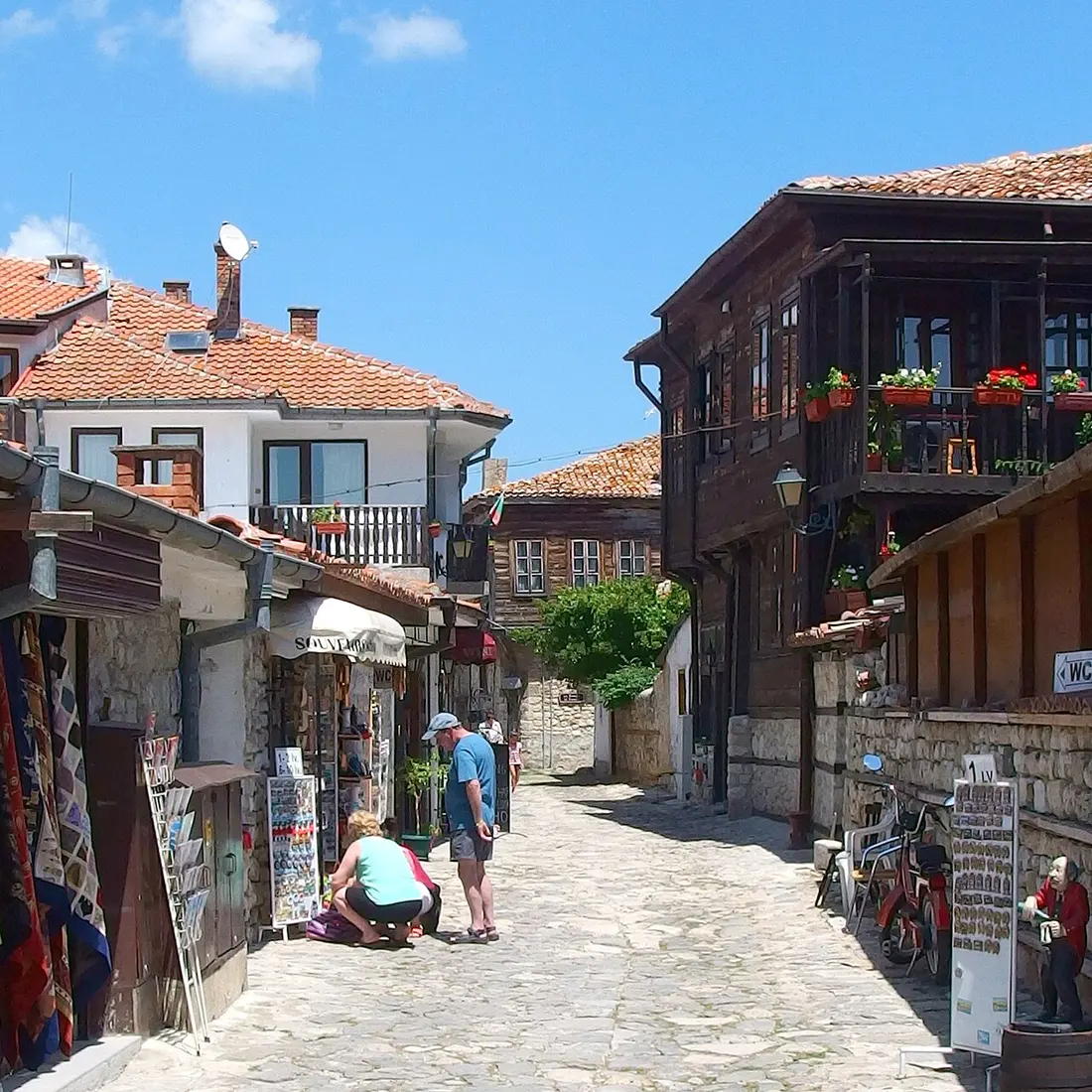
The Archaeological Museum is a worthwhile 45 minutes even if churches aren’t your thing: it lays out the town’s Thracian, Greek, Roman and medieval past, including a section of the ancient fortress gate, and puts everything you then walk past into context. The wooden windmill on the causeway and the 19th-century Black Sea Revival houses, with a stone ground floor and a jettied timber upper storey that overhangs the lane, are free and everywhere; the houses are as much a part of the UNESCO listing as the churches.
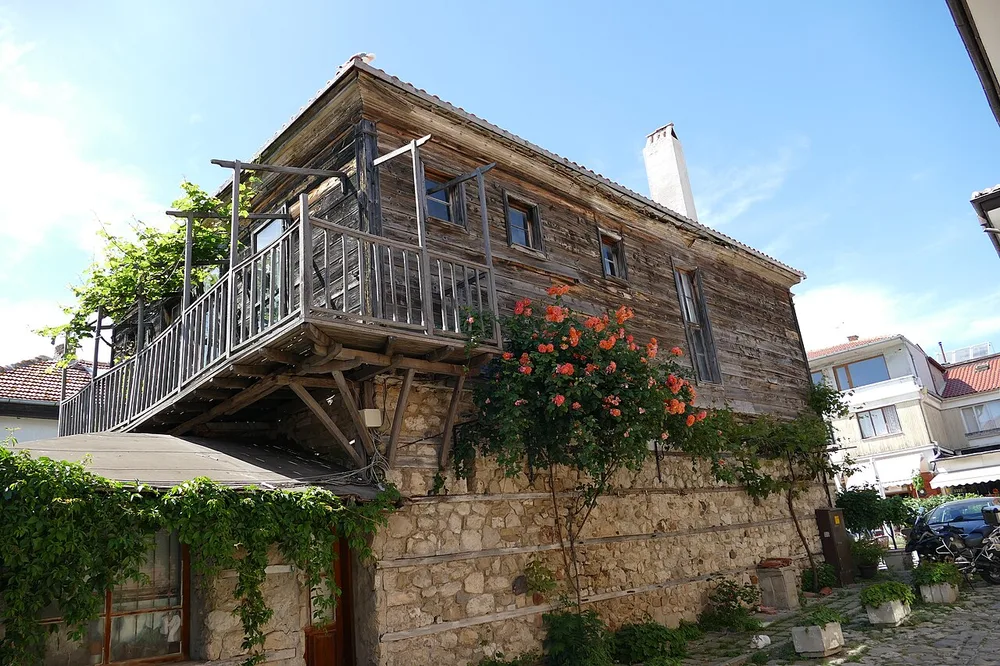
A word of honesty about the crowds. Nessebar is squarely on the cruise and coach-tour circuit, and in July and August the main lane between the entrance and the harbour turns into a slow river of people and souvenir stalls by mid-morning. It thins out fast if you go early or stay into the evening, and the side streets are quiet even at noon. Come in May, June or September and you get warm weather with a fraction of the crush. If you’re basing yourself on the coast anyway, a night in a guesthouse out on the peninsula lets you have the old town almost to yourself before the day-trippers arrive.
How to get to Nessebar
Nessebar sits on the central Black Sea coast, closest to Burgas, with Sunny Beach right next door and Varna a longer run up the coast. The old town itself is largely closed to cars (there’s a paid barrier at the causeway), so unless you’re staying inside, park on the mainland or, easier, arrive by bus. Driving down from Varna, Nessebar is day four of the Black Sea coast road trip - still park on the mainland.
From Burgas and Burgas Airport
Burgas is the practical gateway, about 37 km south. Buses run frequently through the day from Burgas South Bus Station (operated by M-Bus / DS Bus) via Pomorie and Ravda, and the trip takes about 1 hour 10 minutes for a few euros. Departures are spread across the day from early morning to the evening, so you rarely wait long; buy at the station.
From Burgas Airport (BOJ) it’s roughly 27 to 30 km. The simplest option with luggage is a taxi or pre-booked transfer, about 35 minutes and typically 30 to 35 euros. There’s also a public bus (around 46 minutes, a couple of euros), but the stop sits a few hundred metres from the terminal and often means a change, so if you’ve bags and a family in tow the direct transfer removes the hassle.
From Varna
Varna, the coast’s northern hub and its own airport city, is about 90 to 95 km north of Nessebar. Direct coaches take around 1 hour 30 minutes and cost roughly 8 to 9 euros. It’s an easy half-day run if you’re based in Varna, though Nessebar makes a much more natural day trip from Burgas or Sunny Beach than from Varna.
From Sunny Beach (and the water taxi)
If you’re staying in Sunny Beach, Nessebar is basically next door, only about 4 to 5 km around the bay. Local buses shuttle between the two roughly every 30 minutes and take about 8 minutes; it’s the cheapest and most frequent connection anywhere on this stretch. In summer there’s also a seasonal water taxi across the bay, which turns the trip into a short and scenic boat ride, and the shore walk between the two is doable in about an hour if the weather is kind. For how Nessebar fits next to Sozopol and Strandzha as resort day outs, see day trips from Sunny Beach.
Where to stay and what comes next
For the quiet-evenings version of Nessebar, stay out on the peninsula in one of the old wooden houses turned guesthouse: you get the empty lanes at dawn and dusk, and the churches on your doorstep. For beaches, nightlife and a wider choice of hotels, base in Sunny Beach next door and hop over by bus or boat. Either way the old town is small enough that you never need a car once you arrive.
From here the coast runs on to Burgas, with its long sea garden, and up to Varna and its Roman baths. Just south of Burgas is Sozopol, the other old peninsula town on this coast: smaller and less famous than Nessebar, but with its own sandy beaches a short walk from the old lanes, so the two pair well on a Black Sea trip, and our Nessebar vs Sozopol comparison weighs up which to pick. Inland, Nessebar pairs naturally with the rest of a Bulgaria trip: the mountain monastery at Rila, the old towns of Plovdiv and Veliko Tarnovo, and the capital, Sofia. The easiest way to string the coast together with the interior is the 7-day Bulgaria itinerary, which builds in a Black Sea day exactly like this one.
Photos
Read also

Cities · 10 min read
Bulgaria's Spa Towns: Velingrad, Hisarya & More
Verified · August 31, 2026Compare Velingrad, Sandanski and Hisarya: water temps, climate, Roman walls, when to go year-round, and real 2026 spa-hotel rates.

Cities · 12 min read
Where to Stay in Pamporovo: Hotels & Chalets
Verified · August 22, 2026Pamporovo hotels, chalets and apartments by lift base: Malina vs Studenets, why "renovated" is not "new", and how to price a bed.

Cities · 14 min read
2 Days in Sofia: The Perfect Weekend Itinerary
Verified · August 20, 2026A 2-day Sofia itinerary for a Friday-to-Sunday trip: Nevsky, Serdica, Boyana Church, real euro prices, and what actually fits in one weekend.

Cities · 9 min read
Where to Stay in Burgas: Best Areas & Hotels
Verified · August 10, 2026Where to stay in Burgas: city centre for a first visit, Sea Garden for beach and park, Lazur for quiet value, or Sarafovo by the airport.