
Boyana Church: Visiting the UNESCO Frescoes
How to visit Boyana Church from Sofia: the 1259 frescoes, the 10-minute time limit, real euro prices, opening hours, and bus 64 (no tour needed).
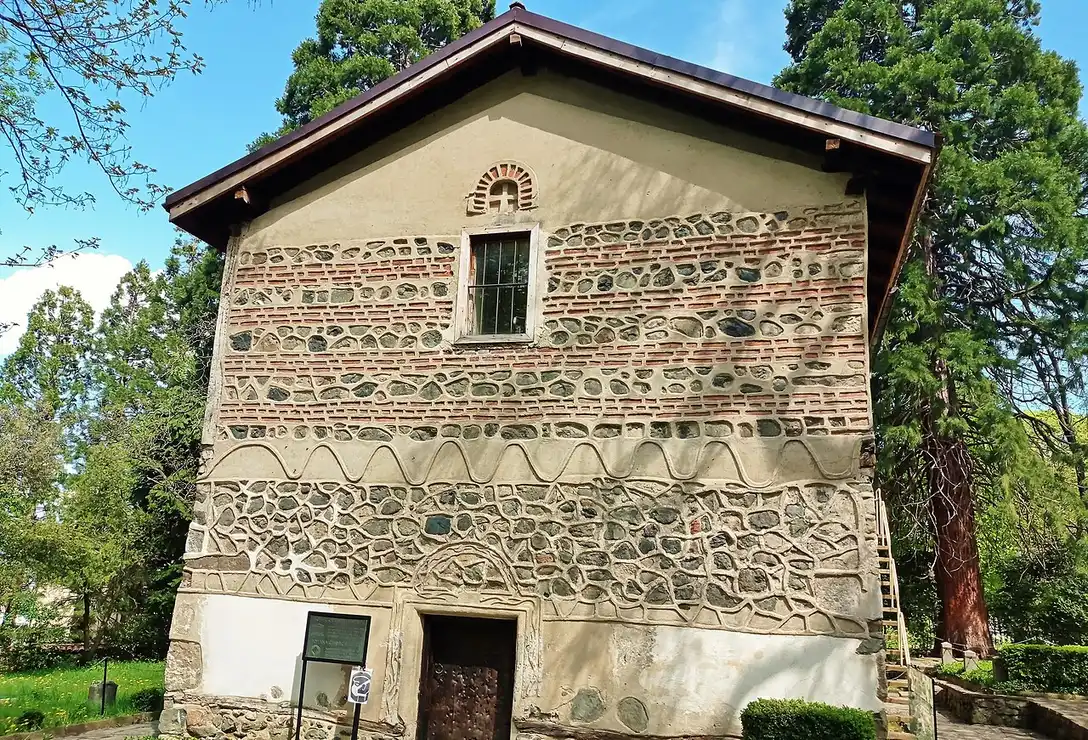
Boyana Church is tiny, easy to reach, and the paintings inside are worth planning a morning around. It sits about 8 km from central Sofia, on the southern edge of the city below Vitosha, and the reason it’s a UNESCO World Heritage Site is a single layer of frescoes finished in 1259: faces so lifelike and full of feeling that art historians talk about them in the same breath as the early Italian Renaissance, which arrived a good two generations later. The catch is that they only let a small group inside at a time, for about ten minutes, so this is a visit you time rather than wander into.
One thing to set expectations up front: do not come expecting a grand cathedral. Boyana is three small rooms you could pace out in under a minute, and the value is entirely on the walls - which is exactly why that ten-minute slot inside, now priced in euros, rewards a little planning rather than a wander-in.
Why is Boyana Church a UNESCO site?
Because of the 1259 frescoes, and specifically because of how modern they look. UNESCO added Boyana to the World Heritage List in 1979, and its case rests on this second, main layer of painting: 89 scenes with 240 human figures, done by an unknown master working in the tradition of the Tarnovo School, the artistic centre of the medieval Bulgarian capital.
What makes them stand out is the realism. Byzantine and early medieval church painting tends toward flat, stylised, almost identical saints. The Boyana painter broke that mould: the figures have individual faces, weight, expression, and something close to a psychological inner life. That is why you’ll see them described everywhere as “pre-Renaissance,” painted roughly 70 years before Giotto started doing similar things in Italy. It’s a claim worth taking with a pinch of scholarly salt, but standing in the room, you understand why people reach for it.
The church itself is really three buildings joined into one, built across three eras:
- The eastern church, a small single-apse chapel, is the oldest part, from the late 10th or early 11th century.
- The middle two-storey section was added around 1259 by a local nobleman, Sebastocrator Kaloyan, and his wife Desislava, and this is the part carrying the famous frescoes.
- The western extension is much newer, built with local donations in the mid-19th century.
So you’re looking at 900-plus years of building history in one small footprint, with fresco fragments surviving from the 11th-12th century right through to the 19th.
What you actually see inside (and the 10-minute rule)
Here’s the part to plan around. To protect the paintings, the interior is kept cool and dry, air-conditioned to a steady 17-18 °C, and they admit only a small group (up to about nine people) at a time, for roughly ten minutes, before the next group rotates in. Your own breath and body heat are, quite literally, the threat: humidity is what degrades 750-year-old plaster and pigment.
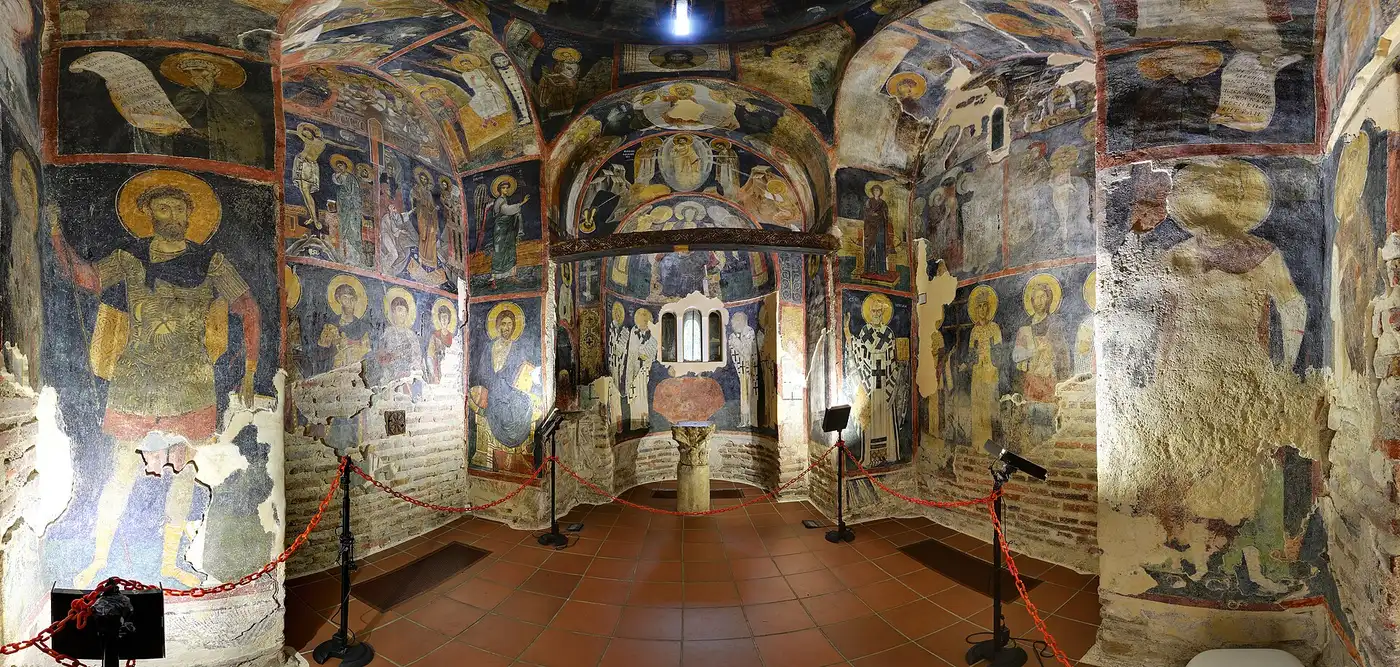
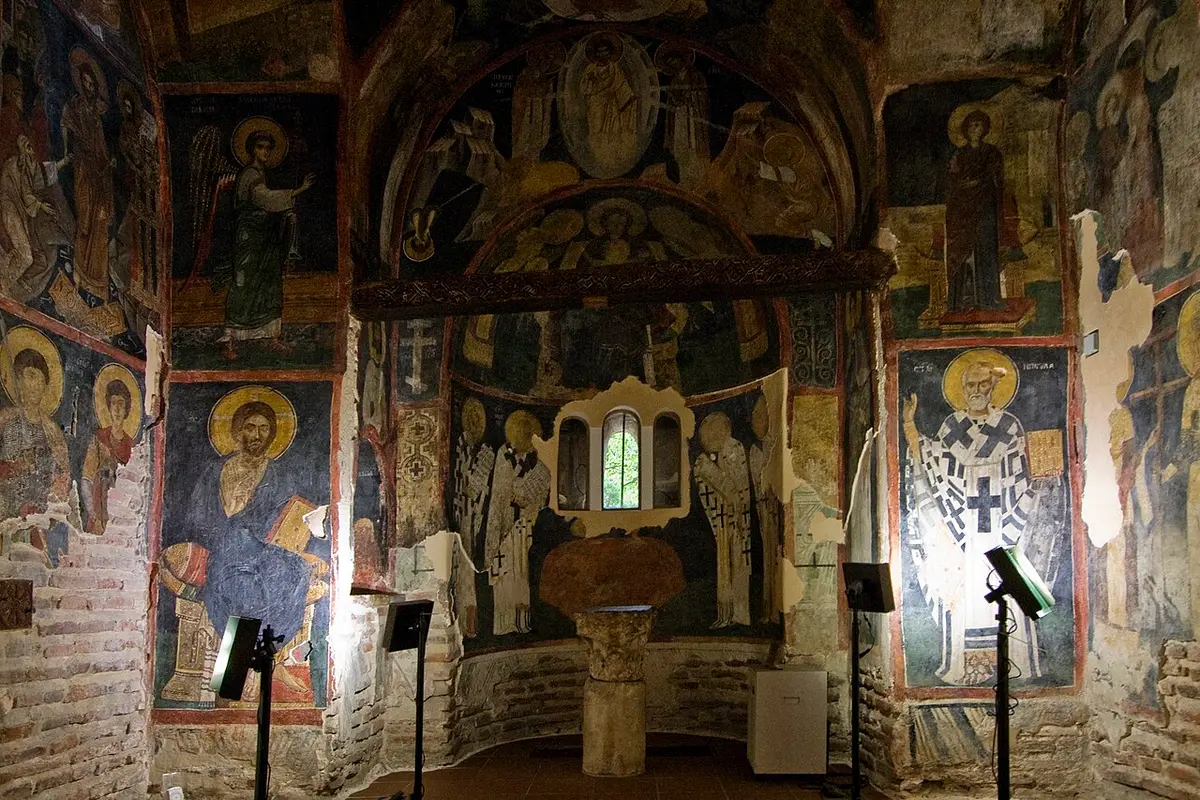
Ten minutes sounds short, and it is, but the room is small enough that you can take in a lot if you know where to look. The frescoes cover the walls floor to vaulting. A guide or the posted panels will point you to the highlights, but three things are worth finding on your own:
- The donor portraits on the north wall. Sebastocrator Kaloyan is shown holding a model of the church he paid for; beside him, Desislava is one of the most famous faces in Bulgarian art, a noblewoman in a patterned robe with a direct, almost contemporary gaze. Nearby are Tsar Konstantin Asen Tikh and Tsaritsa Irina, the reigning royals of the day. These are real medieval people, painted as individuals.
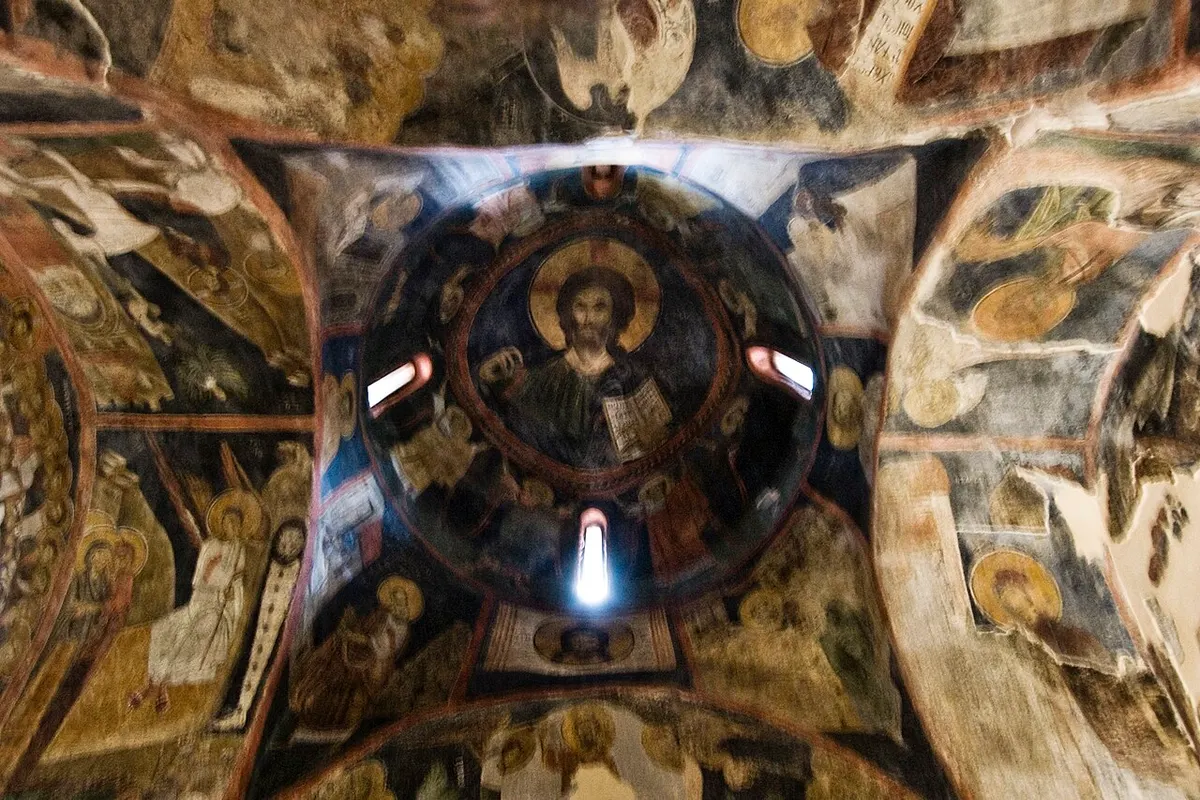
- The Christ Pantocrator and the saints, whose faces carry the emotional realism the site is known for. Look at the way expressions differ from one figure to the next instead of repeating a single template.
- The everyday details, like the famous scene where Christ is shown with a loaf of bread scored exactly the way Bulgarian round bread still is, a small, human touch that connects the 13th century to a bakery you’ll pass today.
A practical note: photography inside isn’t allowed, to protect the frescoes. Leave the camera in your bag and just look. You can photograph the exterior and the garden as much as you like, so save the phone for the pretty stone-and-brick facade on the way out.
Individual visits run on a fixed timetable rather than a live queue: two slots right at opening, then a gap while the late-morning slots go to booked groups. Buy your ticket at the small kiosk when you arrive, or email reservation@boyanachurch.info ahead and pay by bank transfer to lock a specific slot. On a quiet weekday morning you may walk almost straight in at opening; midday in summer, when the tour minibuses pull up, you’re more likely to land in one of the group-only gaps. Early or late in the day is the move.
How much does it cost, and when is it open?
Prices moved to euros when Bulgaria joined the eurozone on 1 January 2026, so the figures below are in euros, though small kiosks still like cash. Treat exact amounts as a guide and confirm at the desk, since this is precisely the kind of number that shifts around a currency changeover.
- Adult ticket: around 6 EUR.
- Student and reduced: a little over 1 EUR.
- Groups of 10 or more: cheaper per person.
Opening hours run on a summer and winter schedule:
- Summer (1 April to 30 September): 09:30-18:00.
- Winter (1 October to 31 March): 09:00-17:30.
It’s open daily, with last entry about 10 minutes before closing time (the church closes for a few public holidays, including 1 January and Orthodox Easter Sunday). Because slots are timed and the day has a hard end, don’t roll up ten minutes before close and expect to get in. Give yourself a buffer.
How do you get to Boyana Church from Sofia?
It’s genuinely easy to do on your own, and you don’t need a guided tour to see it. Boyana sits about 8 km south of the centre, in the leafy Boyana district on the lower slopes of Vitosha.
By bus is the cheapest way. Bus 64 is the one line that runs right up to the church: you catch it near the Vitosha metro station (Line M2) on Bulgaria Boulevard and ride to the Boyansko Hanche stop, a short walk from the gate. Bus 107 is an alternative from the tram 5 terminus. All city transport takes the same cheap single ticket. Reckon on roughly 30-40 minutes door to door depending on connections.
By taxi or transfer is faster and worth it if you’re short on time, travelling as a family, or pairing the church with the museum about 2 km away. A metered taxi from the centre is quick and inexpensive by Western standards, around 15-20 minutes outside of rush hour. If you would rather have a fixed price and a driver who knows the spot, a pre-booked transfer removes the haggling.
Driving yourself is fine too: there’s parking near the site, and Boyana is an easy add-on if you are already heading up Vitosha for a hike. That pairing is the cheapest half-day out of the city, and our guide to day trips from Sofia weighs it against the longer runs to Rila Monastery and Koprivshtitsa.
Pair it with the National History Museum
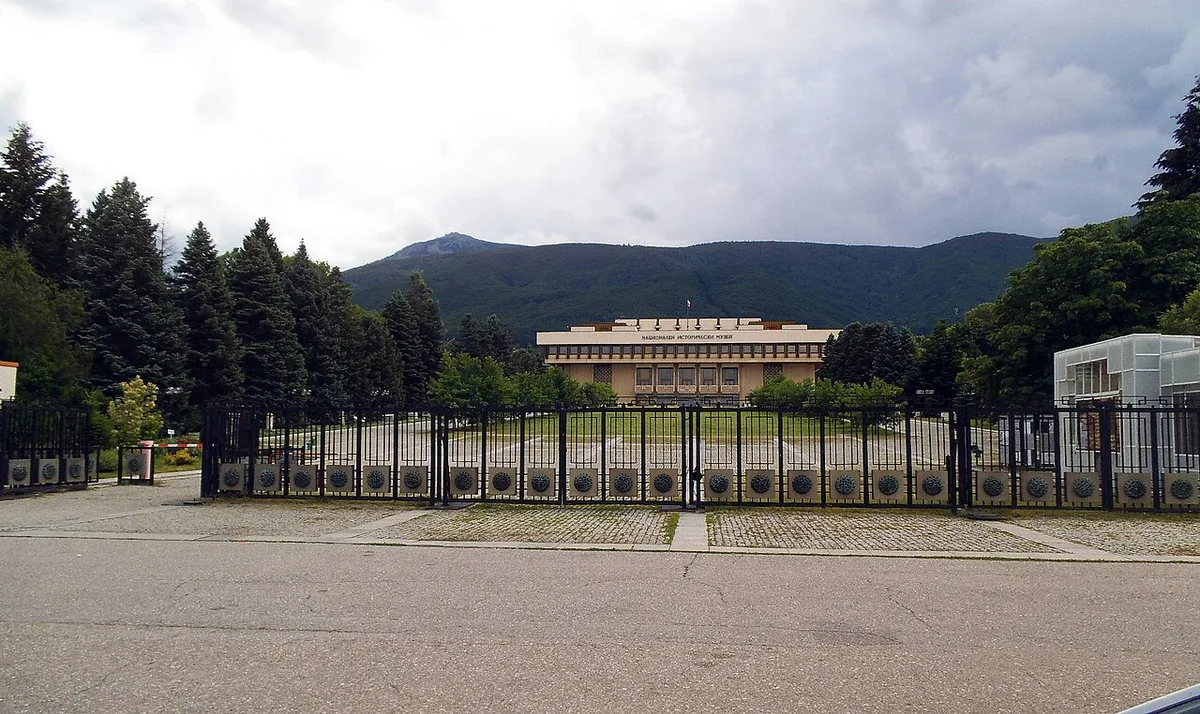
The single best reason to build a half-day around Boyana rather than a rushed hour is that the National Museum of History is about 2 km away in the same district - a 25 to 30 minute walk, or a quick hop on bus 64. Boyana Church is actually run as part of this museum, and the museum holds the country’s headline collection: Thracian gold, including the astonishing Panagyurishte Treasure, plus a sweep through Bulgarian history from prehistory to the 20th century. It is housed in a hulking former government residence, and you could easily spend two hours there.
The natural rhythm is to do the church first, when it’s quietest, then walk down to the museum, which needs no timed slot and rewards a slower visit. Together they make a satisfying morning-into-afternoon out of the city centre.
Is Boyana Church worth it?
Yes, with one honest caveat: manage your expectations about scale and time. You’re paying a few euros and travelling to the edge of town for about ten minutes in a very small room. If you want sweeping architecture, this isn’t it. If you care about art, medieval history, or just the strange thrill of standing a metre from faces painted in 1259 that look like people you might know, it is one of the most memorable half-hours in Sofia, and paired with the museum a couple of kilometres away it earns a comfortable half-day.
For where this fits in a city visit, see our guide to the best things to do in Sofia, which uses Boyana and Vitosha as the natural third day. If it is church art you are chasing, the grand ones back in the centre - the giant Alexander Nevsky, the 6th-century Hagia Sophia and the golden Russian Church - make a walkable half-day of their own, laid out in our Sofia churches guide. The other unmissable UNESCO day trip from the capital is Rila Monastery, about two hours south, and some day tours pair the two; for a mountain day in the same range instead, the Seven Rila Lakes are a chairlift-and-loop hike. Browse more of Bulgaria’s top attractions, or fit Sofia and its sights into a bigger loop with our 7-day Bulgaria itinerary.
Photos
Admission and opening hours
- Admission price
- Adult around 6 EUR, student a little over 1 EUR. Group rates for 10+ are cheaper per person.
- Opening hours
- Summer (1 Apr-30 Sep) 09:30-18:00; winter (1 Oct-31 Mar) 09:00-17:30. Open daily. Last entry about 10 minutes before closing.
Small groups only: up to about 9 people per 10-minute slot, roughly 10 minutes inside the painted room. Individual slots run on a fixed timetable rather than a live queue - two right at opening, then a gap while mid-morning slots go to booked groups. Reserve by emailing reservation@boyanachurch.info and paying by bank transfer, or buy at the on-site kiosk on arrival. No photography inside. Confirm current prices and hours on the day.
Details checked: July 4, 2026
Distance ≈8 km · about 30-40 min by bus, or 15-20 min by taxi
- Sofia ≈8 km · about 30-40 min by bus, or 15-20 min by taxi On the southern edge of the city below Vitosha, in the Boyana district. Bus 64 is the one direct public option; get off at the Boyansko Hanche stop.
Read also

What to see · 13 min read
Skiing in Bulgaria vs the Alps: Honest Verdict
Verified · September 13, 2026Bansko's last published 6-day pass was 341 EUR; Livigno's 2026-27 rate is 374.50 EUR. Real lift-pass, terrain and rental numbers, checked Sep 2026.

What to see · 12 min read
Pirin National Park: Vihren, Trails & Lakes
Verified · September 3, 2026Pirin National Park: the Vihren hut road closure, UNESCO peaks, 27 marked trails, glacial lakes and Bansko visitor centre hours.

What to see · 12 min read
Climbing Musala: The Balkans' Highest Peak
Verified · August 29, 2026Climbing Musala, the Balkans' highest peak at 2,925 m: the Yastrebets gondola schedule and price, the real hiking time from the top station, huts and gear.

What to see · 9 min read
Learning to Ski in Bansko: Schools & Lessons
Verified · August 25, 2026Bansko ski lessons: group and private prices in euros from official schools, Banderishka Polyana base, plus the lift pass you still need. Checked 2026.