
Bulgaria in Winter: Ski, Spa Towns and What It Costs
Bulgaria in winter: day lift passes 33 to 59 euro, skis from 6 euro a day, thermal spa towns, the 15 November tyre law and when the snow arrives.
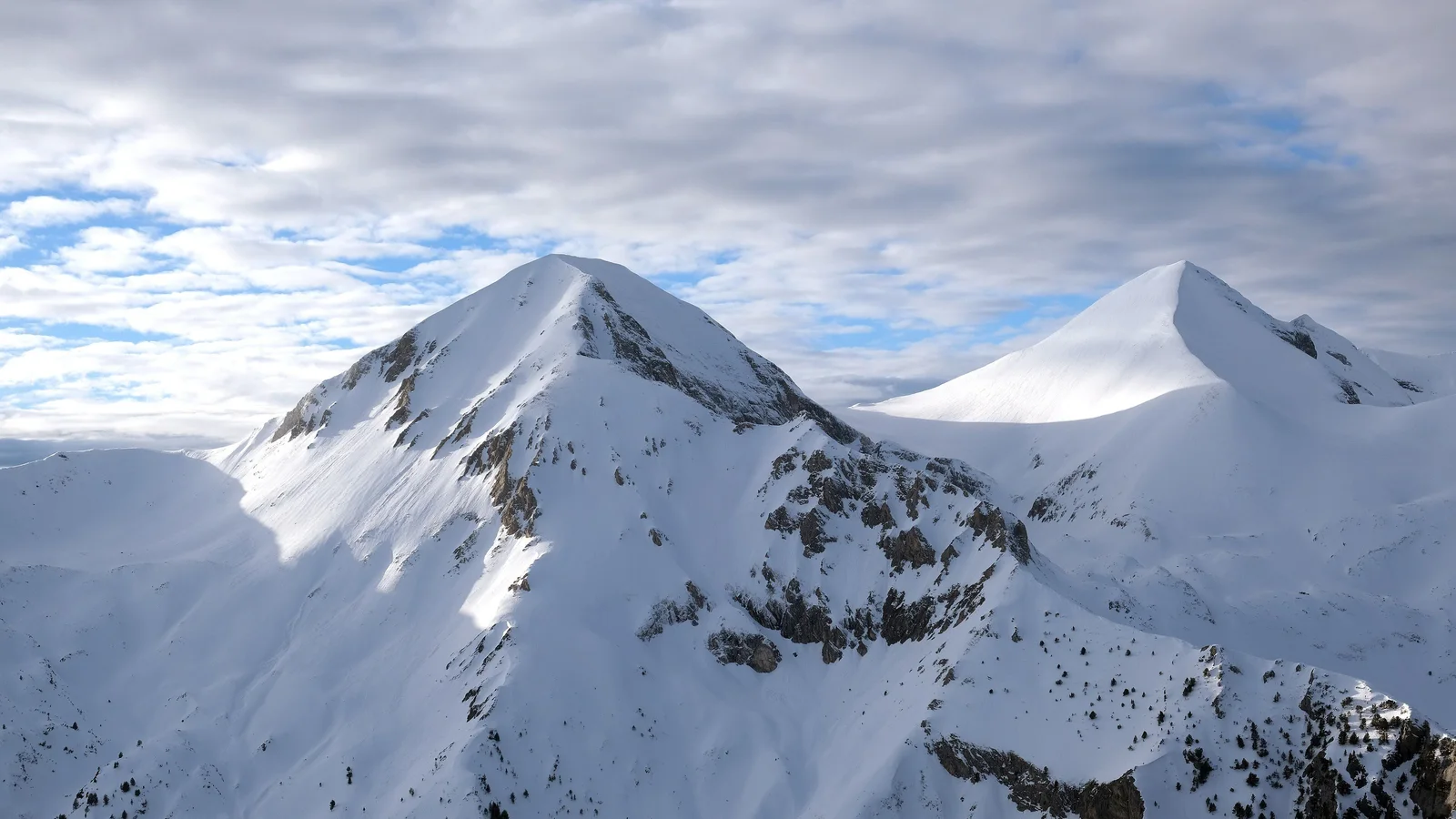
Bulgaria sells three completely different winter holidays and most visitors only ever hear about one. Skiing is the loud one: an adult day pass at Bansko opened the 2025/26 season at 33.23 euro on the opening tariff (from 14 December, withdrawn once the 27 December tariff began) before settling at 59 euro for high season, and a week of hired skis and boots costs about what a single day’s rental costs in a big Alpine resort. The quiet one is the spa towns, where mineral water surfaces at up to 91 degrees and almost no foreign visitor books.
Which fortnight you pick matters more than which resort you pick. That Bansko day pass nearly doubles between the quiet weeks and the peak, hotel rates move the same way but harder, and ten days of flexibility in December is worth a few hundred euro a head. In a country where a regular cafe coffee costs about a euro fifty, that’s an odd sentence to write, and it’s the single most useful thing to know before you open a booking site.
Three winters, one country
- A ski week, mid-December to early April. Bansko, Borovets or Pamporovo, a day pass of roughly 33 to 59 euro, hired kit from about 8 euro a day with boots. Best snow in January and February.
- A spa week, any time from November to March. Velingrad, Hisarya, Ognyanovo, Bankya. Bulgaria has 38 balneological resorts on the official count, and they fill with Bulgarians, not tourists.
- A city break of three or four days in Sofia, Plovdiv or Veliko Tarnovo. Cheapest flights of the year, museums with nobody in them, Sofia around freezing in January.
The Black Sea isn’t a fourth option: the resort strip shuts and Burgas airport thins to almost nothing. The first two combine well, because the thermal towns sit close to the mountains rather than away from them.
When the snow actually turns up
The season runs roughly mid-December to early April, and “roughly” is doing real work there. In 2025/26 Bansko opened on 13 December with 70 cm of snow at the Plato area and 140 cm up at Todorka peak, then skied through to 12 April. Pamporovo didn’t open until 28 December that same season, held back by warm weather. Two resorts in one small country, a fortnight apart, and neither knew the date in September.
So don’t buy flights against an opening date. If you need the snow to be there, book January or February, which is also when the mountain is busiest and dearest. Late March skis well and costs less.
Altitude is the quiet tiebreaker. Bansko tops out around 2,530 m and Borovets around 2,550 m, while Pamporovo’s high point at Snezhanka is 1,926 m, so Pamporovo loses its spring snow first. Our best time to visit Bulgaria guide sets the ski calendar against the rest of the year.
The three resorts, and who each one suits
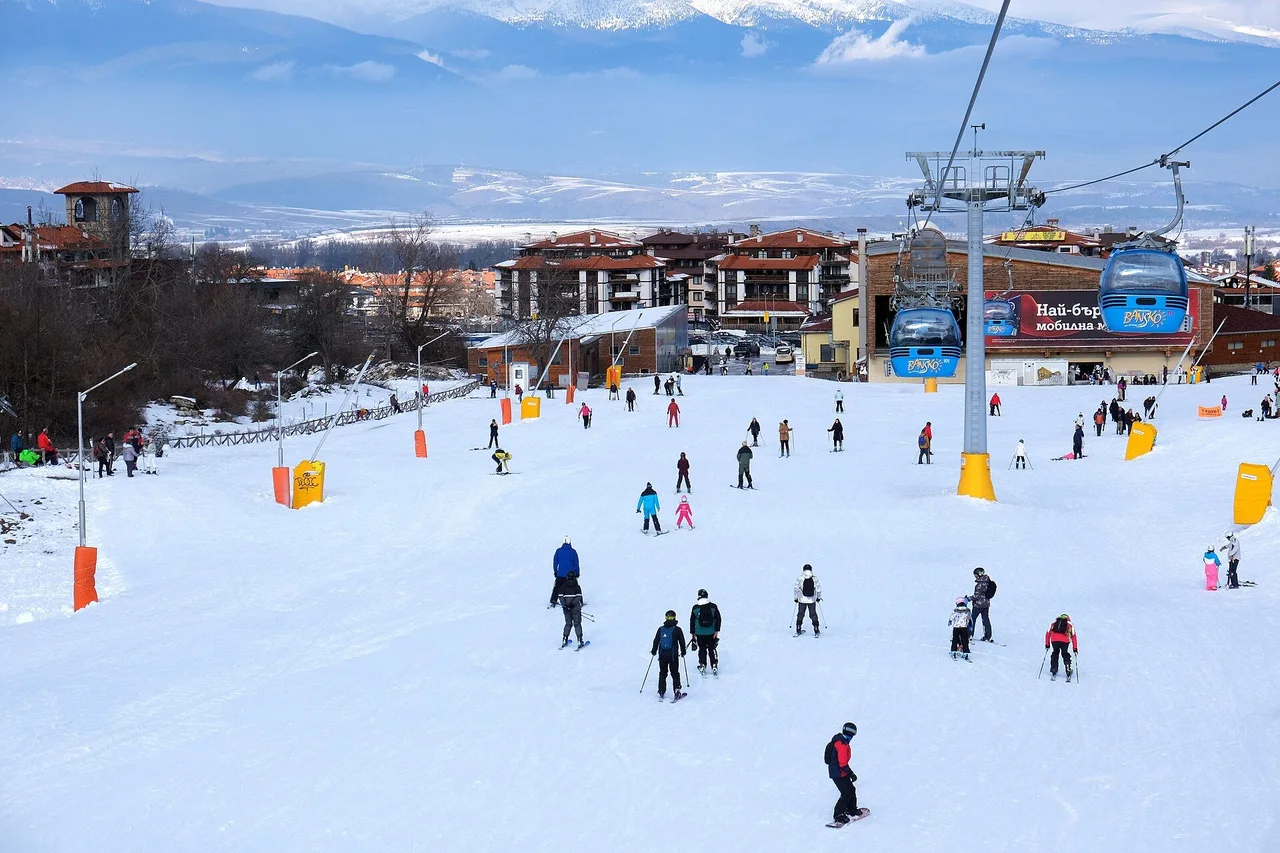
Bansko is the biggest mountain: 75 km of pistes in the Pirin, mostly easy and intermediate, reached by a gondola from its 990 m valley station, above the 925 m town, rather than lifts at the snowline - our Bansko versus Borovets head-to-head covers that trade-off and the queue it creates. What you get back is a real town with a cobbled old quarter and taverns rather than a hotel car park, plus a pass that includes mountain-rescue insurance. See the Bansko skiing guide and where to stay in Bansko, and for the evenings, our Bansko après-ski guide.
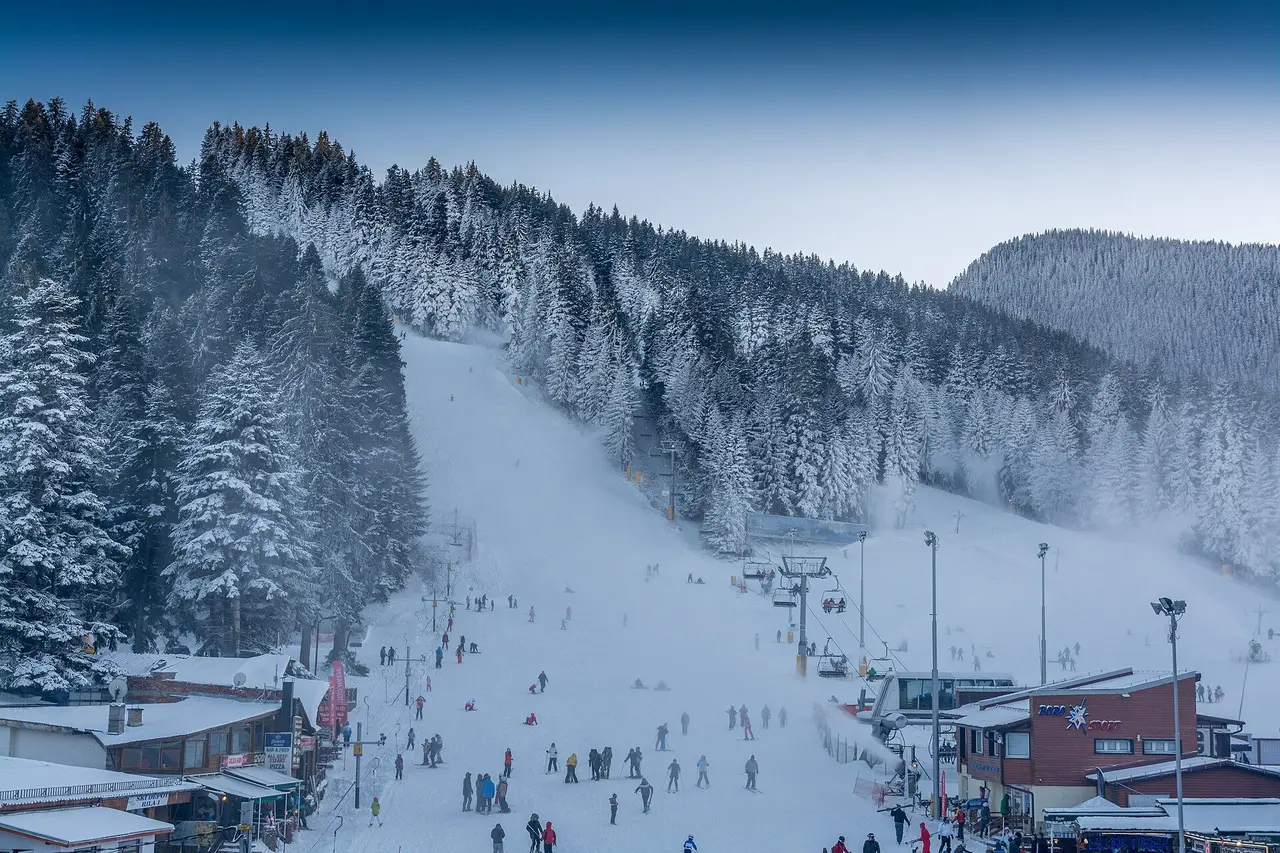
Borovets solves that problem by not having it: the base sits at about 1,350 m with the hotels standing among the lifts, so nobody carries skis far. 58 km of wide, tree-lined cruising an hour from Sofia, with floodlit night skiing on Wednesday to Saturday evenings, roughly 18:30 to 22:00, that quietly adds hours to a short trip. The adult day pass is 54 euro, holding flat until 15 March and then easing to 43.20 euro, about two weeks ahead of Bansko’s own spring step-down. Take it for a weekend, or a first family week where getting everyone from bed to lift without a fight matters more than terrain.
Pamporovo is the gentle, sunny one, down in the Rhodopes and only 80 km from Plovdiv. The terrain is overwhelmingly green and blue, snow cannons cover about 90 per cent of the pistes so it holds a base through a thin winter, and a day pass at 53 euro for adults (45 for youth 12-21, 32 for children 7-11), with the main zone and Mechi Chal at Chepelare sold as separate tickets in the resort’s own spring sale. Strong skiers will have seen everything that challenges them in two days. Torn between Bansko and Pamporovo? Start with Bansko or Pamporovo. Choosing between the two Sofia-side resorts? The Bansko versus Borovets head-to-head settles it; the Borovets and Pamporovo guides stand on their own.
What a week on the snow really costs
The reason Bulgaria is cheap isn’t the lift pass: Borovets at 54 euro and Pamporovo at 53 sit within a few euro of Bansko’s 59-euro peak rate. What collapses is everything else.
A published price list from a Bansko hire shop puts an economy adult ski set at 6.00 euro for one day and 27.00 euro for six, with boots adding 1.95 euro a day or 10.35 for six. That’s skis, poles and boots for six days for 37.35 euro. A performance ski is 7.20 a day, junior skis alone start at 4.50 a day with boots priced separately, and a child’s six-day set with boots lands near 28 euro.
If you would rather buy it as one line, a Bansko operator sells a five-day lift pass with skis, poles and boots at 310 euro for an adult and 155 for a child on its basic tier. Whether that beats buying the parts separately depends on which tariff week you land in, so do the arithmetic rather than assume the bundle wins. All of these are 2025/26 lists; the 2026/27 numbers appear in the autumn. Stack pass, bed, food and transfer into one week in How much a Bulgaria ski holiday costs. Is Bulgaria expensive puts food and beds next to the rest of Europe.
The holiday fortnight plays by different rules
Between Christmas and New Year the whole country reprices. Lift tariffs hit their peak, hotel rates follow, and most hotels add a compulsory gala dinner to the bill for 31 December whether you wanted one or not. Four public holidays close banks and offices, the Sofia markets keep their own opening and closing dates, and beds for that week sell months earlier than the rest. Those numbers and dates are all in our guide to Christmas and New Year in Bulgaria. If your dates don’t have to land there, ski the week before it.
The other winter: thermal towns
This is the half of Bulgarian winter that foreign visitors miss. The official tourism figures count more than 550 known sources with 1,600 springs and 38 balneological resorts, and the towns built on them run all winter at low-season rates.
Velingrad, in the western Rhodopes, is the headline. Stitched together in 1948 out of three villages, Kamenitsa, Ladzhene and Chepino, it has water surfacing between 28 and 91 degrees, hottest in the Kamenitsa quarter, and the Kleptuza karst spring pushing 600 to 1,200 litres a second through two ponds in the middle of town. It sits 130 km from Sofia and 80 from Plovdiv, and its January average of plus 1.8 degrees makes it milder than the capital.
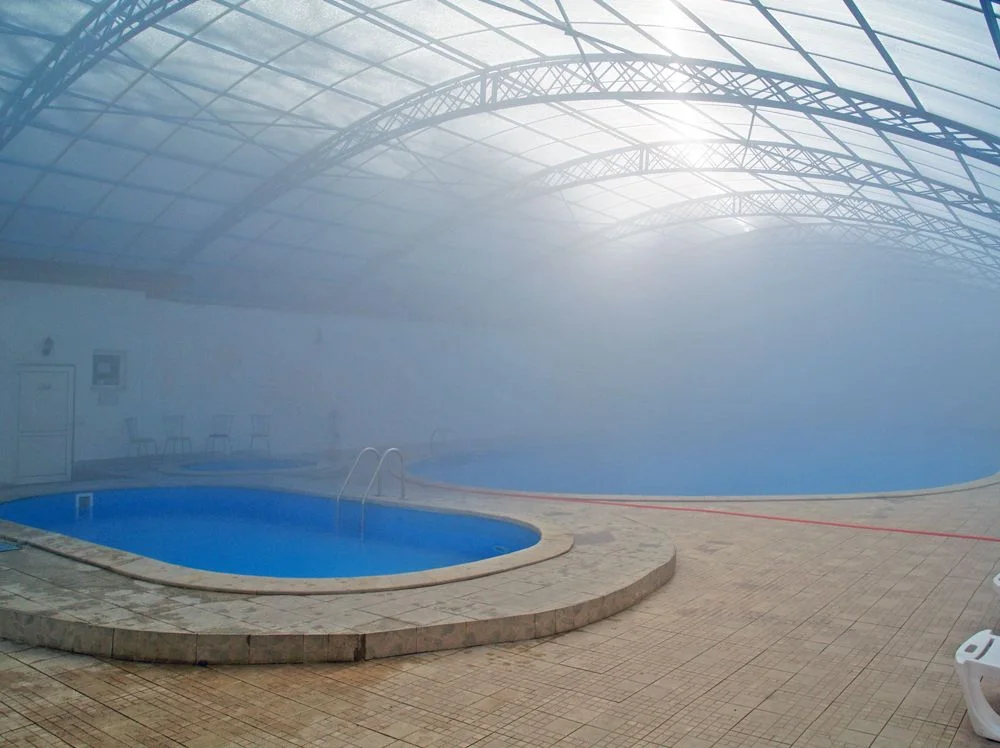
Ognyanovo is the one to know if you’re already skiing. It sits in the same corner of the country as Bansko, ten kilometres from Gotse Delchev, and its 24 thermal springs run at 39 to 42 degrees with a combined flow of 102 litres a second. A day off the snow here beats a day off the snow in a ski hotel.
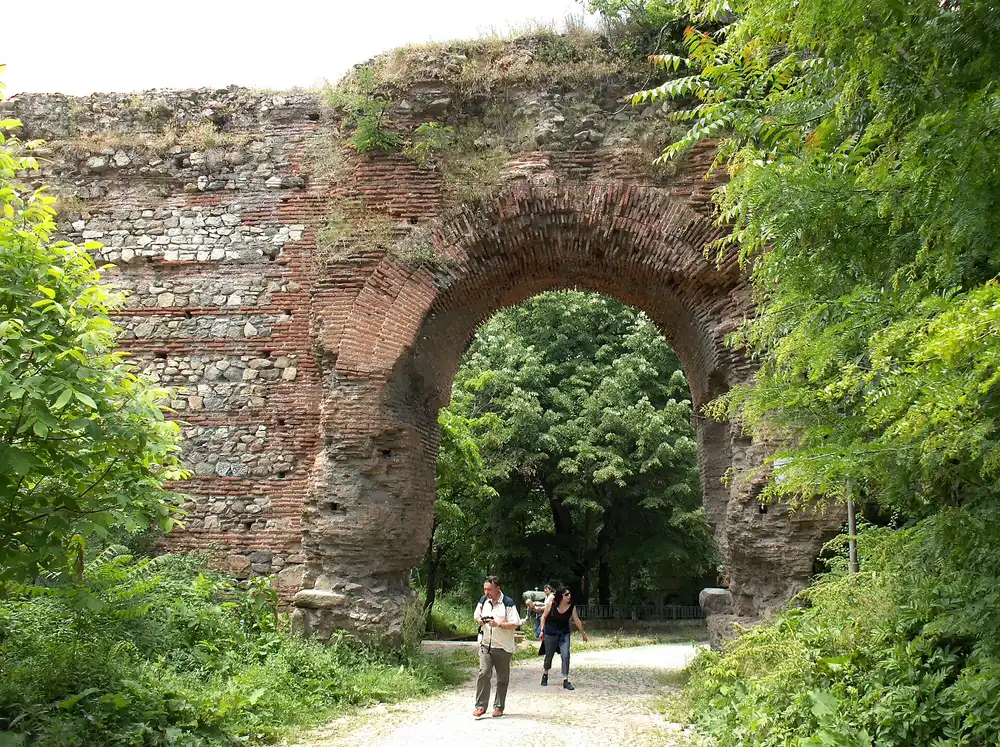
Hisarya is the odd one out, and the most interesting. Its 16 natural springs and 6 drilled wells sit inside a Roman spa town: Diocletian made Diocletianopolis a city in 293 CE, and 2,327 m of its wall still stands, up to 11 m high, with the southern gate known as the Camels rising 13 m. You can leave a thermal pool and be looking at third-century brickwork ten minutes later.
Two more are detours rather than weeks. Sapareva Banya throws 103-degree water about 18 m into the air from a geyser in the middle of town, on the road up to the Seven Rila Lakes. Bankya, 17 km west of Sofia, has a bath house built in 1907 to 1910 by the Munich architect Carl Hocheder. Sofia gives the water away outright, from free public spouts outside the Central Mineral Baths, which stopped being a bathhouse in 1986 and has housed the city history museum since 2015; things to do in Sofia puts it on the walking route.
One honest warning. Nobody publishes a standard entry price for any of this, because the pools belong to hotels and municipal treatment centres rather than to a leisure-spa industry. Several of these towns are medical facilities first, with balneologists and prescriptions. Ask what a room rate includes, and don’t assume “spa hotel” means what it means at home. For a year-round pick between Velingrad, Sandanski and Hisarya - climate, water ranges and who each town suits - see Bulgaria’s spa towns.
Cities in winter, and a coast that shuts
Sofia in January hovers around freezing, with nights below minus four, and snow in the capital is possible rather than promised. What you get instead is the emptiest version of the country, at the lowest rates of the year outside the New Year spike.
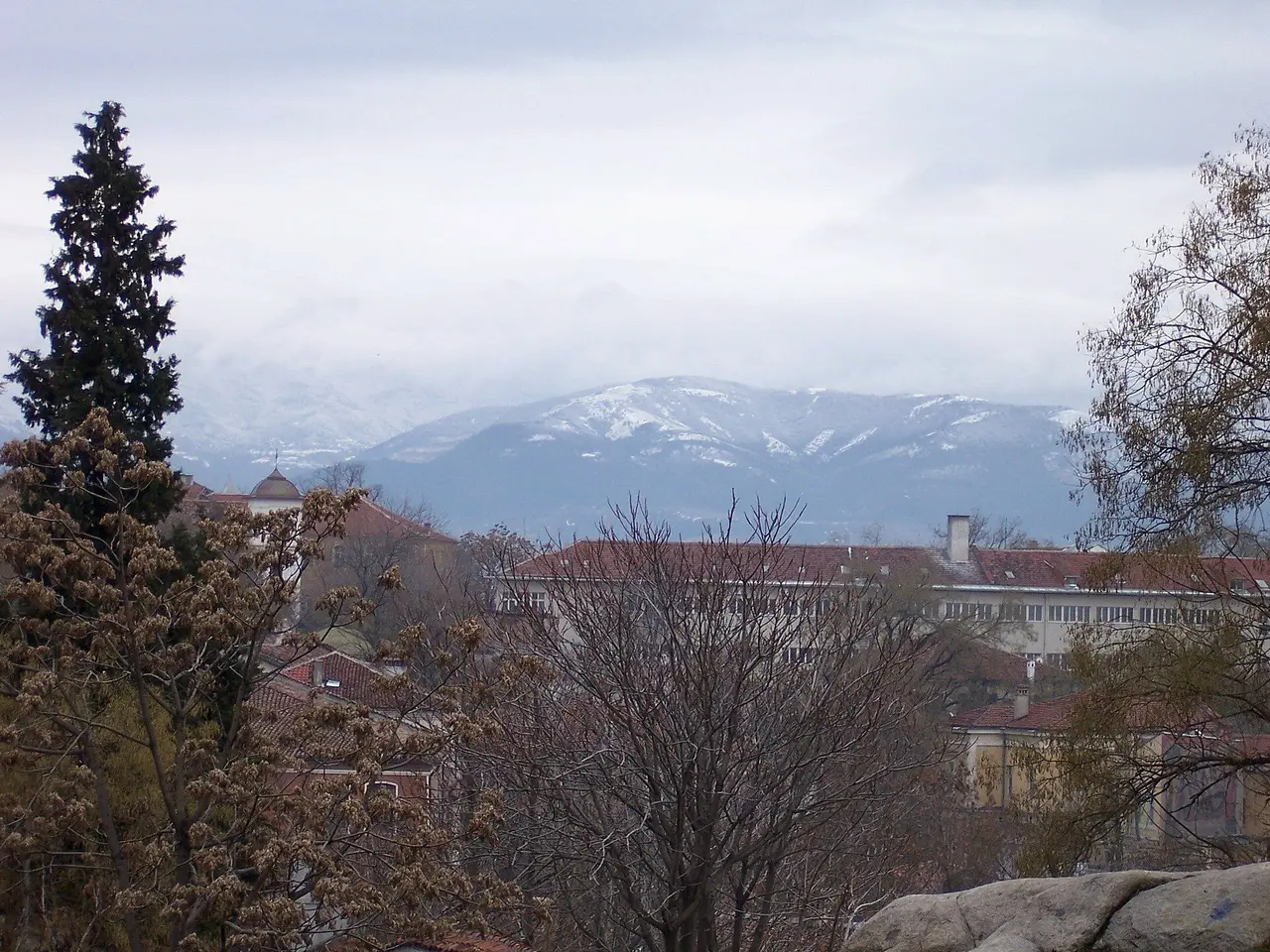
Plovdiv is the strongest of the winter cities and close enough to Pamporovo to bolt onto a ski trip; things to do in Plovdiv works in the cold, because most of it’s walkable in an afternoon. The coast is the opposite: the resort towns close, Burgas airport all but empties out from November (it was fully closed for the whole of winter 2025/26 during a runway rebuild, reopening 1 May 2026 - that’s a construction closure, not the norm, but even in a normal year traffic thins to almost nothing), and Varna keeps a thin winter schedule.
Flights, transfers and the tyre law
Sofia is the default arrival for all three resorts, and it’s an easy one: the airport sits on metro line 4, about 20 minutes from the centre. From there it’s 70 km to Borovets (an hour to an hour and twenty), 160 km to Bansko (two to two and a half hours) and 225 km to Pamporovo (three to three and a half). Buses to Bansko run about five times a day and take nearly three hours, which is fine until your flight is late; the Sofia airport transfer guide has the alternatives.
Plovdiv airport is the winter oddity worth checking. It’s quiet most of the year, but it works mainly as a charter airport from the end of December to March, with traffic from the UK and Germany alongside thin scheduled links to London Stansted and Luton. A charter on your dates saves the long drag from Sofia, especially for Pamporovo at 80 km; if none matches, fly to Sofia and stop looking. Which airport to fly into explains why, and Plovdiv to Bansko covers the run up to the Pirin.
If you drive, one rule catches people out. From 15 November to 1 March Bulgarian law requires tyres suitable for winter conditions: winter or all-season tyres, or summer tyres with at least 4 mm of tread against a year-round minimum of 1.6 mm. The fine runs roughly 26 to 102 euro, studded tyres are banned outright, and foreign plates aren’t exempt. Central Sofia also runs a low-emission zone from 1 December to the end of February, which only bites in an old car. Driving in Bulgaria has the vignette and the speed limits.
Two last things. Bulgaria is in Schengen now and the entry arithmetic changed for non-EU passports, so check Bulgaria entry requirements first. And the cover in a Bansko lift pass is rescue, not treatment: a hospital in Blagoevgrad will still want a policy, which is what travel insurance for Bulgaria is for. If you’re skiing, our dedicated guide to ski travel insurance for Bulgaria covers off-piste cover and the two-part rescue question in full.
Pick the version that matches what you want
If you ski and you have a week, take Bansko and accept the gondola queue. With three or four days, or a nervous beginner, take Borovets for the hour-long transfer and the ski-in beds. If the point is sun, gentle blues and children still learning, take Pamporovo and fly into Plovdiv if the schedule allows.
If you don’t ski, the spa route is the trip nobody is selling you. A week of thermal water at Velingrad or Ognyanovo in February, at off-season rates, with a couple of days in Plovdiv on either side, is the version of Bulgarian winter that Bulgarians take themselves.
Admission and opening hours
- Admission price
- Adult day lift pass, 2025/26 season: Bansko 33.23 EUR on the opening tariff (from 14 December 2025, withdrawn when the 27 December tariff began) rising to 59 EUR for high season, Borovets 54 EUR (one standard tariff, softening to 43.20 EUR from 16 March), Pamporovo 53 EUR (youth 12-21 45 EUR, child 7-11 32 EUR). Ski hire in Bansko from 6.00 EUR a day for an economy adult set, 27.00 EUR for six days, boots 1.95 EUR a day or 10.35 EUR for six; junior skis alone from 4.50 EUR a day, boots priced separately. A local operator sells a five-day pass with skis, poles and boots at 310 EUR for an adult and 155 EUR for a child.
- Opening hours
- Ski season roughly mid-December to early April, snow permitting. In 2025/26 Bansko opened on 13 December 2025 and ran to 12 April 2026; Pamporovo did not open until 28 December 2025. Tyres suitable for winter conditions are required by law from 15 November to 1 March. The Sofia low-emission zone runs from 1 December to the end of February.
Checked on 13 September 2026. All prices are the last published 2025/26 tariffs; the 2026/27 lists go up in the autumn, so confirm on the resort and hire-shop sites before you book. Prices are in euro since Bulgaria joined the eurozone on 1 January 2026 at a fixed 1.95583 leva to the euro.
Details checked: September 13, 2026
Read also

Before you go · 12 min read
How Much Does a Bulgaria Ski Holiday Cost?
Verified · September 13, 2026A Bulgaria ski week usually lands around 770 to 1,170 EUR mid-range: lift pass, hire, bed, food and transfer from official 2025-26 tariffs.

Before you go · 9 min read
Day Trips from Sunny Beach: Nessebar & Beyond
Verified · August 28, 2026Day trips from Sunny Beach: Nessebar on the local bus, Sozopol via Burgas, Strandzha jeep days. Times, tickets and what fits in a day. 2026.

Before you go · 10 min read
Bulgaria or Greece: Which Beach Holiday Is Better?
Verified · August 27, 2026Greece wins on islands and water clarity; Bulgaria wins on price and sandy resort beaches. Who each suits, real 2026 costs and flights from the UK.

Before you go · 8 min read
Day Trips from Varna: Balchik, Kaliakra & Caves
Verified · August 26, 2026Day trips from Varna: Balchik Palace from €10, Cape Kaliakra cliffs, Aladzha rock monastery and Pobiti Kamani. Distances, buses and what fits in a day.