
Bansko vs Borovets: Which Bulgarian Ski Resort?
Bansko for the bigger mountain and a real old town; Borovets for ski-in-ski-out an hour from Sofia. How the two resorts differ, and which to book.
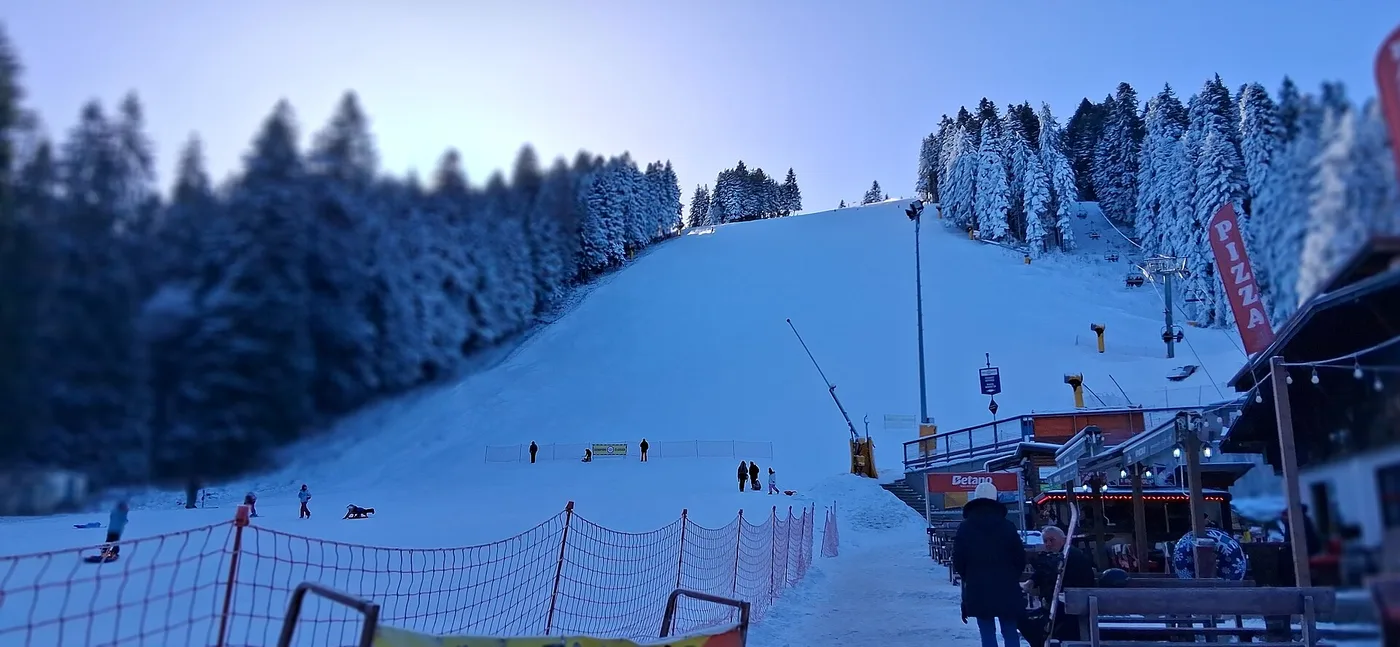
Pick Borovets if you want to be on snow with the least fuss: it is barely an hour from Sofia, the hotels sit right at the lifts, and it is the easiest resort in Bulgaria for families and first-timers. Pick Bansko if you want the bigger, more varied mountain and a real town to come back to at night, and you do not mind a two-and-a-half-hour transfer to get it. Both are a fraction of Alpine prices and both suit beginners and intermediates well, so the honest choice is about distance, convenience and what you want off the slopes. Here’s how they actually compare.
Quick verdict
- Go to Borovets if: you have a long weekend rather than a week, you’re travelling with young kids or nervous beginners, you want to step out of the hotel straight onto the snow, or you fancy an evening on the floodlit night-skiing runs. Its trump card is being an hour from the capital.
- Go to Bansko if: you want more terrain and longer runs, you care about apres-ski and a proper old town with taverns, you want the widest choice of cheaper hotels, or you are staying a full week. Its trump card is the mountain itself, and the atmosphere down in town.
- Both are cheap, both are strong for beginners and intermediates, and neither has much for expert skiers. The resort is the decision; Bulgaria is a bargain either way.
Location and getting there: the big split
This is the difference that decides more trips than the skiing does. Borovets is about 70 km southeast of Sofia, roughly an hour to an hour and twenty by car, and a private airport transfer lands you at your hotel in about the same time. That makes it a genuine weekend or even day-trip resort: fly into Sofia in the morning and you can be clicking into bindings after lunch. It sits in the Rila mountains directly below Musala, at 2,925 m the highest peak in the Balkans.
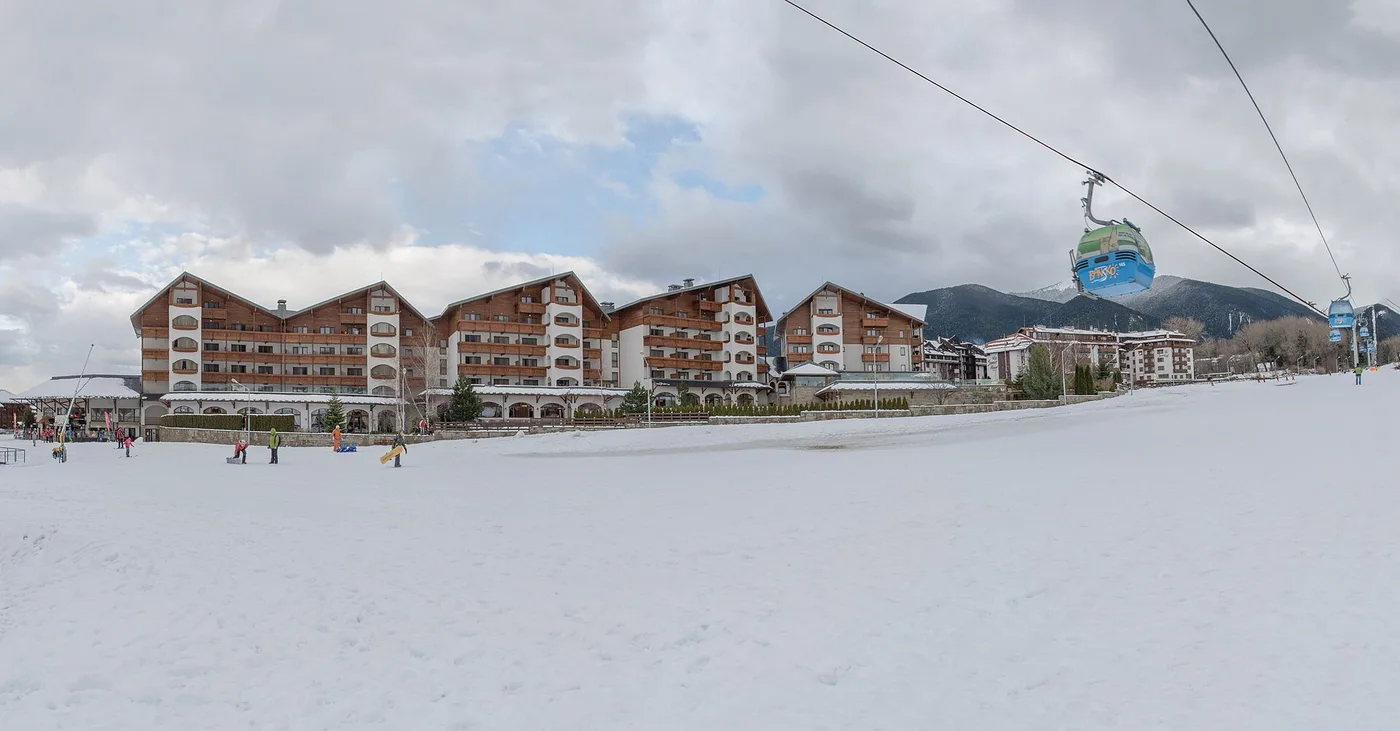
Bansko is about 160 km south of Sofia, a two to two-and-a-half hour drive or a direct bus of nearly three hours, down in the Pirin mountains near Razlog. The extra distance is the price of admission for the bigger mountain, and it is not trivial with a family and ski bags. Our Sofia to Bansko guide lays out the bus, transfer and driving options in full, and if you’re coming from the south instead, Plovdiv to Bansko covers the buses, the scenic narrow-gauge train and the winter airport shuttle. If you’re flying in specifically to ski and want the shortest possible transfer, Borovets wins before you have even seen a piste.
The mountains: size and terrain
On paper Bansko is the bigger mountain and it’s not close. Bansko has 75 km of marked pistes; Borovets has 58 km across three linked sectors, Sitnyakovo, Yastrebets and Markudjik. Bansko’s split is roughly 44 km easy, 25 km intermediate and only 6 km of genuinely hard terrain, so it is a superb mountain for improving intermediates and a small one for experts. Borovets covers similar ground for ability, strong on wide beginner and intermediate cruising, thin on steep expert lines. Curiously, their top heights are almost identical, about 2,530 m at Bansko under Todorka and around 2,550 m at Borovets, so the difference is total terrain, not altitude.
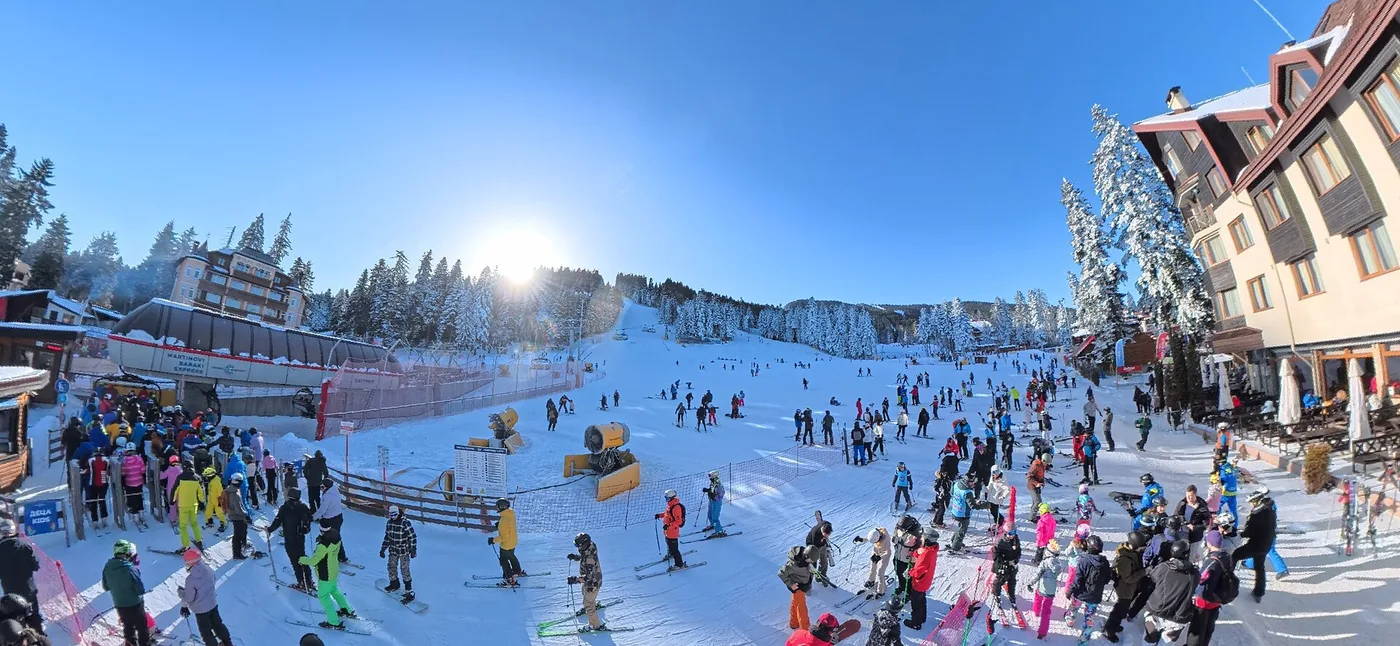
The layout is where they part ways, and it matters more than the piste count. Bansko town sits at 925 m, well below the snow, so every morning you ride the 8-seat gondola from its 990 m valley station about 6.2 km up to the skiing at Banderishka Polyana around 1,600 m. The reward is a long descent: in good snow you can ski a continuous 16 km line from the top back to the valley. The catch is the gondola queue, which on a peak Saturday morning can eat 45 minutes. Borovets skiing starts where you sleep: the resort sits up at around 1,350 m and the lifts leave from among the hotels, so there’s no town-to-mountain commute and no single bottleneck to beat.
Beginners and families
Both resorts are genuinely good for learning, and both have cheap, English-speaking ski schools, so you will not go wrong either way. Ski hire and lessons are inexpensive at each, cheap enough that you can fly in with nothing and kit out the whole family for less than a single day’s rental would cost you in the Alps. The nuance is convenience versus variety.
Borovets is the family pick for sheer ease. Almost every hotel is within walking distance of the lifts, the beginner nursery sits right by the resort centre, and the compact layout means small children and tired legs are never far from a hot chocolate. For a first family ski trip, that walk-everywhere simplicity is worth a lot. Bansko gives beginners more room to progress, with a wider spread of easy blues once you’re off the nursery slope and faster lifts to reach them, though you and the kids do have to negotiate the gondola up and down each day. First-timers who want the gentlest possible logistics lean Borovets; beginners who expect to improve fast over a week get more mileage at Bansko.
Off the slopes: town, nightlife and night skiing
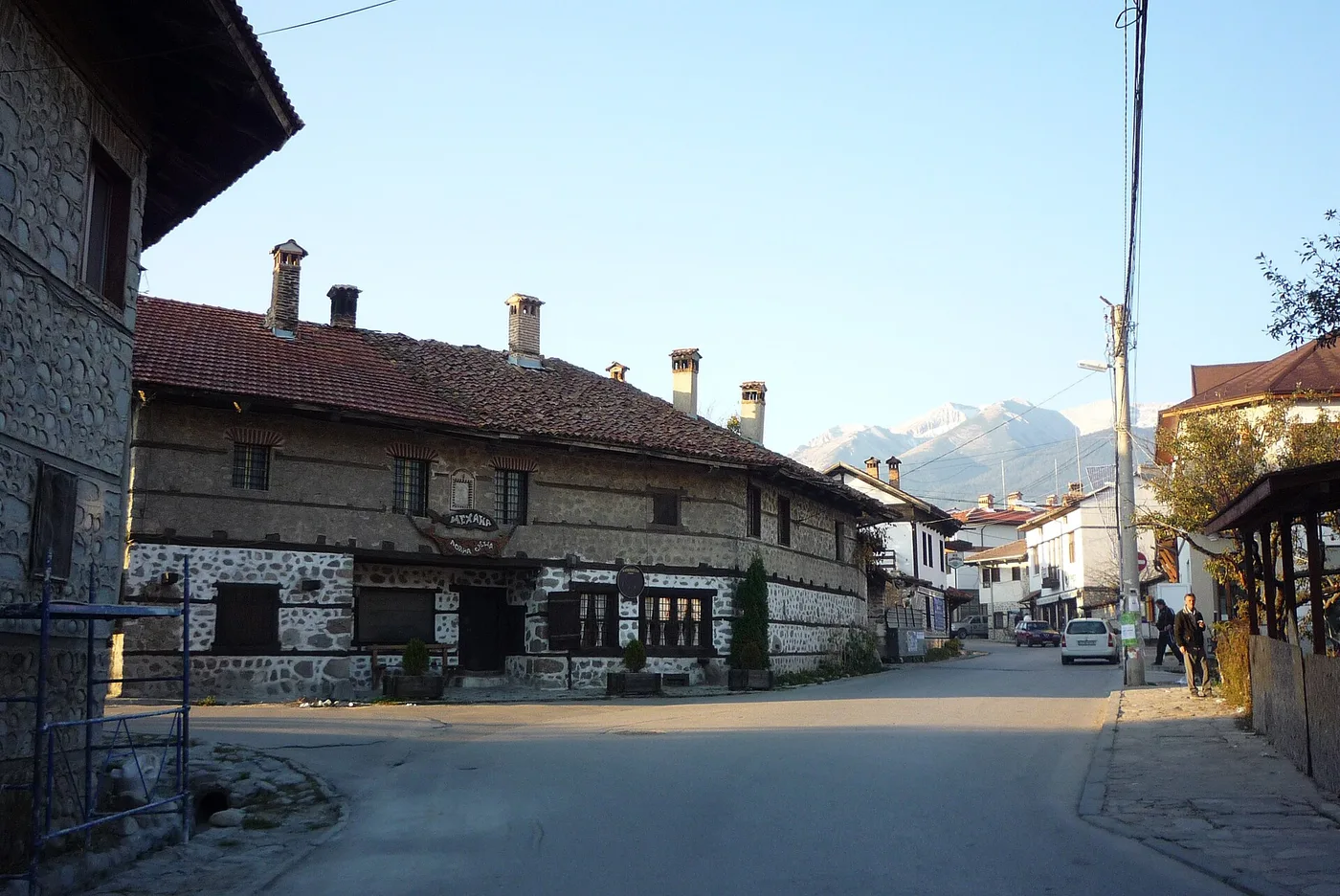
Here Bansko pulls clearly ahead, and it’s the reason a lot of people who have skied both prefer it. Bansko is a real town, not just a resort: behind the modern ski quarter is a cobbled old town of stone houses and traditional mehanas (taverns) where a hearty dinner with a carafe of wine costs very little. Add mineral spa pools nearby, churches and a genuine Bulgarian sense of place, and there is a proper holiday here even on a day you do not ski. Its nightlife is the liveliest in Bulgarian skiing, from tavern folk nights to late bars.
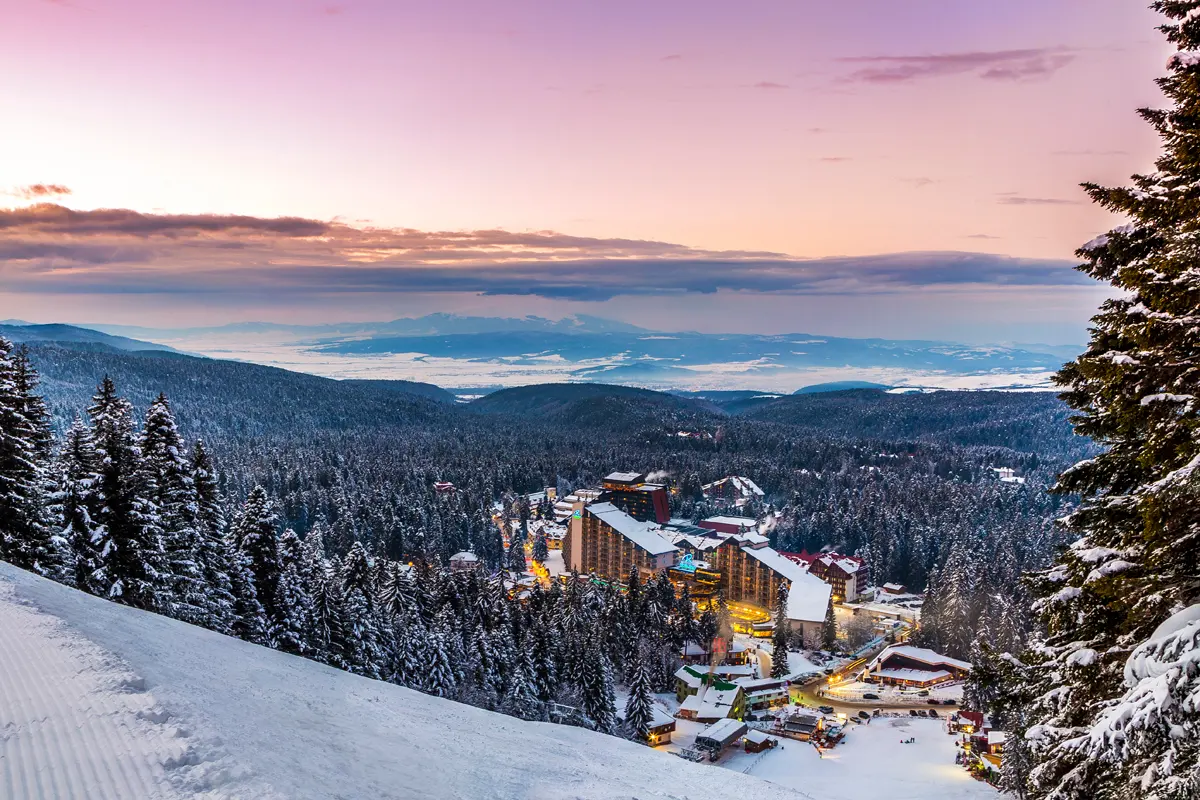
Borovets was built to be a ski resort and it shows. It began in 1896 as a royal hunting retreat for Prince Ferdinand, which gives it a certain pedigree and the grand old Tsarska Bistritsa Palace nearby, but the resort itself is a compact cluster of hotels, bars and rental shops with little to see beyond the slopes. What it does have, and Bansko doesn’t, is night skiing: floodlit evening runs that add hours to a short trip and are genuinely fun with kids. So the off-snow question splits neatly, do you want a town to explore (Bansko) or more skiing squeezed into fewer days (Borovets)?
What it costs
Both resorts are among the cheapest in Europe, which is the whole point of skiing in Bulgaria, and on lift passes the two sit closer together than most people assume. Borovets is still the cheaper of the two to ski, closer than most people assume: its 2025-26 adult day pass runs 105.61 leva, 54 euro, against Bansko at about 115 leva, roughly 59 euro, at peak, and the gap holds over a week, where Borovets charges 279 euro for six days to Bansko’s 341. The two step down on different calendars, though: Borovets holds its rate until 15 March and then cuts to 43.20 euro a day, while Bansko holds its peak until 31 March and then cuts to 45 euro - so Borovets’ spring saving lands about two weeks earlier. Bansko throws in one nice extra: its pass includes mountain-rescue insurance. Where Bansko wins on cost isn’t the pass but everything around it, a bigger mountain for the same lift day, plus cheaper beds and food once you’re down in town.
On accommodation and food, Bansko is clearly cheaper and has far more choice, from budget guesthouses in the old town to slick ski-in apartments, and its mehanas make eating out cost almost nothing. Borovets has fewer beds and they cluster at the lifts, so the trade-off is convenience for price. Neither will dent your budget the way the Alps do, and if you’re pricing a whole trip our guides to whether Bulgaria is expensive and the best time to visit put the seasons and costs in context.
So which should you book?
Book Borovets for a short, easy, low-stress ski trip: a weekend from Sofia, a first family holiday on snow, ski-in-ski-out hotels and the option of a floodlit evening run, accepting a smaller mountain and a purpose-built base with little to see off the slopes. Book Bansko for the bigger week: more terrain, longer descents, cheaper and wider-ranging places to stay, and a real old town of taverns to come back to at night, as long as you are happy with the longer transfer and the morning gondola. If you can’t decide, answer one question: is this a quick, convenient hit close to the capital, or a proper week-long mountain holiday? That points you straight at the resort. For the full detail on each, see our Bansko skiing guide and Borovets skiing guide; for a gentler, sunnier third option down in the Rhodopes, Pamporovo is the family alternative to both. If Borovets wins the decision, our where to stay in Borovets guide covers the hotel-by-hotel detail. Sofia itself is worth a day or two on either trip, with plenty of things to do in Sofia before you head for the snow.
Admission and opening hours
- Admission price
- Adult day lift pass 2025-26, high-season rates compared: Bansko about 115 BGN (around 59 EUR); Borovets 105.61 BGN (54 EUR), holding flat until 15 March. Bansko charges less outside high season - 65 BGN (about 33 EUR) from 14 December, the day after its 13 December opening, until 27 December, 88 BGN (about 45 EUR) from 1 April - so an early-December or April trip is cheaper than these figures suggest; Borovets softens to 43.20 EUR a day from 16 March, about two weeks ahead of Bansko's own spring cut. Borovets 6-day adult 545.68 BGN (279 EUR); Bansko 6-day about 341 EUR (around 667 BGN).
- Opening hours
- Both seasons run roughly late December to April, snow permitting. Borovets usually opens late December; Bansko opened 13 December for 2025-26.
Prices are the last published 2025-26 tariffs and moved to euro when Bulgaria joined the eurozone on 1 January 2026; both resorts discount early or late-season tickets, and window rates vary. Confirm the current price and season dates before you book.
Details checked: August 30, 2026
Read also

What to see · 13 min read
Skiing in Bulgaria vs the Alps: Honest Verdict
Verified · September 13, 2026Bansko's last published 6-day pass was 341 EUR; Livigno's 2026-27 rate is 374.50 EUR. Real lift-pass, terrain and rental numbers, checked Sep 2026.

What to see · 12 min read
Pirin National Park: Vihren, Trails & Lakes
Verified · September 3, 2026Pirin National Park: the Vihren hut road closure, UNESCO peaks, 27 marked trails, glacial lakes and Bansko visitor centre hours.

What to see · 12 min read
Climbing Musala: The Balkans' Highest Peak
Verified · August 29, 2026Climbing Musala, the Balkans' highest peak at 2,925 m: the Yastrebets gondola schedule and price, the real hiking time from the top station, huts and gear.

What to see · 9 min read
Learning to Ski in Bansko: Schools & Lessons
Verified · August 25, 2026Bansko ski lessons: group and private prices in euros from official schools, Banderishka Polyana base, plus the lift pass you still need. Checked 2026.