
Where to Stay in Bansko: Ski-in Hotels & Old Town
Where to stay in Bansko: the gondola end and its strip, the Old Town mehanas, cheaper beds nearby, and which hotels sell a gondola fast lane.
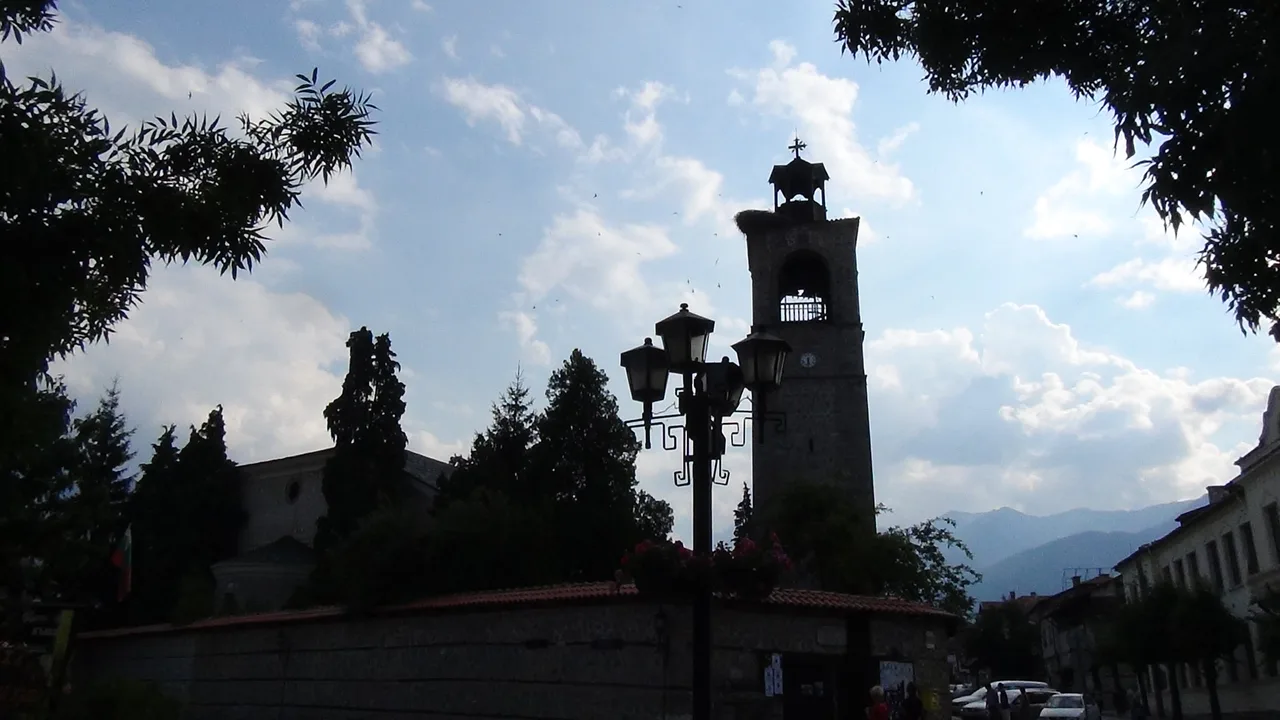
If you’re here to ski hard, book at the gondola end of town, on or just off Pirin street. If you’re here for the mountain town rather than the lift queue, book in the Old Town, where stone-and-timber houses, mehanas and the clock tower sit within a ten-minute walk of everything. The centre between the two splits the difference, and the cheapest beds are on the edges and in the villages 6 km away. One thing to get straight before you compare listings: nothing in Bansko is genuinely slopeside.
The town itself sits at about 925 metres, roughly 65 metres below the 990-metre gondola valley station where the skiing actually starts, with the top of the mountain near 2,530 metres under Todorka peak. So “ski-in, ski-out” on a Bansko listing means “a short walk from the gondola station”, not “clip in outside your door”. Once you accept that, the choice stops being about snow and starts being about the morning queue, the walk home from dinner, and how much charm you want for your money.
The short version
- Serious skiers, first trip: the gondola end of Pirin street, within a 5 to 10 minute walk of the lower station.
- Atmosphere, food, couples: the Old Town around Vazrazhdane square and the cobbled lanes behind it.
- Balance of both: the centre, roughly halfway, with a flat walk to the lift and to the mehanas.
- Cheapest: the outer streets, or Razlog and Dobrinishte, both 6 km away.
- Summer and long stays: apartments anywhere in town, since the gondola stops mattering.
The gondola end: what “ski-in” really buys you
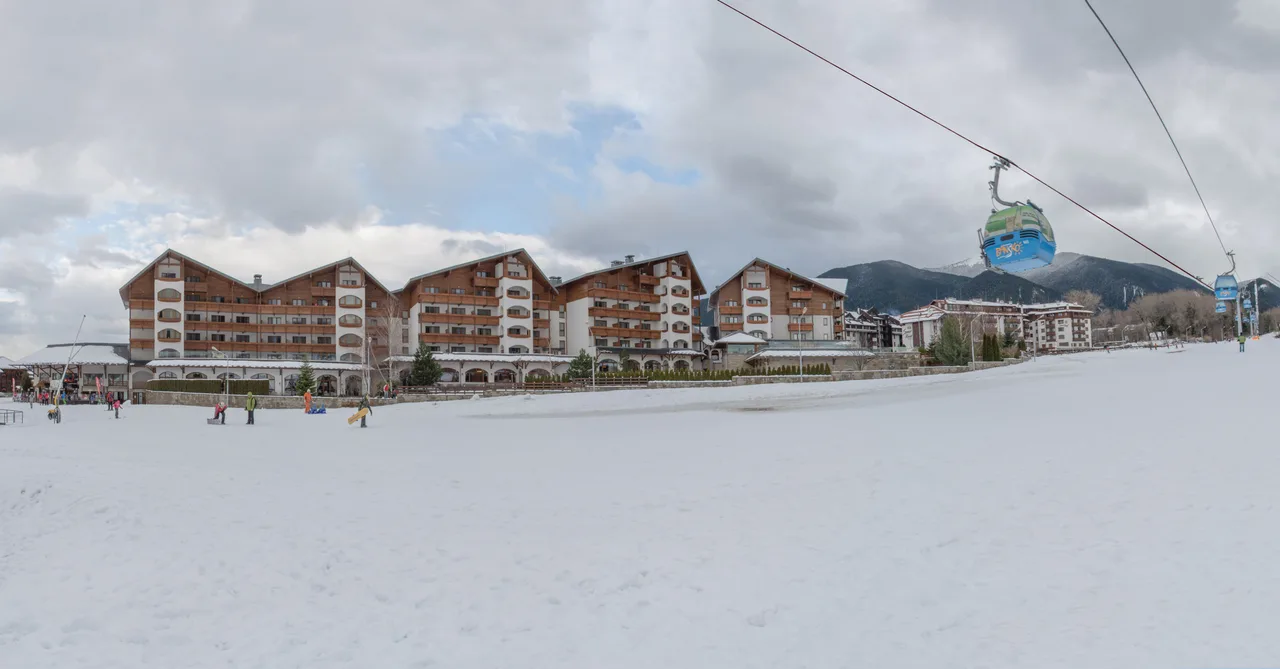
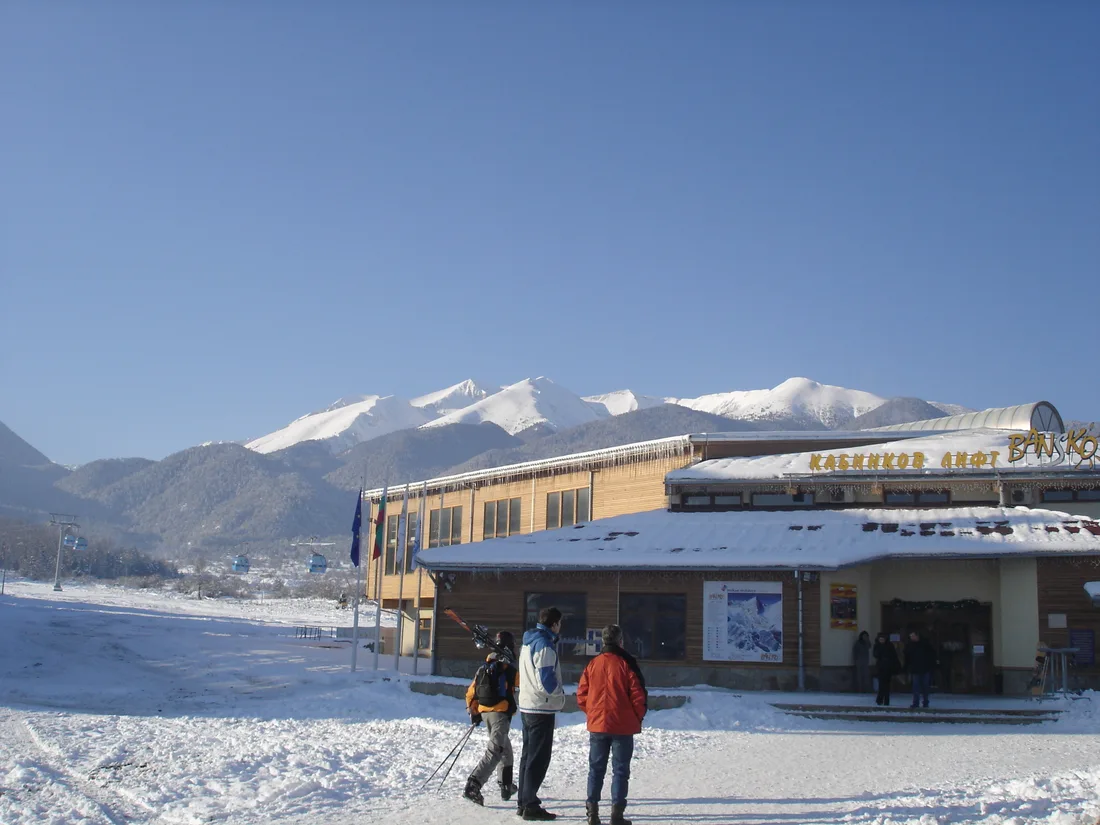
This is the newest part of Bansko and it looks it: large four and five-star blocks, apartment complexes, rental shops, and the row of bars everyone calls the strip, which is where the after-ski drinking, the karaoke and the louder nightlife happen. Our Bansko après-ski guide goes through it bar by bar, from Happy End at the gondola to the late spots. The pitch is simple. You wake up, walk a few hundred metres with your skis, and you’re in the queue rather than in a shuttle.
Be precise about the distances, because listings aren’t. The Kempinski Grand Arena sits right by the valley station beside the lower runs and is the hotel most often sold as ski-in, ski-out; MPM Sport is around 100 metres from the lift. After that the numbers slide fast: plenty of “next to the gondola” hotels are actually 300 to 600 metres away, with Tanne around 350 metres and Amira around 400. In January, at 7:45 in the morning, in ski boots, that difference is real. Ask for the distance in metres before booking, not the adjective.
The trade-off is the evening. This end of town is functional and modern rather than pretty, the restaurants are aimed squarely at visitors, and if you want the traditional dinner you’ll be walking twenty minutes or taking a taxi. Families and hard-charging ski groups tend to love it; anyone who came for the Bulgarian mountain town tends to regret it by day three.
The Old Town: stone houses, mehanas and the clock tower
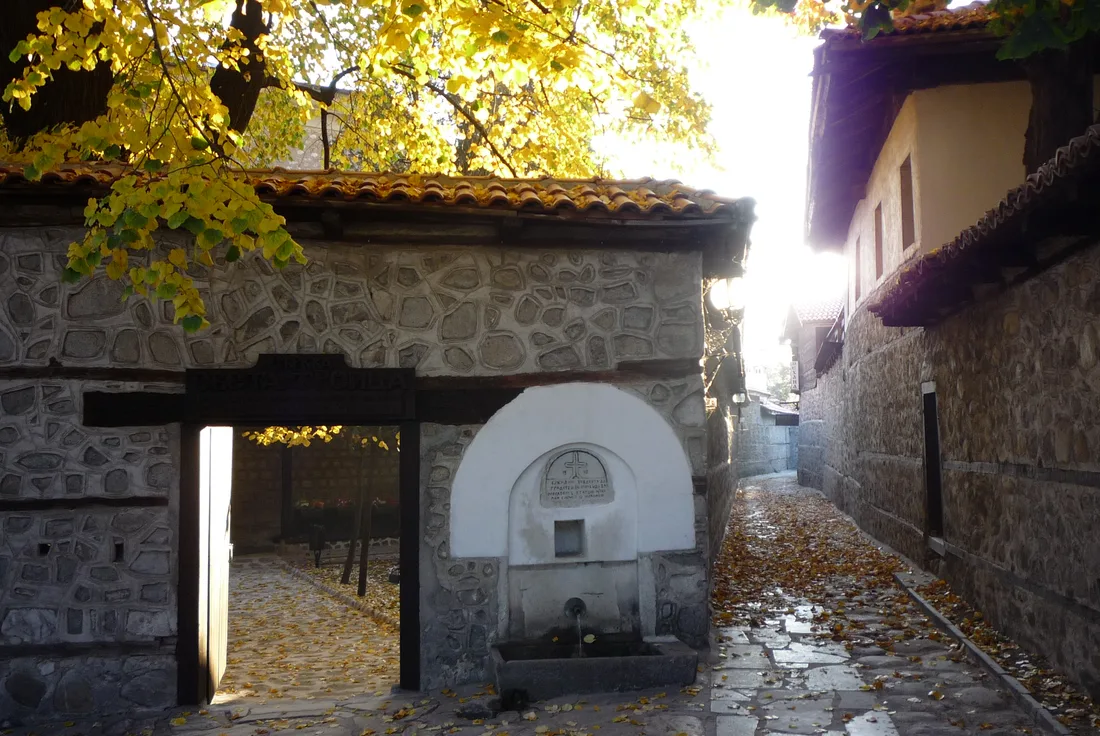
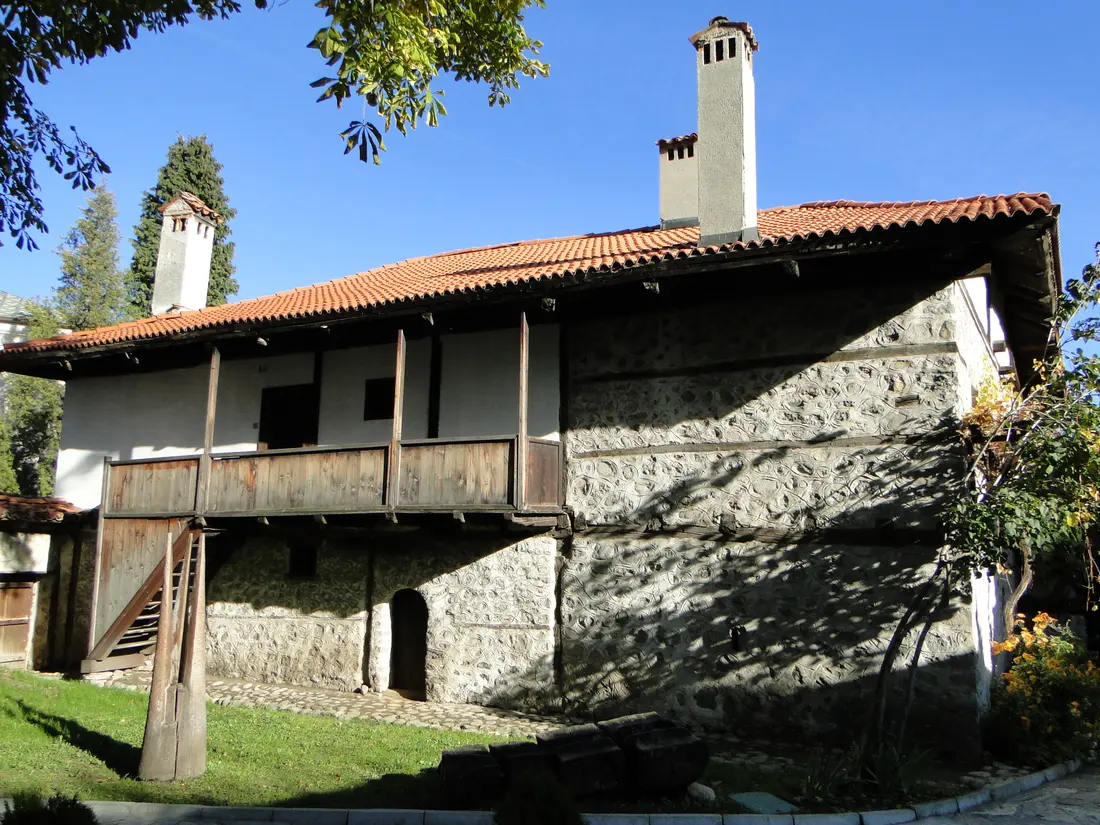
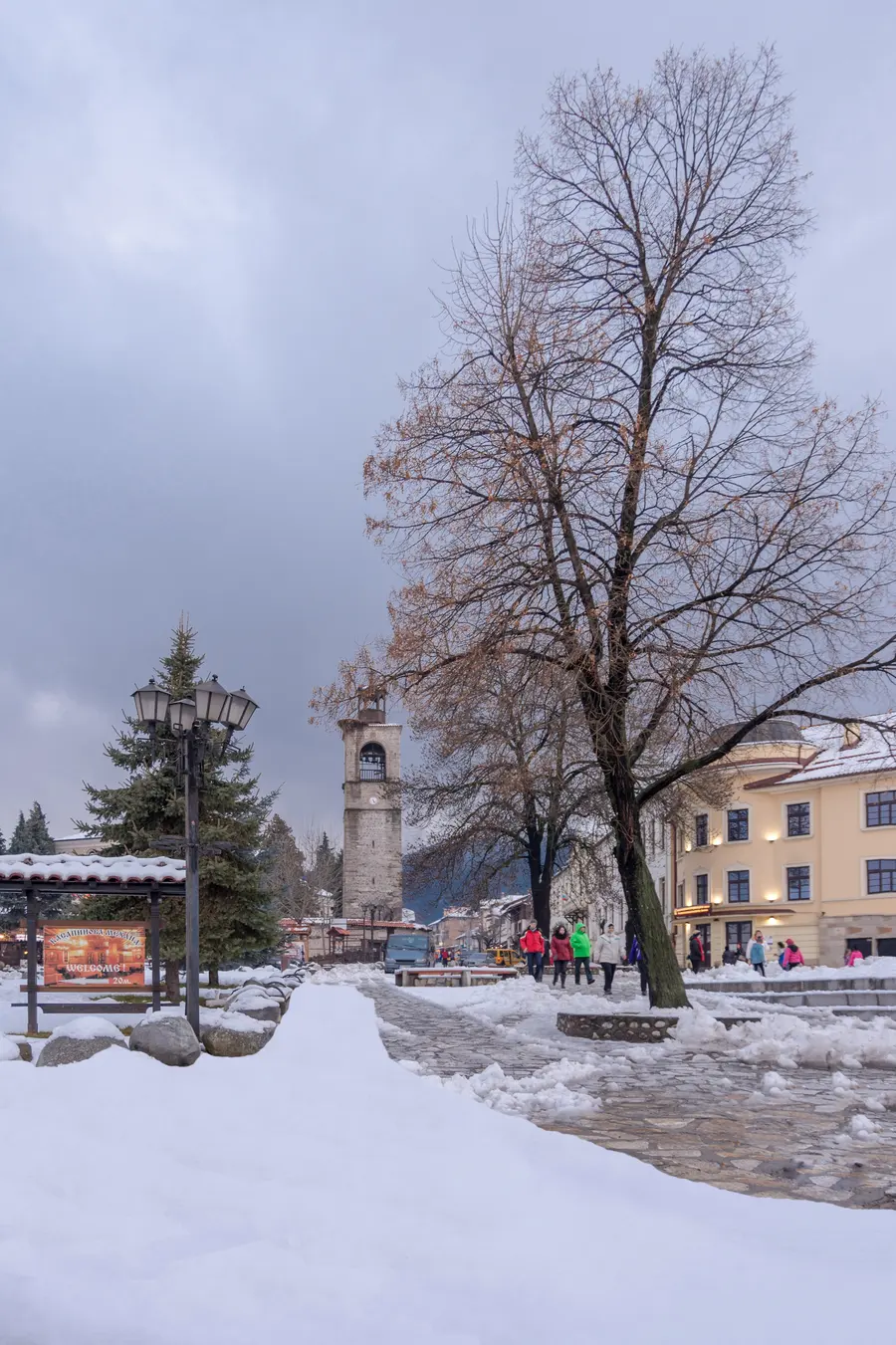
Walk fifteen minutes the other way and Bansko turns into a different town. The Old Town is a grid of narrow cobbled lanes lined with 17th to 19th-century houses in the National Revival style, thick stone walls at street level, timber and whitewash above, many of them now family guesthouses or mehanas with a fire going and live folk music at the weekend. The anchor is Vazrazhdane square and the church of the Holy Trinity, finished in 1835, with a 30-metre bell tower added in 1850 whose clock still runs.
This is where the good eating is, and it’s the reason plenty of returning visitors book here even in ski season and just shuttle to the lift. Rooms in the old quarter are usually smaller and cheaper than the gondola blocks, often in restored houses with a courtyard, and you get the town at night instead of a car park. The catch is the morning: you’ll either take a hotel shuttle, taxi it, or walk fifteen to twenty minutes in boots.
The centre: the compromise that usually wins
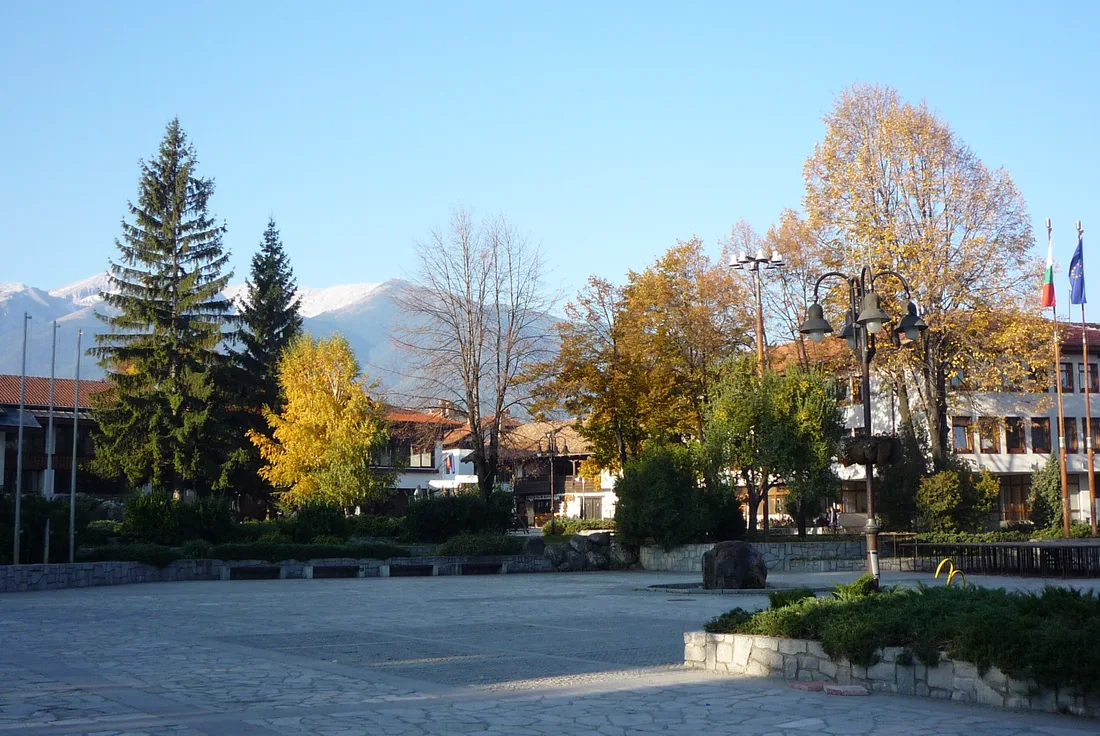
Between the two ends sits the ordinary town centre, and for most first-timers it’s the smart booking. Pirin street runs from the square down to the lift on flat ground, and the walk is roughly ten to twenty minutes depending where you start; from the top of the centre to the far end of the gondola zone is a 20 to 30 minute stroll. Hotels here are mid-range, often three or four-star with a spa, and you’re within a few minutes of both the mehanas and the supermarket.
Pick this if you’re travelling with a mixed group, some skiing, some not, or if you want a short walk to dinner without paying the gondola-side premium. Pick against it if your party skis first lift to last and would rather trade the charm for those extra ten minutes in bed.
The thing your hotel can actually do about the queue
Here’s the part nobody tells you when you book. Bansko’s weak spot is the morning gondola crush, and where you sleep changes how you handle it far more than how many metres you walk.
Three concrete advantages worth checking before you pay:
- A shuttle. Most hotels run guests to the lower station free of charge, and a few will drive you further up for a fee. If you’re booking the Old Town or the edges, a shuttle removes the main objection to the location.
- Lift passes sold in-house. You can buy your pass the evening before, either at the ticket desks or at hotels that sell them, Guinness and MPM Sport among them. That saves you the second queue, the one for tickets.
- A fast lane. Premium hotels including the Kempinski Grand Arena and Hotel Premier sell VIP fast-track access to the gondola. It costs extra and it’s guest-only, which is the single strongest argument for booking one of those hotels if your holiday is short.
Timing decides your day in two ways: from early February the gondola opens at 08:00, half an hour earlier than the rest of the season, and turning up around 09:00 in peak weeks means you’re unlikely to make a 10:00 lesson. Queues ease off around 11:30 to 12:00. Our Bansko skiing guide goes deeper on pass prices, season dates and how to play the queue. For lesson types and school tariffs from the official operators, see our Bansko ski school guide.
Cheaper beds and the villages next door
For the lowest prices, look at the outer streets of Bansko itself, or move out of town. Razlog, 6 km away, is a working town with hotels and the golf resort nearby, and it’s noticeably cheaper. Dobrinishte, also 6 km, is the more interesting choice: a small spa town with 17 mineral springs running at 30 to 43 degrees and its own beginner ski area, so a family with mixed abilities can have both a soak and a slope without touching the main gondola.
The condition on both is transport. Without a car you’re relying on hotel shuttles and taxis for every trip to the lift, and that gets old fast on a short ski week. On a longer or summer stay, where you’re not chasing first lifts, the saving is worth it. If you’re hiring a car anyway, check the winter tyre rules and mountain-road habits in our guide to driving in Bulgaria.
Summer, long stays and the nomad crowd
Outside ski season the whole calculation flips. The gondola keeps running for hikers, but nobody needs to sleep next to it, so location comes down to whether you want the quiet lanes or the modern block with a pool. Prices drop hard: local long-let agencies advertise studios from around 100 euro a month and one-bedroom apartments from around 150 euro a month in summer, which is why Bansko has grown into one of Europe’s cheapest remote-work bases. Treat those as headline from-prices, not the going rate for a good flat in a good building.
That crowd has its own infrastructure now - it’s built around Coworking Bansko as the main hub and the annual Bansko Nomad Fest in June, whose next edition runs 20 to 27 June 2027. Book well ahead for that week, because it’ll fill the town in a season when hotels are used to being half empty. If a longer stay is the plan, our guide to Bulgaria for digital nomads covers visas, costs and the practical side.
What it costs and how to book
Bansko is cheap by Alpine standards in every season, but the spread within the town is wide, and it’s driven by the calendar rather than the postcode: the gondola end charges the most in January and February, the Old Town and centre sit below it, and the outer streets and neighbouring towns are cheaper again. As a rough shoulder-season guide, budget rooms and studios sit around 25 to 45 euro a night, mid-range three and four-star hotels around 55 to 90 euro, and the ski-in blocks well into three figures at the February peak; in summer the whole board resets and almost everything is inexpensive. Treat those as ballparks, not quotes: rates swing so hard between a February Saturday and a June Tuesday that you shouldn’t trust a single figure - compare live prices for your own dates, and expect a small nightly tourist tax per person at check-out.
The method that works: pick the area first from the sections above, then filter on price and reviews inside it, then ask the property two questions before you pay. How many metres to the gondola, and do you run a shuttle. Get those right and everything else in Bansko is a rounding error. Still deciding between resorts? Compare it with the alternative in Bansko or Borovets, and check the journey in our Sofia to Bansko guide before you lock in a hotel that assumes you have a car.
Good to know
Bansko has no true slopeside hotel: the town itself sits at about 925 m and the gondola valley station is at 990 m, so "ski-in" here means "close to the gondola station", not the town centre. Room rates swing hard by season, and a small nightly tourist tax per person is settled at check-out. Confirm current rates on your own booking.
Details checked: August 30, 2026
Distance
- Sofia ≈160 km · about 2 to 2.5 hours by car Direct buses run from central Sofia several times a day; private transfers take around 2.5 hours door to door and drop you at the hotel, which matters if you land with ski bags.
- Plovdiv No fast direct link. Most people route through Sofia or drive across via Velingrad; allow the best part of a day either way.
Read also

Cities · 10 min read
Bulgaria's Spa Towns: Velingrad, Hisarya & More
Verified · August 31, 2026Compare Velingrad, Sandanski and Hisarya: water temps, climate, Roman walls, when to go year-round, and real 2026 spa-hotel rates.

Cities · 12 min read
Where to Stay in Pamporovo: Hotels & Chalets
Verified · August 22, 2026Pamporovo hotels, chalets and apartments by lift base: Malina vs Studenets, why "renovated" is not "new", and how to price a bed.

Cities · 14 min read
2 Days in Sofia: The Perfect Weekend Itinerary
Verified · August 20, 2026A 2-day Sofia itinerary for a Friday-to-Sunday trip: Nevsky, Serdica, Boyana Church, real euro prices, and what actually fits in one weekend.

Cities · 9 min read
Where to Stay in Burgas: Best Areas & Hotels
Verified · August 10, 2026Where to stay in Burgas: city centre for a first visit, Sea Garden for beach and park, Lazur for quiet value, or Sarafovo by the airport.