
Taxis in Bulgaria: No Uber or Bolt Cars, Real Fares 2026
Uber and Bolt send no cars in Bulgaria. Use TaxiMe or Yellow!, read the windscreen sticker, know Sofia's 2026 per-km caps and the airport taxi queue.
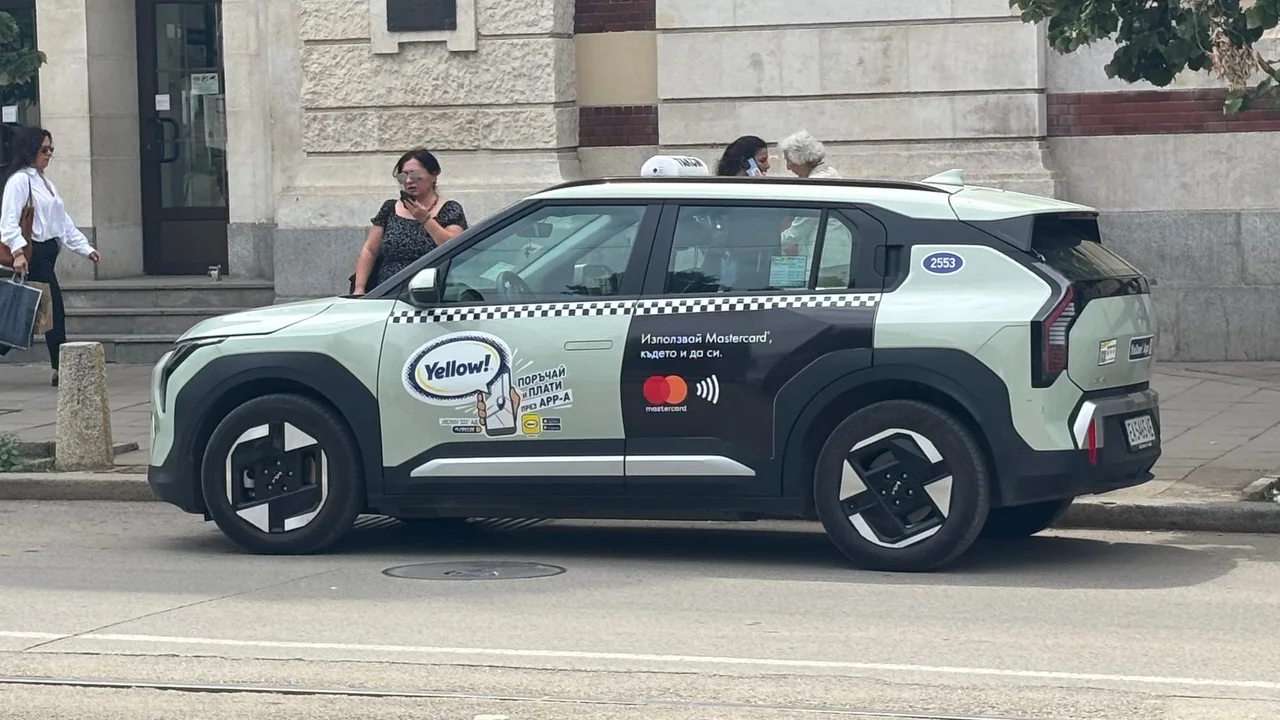
Neither Uber nor Bolt will send you a car in Bulgaria, so the reflex of opening a ride app at the arrivals gate gets you nowhere. What works is a licensed company cab, ordered through a local app such as TaxiMe or Yellow! or taken from an official queue, and priced by a sticker you can read before you get in. In Sofia the city council caps that price at 1.24 euro a kilometre by day and 1.52 at night in 2026, and Sofia Airport introduced a ticket-and-gate taxi queue at Terminal 2 in July 2026 that is worth following to the letter.
Why the ride app comes up empty
Uber came to Sofia in December 2014 and ran UberX there, the only Bulgarian city it served, until a Supreme Administrative Court ruling upheld the competition authority’s fines. On 6 October 2015 its Bulgaria manager announced that the service was “temporarily stopped”, and the chair of parliament’s transport committee had said that a return would mean registering as a taxi service. Uber’s global city list, checked on 24 October 2026, doesn’t include Bulgaria.
Bolt is the app people expect to rescue them, since it runs cars across much of Europe. In Bulgaria it doesn’t: Bolt’s own Sofia page offers two categories, e-bikes and scooters, plus Bolt Food delivery, and its Bulgarian-language page lists the same two. Our Sofia nightlife guide makes the same point about getting home after the last metro.
The reason sits in the law rather than in the apps. Under the taxi ordinance (Naredba No. 34), carrying passengers for a fee by car is for registered traders holding a permit issued by the mayor of the municipality, so a legal cab is a registered, metered, marked vehicle. For a visitor that has an upside: the rules are specific and checkable from the pavement, and the sections below put them to work.
The apps that do send a cab
In Sofia, TaxiMe works much like the ride app you were hoping for. It dispatches licensed cabs, shows the driver, the car and an approximate bill, and lets you pay in cash or by card through the app. Under its passenger terms you choose cash or card when you order and can’t switch once a driver has accepted. And after the ride the driver types the exact sum from the meter into the app and gives you a receipt, so the figure on your screen is a forecast and the meter has the final word. You can preset a tip in your profile too, from 0.15 euro up, though rounding the fare up in cash is just as normal - see the tipping guide.
Yellow! and OK Supertrans (its app is called OK Taxi) have their own iPhone and Android apps as well as phone dispatch. Install one before the flight and keep the other as a backup, because a company’s cars aren’t always near you.
Outside Sofia there are apps too, just different ones. In Plovdiv, Taxi One App calls a cab and takes cash or card; in Varna, Joy Taxi lets you follow the car coming to you in real time and takes cards; and in Burgas and Plovdiv there’s Taxistars, which sends cabs from licensed companies, shows on screen where your taxi is and takes card payment in the app (app listings checked on 24 October 2026). The UK Foreign Office advice is the practical fallback: ask your hotel to call a cab, or flag down a passing one with a green “available” light, and avoid cabs idling outside hotels and in tourist areas.
What a licensed cab looks like
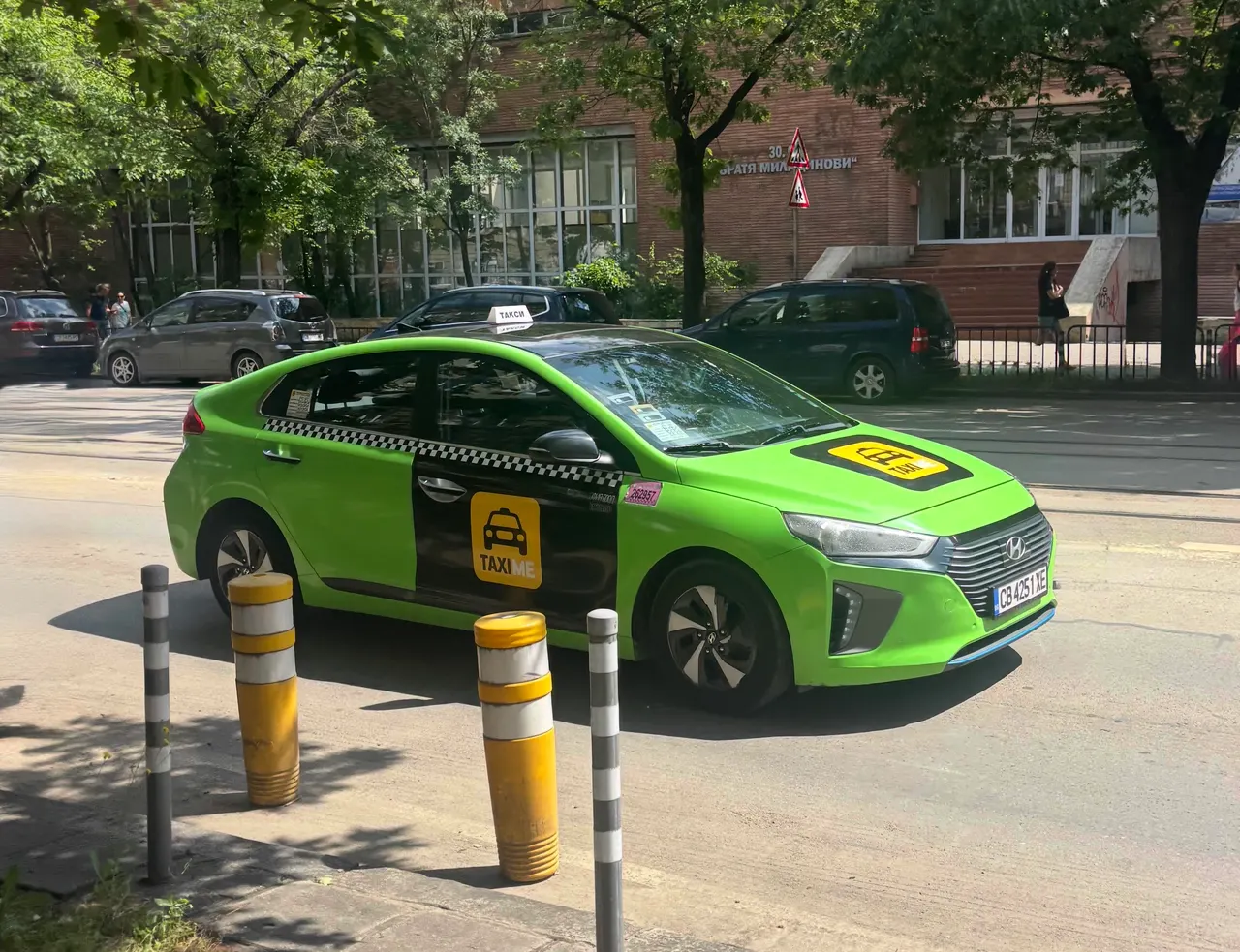
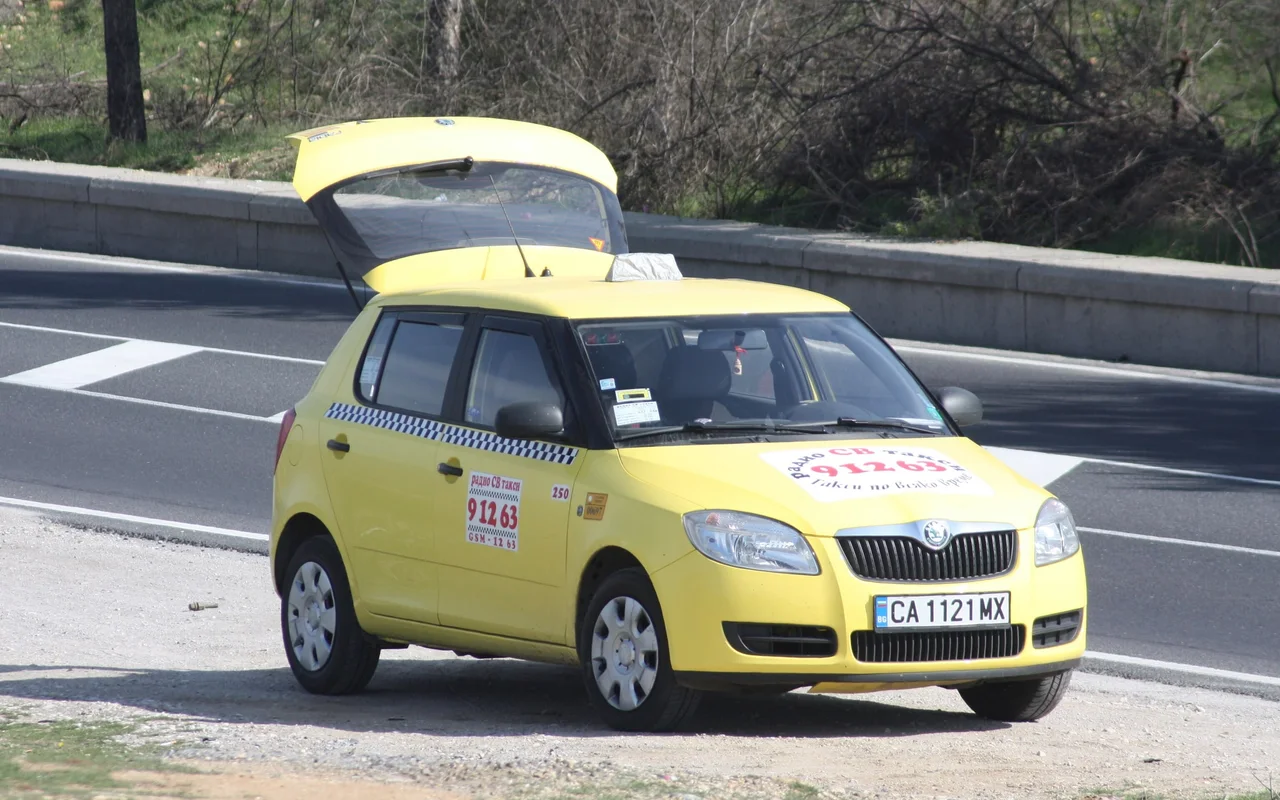
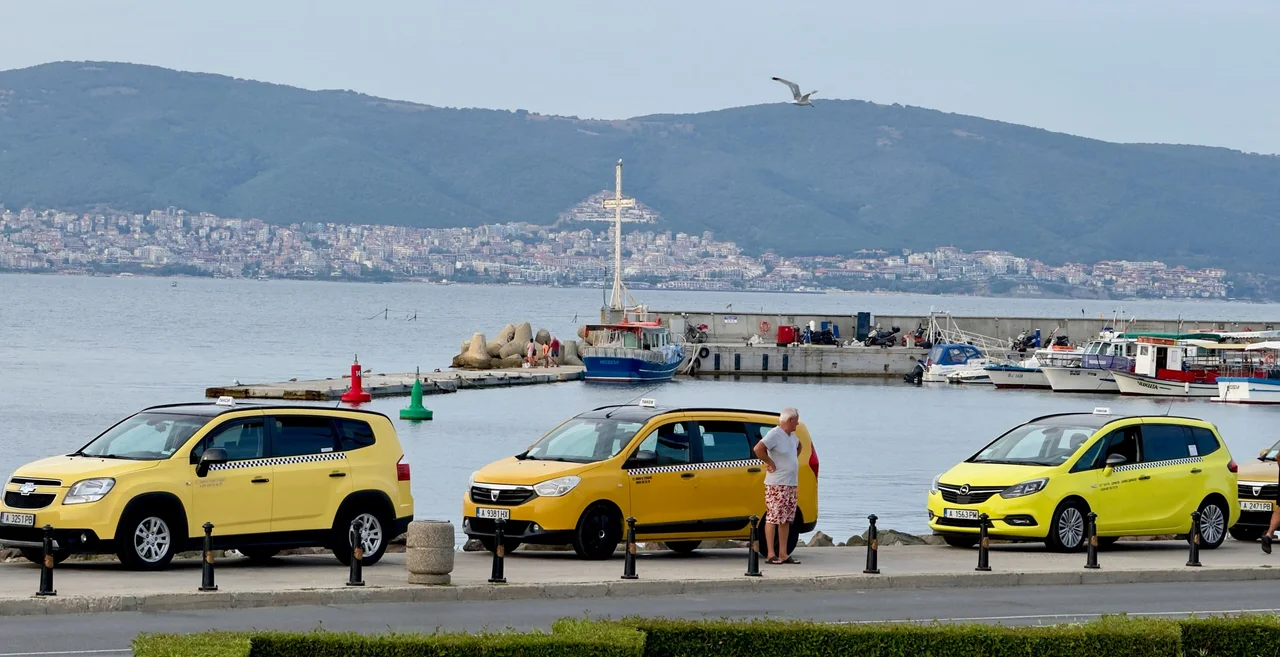
The ordinance describes the car in unusual detail, and that makes it easy to check. In the consolidated text on the Road Administration’s site (amended through 2021), a cab has to be painted yellow (hybrids and fully electric cars may be green), carry a permanently fixed TAXI sign on the roof that lights up after dark, have a chequered band along the doors, and show the company’s name and phone number in Cyrillic letters at least 30 mm high on the front doors. A municipal council can also require a hologram on the windscreen. A car that misses these marks isn’t one the ordinance recognises as a taxi, however friendly the driver offering a lift.
Reading the sticker and the meter
Every cab must carry a price sticker on the right of the windscreen where it can be read from outside, on the dashboard, and on the windows of both rear doors. It shows the company name and six prices: per kilometre by day and by night inside a town, per kilometre outside a town, the call-out charge, the start charge and the waiting rate per minute. The ordinance puts a ceiling on them. Per-kilometre prices can’t exceed the municipality’s maximum, the call-out charge can’t be more than 50% above the per-kilometre price, waiting can’t cost more than 50% of it per minute, and the start charge has to sit between double and triple the minimum per-kilometre price.
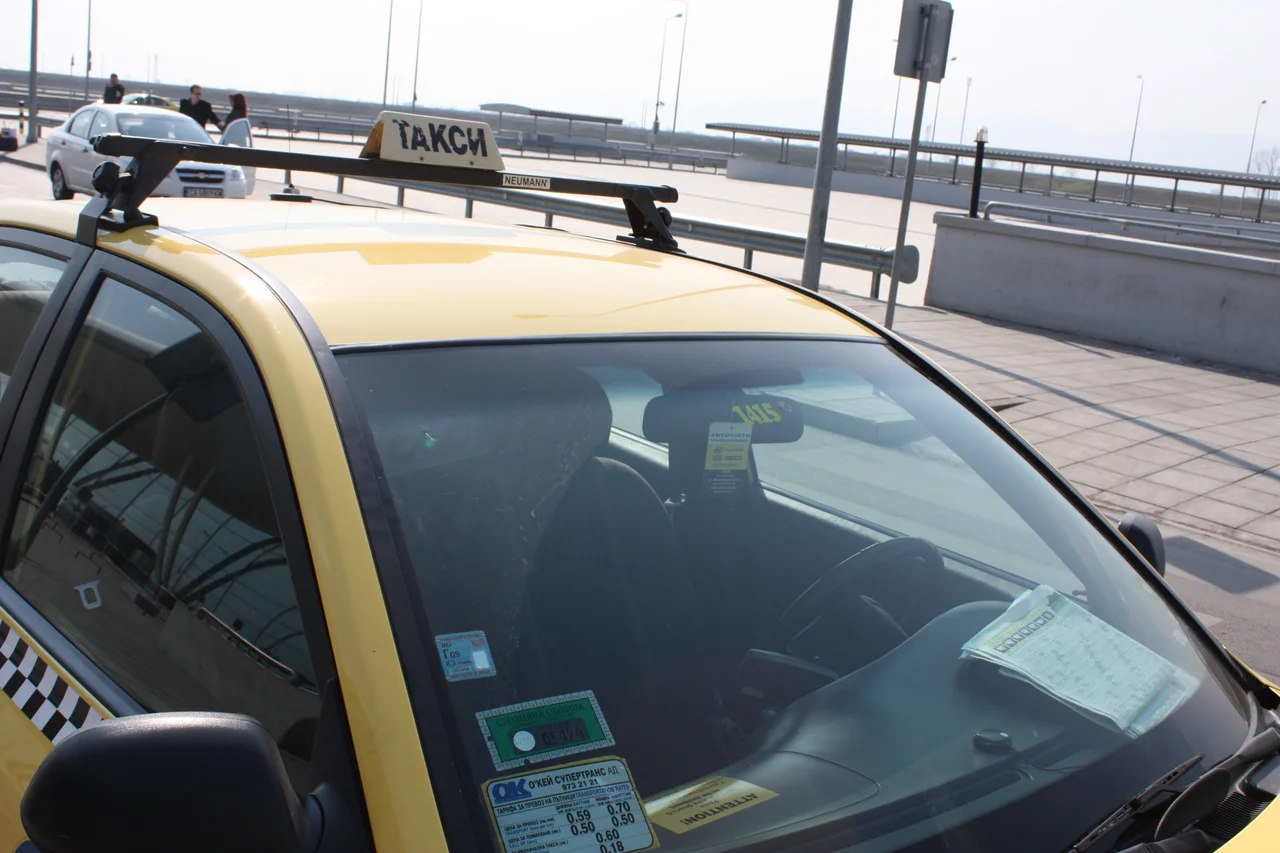
Each municipality sets its own band. Sofia’s council fixed it in decision No. 873 of 23 October 2025, applying from 1 January 2026: 0.73 to 1.24 euro per kilometre by day and 0.84 to 1.52 by night, so the top of the daytime band is about $1.39 or £1.04 a kilometre at the ECB rate of 23 October 2026. The council revisits the band every autumn under an indexing method built on inflation, the minimum wage and fuel prices, which is why the sticker, not this page, has the current figure. By our arithmetic the start-charge rule puts a daytime start charge in Sofia between about 1.46 and 2.19 euro; a sticker asking 4 euro would be outside it.
Varna’s numbers differ. According to the local news site Moreto, its council voted on 30 April 2026 to lift the minimum to 0.79 euro a kilometre by day and 0.89 at night from 1 May. We haven’t confirmed the current bands for Plovdiv, Burgas or the resorts, so in those towns read the sticker and don’t carry a figure over from another city.
The meter has two tariffs and switches by the clock: day from 06:00 to 22:00, night from 22:00 to 06:00. Make sure it’s running before the car moves - the UK Foreign Office says the same about airport pickups. The ordinance only plans for a meter that fails during a ride. Then driver and passenger agree a fare from the distance and the tariff, the driver logs the time and the odometer reading, and stops working once the ride ends. A meter that is “broken” before you’ve sat down is a reason to wait for the next cab. At the end the driver has to issue a fiscal receipt, and an invoice if you ask for one. Ask whether the card reader works before you set off, or pay in the app if you ordered through TaxiMe.
Sofia Airport and the Yellow desk at Exit 5
The UK Foreign Office warns of an increase in unlicensed cabs at Sofia Airport overcharging passengers, and says there’s an official taxi booking office in the arrivals hall. In July 2026 that office became a queue at Terminal 2, as Novinite reported on 2 July. You go to the Yellow desk beyond the arrivals area, request a taxi at the kiosk, and take the printed ticket to Exit 5, which is marked Taxi; a coordinator there assigns you a car. Yellow! has been the airport’s official taxi operator since the summer of 2023 under a five-year contract, the report says, with a possible three-year extension, and the system is meant to reach Terminal 1 later. Signs and gates move, so follow the airport’s own signage if it differs.
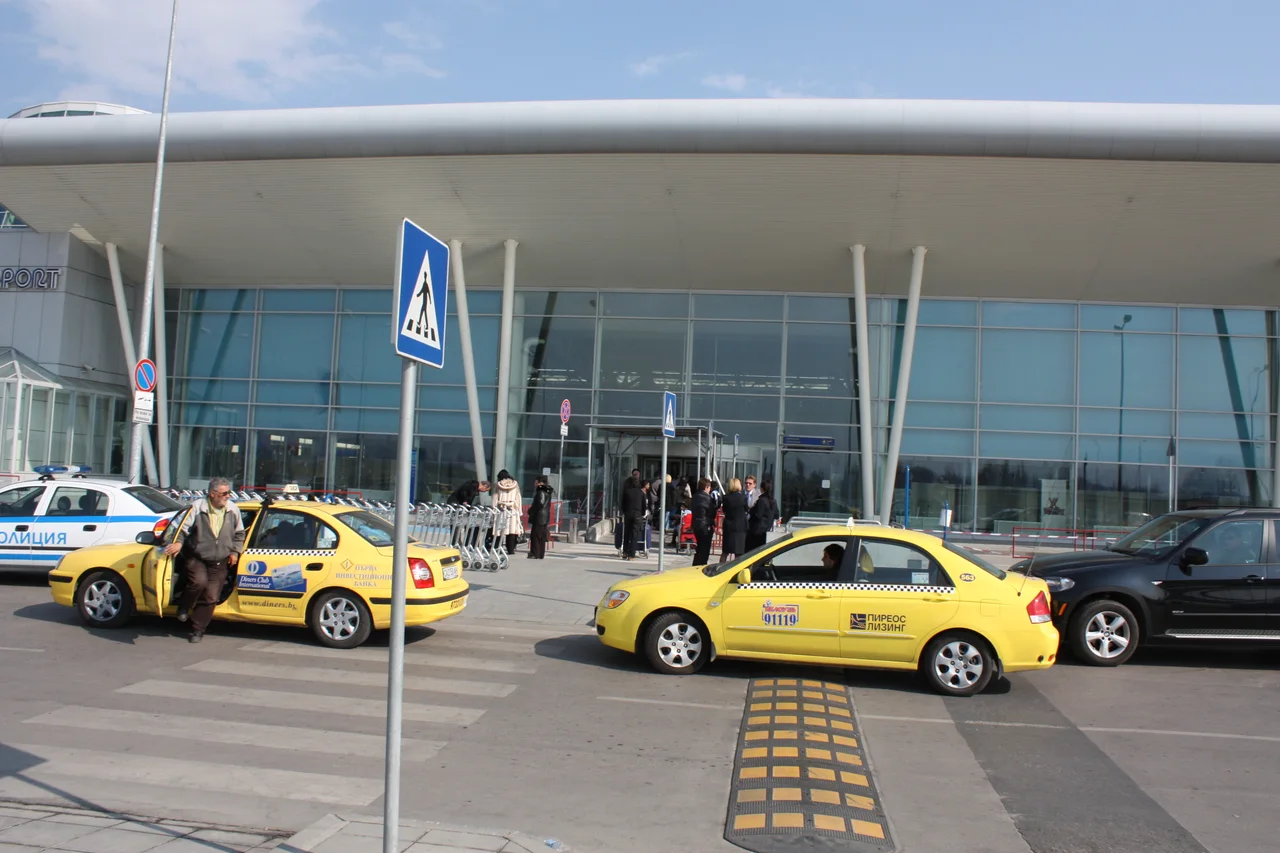
OK Supertrans is another licensed Sofia company, though not the one holding the airport contract. It publishes typical metered fares from the airport, which are not binding: 13 to 14 euro to the centre and to the National Palace of Culture, 12 to 13 euro to the national stadium, and 14 to 15 euro to the central bus and railway stations (checked on 24 October 2026). For the centre that’s about $15-16 or £11-12. Anyone who approaches you inside the hall with a price well above those figures is outside the queue system. The metro, the bus and the luggage-ticket catch are in our Sofia Airport transfer guide, the airport scam is in is Bulgaria safe, and Varna and Burgas have their own airport guides.
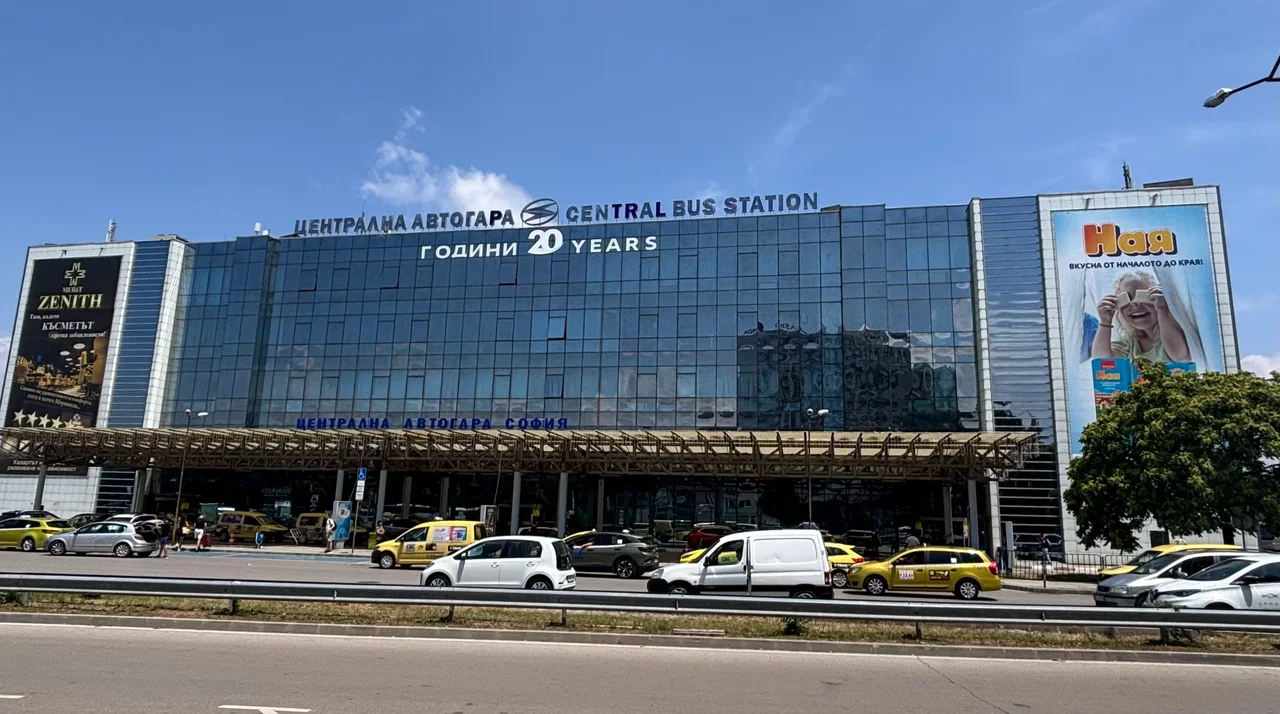
Resorts and ski transfers: past the town sign
The meter’s rules change at the edge of town. Once the cab passes the road sign marking the end of the built-up area, the driver has to switch the meter by hand to the out-of-town price on the sticker and stay on it until the end of the trip. For a run to Borovets, Rila or Bansko, the third price on the sticker is the one that counts, not the city rate. Over distances of roughly 70 to 160 km that makes a long meter, and a fixed-price booking is often the cleaner deal, especially with ski bags. Our Sofia to Bansko and Sofia to Borovets guides carry the current fares and the shuttle options, so we don’t repeat the numbers here.
On the coast the warning is sharper. The UK Foreign Office reports regular robberies and threatening behaviour by taxi drivers in Sunny Beach and advises using a taxi recommended by your tour operator or accommodation provider. Have the hotel call the cab, or pre-book the airport run; the Burgas airport guide covers the transfer to the resort.
Three rides, worked out
Take OK Supertrans’s published tariff as an example of a licensed Sofia company: a daytime start charge of 1.50 euro and 0.75 euro a kilometre, 1.70 euro and 0.85 euro a kilometre from 22:00 to 06:00, waiting at 0.25 euro a minute, and 0.60 euro extra if you order the car to an address (checked on 24 October 2026).
- 5 km across the centre at 14:00: 1.50 + 5 x 0.75 = 5.25 euro, about $5.90 or £4.40.
- 8 km home at 23:00: 1.70 + 8 x 0.85 = 8.50 euro, about $9.50 or £7.10, plus 0.60 euro if you ordered the car to your address.
- Airport to the centre: 13 to 14 euro on the company’s own list of typical fares.
Another company’s sticker will differ a little, and the council’s cap sets the ceiling: even at the top of the daytime band, 1.24 euro a kilometre, 5 km comes to 6.20 euro before the start charge. If the receipt lands well above the sum you can make from the sticker, ask the driver to show the meter and the tariff it ran on. Photograph the sticker as you get in and keep the fiscal receipt the driver has to give you: between them they show what the ride should have cost and what you were charged.
Good to know
Tariffs are in euro (Bulgaria joined the eurozone on 1 January 2026; fixed 1.95583 leva = 1 euro). Sofia's per-kilometre band is set by the city council and reviewed each autumn, taxi companies change their own rates, and the airport queue system was introduced in July 2026 - confirm the figures on the cab's sticker and the airport signs.
Details checked: October 24, 2026
Read also

Transport · 13 min read
Bulgaria Border Crossings by Car: Turkey, Serbia & EES
Verified · October 31, 2026Driving across Bulgaria's borders in 2026: where EES applies, Kapitan Andreevo works, Danube bridge tolls, rental permission and the green card.

Transport · 12 min read
Sofia to Borovets: 70 km, ~1h, Bus from €5
Verified · September 5, 2026Sofia to Borovets (~70 km, 1-1.5h): public bus via Samokov from ~€5, seasonal shared shuttles from €8/pp, private transfer from ~€79.

Transport · 11 min read
Plovdiv to Pamporovo: Bus & Ski Transfer
Verified · September 3, 2026Plovdiv to Pamporovo is about 80 km via Chepelare. Bus from Rodopi station, winter airport transfer, or drive - how to choose.

Transport · 9 min read
Sofia to Sunny Beach: Bus, Train & Transfer
Verified · August 24, 2026Direct coaches Sofia to Sunny Beach year-round (~7h, from ~€21), train only to Burgas, or a fixed private transfer. Times, stops and when each wins.