
Tipping in Bulgaria 2026: 10% in Restaurants, €1-2 a Bag
Tipping in Bulgaria is light: about 10% in restaurants, round up taxis and bars, €1-2 a bag for porters, €2-4 a day housekeeping; tip in cash even by card.
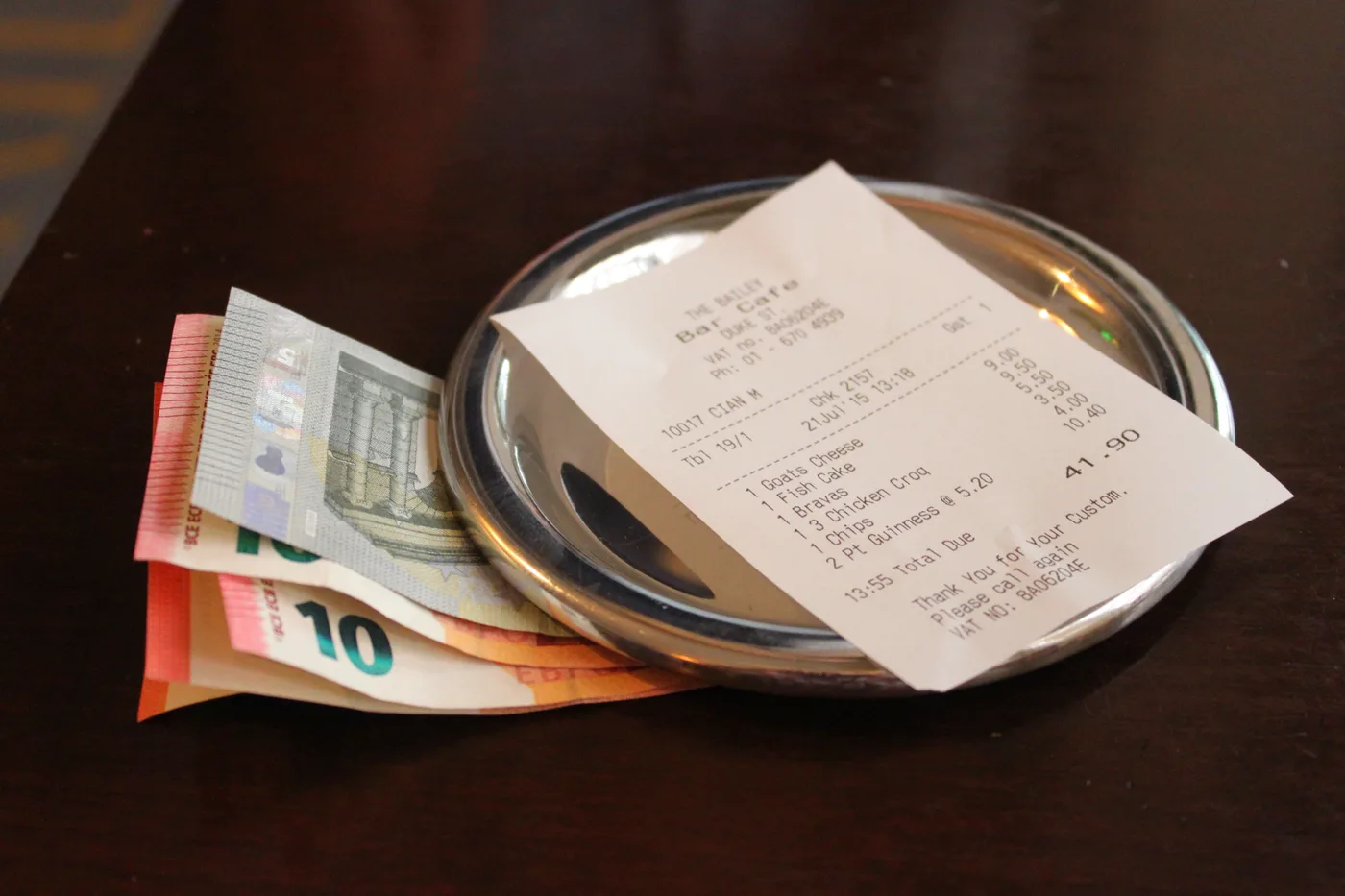
Tipping in Bulgaria is light and always optional, but appreciated: leave about 10% in restaurants, round up the fare in taxis and the change in cafes and bars, and hand it over in cash even when you settle the bill by card. Nobody expects a North American 20%, and leaving nothing where you had table service reads as a small complaint rather than a neutral choice. Prices and tips are now in euro, since Bulgaria joined the eurozone in January 2026. That’s the whole of it; the detail below is where the coins actually go, and the couple of local quirks worth knowing before you pay.
The short version
- Restaurants: around 10% for good service, up to 15% if you were genuinely spoiled.
- Cafes and bars: just round up or leave the change; no percentage needed.
- Taxis: round the fare up to the next round figure; roughly 10% on a long ride.
- Hotels: about 1 to 2 euro a bag for a porter, 2 to 4 euro a day for housekeeping.
- Guides: about 10% of a paid tour; 5 to 10 euro per person on a “free” walking tour.
- Always in cash where you can, and keep small notes and 1 and 2 euro coins handy.
Restaurants: 10%, and the bill you should check
In a sit-down restaurant, 10% is the going rate for good service, a little more if you were properly looked after, and rounding up is fine on a casual lunch. Leaving nothing at all after table service comes across as a mild rebuke, so unless something went wrong, put something on the table. To put a number on it, a 40 euro dinner for two means about a 4 euro tip, so you either tell the waiter to make it 44 or leave a 5 euro note on the tray and wave off the change; on a 12 euro lunch, rounding the tray up to 13 or 14 does the job. Nobody counts to the cent here, and a slightly generous round figure always beats fishing about for exact coins.
The one trap to watch is the service charge. Some restaurants, especially in tourist areas, the resorts and inside hotels, quietly add a service line to the bill, often around 10%. If it’s already there, you’ve effectively tipped, and there is no need to add more on top; a few coins to round up is plenty. So glance at the itemised bill before you decide. Do not confuse this with VAT, which is a government tax printed on the receipt, not a gratuity and nothing to do with the staff. When in doubt, ask “is service included?” before you add anything.
Paying by card? Leave the tip in cash
This is the practical quirk that catches visitors, and it is worth understanding before the card machine comes over. Bulgarian card terminals almost never have a tip line. You cannot usually add a gratuity on screen the way you might at home, and you can’t write one in after the card has run. So you have two options. Either tell the waiter the total you want charged before they tap the card (“make it forty-five”), or, simpler and better, pay the bill by card and leave the tip in cash on the tray. Cash is the surer route anyway: it goes straight into the server’s pocket rather than through the till and the business, so keep a few small notes and coins on you for exactly this moment. It is the single most useful habit to bring to a Bulgarian restaurant.
Cafes, bars and coffee: round up and move on
For everyday spots the maths is easy: round up or leave the change, no percentage required. Buy a two-euro coffee at a table and dropping the coins from your change is normal and enough; buy the same coffee at a counter to take away and nothing is expected at all. In a bar, round up per drink or leave the small change on the bar, and if you’re getting proper table service through the evening, a loose 10% is generous. None of this is calculated or formal, it is just the local habit of not scooping up every last coin.
Taxis and airport transfers
For taxis, round the fare up to the next round number, and on a longer ride roughly 10% is generous, though drivers don’t expect much. Pay in cash where you can, and use a metered, reputable taxi or an app rather than one touting outside the airport arrivals, which is where the overcharging happens. A pre-booked airport transfer is a different case: the price you paid already covers the driver, so nothing is required, but a euro or two for help hauling bags and ski gear is a nice touch and always well received. Our guide to getting around Bulgaria covers the taxi apps and fares in more detail.
Hotels, guides and the “free” walking tour
At a hotel, a porter who carries your bags is worth about 1 to 2 euro a bag, and housekeeping appreciates 2 to 4 euro a day, best left on the pillow at the end of your stay with a note so it’s clearly a tip. A concierge who pulls off a real favour, a hard restaurant booking or last-minute tickets, deserves a few euro; the receptionist who checks you in doesn’t. A doorman who hails you a cab or a valet who parks the car earns a euro or two, and where a smart restaurant or club keeps a cloakroom, the coat check is usually a small fixed charge rather than a tip, though a spare coin on top is a kind touch. Nudge the amounts up at the luxury end.
For a guided day tour, about 10% of the price is right if you enjoyed it, with a little extra split off for a separate driver. The one people get wrong is the free walking tour, the kind that runs in Sofia and Plovdiv on a tips-only basis. It is not really free: the guide earns their living from what you hand over at the end, and the honest rate is 5 to 10 euro per person for a good two-hour tour, not a token coin. If you were entertained and informed for two hours, tip it like the paid tour it effectively is.
Spas, barbers and ski instructors
A few services outside the restaurant world follow the same gentle 10% logic. At a spa, massage, hairdresser or barber, round up or leave about 10% if you were happy with the result. If you take ski lessons at Bansko, Borovets or Pamporovo, it’s normal to tip a good instructor at the end of the course or the week rather than each day, again in the region of 10% of the lesson price if they got you or the kids skiing. None of these are obligatory, and none are large; the principle throughout Bulgaria is the same small courtesy for someone who looked after you well.
What counts as rude, and when not to tip
Two things to avoid. First, don’t leave only tiny coins: a couple of 1 and 2 cent pieces as a “tip” reads as an insult and is genuinely worse than leaving nothing, so use 50 cent, 1 and 2 euro coins for the job. Second, now that Bulgaria is on the euro, don’t tip in foreign notes: leftover pounds or dollars are useless to staff who would pay a fee to change them.
And plenty of places want no tip at all. Fast food, self-service canteens, bakery and pastry counters, takeaway coffee, supermarkets and self-service petrol are all no-tip by default; you are not being stingy by walking away. The flip side is that a small round-up is a kind gesture for a full-service petrol attendant or anyone who goes out of their way, but it’s a courtesy, not an expectation.
The bottom line
Tipping in Bulgaria never needs to be stressful. Leave about 10% for good table service, round up taxis, bars and cafes, and do the tipping in cash because the card machine usually will not let you and cash reaches the server anyway. Keep small notes and 1 and 2 euro coins in your pocket, check the bill for an included service charge before you add more, and remember that a “free” walking tour isn’t really free. Get those right and you’ll tip like a local without a second thought. For the wider picture of paying here, see our guide to money in Bulgaria, and if you’re budgeting a trip, whether Bulgaria is expensive (it’s the cheapest country in the EU) and what to eat will tell you what those tips are buying.
Good to know
Tipping norms checked July 2026 against Bulgarian travel-money and tipping guides; customs vary by venue, city and how good the service was. Amounts are in euro (Bulgaria joined the eurozone on 1 January 2026, fixed at 1.95583 leva to 1 euro). Tips are always a courtesy, never obligatory.
Details checked: July 15, 2026
Read also

Before you go · 12 min read
How Much Does a Bulgaria Ski Holiday Cost?
Verified · September 13, 2026A Bulgaria ski week usually lands around 770 to 1,170 EUR mid-range: lift pass, hire, bed, food and transfer from official 2025-26 tariffs.

Before you go · 9 min read
Day Trips from Sunny Beach: Nessebar & Beyond
Verified · August 28, 2026Day trips from Sunny Beach: Nessebar on the local bus, Sozopol via Burgas, Strandzha jeep days. Times, tickets and what fits in a day. 2026.

Before you go · 10 min read
Bulgaria or Greece: Which Beach Holiday Is Better?
Verified · August 27, 2026Greece wins on islands and water clarity; Bulgaria wins on price and sandy resort beaches. Who each suits, real 2026 costs and flights from the UK.

Before you go · 8 min read
Day Trips from Varna: Balchik, Kaliakra & Caves
Verified · August 26, 2026Day trips from Varna: Balchik Palace from €10, Cape Kaliakra cliffs, Aladzha rock monastery and Pobiti Kamani. Distances, buses and what fits in a day.