
What to Eat in Bulgaria: Food & Wine Guide
What to try in Bulgaria: banitsa, shopska salad, tarator, kebapche, kavarma, sarmi, real Bulgarian yogurt, sirene cheese, plus Mavrud wine and rakia.
Bulgarian food is Balkan home cooking built on two pillars: the grill and dairy. Meals open with a salad and a shot of cold rakia, run through grilled minced meat and slow-cooked stews from a clay pot, and lean the whole way on white brine cheese and the thick, tangy yogurt the country is literally famous for. It’s hearty, cheap, and made for sharing, and outside a handful of tourist traps it has barely been dressed up for visitors. This guide covers the dishes worth ordering, the local wines to drink with them, and how to eat like you know what you’re doing.
One thing to note before the bill arrives: Bulgaria joined the euro on 1 January 2026, so prices are now in euros (€). Menus still print both euros and the old leva through most of 2026, and small places love cash, so keep coins handy.
Start with a salad and a rakia
A Bulgarian meal begins the way a Bulgarian meal has always begun: with a salad and a glass of rakia, poured cold and sipped slowly while everyone talks. Rakia is the national spirit, a strong grape or fruit brandy (the plum version, slivova, is a favourite), and here it is an aperitif, not a nightcap. Order it before the food and let it sit alongside the starter.
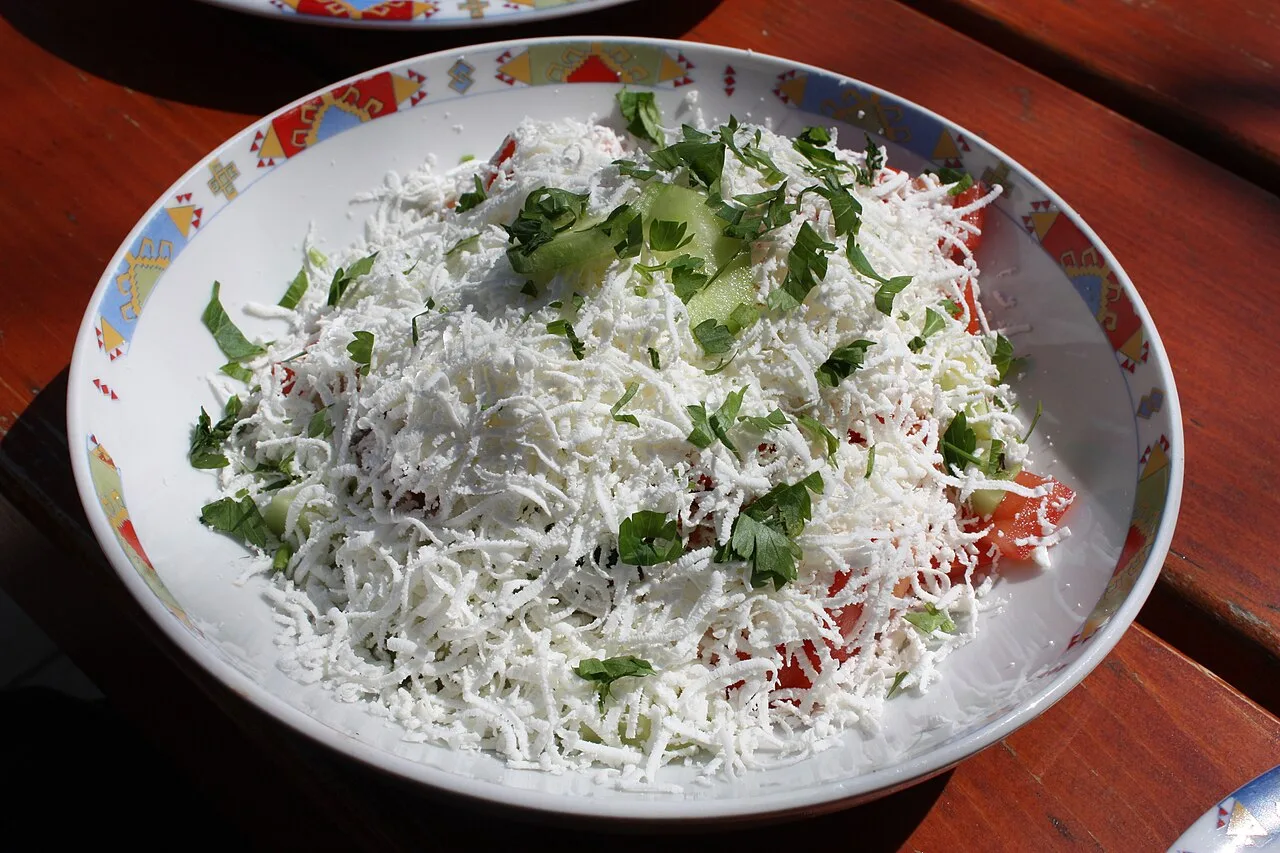
That starter is almost always shopska salad, and it is the dish everyone means when they picture Bulgarian food. It’s simple: chopped tomato, cucumber, raw onion and roasted pepper, buried under a snowdrift of grated sirene, the country’s soft, salty white brine cheese. The colours - red, white and green - happen to match the Bulgarian flag, which is part of why it became a national symbol. Made with ripe summer tomatoes it’s genuinely one of the best simple salads anywhere.
Alongside it you’ll often see a small spread of meze - cubes of cheese, slices of cured sausage like lukanka, olives, and roasted peppers - the little plates that make Bulgarian drinking so civilised. In summer, look for mish-mash, a soft scramble of tomato, pepper, onion, eggs and sirene that works as a light meal in its own right.
Banitsa: the breakfast pastry
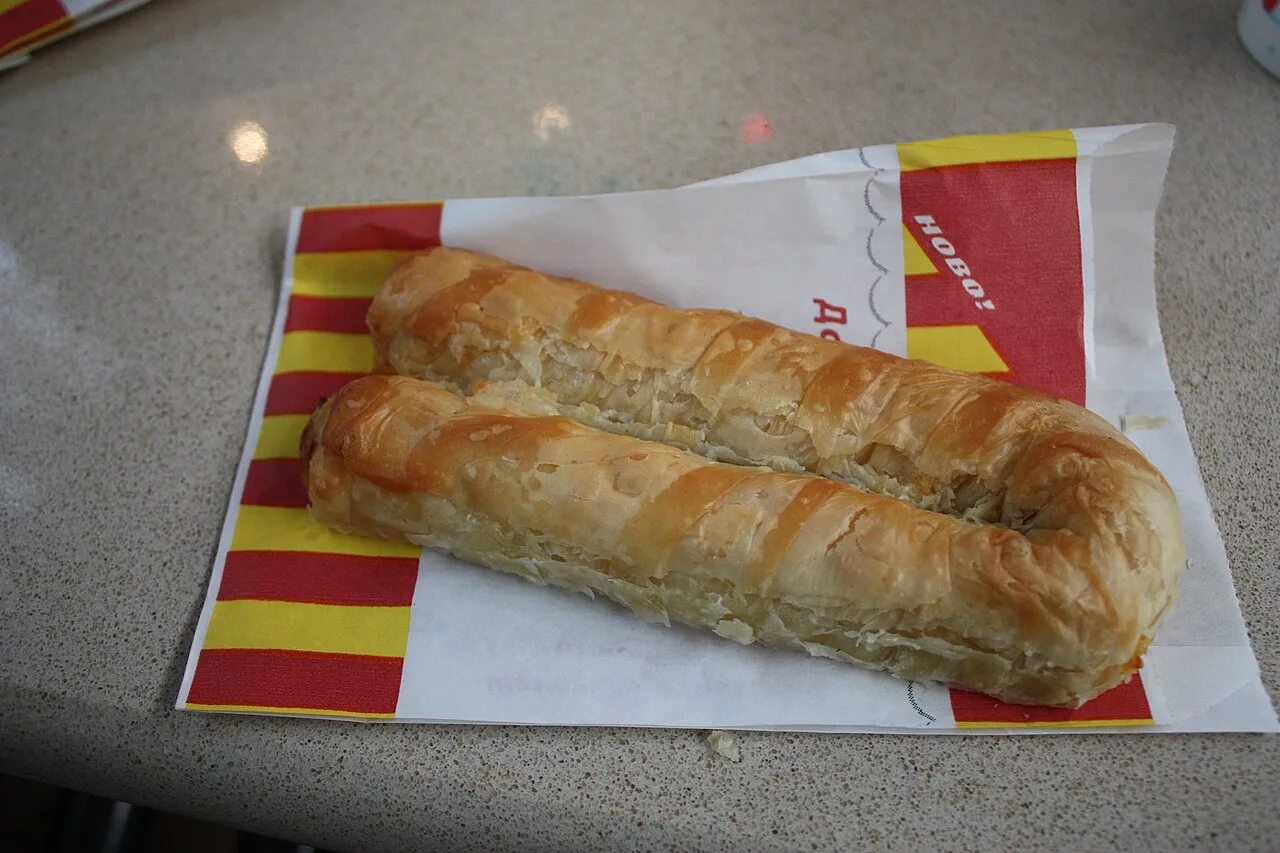
The everyday Bulgarian breakfast is banitsa, and you should eat it hot from a bakery on your first morning. It’s a coil of thin filo pastry layered with a filling of eggs, sirene and yogurt, baked until the top is crisp and golden and the inside is soft and savoury. Bakeries sell it by the slice all day, and it is the cheapest good thing you can put in your hand on the way to a sight.
There’s a bit of ritual attached to it, too: on New Year’s Eve, families bake lucky charms or paper fortunes into the banitsa, and whoever finds the coin or the note gets luck for the year. Wash a morning slice down the local way with boza, a thick, mildly sweet fermented grain drink, or with a glass of the famous yogurt.
For a sweeter start, mekitsi are pieces of deep-fried dough, crisp outside and pillowy inside, served with jam, honey, icing sugar or a piece of cheese. They are a weekend and grandmother’s-kitchen sort of breakfast, and a plate of them with berry jam is hard to beat.
The grill: kebapche and kyufte
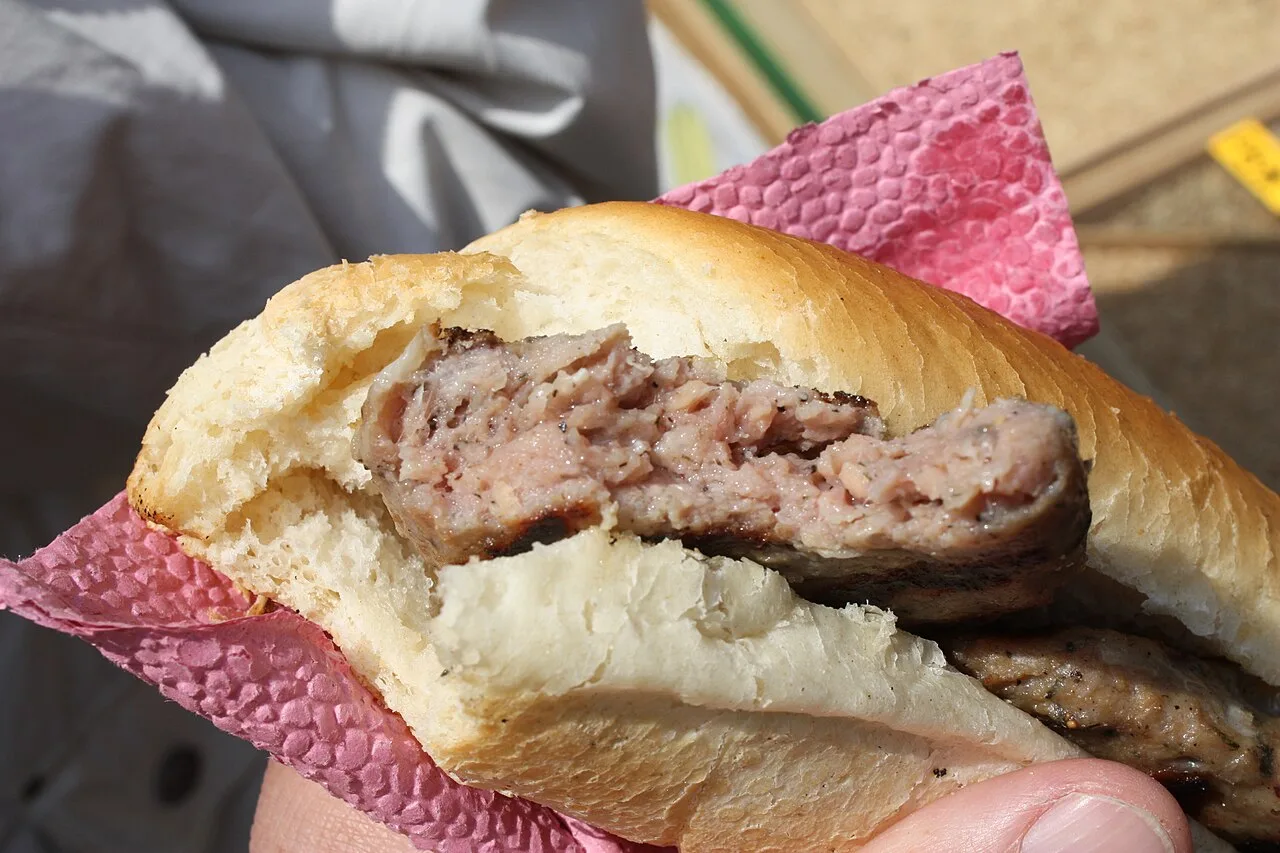
The default cheap, filling meal in Bulgaria comes off the skara - the grill - and the two things to order are kebapche and kyufte. Kebapche is a finger-length roll of minced meat seasoned with cumin; kyufte is its round cousin, a flattened patty flavoured with onion and spices. Both are grilled over coals and served plain with bread, a smear of lyutenitsa, and maybe a raw onion or some chips. A plate of them costs very little and it’s the food Bulgarians actually eat, day in, day out.
A tip most first-timers miss: the giveaway of a good grill house is the smell of charcoal and a queue of locals, not a printed menu in five languages. Order two or three kebapche each, a shopska to share, and a beer, and you have the classic cheap Bulgarian dinner.
That red relish next to your meat, lyutenitsa, deserves its own mention. It’s a thick purée of roasted red peppers, tomatoes and sometimes carrot, spread on bread and often topped with crumbled cheese. Bulgarian families still cook up huge batches in autumn to jar for the winter, and no two are quite the same.
Stews from the clay pot: kavarma and gyuvech
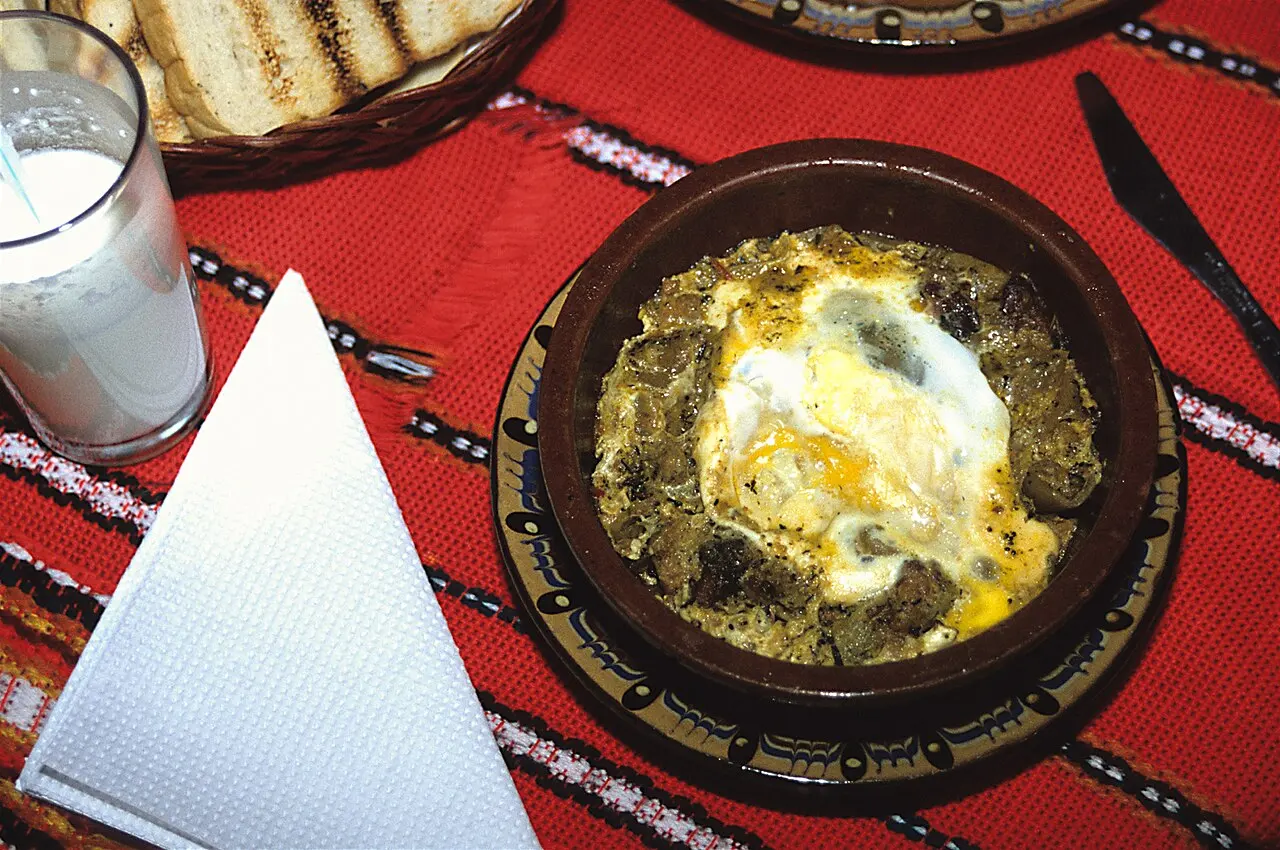
When the weather turns, Bulgaria cooks in a clay pot, and the results are the country’s most comforting food. Kavarma is a slow-cooked stew of pork, veal or lamb with onions and peppers, simmered down until the meat is soft and often finished with an egg cracked on top and baked in its own little pot. Gyuvech is the vegetable-forward version - a stew of seasonal vegetables, sometimes with meat, baked in the earthenware dish that gives it its name. Both arrive bubbling at the table, and both are the sort of thing you order after a cold day in the mountains.
The other cold-weather classic is sarmi: cabbage or vine leaves rolled around a filling of rice and minced meat. They turn up on every festive table, and the Christmas Eve version is meat-free, made with just rice, onion and spices, because that meal is traditionally vegan. That Christmas Eve dinner is spread with an odd number of meatless dishes - sarmi alongside a decorated round loaf, stuffed peppers, beans and boiled wheat. If you’re here in winter, a plate of sarmi with a spoon of yogurt on the side is the taste of a Bulgarian holiday. Our guide to Christmas and New Year in Bulgaria sets out the whole meatless Christmas Eve table, and why the country celebrates on 25 December rather than in January.
Bulgarian yogurt: the real thing
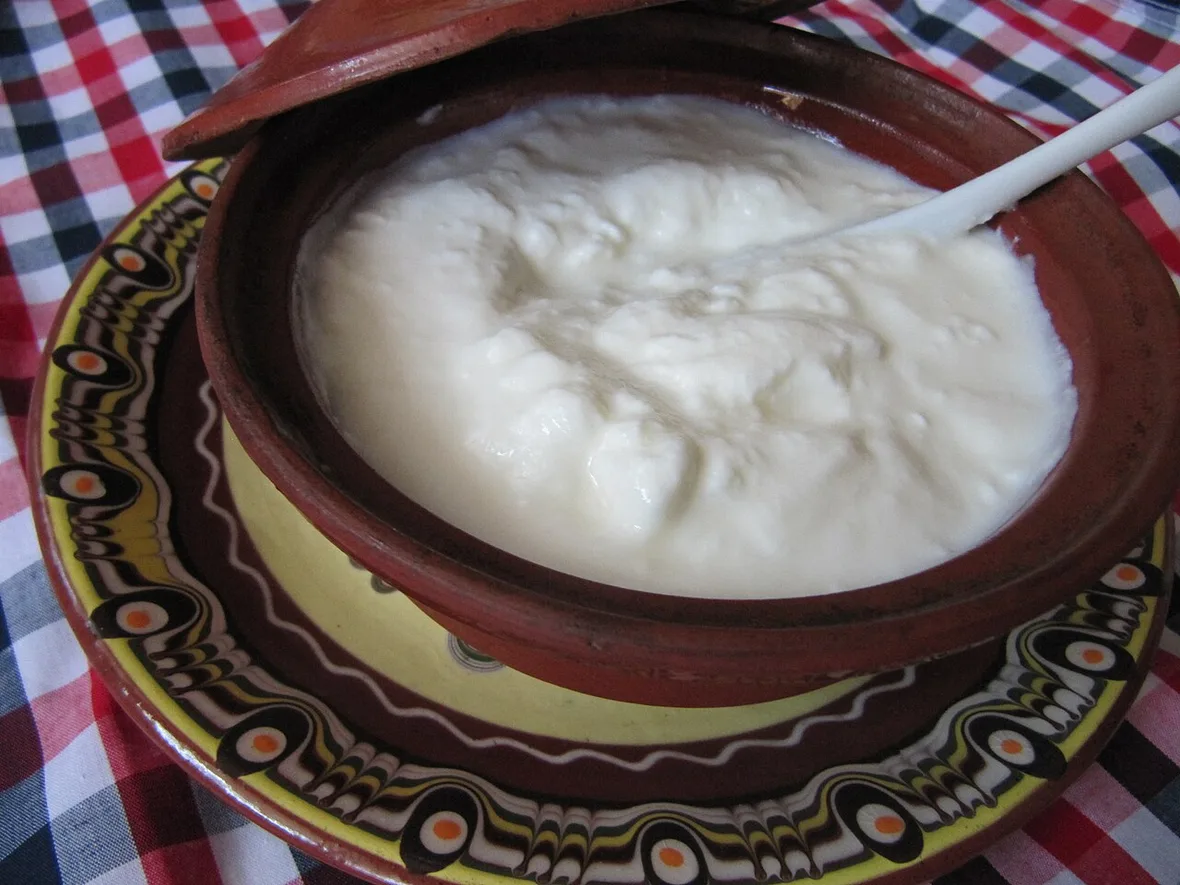
Here’s the one food you can’t get properly anywhere else. Bulgarian yogurt - kiselo mlyako, “sour milk” - is thick, tangy and alive with a bacterium named after the country itself: Lactobacillus bulgaricus. It was isolated in 1905 by a young Bulgarian doctor, Stamen Grigorov, then just 27, working in a Geneva laboratory, and the scientific world named the strain after Bulgaria. Bulgarians have eaten this yogurt daily for centuries, and per-head they still get through more of it than just about anyone in Europe.
Try it plain, the way locals do, or spooned over with honey and walnuts for breakfast. It also does double duty: it’s the base of tarator, the cold summer soup of yogurt, cucumber, garlic, dill and crushed walnuts, thinned with water and served chilled. On a hot Sofia afternoon, a bowl of tarator is the most refreshing thing on the menu.
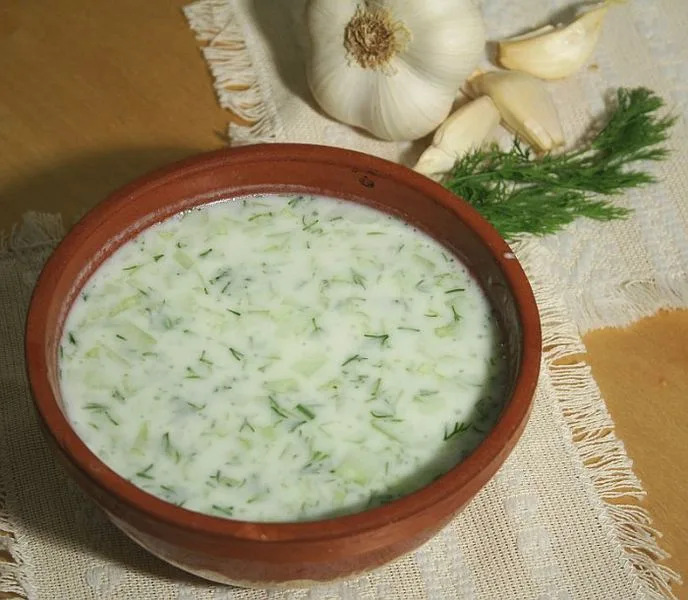
The country’s cheeses run on the same dairy pride. Sirene is the white brine cheese in your salad and your banitsa - crumbly, salty, close to a Greek feta. Kashkaval is the firmer yellow cheese, made from cow’s or sheep’s milk, sliced onto meze boards or breaded and fried as a hot starter. Between them they turn up in half the dishes on this list.
What to drink: Mavrud, Melnik and rakia
Bulgaria has been making wine for thousands of years, and its indigenous grapes are the reason to drink local rather than reaching for an imported label. The red to seek out is Mavrud, a dark, tannic, spicy grape grown mainly in the Thracian plain around Asenovgrad, near Plovdiv. It’s low-yielding and late-ripening, harvested in late October, and it ages beautifully - a good Mavrud has depth and structure and rewards a few years in the bottle.
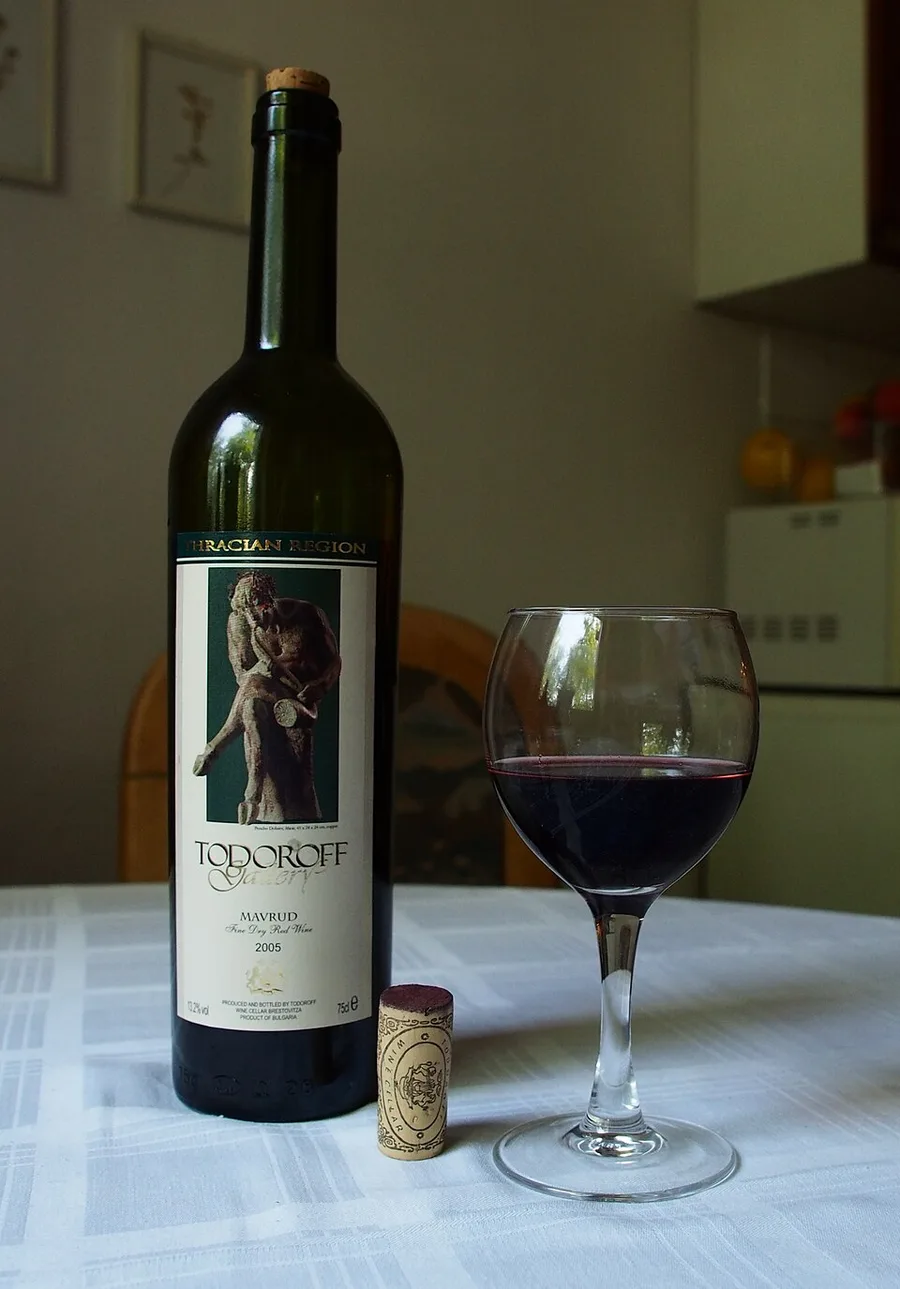
Two more names worth knowing: Melnik, from the warm Struma valley in the southwest, gives softer, plummy reds (the widely planted “Melnik 55” is an early-ripening local cross), and Rubin is a home-grown Bulgarian crossing of Nebbiolo and Syrah, created in the 1950s, that makes rich, dark wines. For whites and rosés, the Thracian plain and the Black Sea coast both deliver easy, well-priced bottles.
And then there’s rakia again, which bookends the meal - poured to start and sometimes to finish. Homemade rakia is a point of pride in the villages and can be fierce, so treat it with respect and sip.
Where and how to eat it
The word to look for is mehana - a traditional tavern, usually rustic, with folk decor, a grill going and the full range of clay-pot dishes. A good mehana off the main tourist drag will feed you better and cheaper than any square-side terrace, and it’s where the stews, the sarmi and the grill are done properly. Portions are large and, even now that Bulgaria is on the euro, the bill lands well below Western European levels.
A few practical notes. Menus and shop shelves showed dual prices in euros and leva until 8 August 2026, when the requirement ended, so you can double-check the conversion while it’s still printed. Markets and small mehanas often prefer cash, even where card machines exist. And the best food maps onto the best cities: the capital is packed with bakeries, grills and wine bars (our where to eat in Sofia picks the best tables, and the best things to do in Sofia covers the rest), while Plovdiv sits in the heart of the Thracian wine country, making it the natural place to drink Mavrud at the source. On the Black Sea side, best food in Varna covers the coast tables. For where to eat by city, browse our vetted picks in the food section, and if you’re planning the wider trip, the 7-day Bulgaria itinerary threads the food regions together.
Photos
Read also

Food · 7 min read
Where to Eat in Varna: Fish, Mehanas & Sea Garden
Verified · September 4, 2026Where to eat in Varna: Black Sea fish at the Port, mehanas in town, Sea Garden terraces, with menu prices from Mr Baba and Captain Cook.

Food · 9 min read
Melnik Wine Guide: Cellars, Grapes & Tastings
Verified · July 23, 2026Melnik wine explained: the broad-leaved Melnik vine, Melnik 55, the sandstone cellars, which wineries to book and how to taste without driving.

Food · 8 min read
Where to Eat in Plovdiv: Kapana & Old Town Restaurants
Verified · July 21, 2026Where to eat in Plovdiv: Pavaj and craft beer in Kapana, Revival-house garden restaurants in the Old Town, plus rakia, Mavrud wine and cheap grills.

Food · 9 min read
Where to Eat in Sofia: Best Traditional Restaurants
Verified · July 20, 2026Where to eat in Sofia: the best traditional mehanas and modern Bulgarian restaurants, from Manastirska Magernitsa to Moma, plus rakia bars and cheap eats.