
Devil's Throat Cave & the Rhodope Villages
Devil's Throat cave in the Rhodopes: the 42 m underground waterfall, tour times and rules, plus Yagodina cave, Trigrad gorge and the Eagle's Eye.
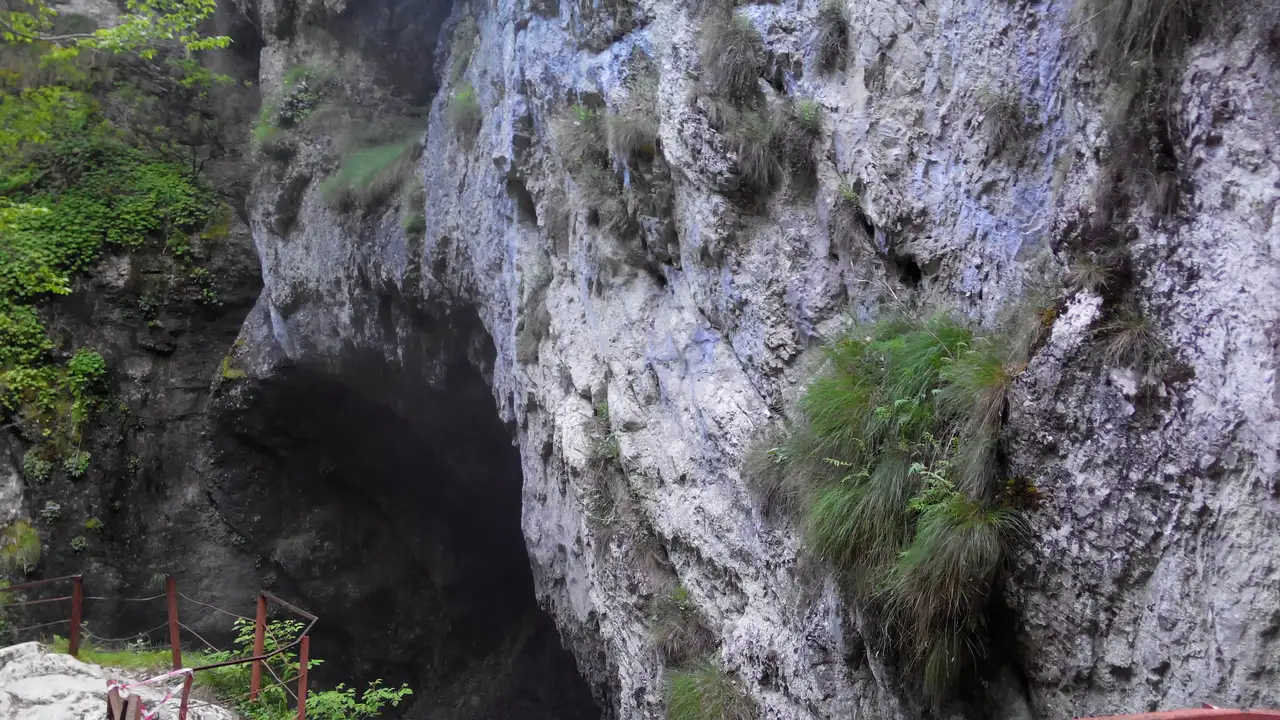
Devil’s Throat is a cave in the western Rhodopes where an entire river disappears into a hole in the mountain and falls 42 metres underground, the highest underground waterfall on the Balkan peninsula. You visit it on a guided tour that leaves on the hour, in a group, for a ticket of a couple of euro, and it takes about an hour. It sits 1.5 km north of the village of Trigrad, roughly 17 km up the gorge from the spa town of Devin, and there’s no bus.
What makes the place stick isn’t the size of the cave, which is small, but the noise. The chamber the water lands in is called the Hall of Thunder for a reason: 110 metres long, 40 wide and up to 35 high, with a roar you feel in your chest before you see anything. Then you climb out on a long staircase cut up through wet rock, back into daylight and pine trees, which is exactly the shape of the story the Thracians told about this hole in the ground.
The Orpheus story, and why locals still tell it
The legend attached to this cave is that Orpheus went down through it into the kingdom of Hades to bring back Eurydice. Hades let them go on the one condition that Orpheus didn’t look back on the way out. Passing through the roaring hall he stopped hearing her footsteps behind him, panicked, and turned. That last detail is what makes the legend fit the place so well: down there, you genuinely can’t hear a person walking a metre behind you.
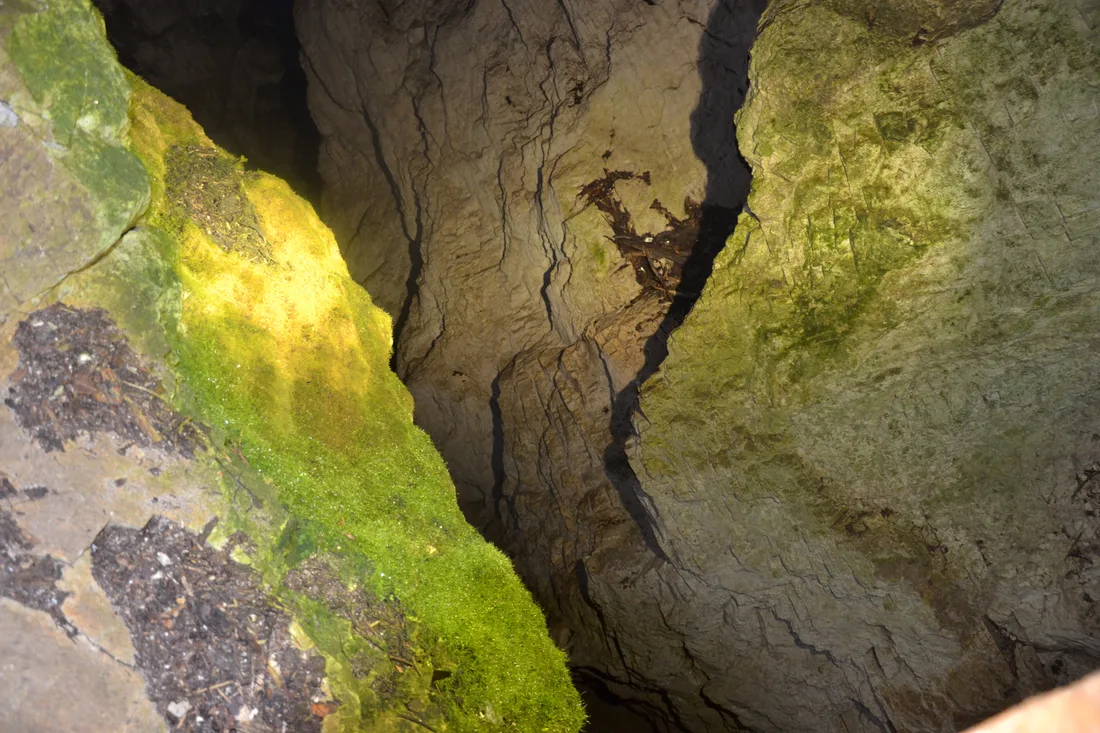
The cave does something else that keeps the myths alive. Nothing the river carries in ever comes out. People have thrown in timber and marked debris for decades and none of it has been recovered downstream. Dye tests show the water takes more than an hour and a half to cover the short distance between where it goes in and where it reappears, which points to a much bigger flooded system inside the mountain than anyone has mapped.
What the visit is actually like
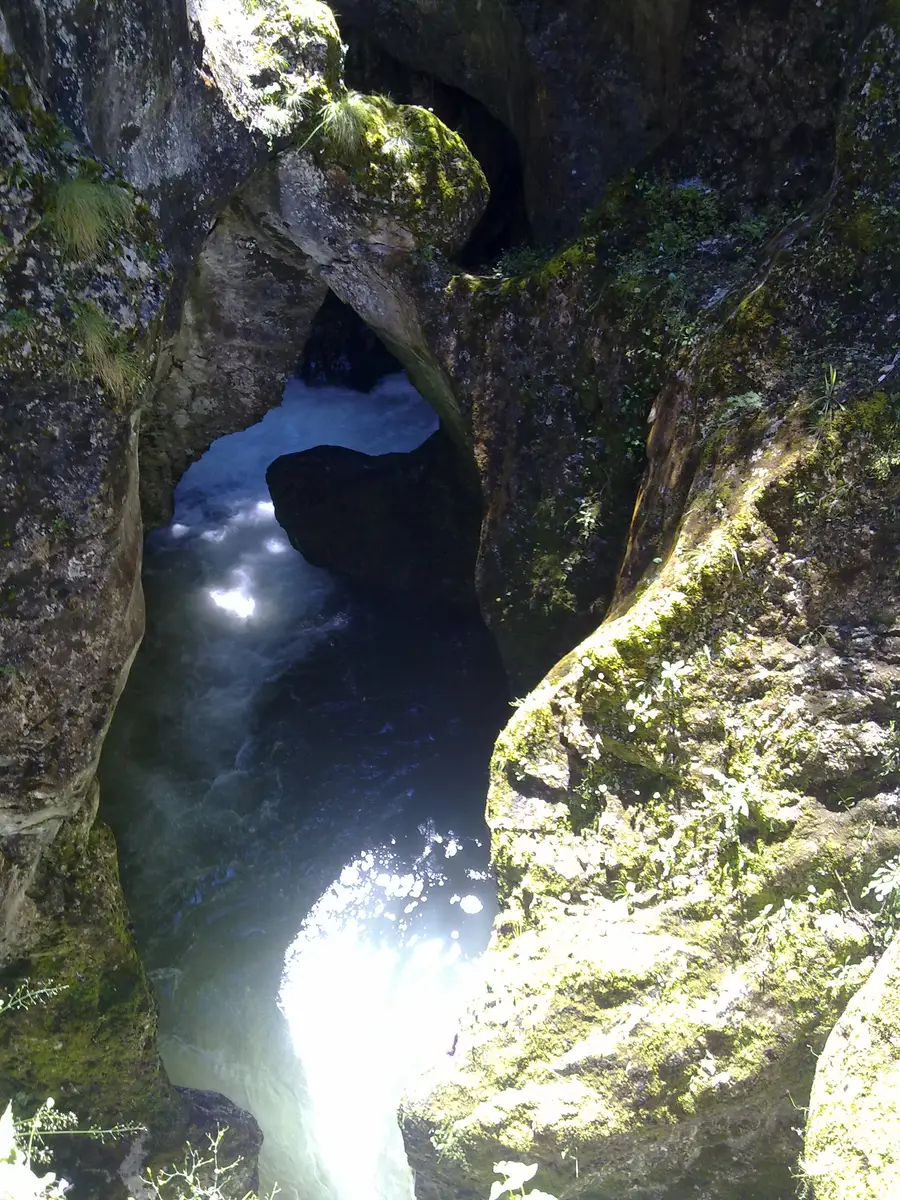
The tour is short and fixed. Groups go in on the hour with a guide, you can’t walk in alone, and the whole thing takes around an hour. The cave runs about a kilometre in total; roughly 350 metres of it’s on the route. You go in near river level, stand in the Hall of Thunder while the waterfall does its work, then leave up a long flight of steps hacked through the rock to an exit higher on the hillside.
In 1970 two divers, Siana Ljutzkanova and Evstati Jovchev, went into the sump below the waterfall to find out where the water goes. They never resurfaced. Neither their bodies nor their equipment was ever recovered. The guides mention it briefly and move on, and it’s the moment the cave stops being a pretty stop on a day trip.
A few practical things. It’s cold and wet in there whatever the weather outside, so bring a jacket even in August. The steps are slick with spray and condensation, so closed shoes with a grip beat sandals by a wide margin. And the last group leaves before the posted closing time, so turning up at 16:45 in July is how people end up looking at a locked gate. Opening is 10:00 to 17:00 from May to September and 10:00 to 16:00 from October to April.
On price, the current tariff is 6.65 euro (13 leva) for an adult, 5.62 euro (11 leva) for students and pensioners, and 3.07 euro (6 leva) for children, updated in spring 2026. Older blogs still quote around 5 leva, from before the reworking, so read the board at the window rather than a stale figure. Either way this is still one of the cheapest hours in Bulgarian tourism.
A small thing that Bulgarians will assume you know and nobody explains to visitors: both this cave and Yagodina are on the list of 100 National Tourist Sites, a scheme run by the Bulgarian Tourist Union where you carry a booklet and collect a stamp at each site. Locals treat it as a lifelong collection. If you’re travelling with children and want a reason for them to care about the eleventh church of the trip, buy the booklet early and ask for the stamp at the desk here.
The gorge you drive through to get there
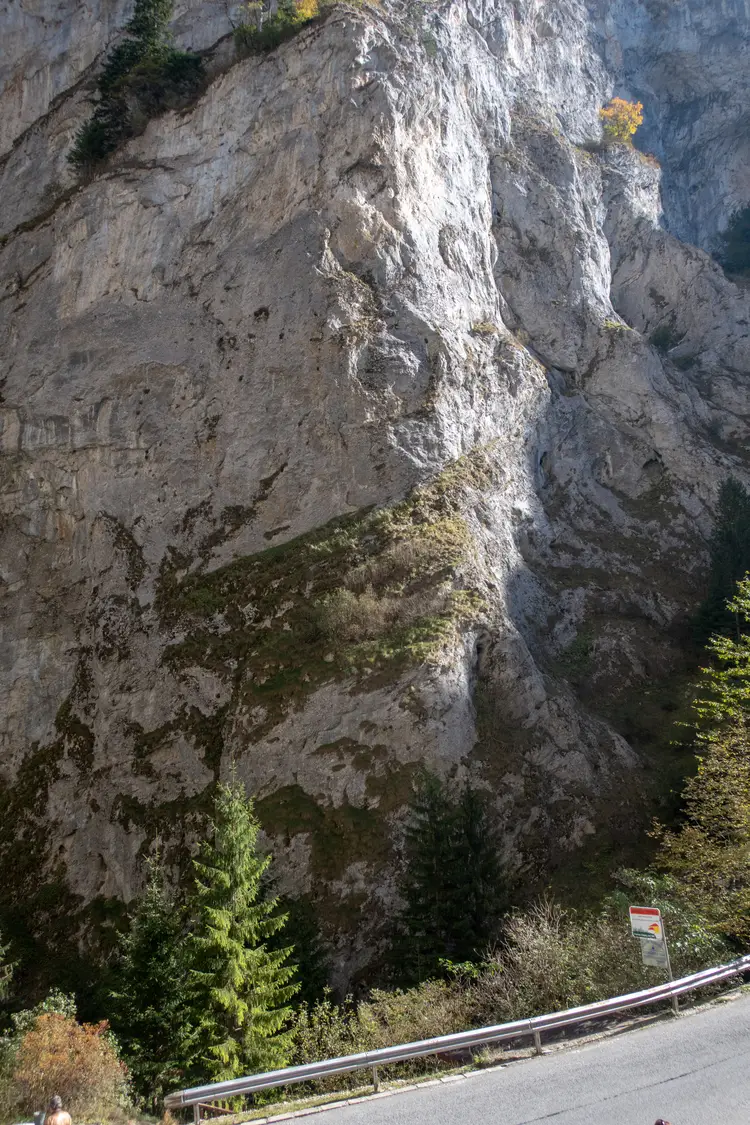
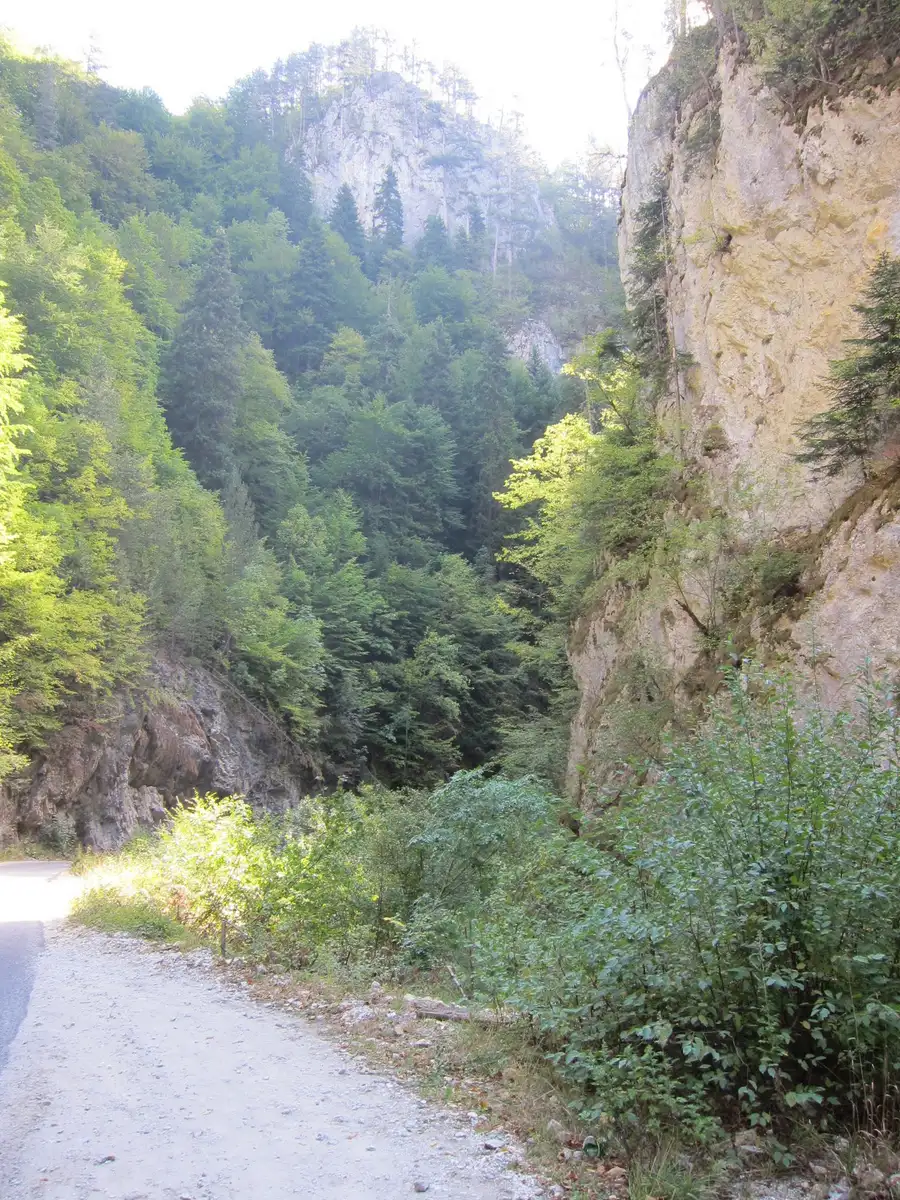
Half the pleasure is the approach. The Trigrad gorge is a slot cut by the river with a west wall around 300 metres high and an east wall reaching 300 to 350 metres, and the road runs along the bottom of it, at times with barely room for the tarmac and the water. It’s a genuinely dramatic drive, and also a slow one: expect single-lane pinch points, blind corners and the occasional rockfall barrier.
If you’re driving yourself, the mountain-road habits in our guide to driving in Bulgaria apply in full here, and picking up a car is covered in car rental in Bulgaria. Without a car you’re looking at a booked transfer or an organised day trip, since there’s no useful public transport up the gorge.
Yagodina cave: the other half of the day
About 40 minutes away by road, out via Teshel because no road links the two gorges directly, sits the cave that most people pair with Devil’s Throat, and the two are nothing alike. In the neighbouring Buynovo gorge, at the village of Yagodina, Yagodina is a labyrinth around 10.5 kilometres long on several levels, decorated with the stalactite and stalagmite formations that Devil’s Throat lacks entirely. The tourist route covers 1,250 metres, and both the entrance and the exit are man-made tunnels, 150 and 80 metres long, driven in to open the system up.
It stays at about 6 degrees all year, tours run with a guide on the hour, and hours are 09:00 to 16:00 from 1 May to 31 October, 10:00 to 16:00 from 1 November to 30 April. One thing to know: an Eneolithic dwelling was excavated four metres inside the natural entrance, a prehistoric pottery site of real importance, but as of spring 2026 that part isn’t accessible to visitors, so don’t build the trip around it. Serious cavers can book the extreme routes, “Orpheus” at 5 km and about six hours, “Eurydice” at 4 km and about four, for groups of 10 to 15 with a request in a week or more ahead and your own lighting.
The Eagle’s Eye, and the villages
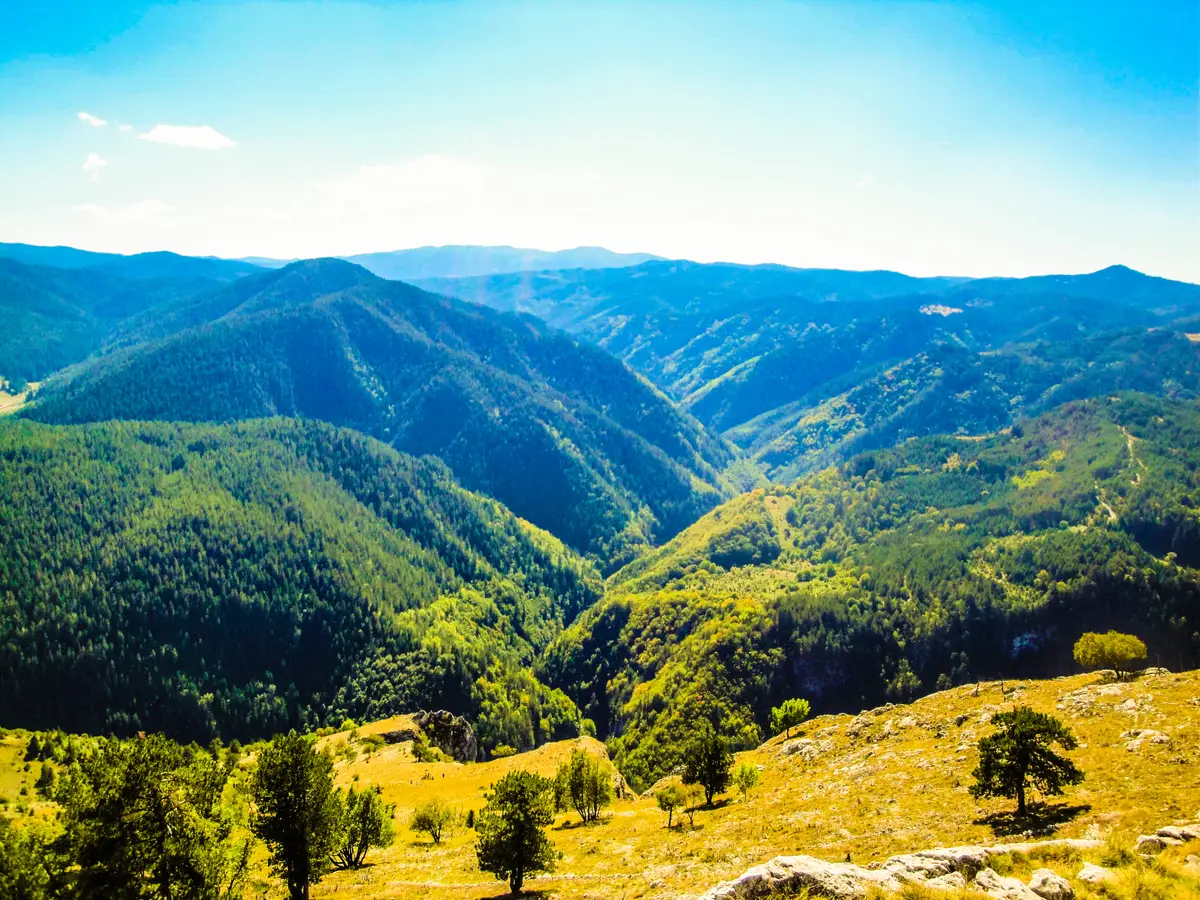
Above Yagodina, on the shoulder of Sveti Iliya peak at 1,563 metres, a steel viewing platform called the Eagle’s Eye juts out 670 metres above the Buynovo gorge. It’s the best view in this corner of the Rhodopes and the single most photographed thing here after the cave mouth. Getting up is the question: it’s a rough track, usually done by local off-road transfer from the village or on foot if you have the legs and the time, and prices are agreed locally, so ask in Yagodina rather than planning a fixed cost.
The villages themselves are the reason to stay a night rather than day-tripping. Trigrad and Yagodina are small, high and quiet, built for grazing rather than tourism, with family guesthouses serving Rhodope food. Neither has anything you would call a sight, and that’s the point: this is the part of Bulgaria where the evening entertainment is the silence. If you want one village with actual architecture, Shiroka Laka on the road toward Pamporovo is a protected architectural reserve of white stone houses stacked over a river.
When to come, and how to fit it in
May to October is the sensible window, both for the roads and because the caves keep longer hours. Summer is the easy option and the busiest; a weekday in June or September gets you the same tour with a third of the group. Winter is possible, the caves stay open on shorter hours, but the gorge roads take snow and ice seriously and the daylight runs out early. Our guide to the best time to visit Bulgaria sets out the wider seasonal picture.
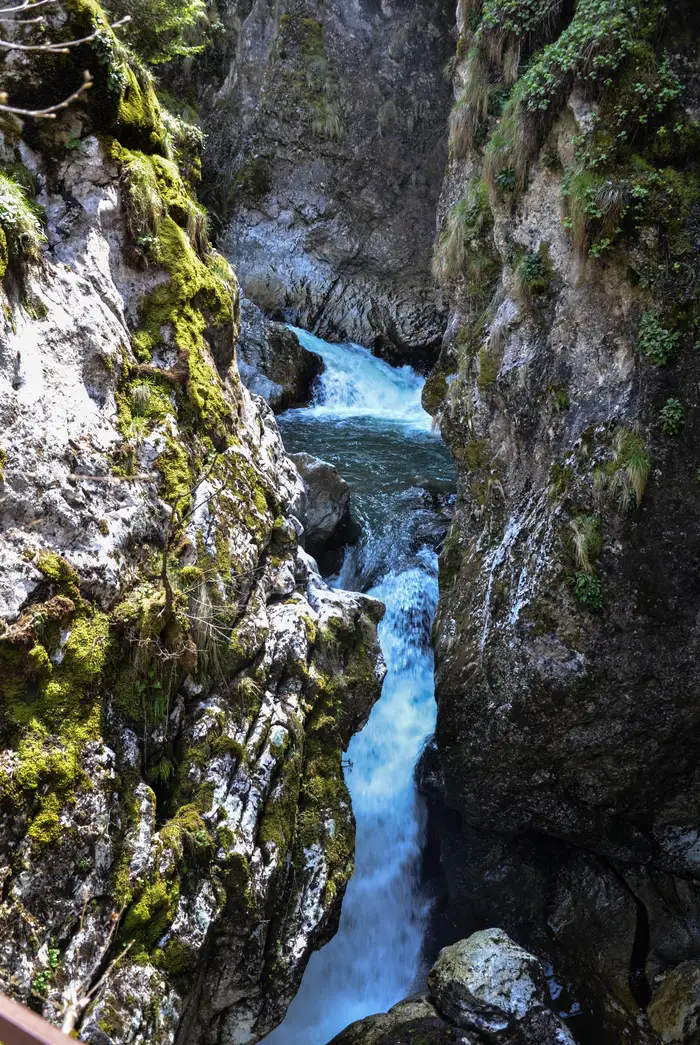
Be honest with yourself about how far out this is. The cave sits at roughly 41°37’N 24°23’E, deep in the western Rhodopes with the Greek border a short distance south, and the nearest settlements of any size are Gyovren and Trigrad. That remoteness is the reason the valley still feels unvisited on a July weekday, and also the reason a “quick stop” on the way to somewhere else doesn’t exist here. The Rhodopes are a destination, not a detour.
The realistic shape of a trip: base yourself in Devin, Trigrad or Yagodina, do Devil’s Throat in the morning and Yagodina after lunch, keep the Eagle’s Eye for a clear afternoon, and allow far more driving time than the distances suggest, because these are mountain roads with 30 km/h corners. Skiers already at Pamporovo are about an hour and a half away and can take this as a rest-day trip, which is by some distance the best use of a bad-snow day in the Rhodopes.
If you would rather have it planned for you, the caves slot naturally into the wider mountain loop in our Rila and Rhodopes route. And one closing warning worth repeating: check the ticket window’s own board for the current price and last-tour time. Everything about this place runs on the hour, and the mountain doesn’t care that you drove three hours to get here.
Photos
Admission and opening hours
- Admission price
- 6.65 euro (13 leva) for an adult, 5.62 euro (11 leva) for students and pensioners, and 3.07 euro (6 leva) for children (rodopi.travel, updated March 2026). Entry is guided only; confirm the current figure at the ticket window.
- Opening hours
- May to September 10:00-17:00; October to April 10:00-16:00. Entry only with a guide, in groups leaving on the hour. Yagodina cave: 1 May to 31 October 09:00-16:00, 1 November to 30 April 10:00-16:00, also guided on the hour.
The cave is cold and wet year round and the staircase is slippery. Bring a jacket and sturdy closed shoes. Last groups leave before closing time, so do not arrive at the final hour.
Details checked: July 23, 2026
Distance
- Sofia A long drive south through Pazardzhik and Devin, or via Plovdiv and Smolyan. There is no practical public transport to Trigrad, so plan on a car, a booked transfer or a tour.
- Plovdiv The usual approach. Head for Devin or Smolyan, then up the gorge road; Trigrad sits about 17 km south of Devin. Allow half a day each way with stops.
- Varna Far. Fly or drive to Plovdiv first and treat the Rhodopes as a separate leg of the trip.
Read also

What to see · 13 min read
Skiing in Bulgaria vs the Alps: Honest Verdict
Verified · September 13, 2026Bansko's last published 6-day pass was 341 EUR; Livigno's 2026-27 rate is 374.50 EUR. Real lift-pass, terrain and rental numbers, checked Sep 2026.

What to see · 12 min read
Pirin National Park: Vihren, Trails & Lakes
Verified · September 3, 2026Pirin National Park: the Vihren hut road closure, UNESCO peaks, 27 marked trails, glacial lakes and Bansko visitor centre hours.

What to see · 12 min read
Climbing Musala: The Balkans' Highest Peak
Verified · August 29, 2026Climbing Musala, the Balkans' highest peak at 2,925 m: the Yastrebets gondola schedule and price, the real hiking time from the top station, huts and gear.

What to see · 9 min read
Learning to Ski in Bansko: Schools & Lessons
Verified · August 25, 2026Bansko ski lessons: group and private prices in euros from official schools, Banderishka Polyana base, plus the lift pass you still need. Checked 2026.