
Bachkovo Monastery & the Rhodopes
Bachkovo Monastery: how to visit Bulgaria's second-largest monastery on a day trip from Plovdiv. Georgian origins, the frescoes, hours and euro prices.
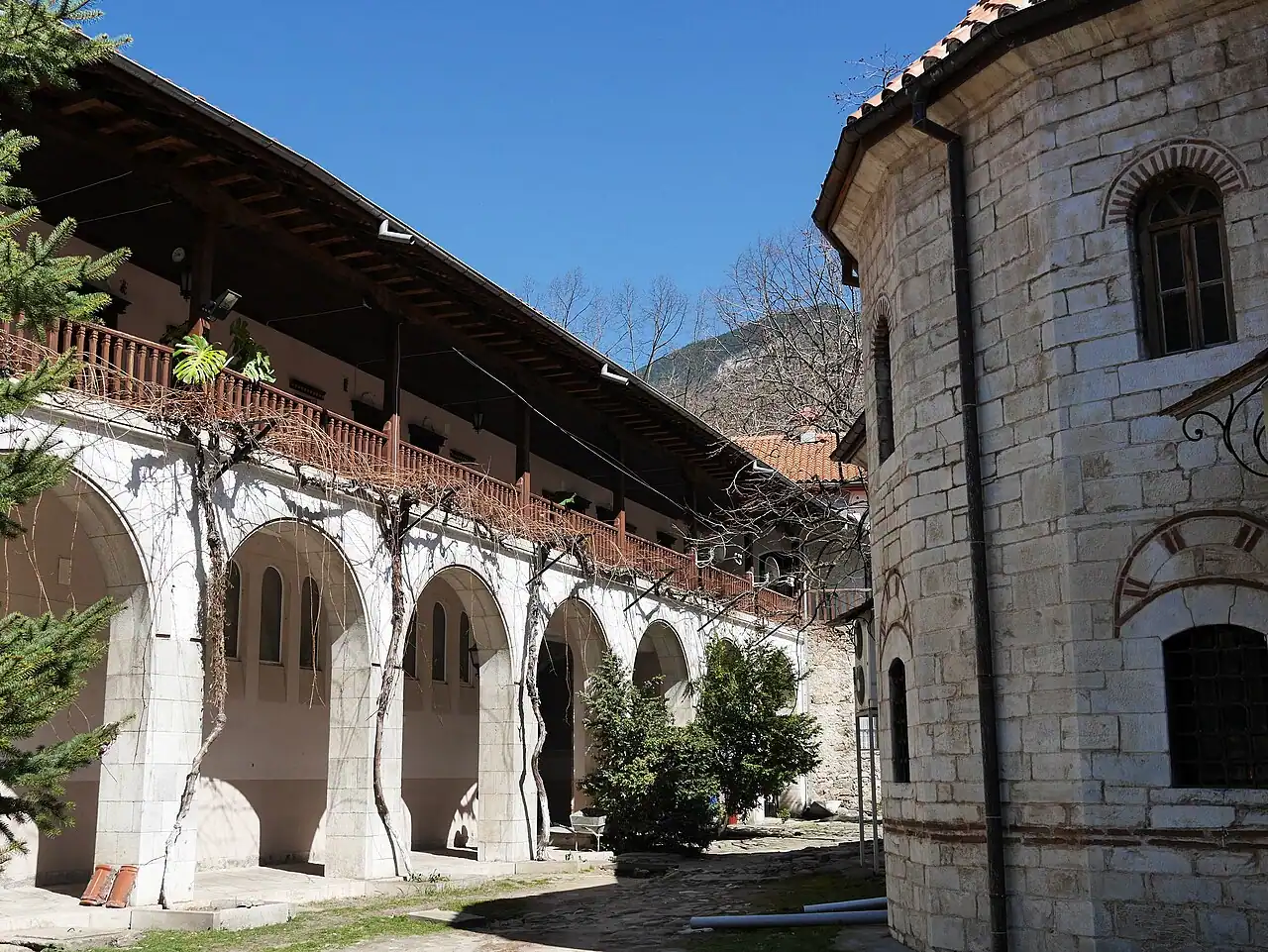
Bachkovo is Bulgaria’s second-largest monastery, after Rila, and it makes an easy half-day trip from Plovdiv, about 30 km south into the Rhodope mountains. Walking into the cobbled courtyard and the main church is free; only the small museum and the old refectory charge a ticket. What sets Bachkovo apart is its origin: it was founded in 1083 by a Byzantine general of Georgian descent and began life as a Georgian monastery, which is why it feels subtly different from anywhere else in the country.
Don’t write Bachkovo off as “the smaller one” just because you’ve already seen Rila. It’s a different experience, older in its bones and quieter, and paired with a cliff-top fortress a short drive away it fills a satisfying day in the mountains. Between the frescoed refectory, the wonder-working icon and a medieval ossuary older than the rest of the complex, there is far more here than a rushed hour allows.
A Georgian monastery in the Rhodopes
The story is the hook here. Bachkovo was founded in 1083 by Gregory Pakourianos, a Byzantine military commander of Georgian origin, and for its first centuries it followed Georgian monastic tradition, an unusual root for a monastery that’s now a pillar of Bulgarian Orthodoxy. You can still find a Georgian inscription on the walls, and the original 11th-century layout survives in one building (the ossuary, more on that below).
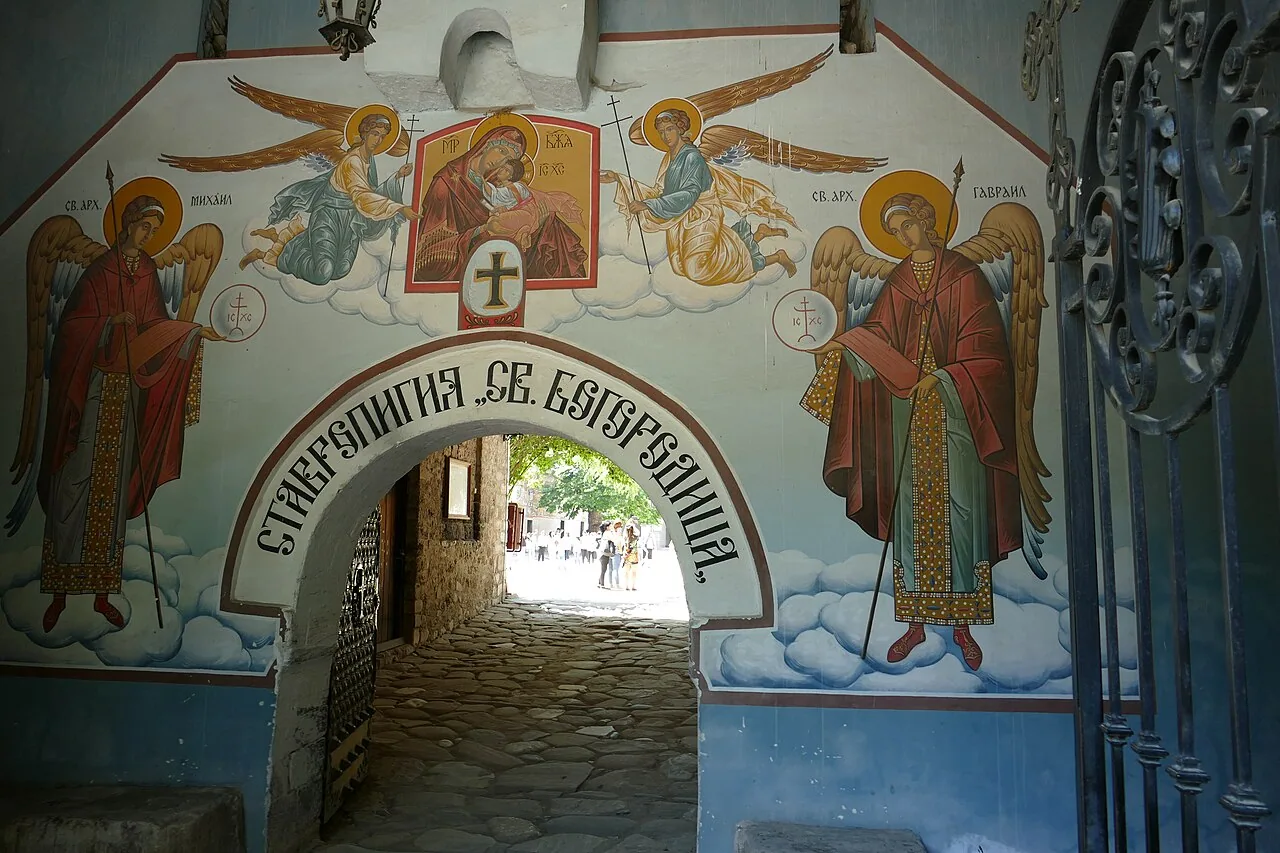
Through the Ottoman centuries Bachkovo held on as a centre of Bulgarian faith and letters, keeping a school and a library alive at a time when the country had no state of its own, and it carries one heavy piece of history: Patriarch Euthymius of Tarnovo (Evtimiy), the last medieval Bulgarian patriarch, was exiled here after the capital fell in 1393 and is buried in the complex. Stand in the courtyard and you’re looking at more than nine hundred years of continuous religious life, layered building by building. This is also where Bachkovo scores over Rila for lovers of the genuinely old: Rila was almost entirely rebuilt after an 1833 fire, whereas here the church is early 17th century, the refectory older still, and the ossuary medieval, so more of what you see is the real thing rather than a Revival reconstruction.
The main church and the wonder-working icon
The heart of the complex is the Cathedral Church of the Dormition of the Virgin, built in 1604 on older foundations. Inside, behind a silver cover, is Bachkovo’s most venerated object: a wonder-working icon of the Virgin Mary (an Eleusa, or “tender-loving”, type) dated to 1310 and brought from Georgia. Pilgrims have come to it for centuries, and on major feast days the icon is carried out in procession, so if your visit lands on a big Orthodox holiday expect crowds and a very different, ceremonial atmosphere. The church’s patronal feast is the Dormition of the Virgin on 15 August, and the icon also draws big processions around Orthodox Easter, when it’s carried up to a nearby meadow and back. On an ordinary weekday, though, you can have the church almost to yourself.
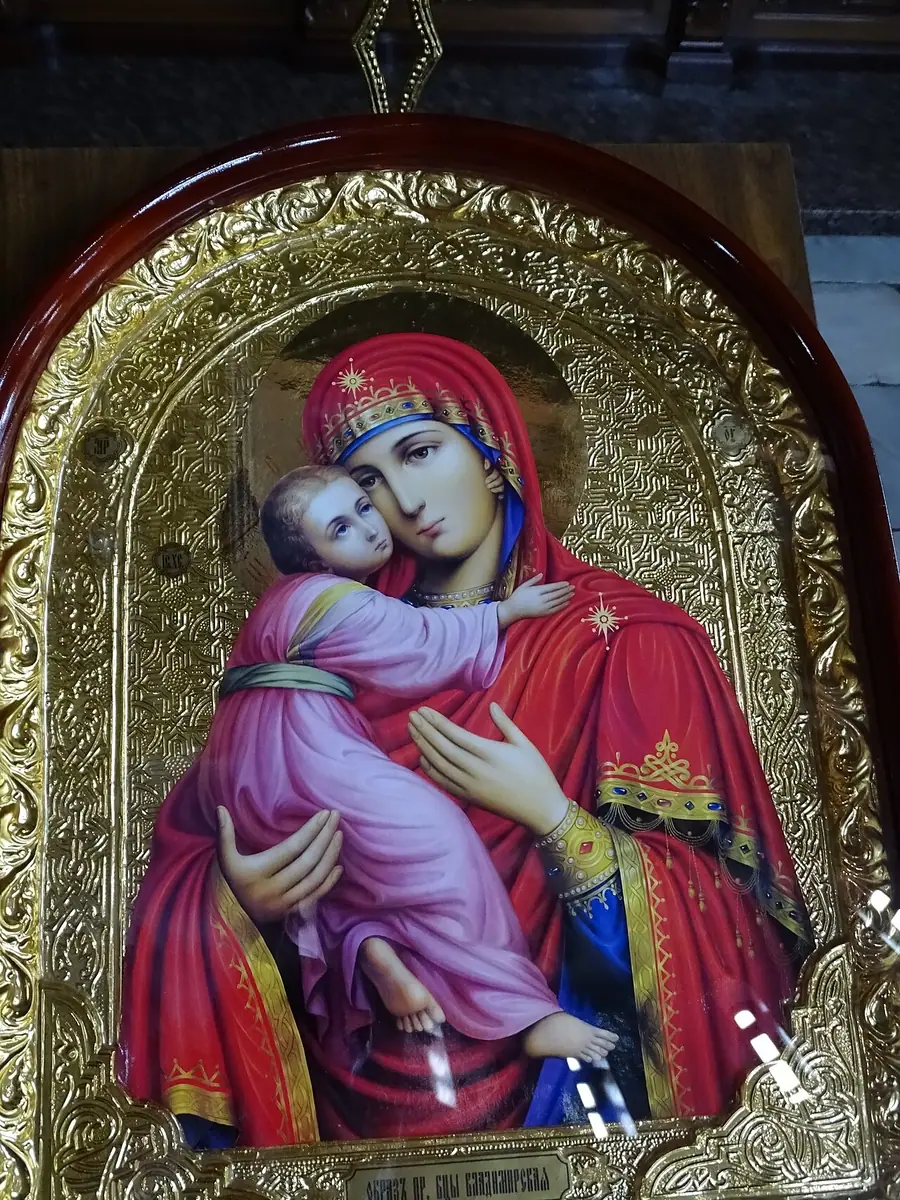
Entry to the church itself is free, and it’s an active place of worship, so keep your voice down, dress modestly, and step aside if a service is underway. Photography rules inside are stricter than out in the courtyard, so take your cue from the signs and the monks.
The refectory and its frescoes
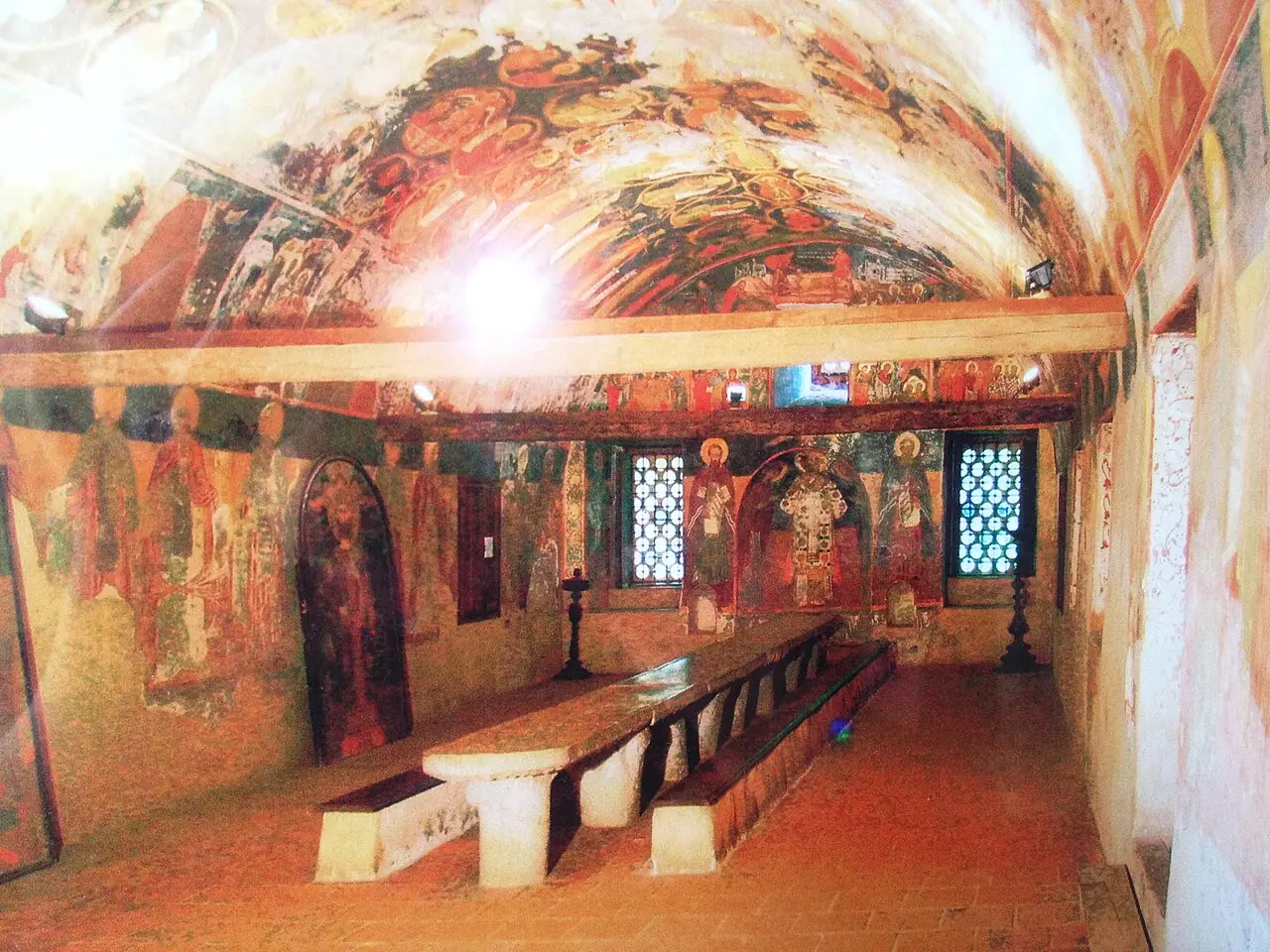
If you pay for one thing, make it the Old Refectory. Reconstructed in 1601, this long vaulted dining hall is covered floor to ceiling in murals, its narthex painted in 1643 by an anonymous master, and it is one of the finest surviving monastic refectories in the Balkans. The long stone table still runs down the middle, exactly as generations of monks used it.
On the refectory’s outer wall is a mural people travel to see: a panoramic scene painted in 1846 by Alexi Atanasov, showing the monastery and its surroundings with an Easter procession of the miraculous icon winding out of the gate. Look closely and it doubles as a snapshot of 19th-century life, the dress of the Plovdiv gentry and Rhodope villagers rendered in careful detail. The National Revival master Zahari Zograf, whose work you also meet at Rila and on Mount Athos, painted here in the 1840s: his frescoes cover the small chapel of the Holy Archangels (1841) beside the main church, and his vivid “Last Judgment”, crowded with sinners and demons, is among the scenes worth hunting down. Between the refectory murals, the chapel and the icon, Bachkovo packs more first-rate religious art into a small footprint than almost anywhere else in Bulgaria.
The ossuary: the oldest thing here
The one part that survives from the original 1083 monastery is the ossuary (kostnitsa), a two-storey medieval chapel standing on its own about 300 metres from the main gate, up the road. Its lower floor holds burial niches; its walls carry rare frescoes, including a 14th-century donor portrait of Tsar Ivan Alexander. It keeps limited hours and isn’t always open, so ask at the monastery whether you can see it, and treat it as a bonus rather than a certainty. When it’s open, it’s the most atmospheric and least crowded corner of the whole site.
How to get to Bachkovo from Plovdiv
It’s a genuinely easy trip, and you don’t need a tour. Bachkovo sits about 30 km south of Plovdiv, roughly 10 km beyond Asenovgrad, on the Chepelare river in the Rhodopes.
By bus is cheap and doable. Regional buses heading up the mountain toward Smolyan, Madan or Zlatograd leave Plovdiv from the Rodopi bus station and stop at Bachkovo on the way; the ride is about 40 minutes, and you buy a ticket to “Bachkovo” (it’s an intermediate stop, so tell the driver). If the timing is awkward, take a local bus to Asenovgrad, which connects to Plovdiv far more frequently, and change there.
By car it’s about a 40-minute drive: head southeast out of Plovdiv toward Asenovgrad, pick up road 86 through the town, and follow the “Бачковски манастир” signs up the valley. There is parking near the gate. By taxi or a booked transfer is the stress-free option if you are travelling as a family or short on time, and it lets you tack on Asen’s Fortress easily.
Hours, tickets and what to know
Prices moved to euros when Bulgaria joined the eurozone on 1 January 2026, so the figures below are in euros, though the museum desk still likes cash.
- Courtyard and main church: free.
- Museum and Old Refectory: around 3 to 5 euros.
- Hours: the complex and church open daily, roughly 07:00 to 19:00 in winter and 07:00 to 20:00 in summer; the museum and refectory keep shorter hours, so do the paid parts earlier in the day.
A few practical notes. There’s a dress code: shoulders and knees covered, as at any working monastery. The monastery sits just above the village of Bachkovo in a wooded fold of the Rhodopes, and the short approach from the car park and bus stop is lined with stalls and little grills selling river fish, fried dough (mekitsi) and jars of local honey and preserves, a Rhodope tradition and a genuinely good lunch. Time your visit for late morning and you can see the monastery, eat by the river, and still fit in the fortress. And because this is a real monastery rather than a museum, timings and openings can shift, so confirm the day’s hours when you arrive.
Pair it with Asen’s Fortress
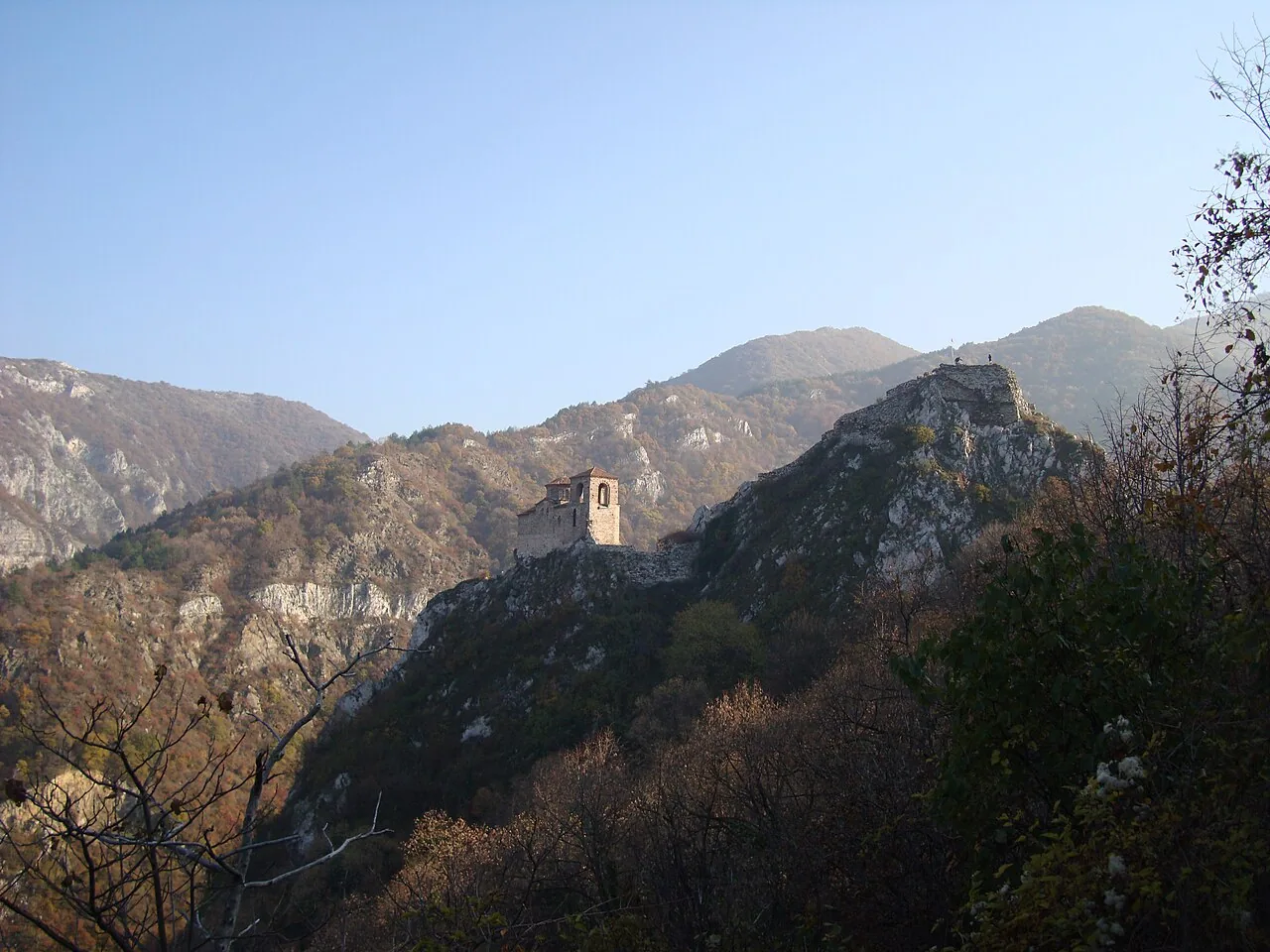
The natural add-on, and the reason to give this a full day rather than a rushed hour, is Asen’s Fortress (Asenova Krepost), about 10 km back toward Asenovgrad. A medieval stronghold on a dramatic rock spur, its highlight is the Church of the Holy Mother of God Petrichka, a 12th to 13th-century chapel perched right on the cliff edge, visible for miles. If you have your own wheels or a taxi, doing the fortress and the monastery together is the classic Rhodope half-day out of Plovdiv.
For where this fits in a wider trip, Bachkovo is the easiest mountain excursion from Plovdiv, so pair it with our guide to the things to do in Plovdiv, use the city as your base (see the best areas to stay in Plovdiv), and stack it with other outings from our day trips from Plovdiv page. It’s a natural counterpart to Rila Monastery near Sofia, the country’s number one; seeing both gives you the full sweep of Bulgarian monastic art. Heading deeper into the same mountains, Pamporovo lies further south for a winter follow-up, and you can browse more of Bulgaria’s top attractions or slot the Rhodopes into a longer loop with our 7-day Bulgaria itinerary.
Photos
Admission and opening hours
- Admission price
- Courtyard and main church: free. Museum and Old Refectory: around 3-5 EUR.
- Opening hours
- Complex and church daily, roughly 07:00-19:00 in winter and 07:00-20:00 in summer. Museum and refectory keep shorter hours.
Modest dress (shoulders and knees covered). No individual online booking, bring some cash for the museum desk. Confirm current prices and hours on the day.
Details checked: July 17, 2026
Distance
- Sofia ≈189 km · about 2.5 hours by car South down the A1 to Plovdiv, then on through Asenovgrad on road 86.
- Plovdiv ≈30 km · about 40 min by car, or 40 min by regional bus toward Smolyan About 10 km south of Asenovgrad in the Rhodope mountains, on the Chepelare river. Buses toward Smolyan/Madan leave Plovdiv from the Rodopi bus station and stop at Bachkovo.
Read also

What to see · 13 min read
Skiing in Bulgaria vs the Alps: Honest Verdict
Verified · September 13, 2026Bansko's last published 6-day pass was 341 EUR; Livigno's 2026-27 rate is 374.50 EUR. Real lift-pass, terrain and rental numbers, checked Sep 2026.

What to see · 12 min read
Pirin National Park: Vihren, Trails & Lakes
Verified · September 3, 2026Pirin National Park: the Vihren hut road closure, UNESCO peaks, 27 marked trails, glacial lakes and Bansko visitor centre hours.

What to see · 12 min read
Climbing Musala: The Balkans' Highest Peak
Verified · August 29, 2026Climbing Musala, the Balkans' highest peak at 2,925 m: the Yastrebets gondola schedule and price, the real hiking time from the top station, huts and gear.

What to see · 9 min read
Learning to Ski in Bansko: Schools & Lessons
Verified · August 25, 2026Bansko ski lessons: group and private prices in euros from official schools, Banderishka Polyana base, plus the lift pass you still need. Checked 2026.