
Ruse Guide: Little Vienna on the Danube
Ruse travel guide: Freedom Square, the Monument of Liberty, the Little Vienna architecture, the Friendship Bridge to Romania and the Ivanovo churches.
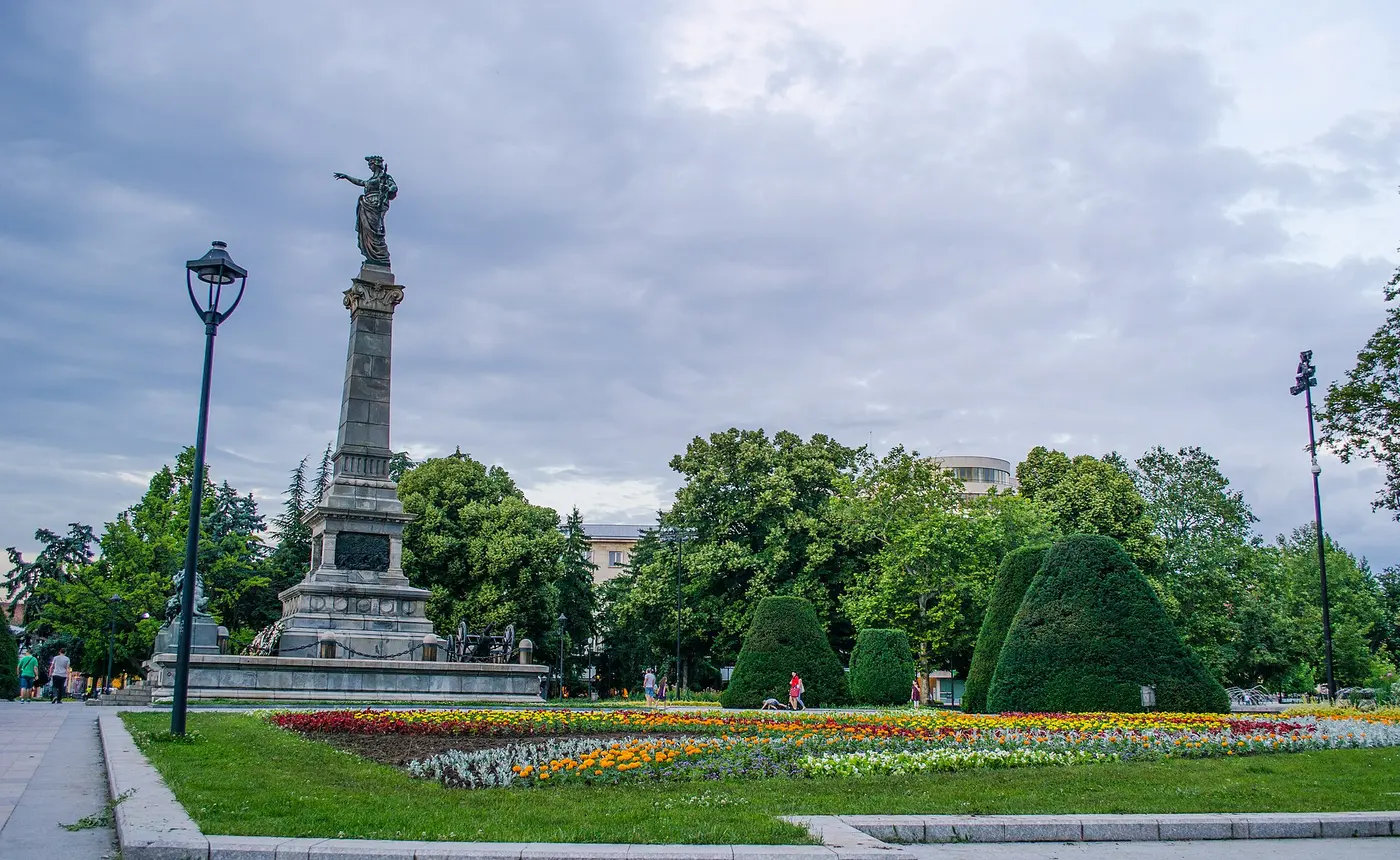
Ruse is Bulgaria’s Danube city, the biggest town on the river and the country’s front door to Romania, which sits just across the water. It earns its “Little Vienna” nickname with block after block of neo-Baroque and neo-Rococo facades thrown up during a 19th-century river-trade boom, all of it fanning out from the grand elliptical Freedom Square. Give it half a day to a day for the centre on foot, and add a second day if you want the UNESCO-listed rock churches at Ivanovo just south of town.
Most people meet Ruse in passing, as the place the Bucharest bus crosses the Danube, and that is exactly the mistake worth avoiding. The Friendship Bridge here is the only road-and-rail crossing for hundreds of kilometres, which is why the town grew rich and cosmopolitan, and why it makes a far better overnight than a drive-through. It pairs naturally with Veliko Tarnovo two hours south, and it’s the logical break on the Sofia to Bucharest run.
How long do you need in Ruse?
Half a day covers the headline square and the main streets; a full day lets you fold in a museum and a walk down to the river. The historic core is compact and flat, unlike the hill towns elsewhere in Bulgaria, so you can see the best of it on foot from a single central hotel. The one thing that turns a day into two is the trip out to the Ivanovo rock churches, which needs a car or a tour and a good half-day of its own.
Here’s the honest read: Ruse is not a headline sight in the way Plovdiv or the coast is, and it doesn’t need to be. It’s a handsome, lived-in provincial city with a couple of genuine surprises, and its real value is as a comfortable, characterful stop on a longer northern loop rather than a destination you fly in for. Treat it that way and it rarely disappoints.
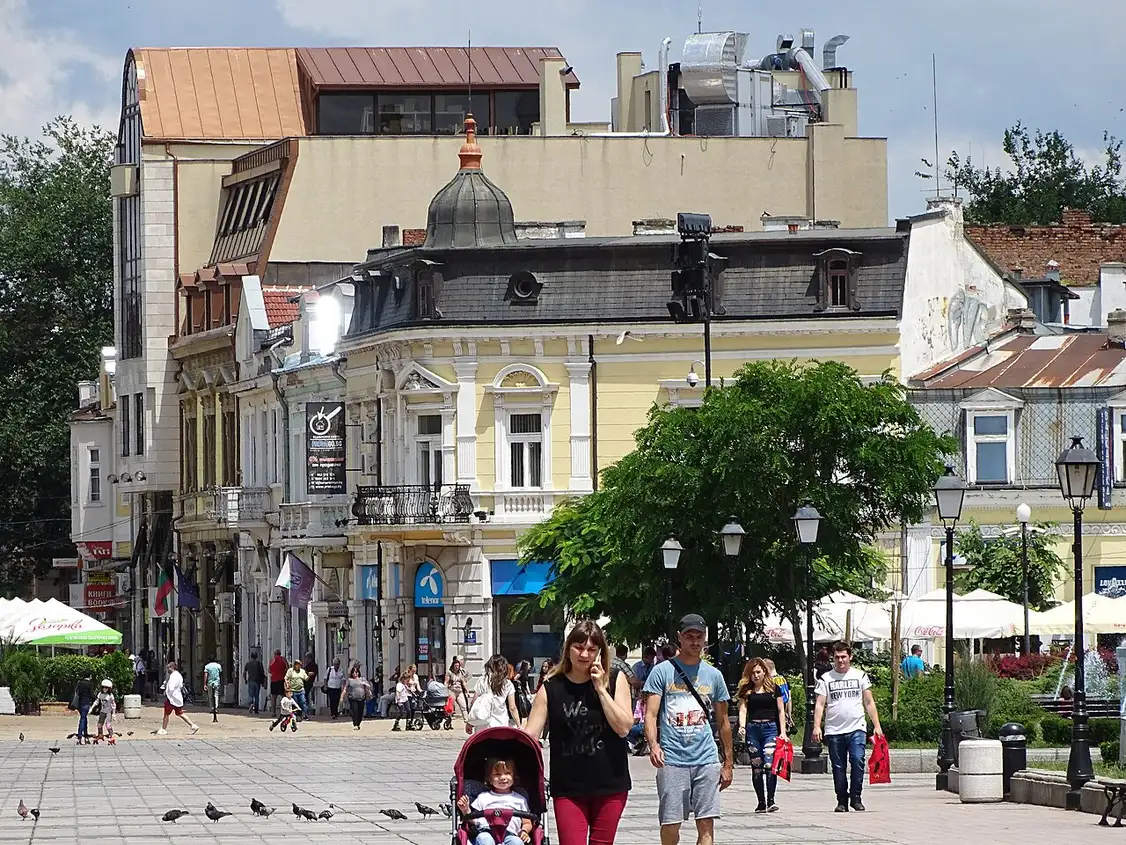
Freedom Square and the Monument of Liberty
Everything in Ruse orbits Freedom Square (Ploshtad Svoboda), a large elliptical plaza laid out after Bulgaria’s Liberation on the Central European model, ringed by the theatre, the town hall and 19th-century mansions. At its centre stands the Monument of Liberty, the city’s symbol: a tall stone column topped by an allegorical female figure who holds a sword in one hand and points toward the horizon with the other. It was designed by the Italian sculptor Arnoldo Zocchi and unveiled in 1909; it’s that pointing gesture, rather than a brandished sword, that most people picture wrong.
Sit on a bench here with a coffee and you get the measure of the town. The square is genuinely used, busy with prams, chess players and teenagers rather than tour groups, and it’s the best place to feel why Ruse thought of itself as a little European capital. Come back after dark, when the fountains and the monument are lit, and it’s prettier still.
Why “Little Vienna”?
The nickname isn’t marketing. In the second half of the 1800s Ruse was the busiest Bulgarian port on the Danube, the point where goods, money and people moved between the Ottoman Balkans and Central Europe. That trade drew in architects, merchants and consuls from Vienna, Budapest and beyond, and they built in the styles they knew: neo-Baroque, neo-Rococo, Secession. The result is a centre that looks more like a Habsburg river town than anywhere else in Bulgaria.
The showpiece is the Dohodno Zdanie, literally the “Profit Building”, raised in 1898-1902 to fund the local culture scene from its rents and now home to the Sava Ognyanov Drama Theatre. Its exuberant facade, crowned with allegorical statues, is the single most photographed building in town. From there, Aleksandrovska street, the long pedestrian axis, strings together a parade of period facades, cafes and shops. Ruse was also a town of Bulgarian firsts, most famously the country’s first modern railway, the Ruse to Varna line of 1866, and the writer Elias Canetti, who won the 1981 Nobel Prize in Literature, was born here in 1905.
Museums, the Roman fort and the Pantheon
For a rainy hour or a genuine interest, the Regional History Museum is the pick. Founded in 1904 and holding around 140,000 objects, its star exhibit is the Borovo silver treasure, a set of Thracian silver-and-gilt drinking vessels found nearby. Nearby, the small Kaliopa House museum recreates the interiors of a wealthy 19th-century Ruse home, and it’s the quickest way to picture the Little Vienna lifestyle behind those facades.
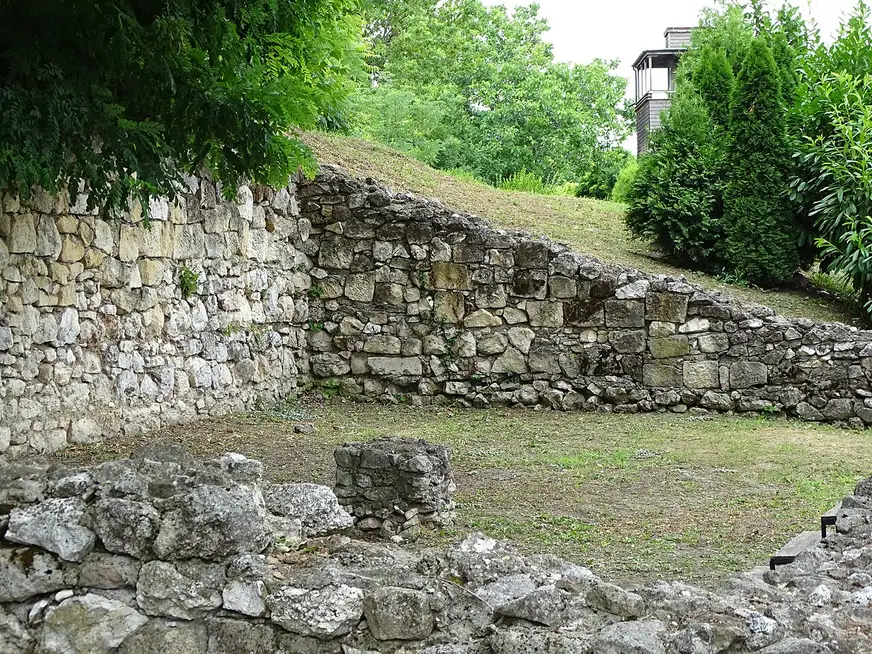
Down by the river sits Sexaginta Prista, the remains of a Roman military and naval fort whose name means “port of sixty ships”. It was established under the emperor Vespasian around 69-70 AD as part of the Danube frontier, and the low stone walls and a small display are what survive. It’s a modest site rather than a grand one, worth twenty minutes if Roman history is your thing.
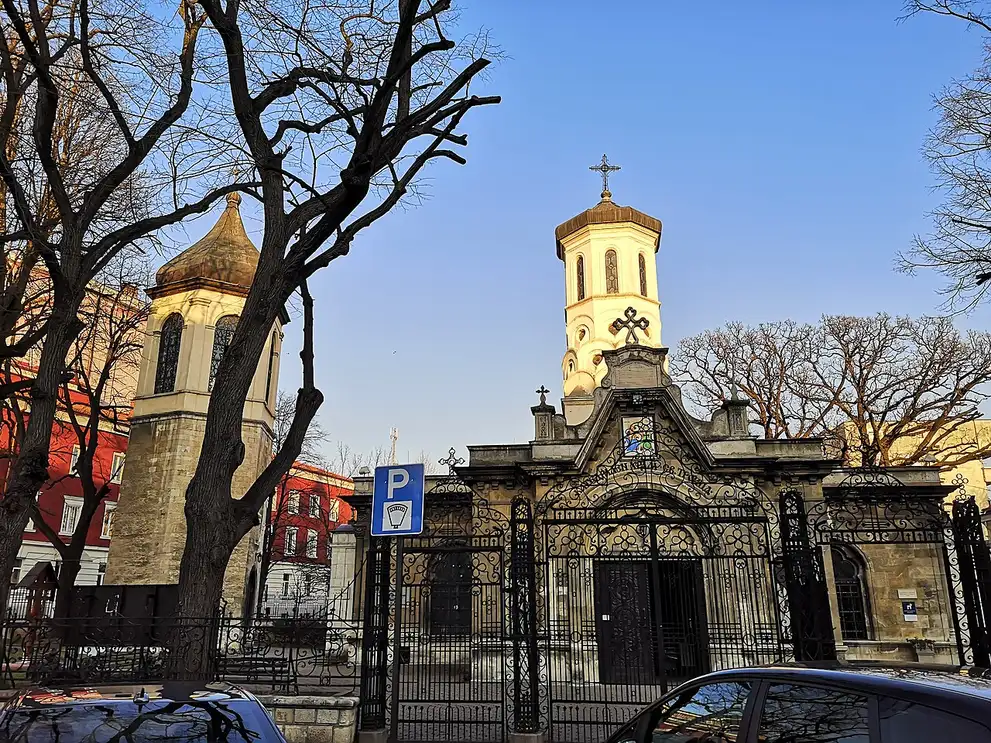
The most divisive landmark is the Pantheon of the National Revival Heroes, a gold-domed rotunda built in 1978 on the site of a demolished church, where some 39 notable Bulgarians of the 19th-century awakening are buried. Its Communist-era design splits opinion sharply, but the crypt and the eternal flame are a proper piece of Bulgarian national memory, and the surrounding park is a pleasant walk.
The Danube and the Friendship Bridge
The river is the reason Ruse exists, and the reason it looks the way it does. Walk down to the embankment and you’re looking straight across the Danube at Romania; the far bank is Giurgiu, and the wide expanse of water in front of you is one of the great rivers of Europe going about its business, with the working port and its cranes off to one side. It’s not a manicured promenade, it’s a real river town, and that’s the appeal.
A few kilometres upstream is the Danube Bridge, better known by its old name, the Friendship Bridge. Opened on 20 June 1954 and running a little over 2.2 km on two decks, one for road and one for rail, it was for almost sixty years the only bridge shared by Bulgaria and Romania, until the Vidin-Calafat crossing opened in 2013. If you’re driving over, the car toll is small, roughly 2 euros on the Bulgarian side plus a few lei on the Romanian one, and from June 2026 the crossing takes electronic payment. Since both countries joined Schengen in 2025 there are no routine passport checks, so the bridge that once meant a long border queue is now just a river crossing.
Day trip: the Ivanovo rock churches and Basarbovo
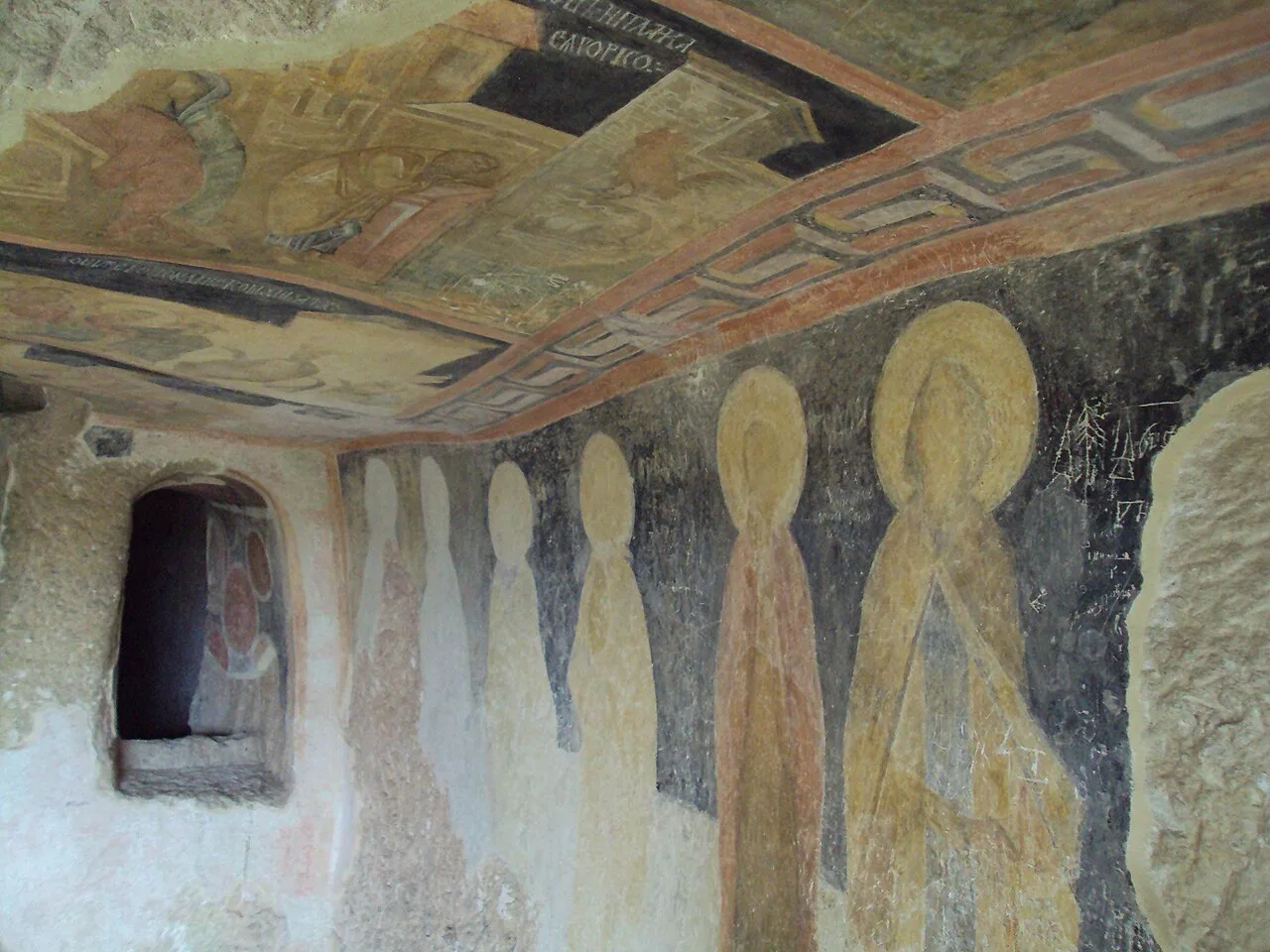
The single best reason to give Ruse a second day sits about 20 km south, cut into the limestone cliffs of the Rusenski Lom river gorge: the Rock-hewn Churches of Ivanovo, on the UNESCO World Heritage list since 1979. Monks hollowed chapels and cells straight out of the rock from the 13th century, and the surviving frescoes of the Tarnovo painting school are the treasure, vivid medieval murals that include a Last Supper painted around 150 years before Leonardo’s. Summer hours run roughly 1 April to 31 October, 09:00 to 16:30, with winter visits by prior arrangement; the ticket is about 5 euros. Confirm both before you set out, because the hours change off-season.
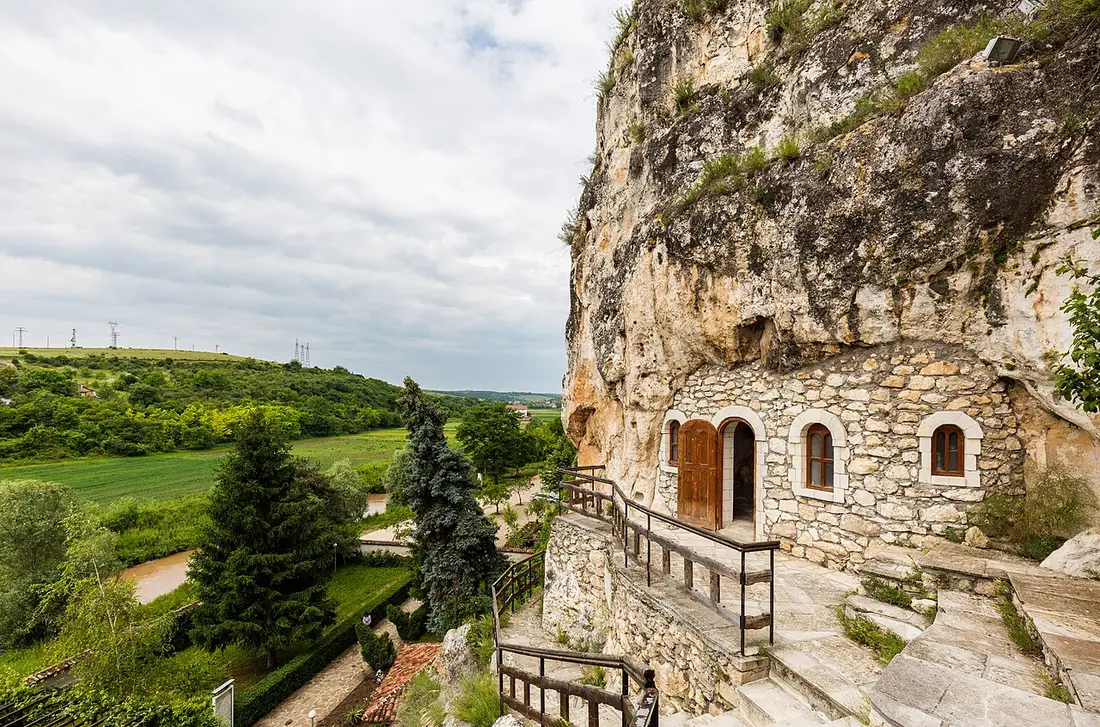
Closer to town, around 10 km south, the Basarbovo Rock Monastery is the other half of the pairing and a lovely one: a monastery carved into a cliff face above the green Lom valley, reached by stone stairs, and the only rock-hewn monastery in Bulgaria still in use by monks. The two sites sit in the same nature park and make an easy combined half-day, but the catch is transport: there’s no convenient public route to either, so a hire car or a tour from Ruse is the practical way to do it.
How to get to Ruse
The town sits in Bulgaria’s far north, and the way you come depends on where you start.
From Sofia it’s a long haul: around 300 km and about five hours by bus, with roughly nine departures a day (including a night service) from around 11 euros, run by Union Ivkoni, Group Plus, Infobus and FlixBus. There’s a train too, but it takes over six hours with a change, so the bus wins unless you love railways. A big part of the road is ordinary two-lane highway rather than motorway, because the A2 “Hemus” across the north is still unfinished, so allow more time than the distance suggests.
From Veliko Tarnovo Ruse is an easy pairing: about 107 km and under two hours by bus, with a few services a day, which is why the two make a natural two-stop northern trip. And here’s the insight most guides skip: the nearest big airport isn’t Sofia but Bucharest (OTP), only about 75 km across the river, so if you’re flying in specifically for the Bulgarian north, a Bucharest arrival can be quicker and cheaper than routing through the Bulgarian capital. Our guide to which Bulgarian airport to fly into weighs the domestic options.
Onward to Bucharest is the short leg everyone knows: about 67 km over the bridge, well under two hours by bus or car, on the corridor covered in full by our Sofia to Bucharest guide.
Where to stay and what comes next
Base yourself in or just off Freedom Square. The centre is small, flat and walkable, the hotels here are inexpensive even on the euro, and you’ll have the square, the theatre, the museums and the river all within a short stroll. There is little reason to stay out in the residential districts unless you’re chasing the cheapest possible room.
From Ruse the obvious moves are south and across the water. Head down to Veliko Tarnovo for the floodlit Tsarevets fortress and the medieval old town, the classic partner to a night here. Cross the Danube and you’re on the doorstep of Romania, with our sister guide to things to do in Bucharest picking up on the far bank. And if the Danube north has given you a taste for Bulgaria’s wilder corners, the country’s most dramatic rock scenery is over in the far northwest at the Belogradchik rocks and fortress, while the whole region slots into our 7-day Bulgaria itinerary if you are stitching a longer loop together.
Photos
Read also

Cities · 10 min read
Bulgaria's Spa Towns: Velingrad, Hisarya & More
Verified · August 31, 2026Compare Velingrad, Sandanski and Hisarya: water temps, climate, Roman walls, when to go year-round, and real 2026 spa-hotel rates.

Cities · 12 min read
Where to Stay in Pamporovo: Hotels & Chalets
Verified · August 22, 2026Pamporovo hotels, chalets and apartments by lift base: Malina vs Studenets, why "renovated" is not "new", and how to price a bed.

Cities · 14 min read
2 Days in Sofia: The Perfect Weekend Itinerary
Verified · August 20, 2026A 2-day Sofia itinerary for a Friday-to-Sunday trip: Nevsky, Serdica, Boyana Church, real euro prices, and what actually fits in one weekend.

Cities · 9 min read
Where to Stay in Burgas: Best Areas & Hotels
Verified · August 10, 2026Where to stay in Burgas: city centre for a first visit, Sea Garden for beach and park, Lazur for quiet value, or Sarafovo by the airport.