
Plovdiv to Veliko Tarnovo: Bus, Train & Route
Plovdiv to Veliko Tarnovo has just one direct bus a day (08:30, ~3h20) and one awkward direct train. Times, fares and driving over Shipka.
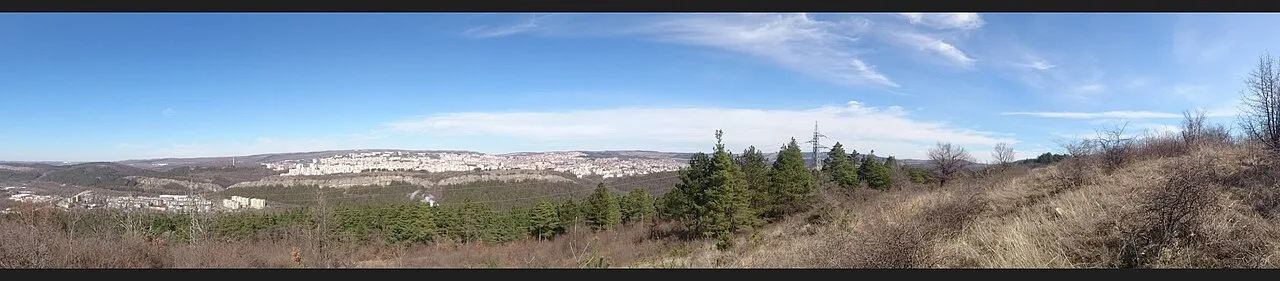
Unlike most Bulgarian routes, the honest answer here is drive it, or take the one bus and plan your day around it. Plovdiv to Veliko Tarnovo is only about 177 km, but public transport is unusually thin: there is a single direct bus a day, leaving Plovdiv’s North station at 08:30 and reaching Veliko Tarnovo around 11:50, roughly three hours twenty. The train is worse for a day-tripper, running from a secondary Plovdiv station and mostly needing a change at Stara Zagora, and the one direct service doesn’t leave until mid-afternoon. A car covers the distance in about two hours fifty and, better still, lets you break the drive at the Shipka Pass and the Valley of the Roses, which is the real reason to go this way.
So the short version: catch the 08:30 bus if the timing works and you just want to get there. Take the train only if you love rail and don’t mind a change, or want the one direct evening service into the centre. But if there are two or three of you, or you would enjoy the Balkan crossing, hire a car or book a transfer, because on this route the scenery is half the point and the buses will not wait for you. Here is how each option actually works.
The bus: one a day, so do not miss it
There’s exactly one direct bus a day on this route, run by Plovdiv Express-2000. It leaves Plovdiv’s North bus station (Avtogara Sever) at 08:30 and pulls into Veliko Tarnovo’s west bus station (Avtogara Zapad) at about 11:50, a run of roughly three hours twenty. The same coach heads back from Avtogara Zapad at 13:30 and is in Plovdiv at 18:00. That single departure is the whole catch: miss it and your same-day options collapse to the train or a taxi, so treat the timetable as fixed and get to the station early.
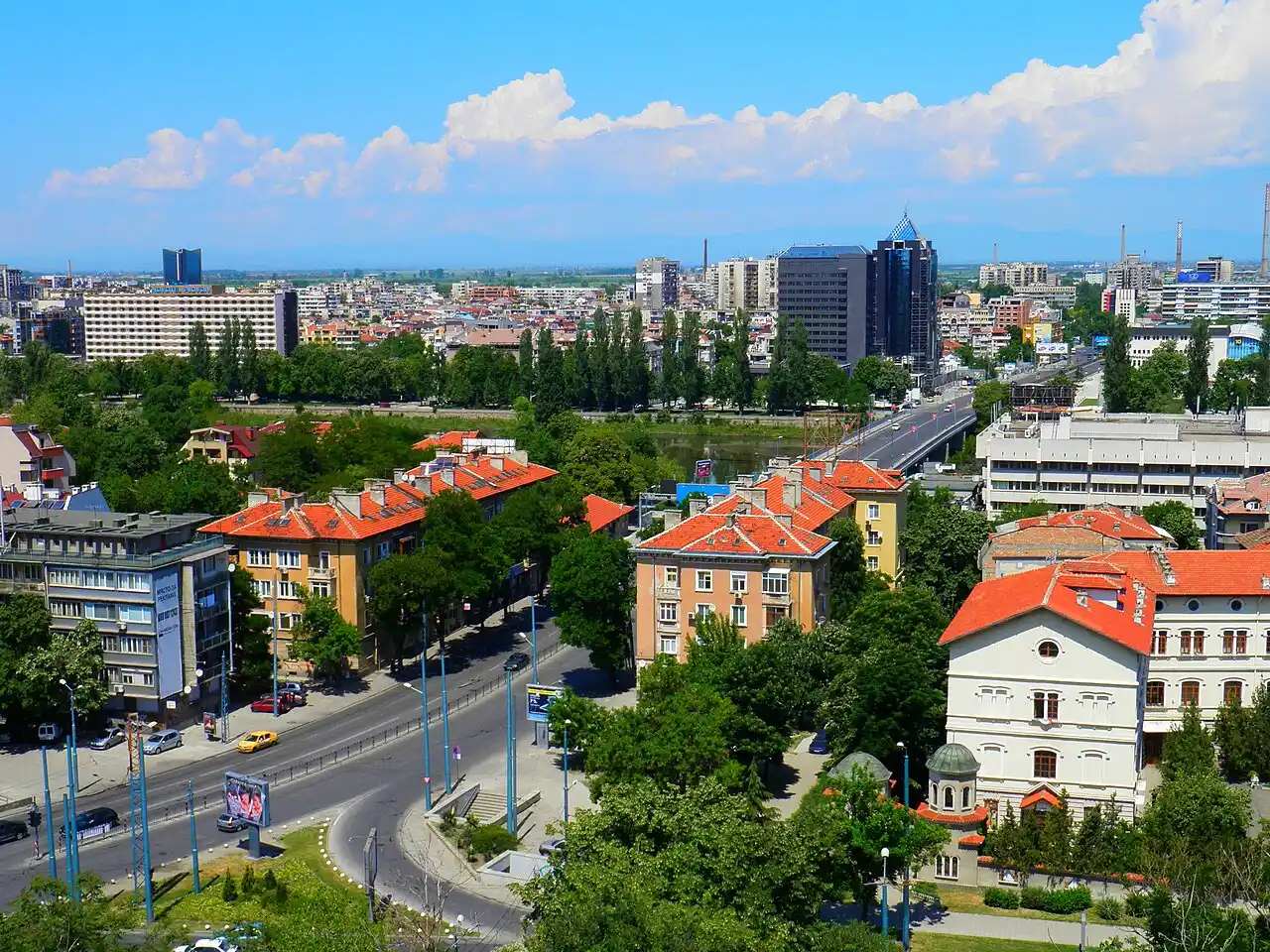
A couple of practical notes that trip people up. Tickets are usually bought on the bus itself rather than online or far in advance, so bring cash and turn up in good time rather than expecting to reserve a seat from your phone. And Veliko Tarnovo has more than one bus station: the Plovdiv coach comes in at a stop a little out of the historic centre, which is normal here, since the old town wraps around a gorge that big vehicles can’t reach. Have a few euros ready for a short taxi or local bus down into the town, or walk it if your bag is light. The ride itself is straightforward and the landscape lifts as you cross the Balkan range, so the three and a bit hours pass easily enough.
Because it’s the only bus, this is the option to lock in first if you’re relying on public transport. Check the current schedule the day before rather than trusting an old listing, since a once-daily service is exactly the kind that shifts by season, and build the rest of your plans around that 08:30 rather than the other way round.
The train: from Filipovo, and mostly with a change
The train is the fiddly option, and it starts with a quirk: departures for Veliko Tarnovo leave from Filipovo, a secondary station on the north side of Plovdiv, not the grand central one most visitors know. So before you even board, factor in getting across town to the right platform.
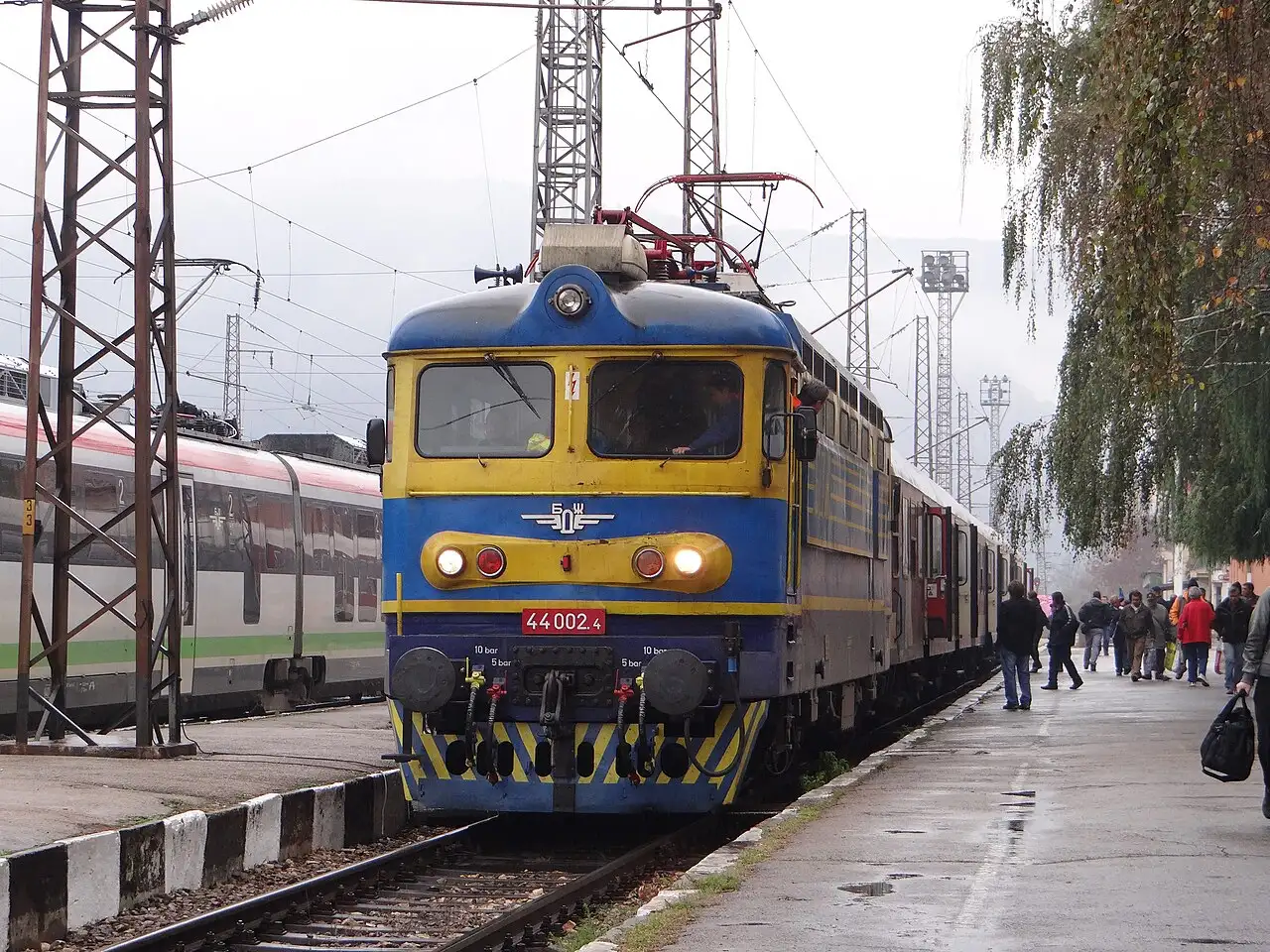
There’s one genuine upside over the Sofia route: from Plovdiv a direct train does exist, and it runs into Veliko Tarnovo’s own small central station down in the gorge, which is more central than the bus drops you. The problem is timing. That direct service (an intercity, seat reservation required) doesn’t leave Filipovo until the afternoon and arrives after dark around 20:36, so it swallows your whole day. The morning trains are quicker on paper, roughly four to four and a half hours, but they change at Stara Zagora, and the connections stretch the slower ones past five hours. Fares are low, around 3 to 6 EUR, and the ride through the Thracian plain and up over the hills is pleasant. Take the train if you actively like rail travel and the once-a-day direct timing happens to suit you, or you don’t mind the change; otherwise it loses to the bus on speed and to the car on freedom. Whatever you decide, check the live BDZ timetable at bdz.bg on the day, because the direct-versus-change picture is exactly what an old schedule gets wrong.
Driving over Shipka: the reason to take this route
This is where Plovdiv to Veliko Tarnovo becomes worth doing for its own sake. A car covers the 177 km in about two hours fifty, and there’s no motorway for most of it, so do not expect the fast A1 cruise you might get elsewhere; this is main road and a mountain pass, which is exactly why the distance takes closer to three hours than two. The payoff is the road itself, climbing north out of the Thracian plain, through the Valley of the Roses around Kazanlak and up over the Shipka Pass in the heart of the Balkan range.
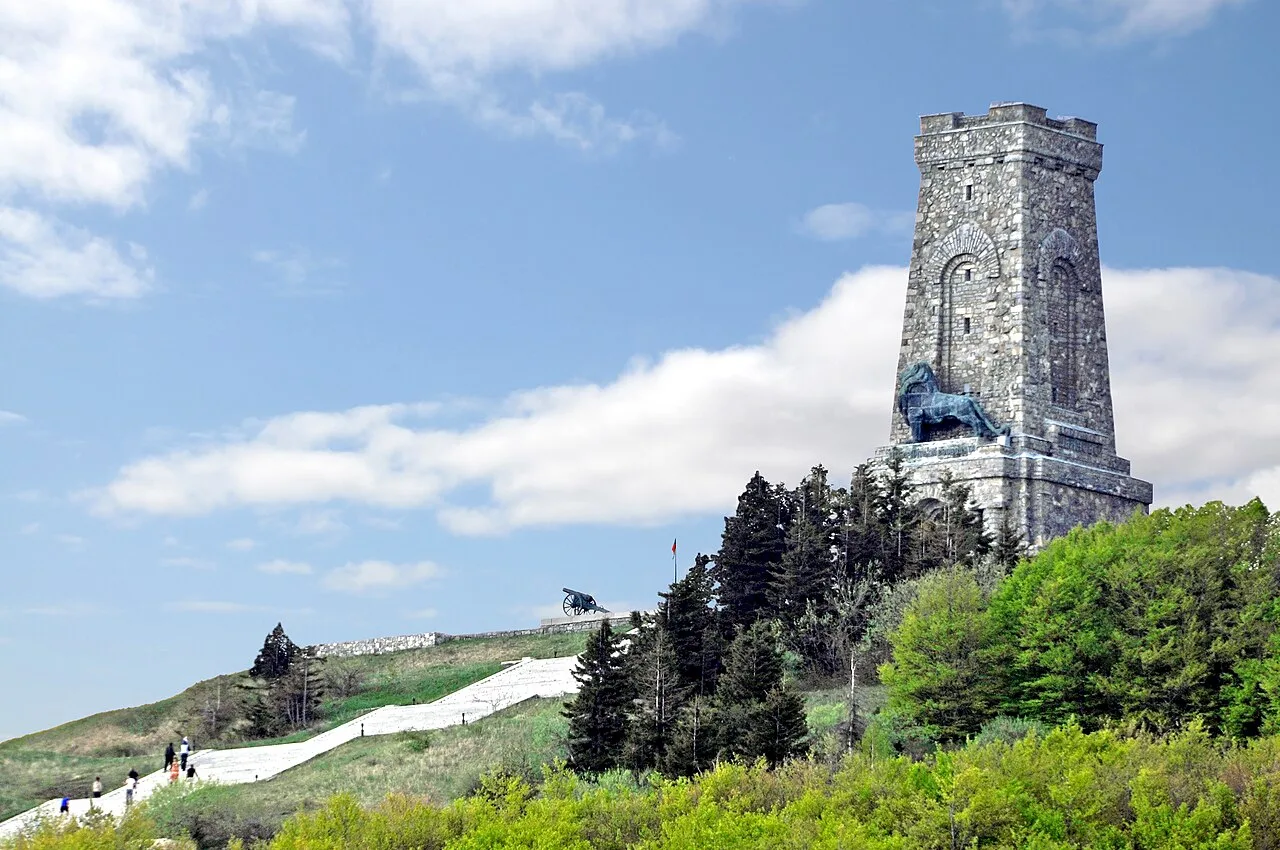
Timed right, in late May or June, the rose fields around Kazanlak are in bloom and being harvested for the attar oil the region is famous for, and a short detour puts you among them. The Shipka Pass carries the towering Freedom Monument to the 1877 battle, worth the climb of steps for the view back over the mountains you’ve just crossed. Neither of these is a scheduled stop on any bus or train, which is the whole argument for driving: you trade the fastest possible transfer for a genuine day out. Do note the winter caveat, the pass sits high and can be snowbound or slow from roughly November to March, so this is a spring-to-autumn pleasure rather than a year-round shortcut.

You will need an e-vignette for the trunk-road sections, bought online in a couple of minutes; our guide to driving in Bulgaria covers the vignette, the speed limits and the rules that catch tourists out, so read it first if this is a new country to drive in. A private transfer buys the same freedom without the wheel: a driver takes you door to door and will pull over at Shipka or the rose fields if you ask, which suits a group or anyone who wants the scenery without the map-reading. With two or three sharing, the per-person cost lands close to what the flexibility is worth.
So which one should you take?
If you’re relying on public transport, the 08:30 bus is your best single option: roughly three hours twenty, cheap, direct, and it drops you a short ride from the old town, just do not miss it, because it is the only one. Take the train if you love rail and either accept the change at Stara Zagora or want that one direct evening service into the central station. Drive or book a transfer if there are two or three of you, or if you would rather make a day of the crossing, because Shipka and the Valley of the Roses are the real reward of this particular route and no bus or train stops at either.
Whichever you choose, the times and fares here move with the season and, in the bus’s case, hang on a single daily departure, so treat everything above as a firm guide and confirm the current schedule before you set off. Once you arrive, our full guide to Veliko Tarnovo covers Tsarevets, the Samovodska craft street and what deserves your time, and if you’re still weighing up the city you’re leaving, things to do in Plovdiv lays out the old town, the Roman theatre and the Kapana quarter.
Read also

Transport · 12 min read
Sofia to Borovets: 70 km, ~1h, Bus from €5
Verified · September 5, 2026Sofia to Borovets (~70 km, 1-1.5h): public bus via Samokov from ~€5, seasonal shared shuttles from €8/pp, private transfer from ~€79.

Transport · 11 min read
Plovdiv to Pamporovo: Bus & Ski Transfer
Verified · September 3, 2026Plovdiv to Pamporovo is about 80 km via Chepelare. Bus from Rodopi station, winter airport transfer, or drive - how to choose.

Transport · 9 min read
Sofia to Sunny Beach: Bus, Train & Transfer
Verified · August 24, 2026Direct coaches Sofia to Sunny Beach year-round (~7h, from ~€21), train only to Burgas, or a fixed private transfer. Times, stops and when each wins.

Transport · 11 min read
Burgas to Sozopol Bus 2026: €3.37, 40-50 Min
Verified · August 21, 2026Burgas South Sector 5 to Sozopol: bus 3.37 euro, about 40-50 min; taxi/transfer about 30-40 min. Buses about every 30 min. Checked Aug 2026.