
Where to Eat in Plovdiv: Kapana & Old Town Restaurants
Where to eat in Plovdiv: Pavaj and craft beer in Kapana, Revival-house garden restaurants in the Old Town, plus rakia, Mavrud wine and cheap grills.
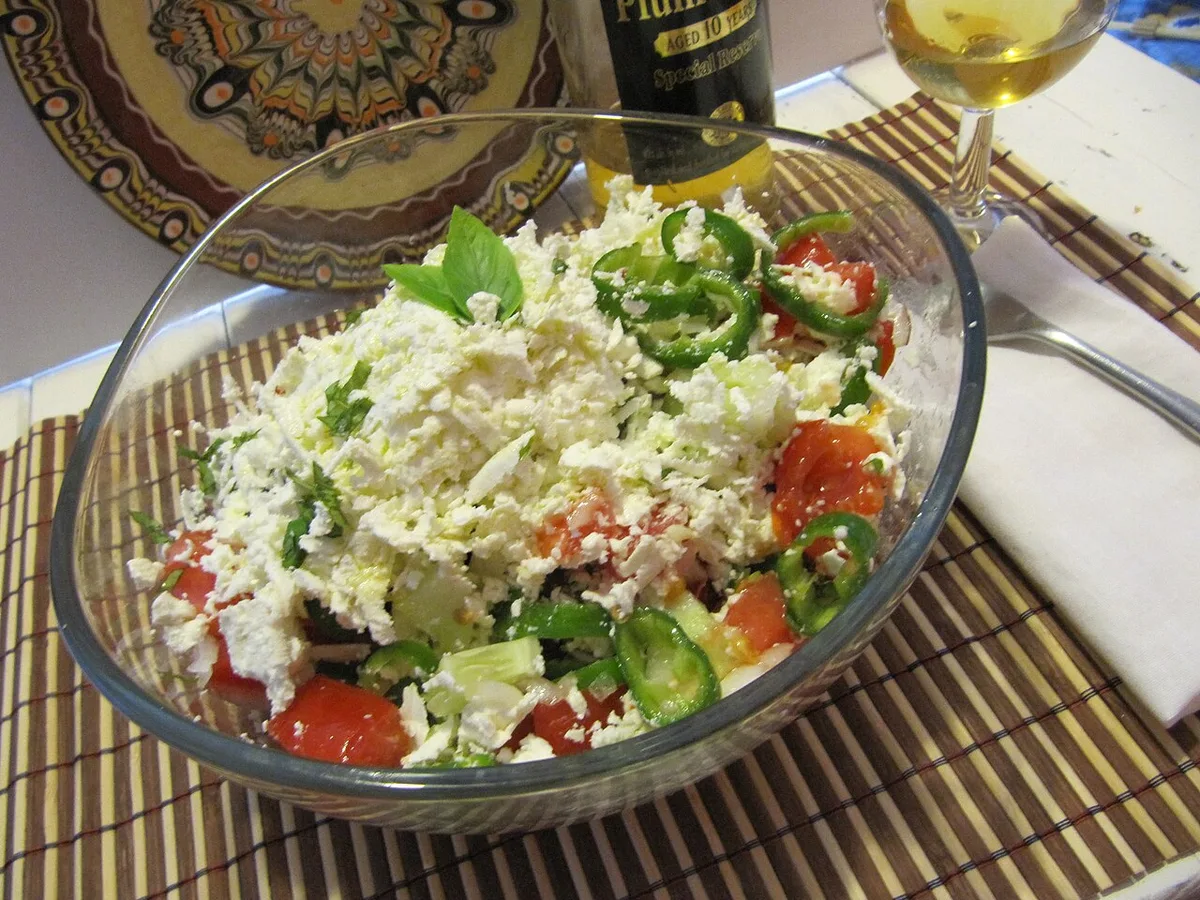
For the best eating in Plovdiv, point yourself at two districts. Kapana, the little grid of arts-quarter lanes, is where locals actually eat and drink: book Pavaj for modern Bulgarian plates, and drift to Cat & Mouse for craft beer afterwards. Up in the Old Town, the Revival mansions hide garden restaurants like Philippopolis and Rahat Tepe where you eat grilled meat and clay-pot stews under the vines. For a smarter dinner, Hemingway near the main street is the reliable pick, and for cheap and fast, the bakeries and grill houses do the job for a couple of euro.
This is a guide to the rooms, not the recipes. Once you know a shopska from a kavarma, the real decision in Plovdiv is which table to sit at, and our companion what to eat in Bulgaria guide is where to send anyone still mixing up banitsa and kyufte. Sitting in the Thracian Plain, the country’s main wine region, Plovdiv eats and drinks a notch better than most Bulgarian cities, so what follows runs from a vine-shaded courtyard to a craft-beer terrace to a quick grill between the ruins.
Kapana: where the city actually eats
The single best area for food and drink is Kapana (“the trap”), the knot of pedestrian lanes between the main street and the Old Town. It was the old artisans’ quarter, fell derelict, and over the last decade filled back up with small kitchens, wine bars, coffee roasters and craft-beer taps, a revival that took off when Plovdiv was European Capital of Culture in 2019. Come in the evening, when the terraces spill across the car-free lanes and you can graze from one place to the next.
The name to book is Pavaj. It is a small, much-loved bistro doing modern takes on Bulgarian home cooking from a short, seasonal menu, and it’s popular enough that you should reserve for dinner rather than chance it. After eating, the drinking heart of Kapana is Cat & Mouse (Kotka i Mishka), the city’s first craft-beer bar, with well over a hundred beers from Bulgaria, Belgium, Germany and beyond; its sister spot pours Bulgarian wine and rakia in a sheltered courtyard. For a lower gear, Monkey House is the sociable, outdoor-table cafe for coffee, house lemonades and a beer, and Artnews Cafe is the arty, quieter one for a slow afternoon.
The Old Town: dining in a Revival mansion
For atmosphere over buzz, climb into the Old Town, where several of the 19th-century National Revival houses have become restaurants with courtyard gardens shaded by old vines, and terraces that look out over the tiled roofs. This is the setting to order the traditional stuff, grilled kebapche, kyopolou (a smoky roasted-pepper and aubergine spread), and slow-cooked lamb, and to sit for a couple of hours.
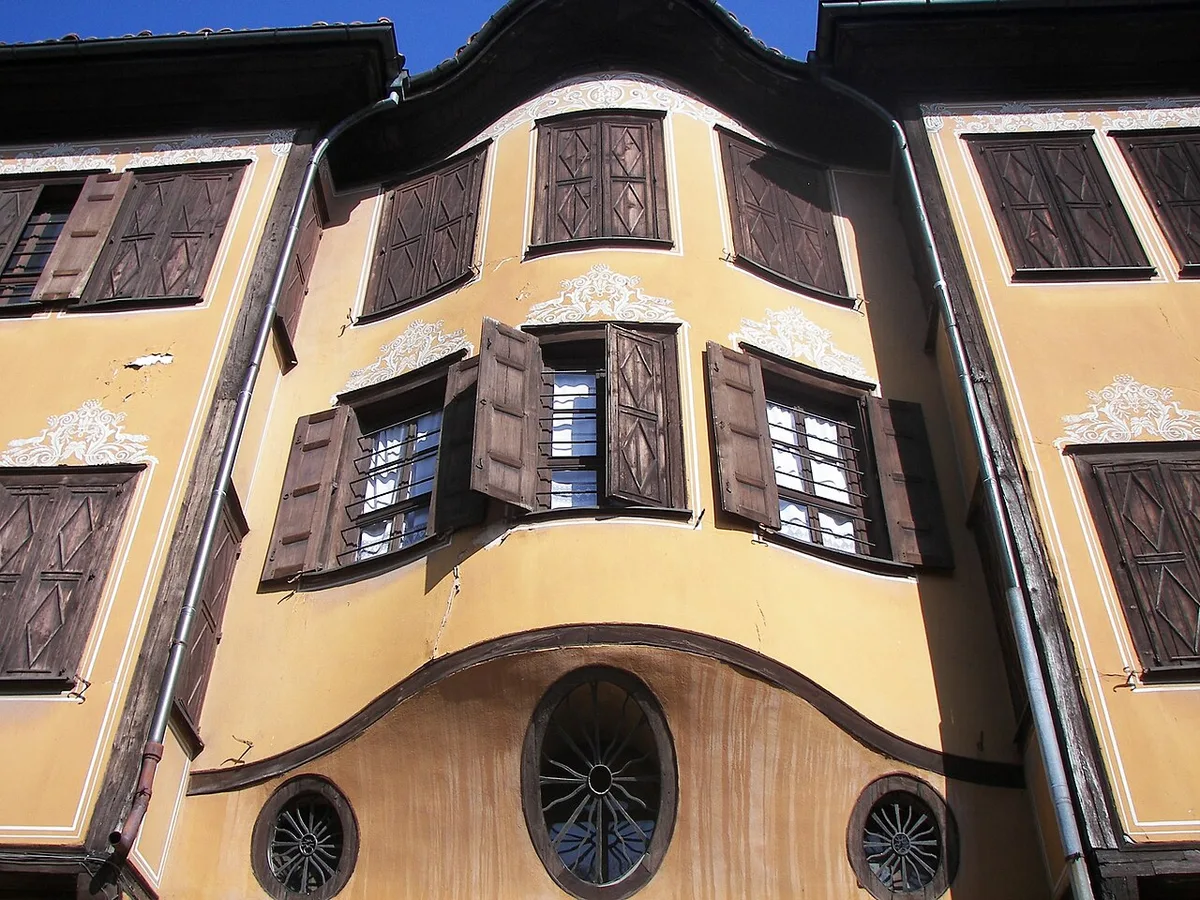
Two names stand out. Philippopolis, a restaurant-gallery with a garden, does a more refined, seasonal menu that leans gourmet, mixing Bulgarian flavours with international touches, and it’s the place for a special dinner up here. Rahat Tepe, right at the foot of the Nebet Tepe hill, is the opposite in spirit: a big, cheerful garden tavern with traditional food and a serious spread of beer, with hundreds of outdoor seats in summer, which makes it the easy choice for a group or a warm evening. For old-school elegance, the restaurant inside the Hebros hotel, set in a restored Revival house, is the Old Town’s fine-dining address.
The main street and centre: a smarter dinner
Down on the flat, the pedestrian Knyaz Alexander I main street and the streets off it are where Plovdiv promenades in the evening, and where you go for a polished sit-down meal rather than a folk-decor tavern. The standout is Hemingway, a long-running, smart restaurant cooking Bulgarian dishes with a modern hand alongside European plates like pasta and seafood; it’s dressier and a touch pricier than a Kapana bistro, and a safe booking for an occasion or a mixed group. For something more relaxed and well-priced, Smokini is a dependable all-rounder that locals rate for generous Bulgarian cooking without ceremony.
One rule is worth carrying into any of these streets: the closer a terrace sits to Dzhumaya Square, where the Roman Stadium draws every tour group in the city, the likelier it’s running a tout and a laminated menu in six languages for food that doesn’t match the view. Step back up Knyaz Alexander toward Hemingway’s end of the street, or duck into Kapana proper, and the same euro buys a noticeably sharper plate.
Rakia, wine and the drinking table
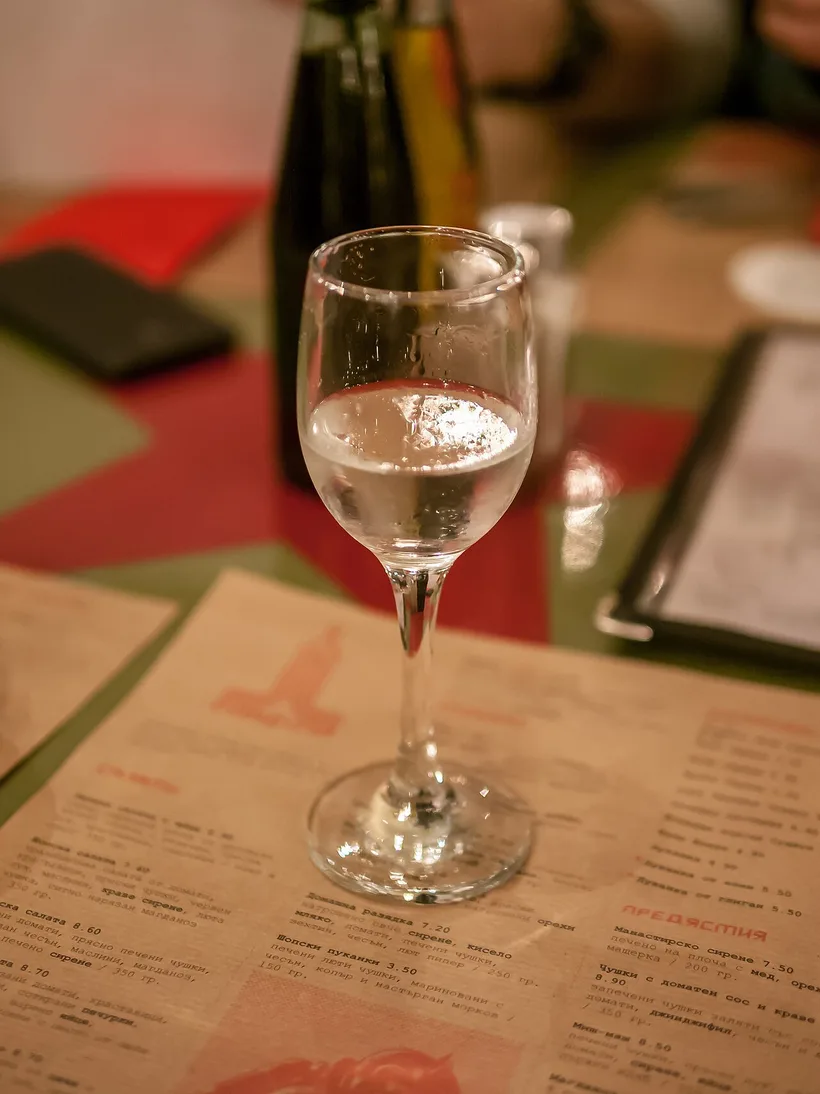
A Plovdiv table doesn’t need a main course to earn its evening. Order a spread of meze (small plates), clear a couple of hours, and let a cold rakia set the pace, the fruit brandy that opens every Bulgarian meal, sipped alongside a shopska salad rather than knocked back in one. Kapana’s bars are the natural home for this, with rakia lists running to dozens of varieties.
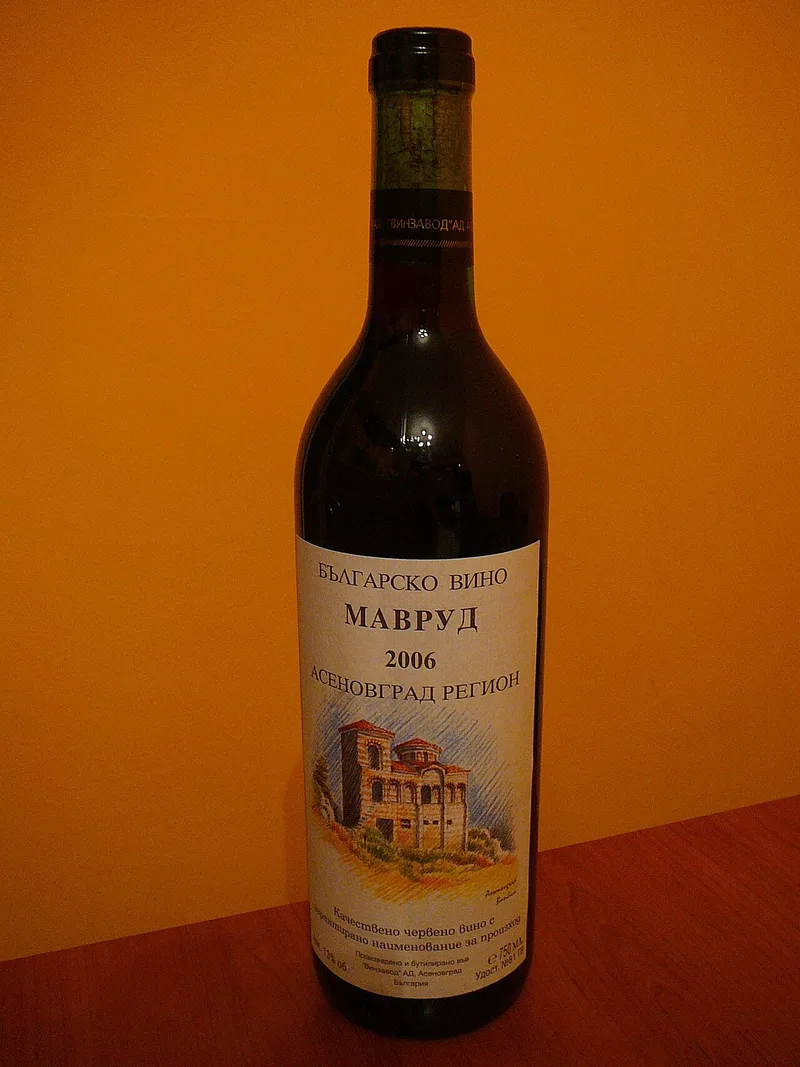
Then drink local. Because Plovdiv is the natural base for the Thracian Valley wineries, this is the place to order a Mavrud, the region’s dark, structured native red, or a dry white, rather than an imported label; any decent Old Town or Kapana list will have several. If the wine grabs you, the cellars are an easy day out, and our Bulgaria wine route links the Kapana bars to the Thracian Valley and beyond. Time the trip for late November and you can taste the new vintage straight from the producers at the Young Wine Festival.
Cheap and fast: Kapana’s bakeries and the grill
Plovdiv doesn’t ask for a booking or a full wallet either. Kapana’s bakeries fold banitsa (the flaky cheese pastry) into paper while it’s still warm, sold by the piece for pocket change; it doubles as the local breakfast and the best cheap food in the city, and nobody sits down to eat it. When lunch calls for something hot, pick a grill house (skara) with a room full of Plovdivchani rather than a laminated five-language menu on a stand outside: a few kebapche (grilled minced-meat rolls) or kyufte (patties), a shopska, bread and a beer barely register on a euro budget.
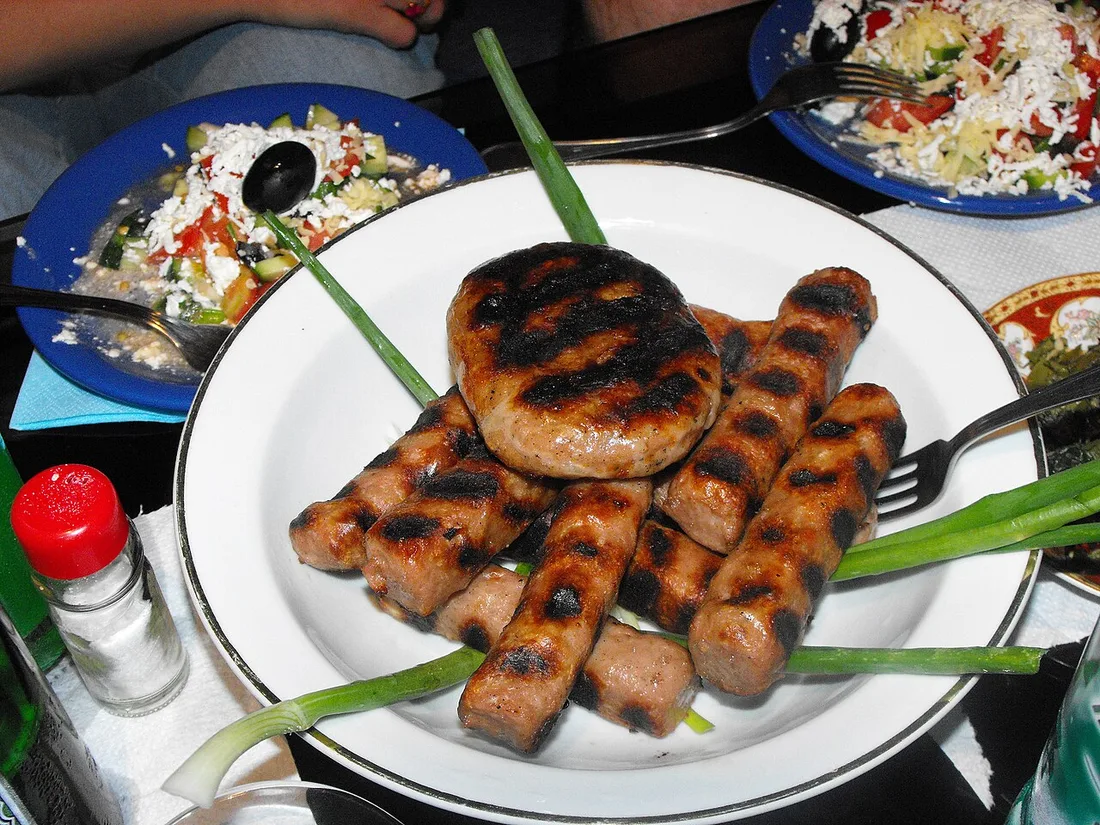
Beyond the bakeries, Kapana keeps a scatter of small counters doing a plate of grill or a quick sandwich between the sit-down places, so a fast bite is never more than a lane or two away, whatever time you get hungry.
Ordering, booking and the practical side
The dish order barely changes from table to table: shopska first, a cold rakia alongside it rather than a shot, then the grill or a clay-pot kavarma, and Mavrud in the glass instead of an import. Our what to eat in Bulgaria guide has the full menu decoder if any of that’s new to you. Kitchens here plate for a group, not a solo diner, so two people should order like they’re feeding three and let the extra land as salads rather than a second main; vegetarians eat well off the same list, on shopska, banitsa, bean stew and grilled sirene.
On booking: Pavaj and Hemingway fill up, and so does any Old Town garden on a warm weekend, so call ahead rather than turn up hoping. Prices have run in euros since Bulgaria’s changeover on 1 January 2026, leva are still accepted and visible on menus through 2026, and the smaller kitchens still lean on cash over cards. Round up by about 10 percent for good service, same as anywhere else in the country.
For everything around the table: where to stay in Plovdiv puts most of these places within walking distance, the 2 days in Plovdiv itinerary times the sightseeing around them, and things to do in Plovdiv fills whatever’s left between meals. Heading to the capital next? Where to eat in Sofia runs the same list for the mehanas and rakia bars up there.
Read also

Food · 7 min read
Where to Eat in Varna: Fish, Mehanas & Sea Garden
Verified · September 4, 2026Where to eat in Varna: Black Sea fish at the Port, mehanas in town, Sea Garden terraces, with menu prices from Mr Baba and Captain Cook.

Food · 9 min read
Melnik Wine Guide: Cellars, Grapes & Tastings
Verified · July 23, 2026Melnik wine explained: the broad-leaved Melnik vine, Melnik 55, the sandstone cellars, which wineries to book and how to taste without driving.

Food · 9 min read
Where to Eat in Sofia: Best Traditional Restaurants
Verified · July 20, 2026Where to eat in Sofia: the best traditional mehanas and modern Bulgarian restaurants, from Manastirska Magernitsa to Moma, plus rakia bars and cheap eats.

Food · 10 min read
What to Eat in Bulgaria: Food & Wine Guide
Updated · September 3, 2026What to try in Bulgaria: banitsa, shopska salad, tarator, kebapche, kavarma, sarmi, real Bulgarian yogurt, sirene cheese, plus Mavrud wine and rakia.