
Bulgaria Wine Route: Melnik, Thracian Valley & Cellars
A 6-day Bulgaria wine road trip - Melnik reds, Rozhen Monastery, the Thracian Valley cellars around Plovdiv and the Rose Valley at Kazanlak.
This is a six-day drive for people who plan a trip around what’s in the glass. It runs down to Bulgaria’s oldest wine town, back up through the vineyards that make three-quarters of the country’s wine, and finishes among the roses and Thracian tombs of the Kazanlak valley. The shape is Sofia - Melnik - Rozhen Monastery - Plovdiv - Thracian Valley wineries - Kazanlak, about 535 km. Bulgaria has been on the euro since January 2026, so no more leva to count, though small family cellars still like cash. And because this is a wine trip that’s also a driving trip, there’s one rule to settle before you turn the key, and I’ll get to it first.
Bulgarian wine is genuinely underrated - deep, characterful reds from grapes you’ll not meet anywhere else - and it’s cheap by Western European standards, which makes a cellar crawl here a real pleasure rather than a splurge. This route is a different animal from our first-timer 7-day itinerary: the sights are the excuse, the tastings are the point. For the wider seasonal picture, keep our best time to visit Bulgaria guide open alongside.
The golden rule: someone has to stay sober
Say it plainly, because a wine route and a rental car don’t mix by default: don’t drink and drive. Bulgaria’s drink-drive limit is low and the police enforce it. You have four honest ways to taste without risking it, and a good trip uses all of them:
- A designated driver who takes the day off the glass and swaps with a partner across the week.
- A booked transfer or taxi for the cellar day, so nobody drives.
- A guided wine tour with a driver - the cleanest option for the Thracian Valley, where cellars are spread out and tasting rooms pour generously.
- Taste on foot in town. In Plovdiv’s Kapana quarter you can walk between a dozen wine bars and leave the car parked for two days.
Plan the route so the biggest tastings land on the non-driving days (Melnik, where you sleep in the village; Plovdiv, where you walk), and keep the driving legs dry.
When to go
Two windows are special. Late spring - May into June - is when the Rose Valley blooms and is harvested at dawn, and it’s when the vineyards are greenest; the Kazanlak Rose Festival falls in early June (in 2026, the 6th and 7th - confirm the exact dates on the official festival site, as they move each year). September and October bring the grape harvest, when cellars are busiest and most alive, and the light on the vines is gold. Deep summer is hot on the Thracian plain; winter shutters many small cellars. Aim for the shoulders. And if you can’t make the harvest, the new wine it produces is poured across Plovdiv’s Old Town in late November, at the Young Wine Festival.
Sofia to Melnik
Collect the car in Sofia, spend a night, and taste your first Bulgarian reds somewhere you’ll walk back from - a gentle warm-up with no keys in hand. Next morning, point south. Melnik is about 175 km away, a straightforward two and a quarter hours down the A3 and E79 toward the Greek border. The landscape dries and opens as you go, and the last few kilometres run in under strange pale cliffs.
Melnik: reds in a sandstone town
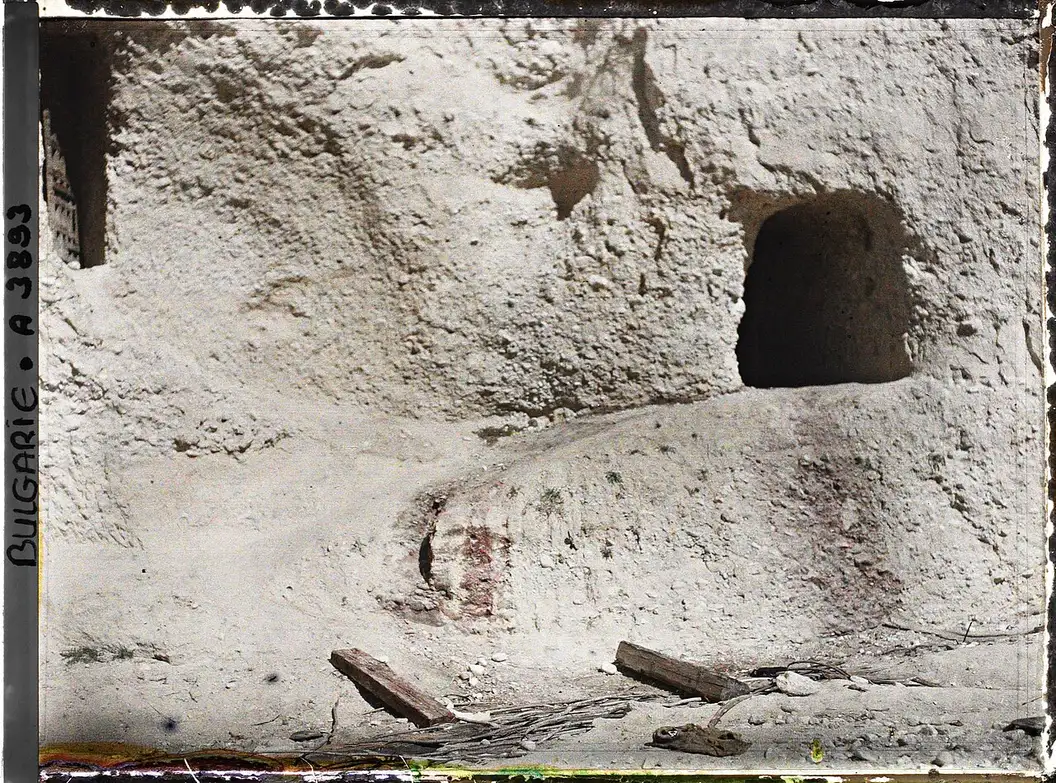
Melnik is the smallest town in Bulgaria - a couple of hundred residents - and one of the strangest and loveliest places in the country, a single street of white Revival houses wedged into a canyon of eroded sandstone pyramids. It has made wine since the Middle Ages, and the local grape, the Broad-leaved Melnik Vine (Shiroka Melnishka loza), grows more or less only here: it gives a dark, warming red that legend says Winston Churchill ordered by the barrel.
The set-piece is the Kordopulov House, built in 1754 and the largest Bulgarian Revival house in the Balkans, with a wine cellar tunnelled 150 to 200 metres straight into the cliff. Below and around it, small family cellars dug into the same soft rock pour their own wines for a few euros, often with a view over the pyramids thrown in. That’s the day to settle in for two nights, walk from cellar to cellar, and let someone else drive - or better, nobody. Our guide to Melnik covers the town, the cellars and where to stay.
Rozhen Monastery
Just 7 km from Melnik, a 12-minute drive (or a lovely walking trail of about an hour and forty over the pyramids), sits Rozhen Monastery, the largest in the Pirin mountains. It’s worth the short hop even on a wine trip: a well-preserved medieval complex of frescoes, carved iconostases and stained glass, wrapped around a quiet courtyard shaded, fittingly, by a grapevine. Entry is free (a donation is welcome), and the drive out and back pairs naturally with a Melnik morning before you set off north.
Plovdiv and Kapana
The long leg is the drive from Melnik to Plovdiv - about 222 km and a solid four hours over back roads and mountains, the one properly long haul of the trip, so you’ll want to start early and keep it dry. Plovdiv is the base for the second half, and it earns two nights on its own. Beyond the Roman theatre and the Revival old town, the reason it suits a wine route is Kapana - “the Trap” - a grid of craft lanes packed with wine bars pouring Bulgarian labels by the glass. Park the car, forget it for two days, and taste your way around on foot; it’s the safest, most sociable wine day of the whole route. Our guide to things to do in Plovdiv covers the sights, and what to eat helps you pair the reds with the right grill.
The Thracian Valley wineries
Plovdiv sits in the middle of the Thracian Valley, Bulgaria’s premier wine region - roughly three-quarters of the country’s vineyards and more than eighty wineries. This is a cellar-hopping day, and the one where a driver or a guided tour really pays off, because the estates are scattered and the pours aren’t shy. Names worth building a day around include Villa Yustina in the Rhodope foothills, Todoroff, Dragomir and Rumelia - but the one that ties the whole route together is Starosel, about 45 minutes north of Plovdiv. There the Thracians built a cult complex in the 5th century BC - a temple, a mausoleum and tombs, with a small winery cut into the wall - and a modern estate now makes award-winning wine and runs a spa hotel on the same ground. Two and a half thousand years of the same idea, in one stop. Book tastings ahead: most cellars pour by appointment, not on a walk-in, and prices vary, so you’ll want to arrange it a day or two before rather than turning up cold.
Kazanlak: roses and the Valley of the Thracian Kings
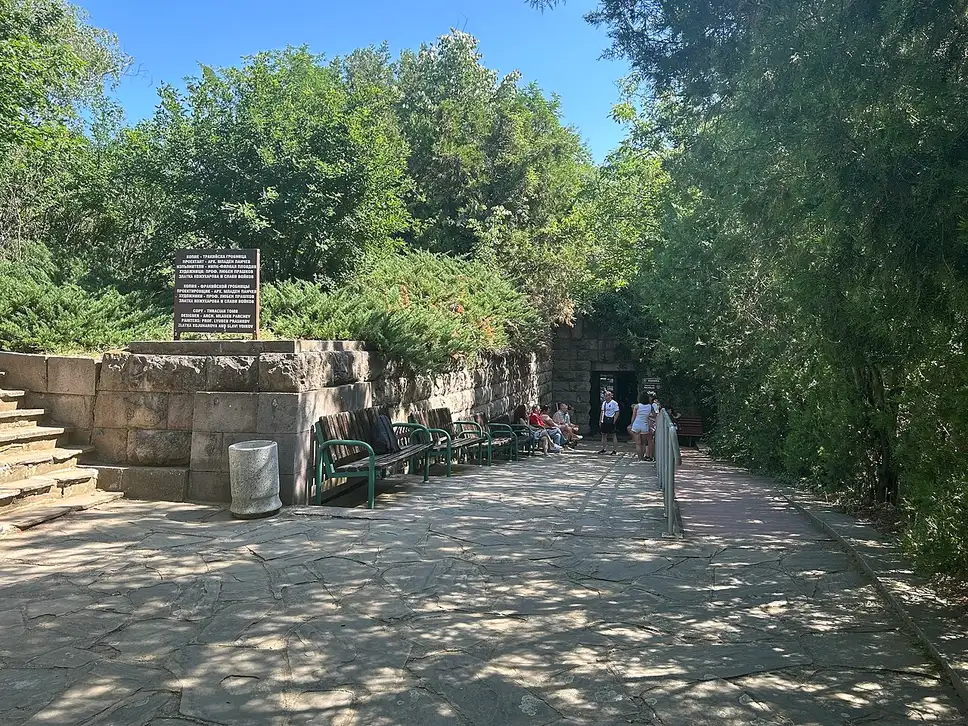
From the cellars it’s a scenic run of roughly 90 km northeast to Kazanlak, the heart of two valleys in one. This is the Rose Valley, where the pink Damask rose has been grown for its oil for three centuries - visit a distillery, tour the Museum of the Rose, and if you time it for late spring you can join the dawn rose-picking. It’s also the Valley of the Thracian Kings, studded with burial mounds: the Thracian Tomb of Kazanlak is a UNESCO World Heritage Site from 1979, and because the 4th-century-BC original is sealed to protect its frescoes, you walk through an exact replica built beside it. Rose-country wineries round out the theme, and the valley makes a fitting last night before you loop back toward Sofia or fly out of Plovdiv.
Practical: cars, cash and tasting sensibly
A few notes to keep the week smooth and safe:
- The car. You need one - Melnik, Starosel and the Rose Valley aren’t linked by useful public transport. Bulgaria’s motorways require an electronic vignette; ask whether your rental includes it and buy your own online if not. Our guide to renting a car in Bulgaria has the deposit and vignette details.
- Never both. Whoever drives doesn’t taste; whoever tastes doesn’t drive. Put the cellar days where you sleep in the village or walk in the city, and use a tour or transfer for the spread-out Thracian Valley.
- Cash. The country is on the euro, but tiny Melnik cellars and village distilleries often take notes only. Carry some.
- Book ahead, and ship home. Most wineries pour by appointment, so call a day or two out; and if you fall for a case, most estates will arrange shipping so you’re not wrestling bottles through the airport.
Done this way, the route reads like a good tasting flight - a bold, strange red in a canyon town, a monastery under a grapevine, two easy walking days of wine in Plovdiv, a valley of scattered cellars, and a finish among the roses. Six days, and you’ll fly home with a list of Bulgarian labels to chase down at home.
Route day by day
- Days on the road
- 6
- Distance
- ≈535 km
- Budget from
- 75 EUR
- Best season
- May, June, September, October
The route at a glance
-
Sofia
Route startstop ≈1440 min
Day 1. A night in the capital to pick up the car and get a first taste of Bulgarian wine in a city bar - somewhere you can walk home from before the driving days begin.
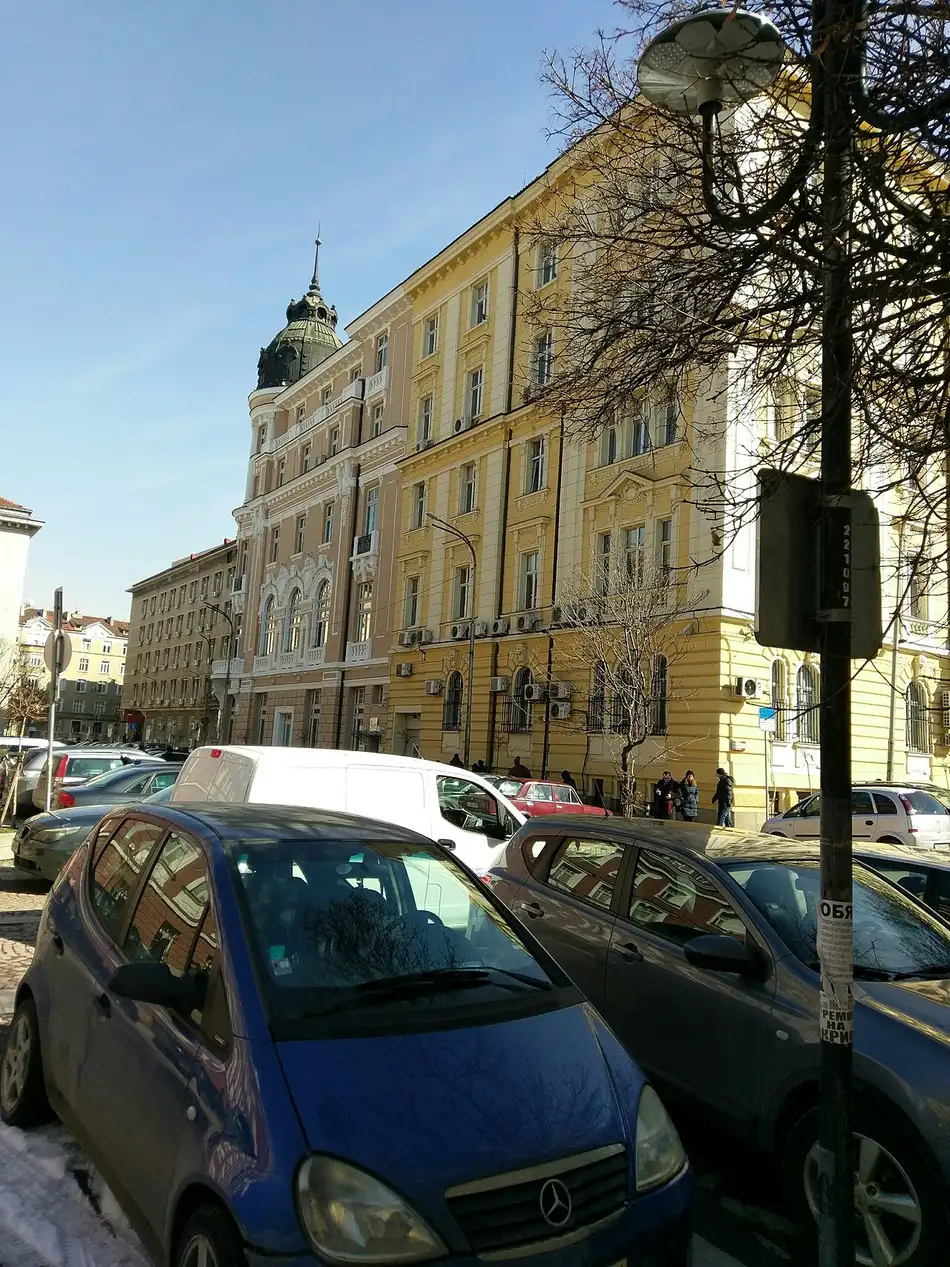
Photo: Hakuna.Matata / Wikimedia Commons, CC BY-SA 4.0 ( source ) -
Melnik
175 km from the startstop ≈1440 min
Days 2-3. Bulgaria's smallest town, tucked under sandstone pyramids in the far south-west. Home of the big Broad-leaved Melnik reds and cellars carved into the cliff.
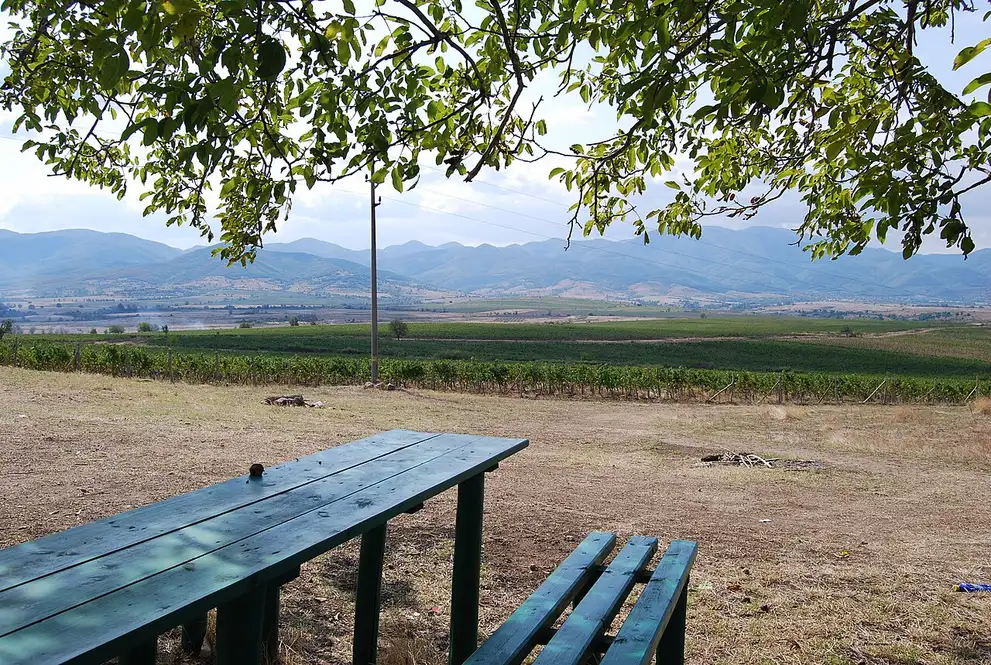
Photo: Celoiskra / Wikimedia Commons, CC BY-SA 3.0 ( source ) -
Rozhen Monastery
182 km from the startstop ≈90 min
Day 3. The largest monastery in the Pirin, 7 km from Melnik - frescoes, stained glass and a vine-shaded courtyard. Free to enter; an easy pairing with the Melnik cellars.
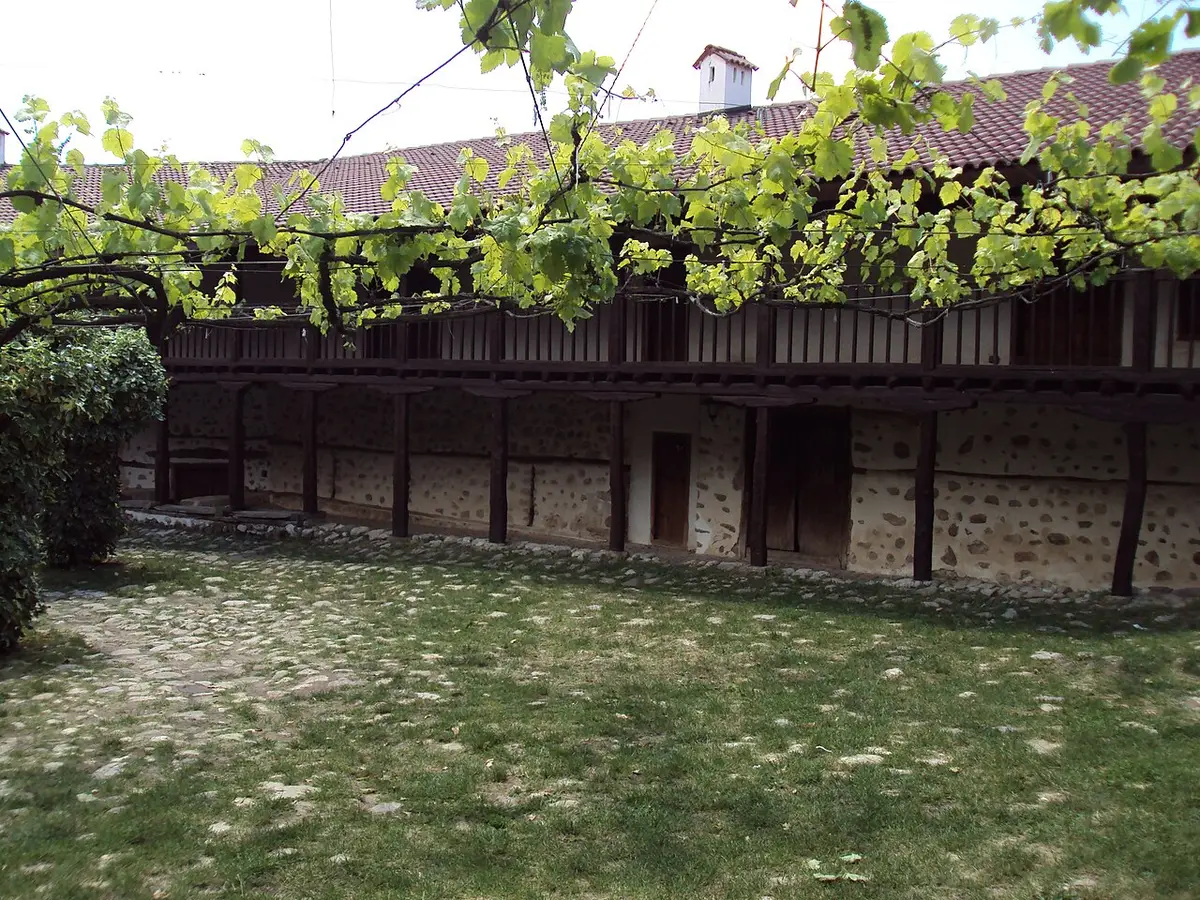
Photo: Vislupus / Wikimedia Commons, CC BY-SA 4.0 ( source ) -
Plovdiv
400 km from the startstop ≈2880 min
Days 4-5. The base for the Thracian Valley. Taste in the wine bars of the Kapana quarter on foot - no car keys needed - then day-trip to the cellars.
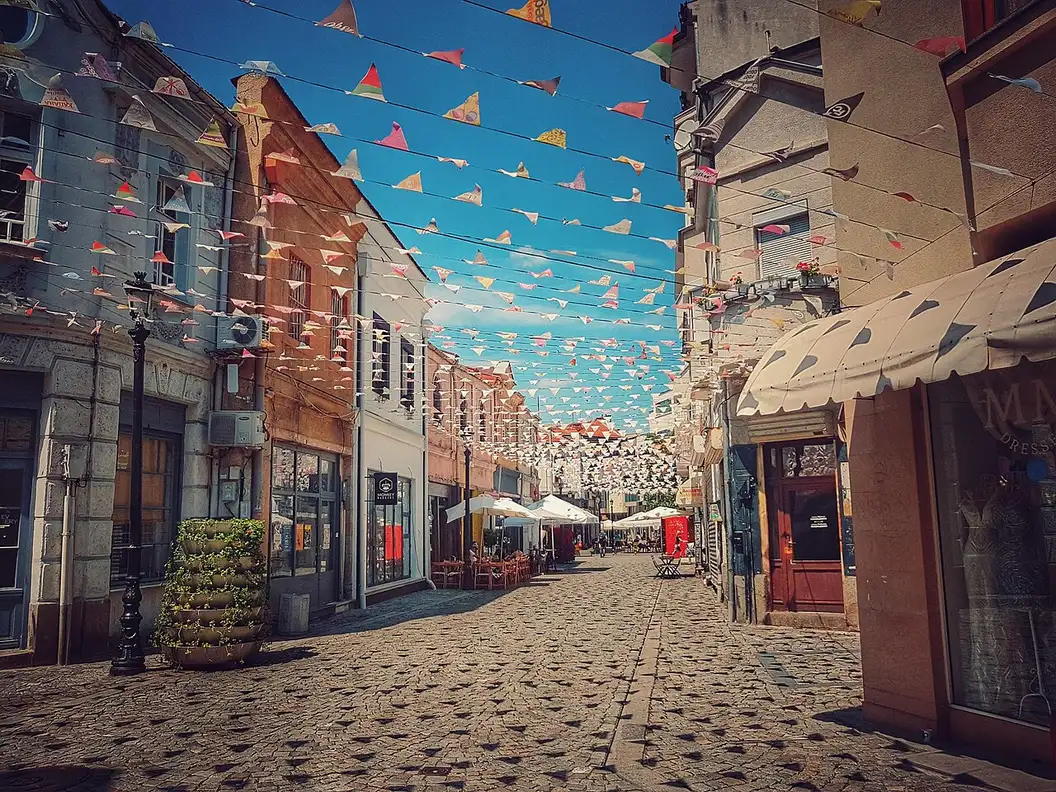
Photo: Realsteel007 / Wikimedia Commons, CC BY-SA 4.0 ( source ) -
Thracian Valley wineries
445 km from the startstop ≈360 min
Day 5. The country's premier wine region: 80-plus cellars around Plovdiv. Starosel pairs a 5th-century-BC Thracian temple with a modern winery. Book tastings ahead.
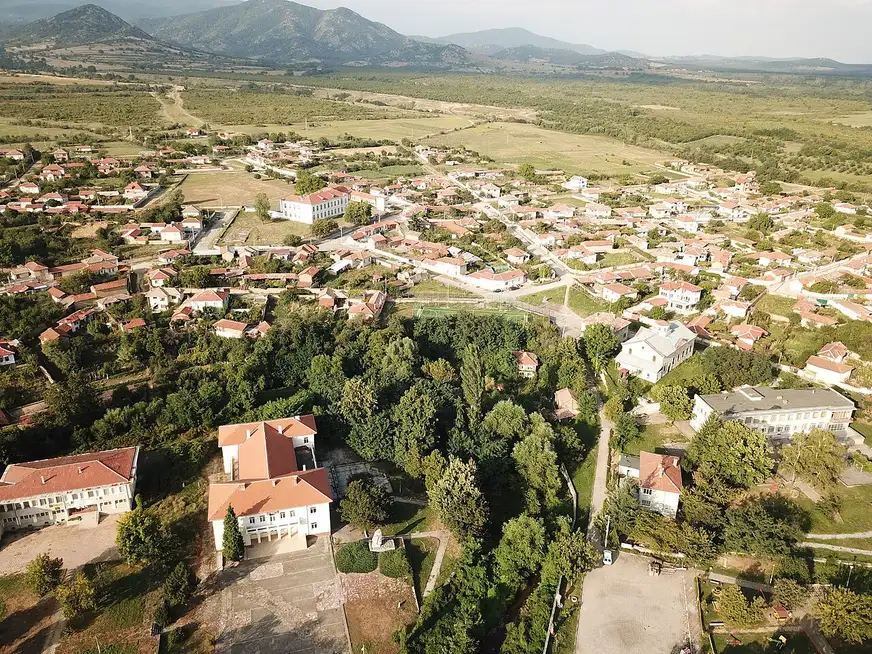
Photo: Valpamoukov / Wikimedia Commons, CC BY-SA 4.0 ( source ) -
Kazanlak
535 km from the startstop ≈1440 min
Day 6. The Rose Valley and the Valley of the Thracian Kings: a UNESCO tomb, rose-oil distilleries and rose-country wineries. Roses bloom and are picked in late spring.
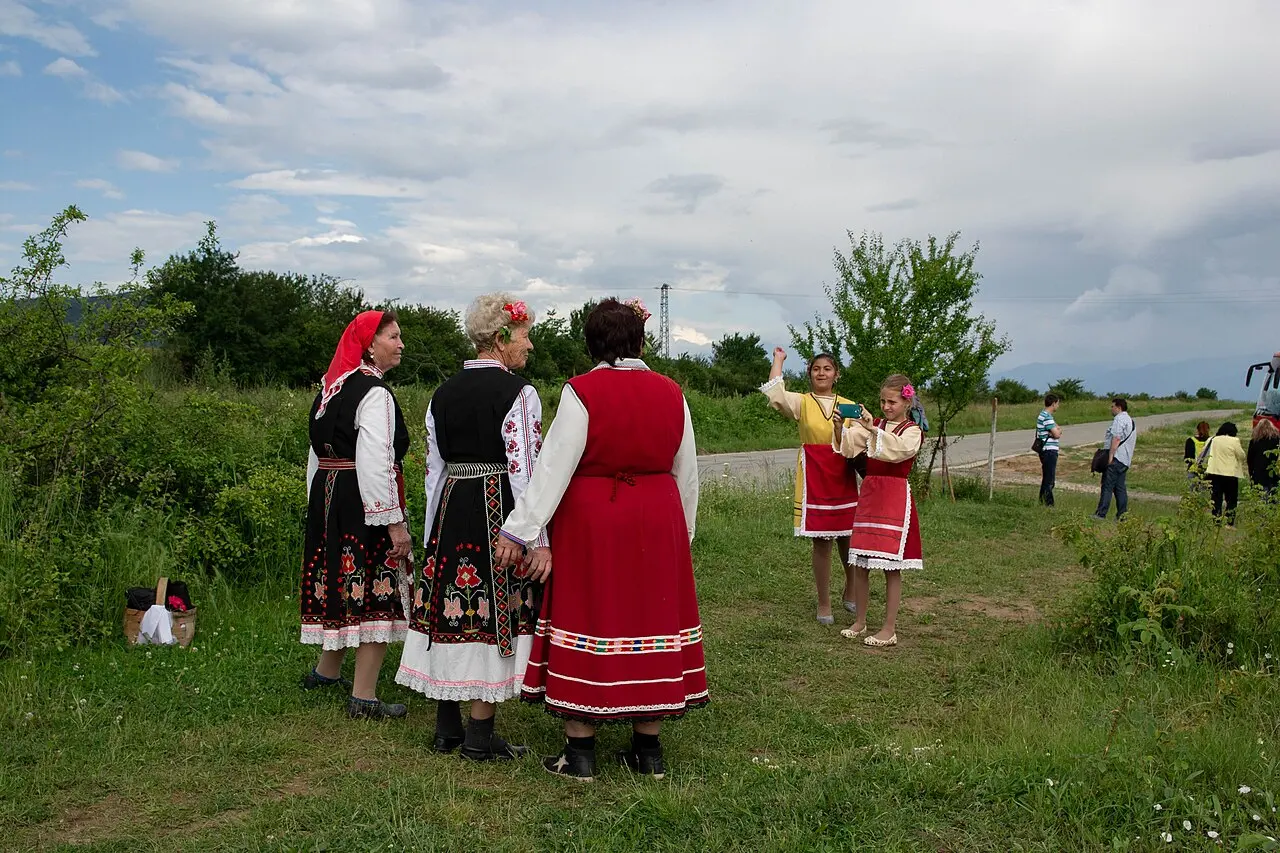
Photo: Dachegraphy / Wikimedia Commons, CC BY-SA 4.0 ( source )
Route map
The map with stops loads on click - to keep the page lightweight.
The map didn’t load. Check your connection and refresh the page.