
Varna or Burgas: Which Black Sea City to Choose?
Varna wins on city life, beaches and year-round flights; Burgas on day trips and price. An honest head-to-head with 2026 airport and cost figures.
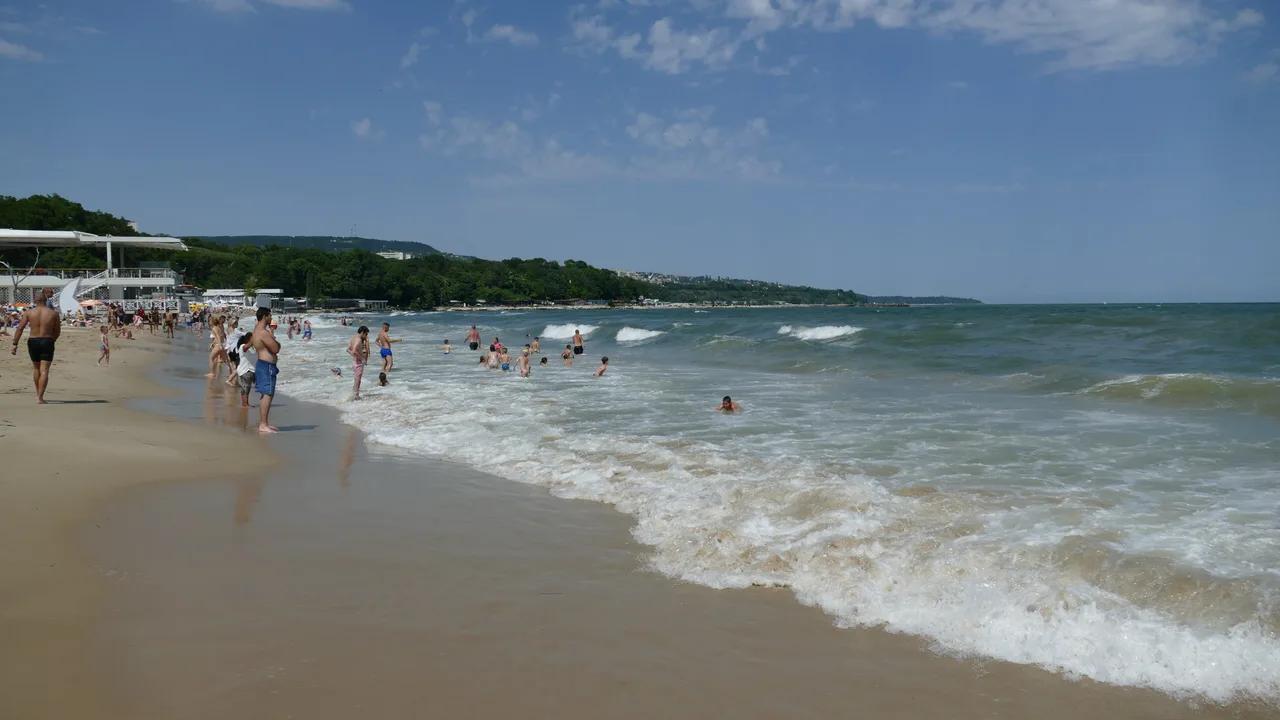
Base yourself in Varna if you want a real city with more than 20 km of its own beach, museums worth an afternoon and flights that run all year. Base in Burgas if the reason you’re coming is Nessebar, Sozopol and the southern old towns, and you’d rather the room cost less. The two sit about 130 km apart on the same coast, each has its own airport, and picking the wrong one means a two-hour bus ride every time you want the thing you actually came for.
Almost nobody makes this choice on purpose. You book whatever charter was cheapest, land at whichever airport the package used, and work out on day two that the good stuff is at the other end of the coast. The cities are also less alike than the map suggests, and their flight seasons don’t match: one keeps a winter schedule, the other’s shrinks to almost nothing, and in 2025/26 it disappeared altogether while the runway was rebuilt.
Two cities, one coast, a two-hour gap
Neither of these is a resort. Both are working cities with normal traffic, normal prices and a beach at the bottom of the main park; if what you want is an all-inclusive strip with a pool bar, where to stay on the Black Sea coast is the page you need instead.
What separates them is reach. Varna is the bigger, older, better-looking city, with the beaches on its doorstep and the country’s most famous museum ten minutes from the sand. Burgas is plainer and cheaper, and it sits within an hour of the two finest old towns on the Black Sea. Everything below is a variation on that trade.
The flights decide this more than the cities do
The two airports are almost exactly the same size and completely different in character. In 2025 Burgas (BOJ) handled about 1.8 million passengers across 51 airlines and 67 destinations, and Varna (VAR) handled just over 1.8 million across 40 airlines and 61 destinations. Look at where those passengers came from, though, and the split is stark. Burgas’s biggest markets were Poland (409,000) and the United Kingdom (395,000), then Czechia and Germany. Varna’s were Germany (596,000), then Bulgaria itself, then the UK on 151,000 and Austria on 145,000.
That’s the practical answer for most readers. Flying from Britain in July, you’ll find more seats and more departure airports for Burgas: Jet2, easyJet, Ryanair, Wizz Air and TUI between them cover Gatwick, Luton, Stansted, Manchester and most of the big regional airports. Flying from Germany or Austria, Varna is your airport, and the scale of that’s worth seeing plainly: Germany alone sent Varna 596,000 passengers last year, close to four times the entire British total.
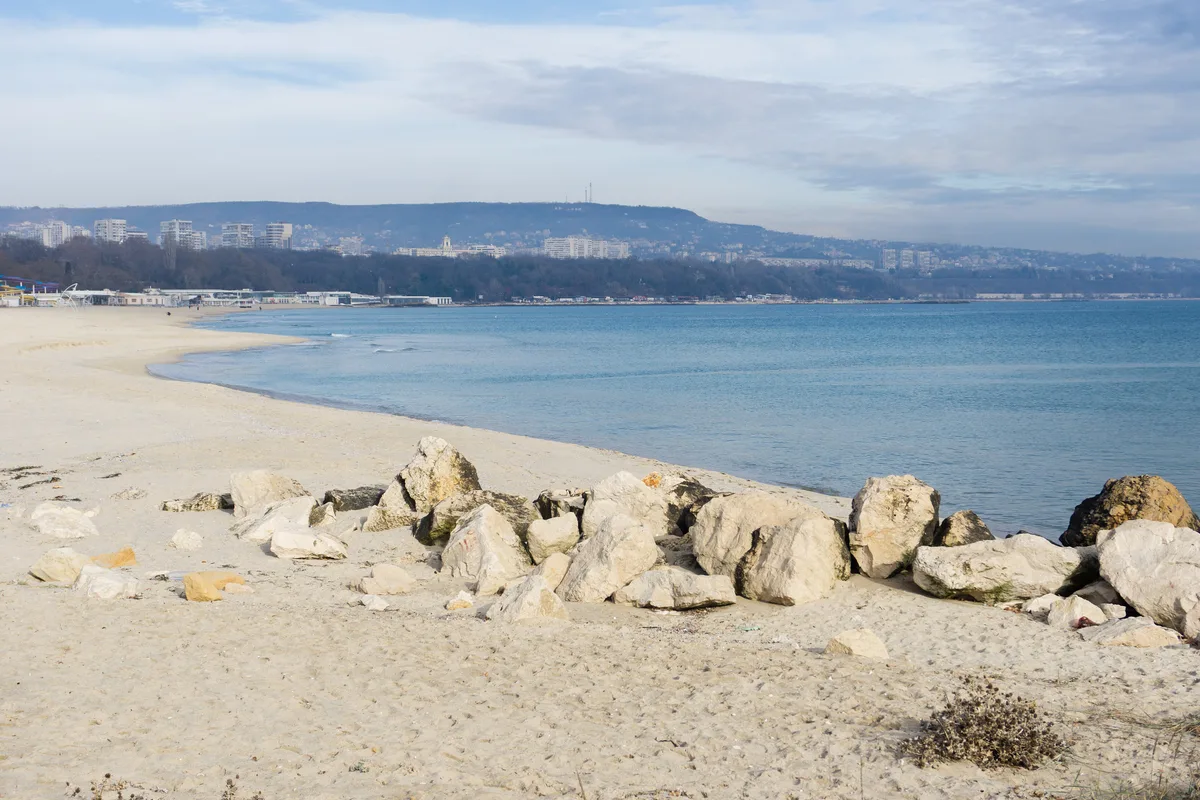
Then there’s the part nobody mentions until you try to book a March trip. Burgas Airport closed completely for the winter of 2025/26, from the start of November to the end of April, while Fraport rebuilt the runway in a project that ran past 60 million euro. The new runway opened on 29 April 2026 and flights resumed on 1 May. Varna carried the coast through that winter alone, with 16 routes to 11 countries: Wizz Air served 12 destinations including London Luton five times a week, plus Bulgaria Air to Sofia, Austrian to Vienna and Turkish to Istanbul.
Even in a normal year Burgas is a summer-charter operation that thins to almost nothing by November, while Varna is a Wizz Air base with aircraft stationed there overnight: a second arrived in April 2025, a third goes in for summer 2026 with five new routes from mid-June (Barcelona, Athens, Paris Beauvais, Debrecen and Gdansk). The rule that falls out of this is simple. Coming between June and September, let the airport follow your holiday. Coming in any other month, fly to Varna, and check the published winter schedule before you count on Burgas at all.
Landing, and how you actually reach your bed
Varna Airport sits about 7.5 km from its centre and Burgas Airport about 10 km from its own, and both have a cheap city bus. What differs is how far that bus can take you.
At Varna, bus 409 waits outside Terminal 2 arrivals, costs about 1 euro into the centre and takes under 20 minutes, then carries on up the coast to Golden Sands, 24 km from the airport, on a 1.30 euro 90-minute ticket. That’s the only spot on the Bulgarian coast where one bus ticket gets you from the aircraft door to a resort hotel without a change. A metered taxi into town runs about 8 to 10 euro. Our Varna airport transfer guide has the ticket prices and the last-bus times.
At Burgas, bus 15 leaves from in front of the terminal for the centre and the South bus station for about 1 euro, and a taxi into town is around 15 euro. But there’s no airport bus to any resort whatsoever. For Sunny Beach, 27 to 30 km up the road, it’s a taxi or a pre-booked transfer from about 30 euro, or bus 15 to the South station and a change onto an intercity coach with your luggage. Sozopol is 43 to 45 km from the airport, because you cross the whole city to reach it. The Burgas airport transfer guide walks through each option, and which Bulgarian airport to use puts the coast against Sofia.
The beaches, honestly
Varna wins this one and it isn’t close. The city’s coast runs to more than 20 km of sand, and the Central Beach sits directly below the Sea Garden, five minutes from the centre, with Asparuhovo across the bay as the quieter local option. You can finish in a museum at four and be swimming by half past.
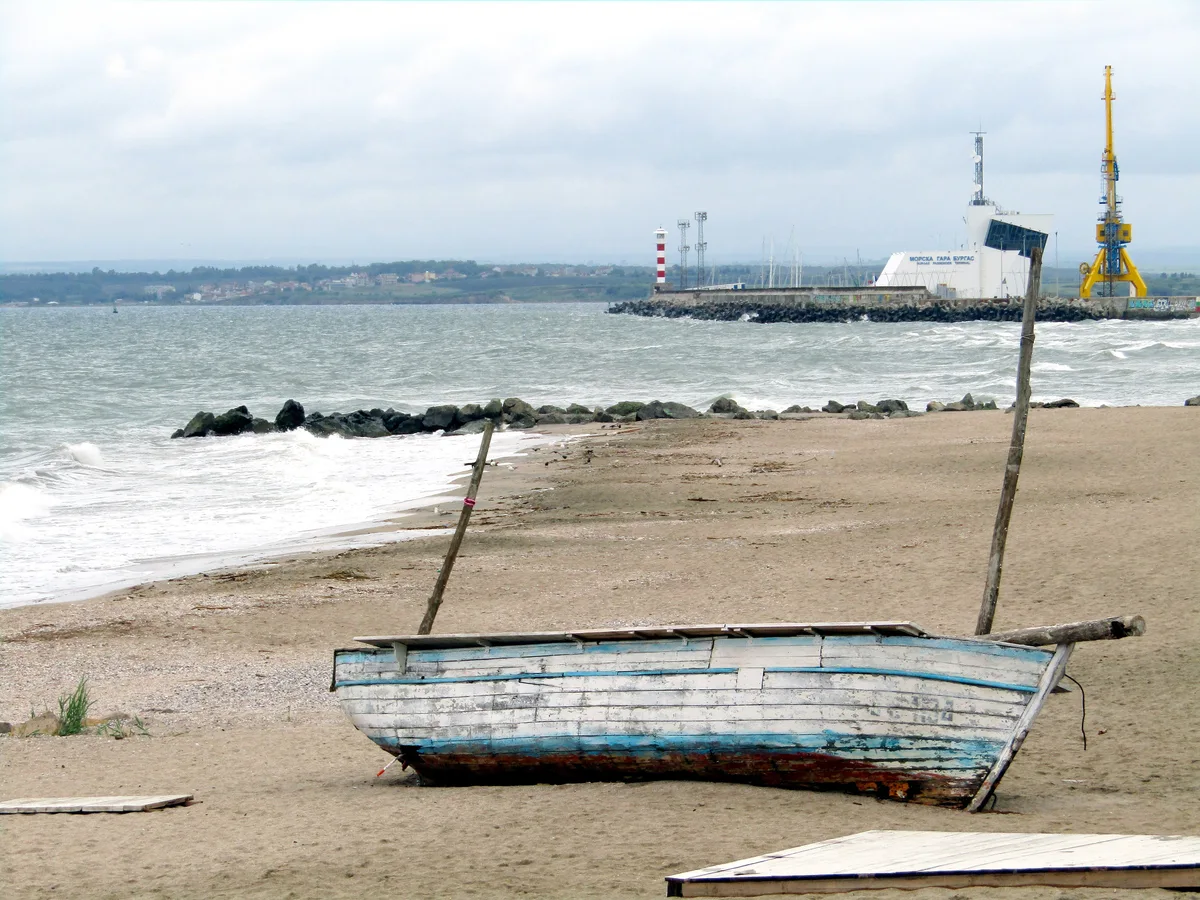
Burgas has a central beach below its own Sea Garden too, and the sand there’s unusually dark because it’s rich in magnetite, which catches everyone out on the first swim. It’s a perfectly decent city beach. It’s also a beach with a cargo port and a container crane in the view, in a city whose outskirts hold the largest oil refinery in south-eastern Europe.
One number complicates the easy conclusion. In the 2026 Blue Flag list for Bulgaria, 26 beaches and 6 marinas were awarded, and Burgas North made the beach list while no beach inside Varna city did. Read that narrowly: Blue Flag rates water quality, safety and management rather than looks, it’s applied beach by beach, and Varna’s coast is well represented just outside the city limits, with Golden Sands, Sunny Day and Albena all on the same 2026 list. Varna has far more sand; Burgas has the certified strip in the middle of town.
Two very different cities to walk around
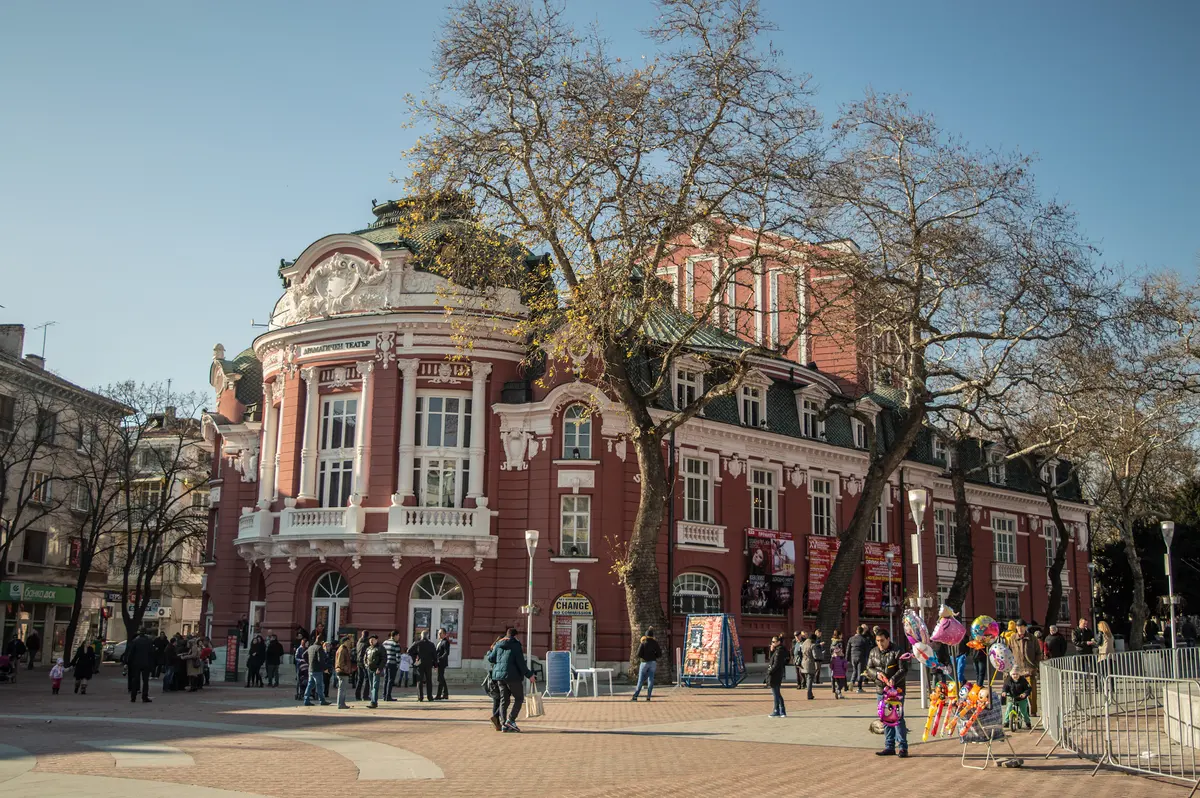
Take the same three hours in each and you’ll get two different holidays. In Varna (just over 320,000 people) they go on museums: the Archaeological Museum holds the oldest worked gold on earth, roughly 3,000 objects weighing close to 6 kilograms from a necropolis dated 4600 to 4200 BC, and the Roman Thermae of Odessos cover some 7,000 square metres, the largest ancient building found in Bulgaria. The city also has the deeper cultural record: the “Varna Summer” music festival has run since 1926, the first music festival in the country, and the Varna International Ballet Competition, founded in 1964, was the first of its kind anywhere in the world. Its opera and drama theatre programmes through the winter, which tells you how much of the year this city is awake.
In Burgas (just over 210,000) the same three hours go on wildlife and water. The city sits inside a ring of four coastal lagoons covering about 95 square kilometres, right on the Via Pontica migration route. Atanasovsko Lake is a working salt pan that turns pink as the salinity climbs in high summer, with flamingos feeding in the basins; the Poda reserve south of town has logged 265 bird species on a tiny patch of coast. Out in the bay, St Anastasia is the only inhabited island on the Bulgarian Black Sea, a former monastery that spent part of the 20th century as a political prison and now runs a museum, a restaurant and a few guest rooms. The 300-metre bridge into the water, first built in 1936, is the best free evening either city offers.
Each of those strengths comes with its own cost. Burgas is plain, industrial and short on old streets. Varna’s is quieter but sharper: from here the coast’s two great old towns are simply out of reach for a day trip, since Nessebar and Sozopol are a two-hour bus each way, so you’ll either surrender a whole day or skip them.
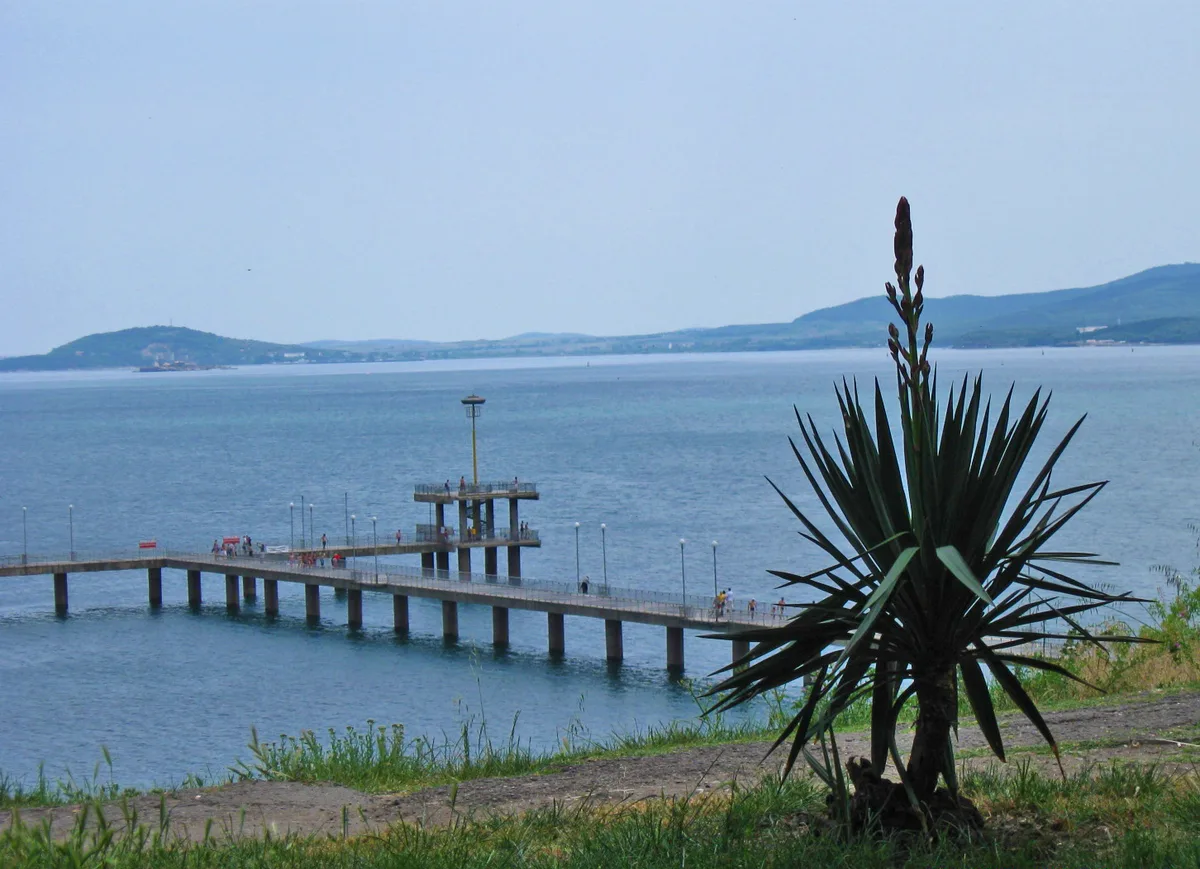
Day trips: Burgas’s strongest card
What sits within an hour of your base matters more than the base itself, and the southern coast is richer. Buses leave the Burgas South station roughly hourly for Nessebar, the UNESCO old town of medieval churches on a rocky peninsula about 37 km away, and for Sozopol, 35 km south of the city, where wooden Revival houses stand above a working fishing harbour. Add Sunny Beach, Pomorie and the salt lakes and you’ll fill five days without repeating a day trip.
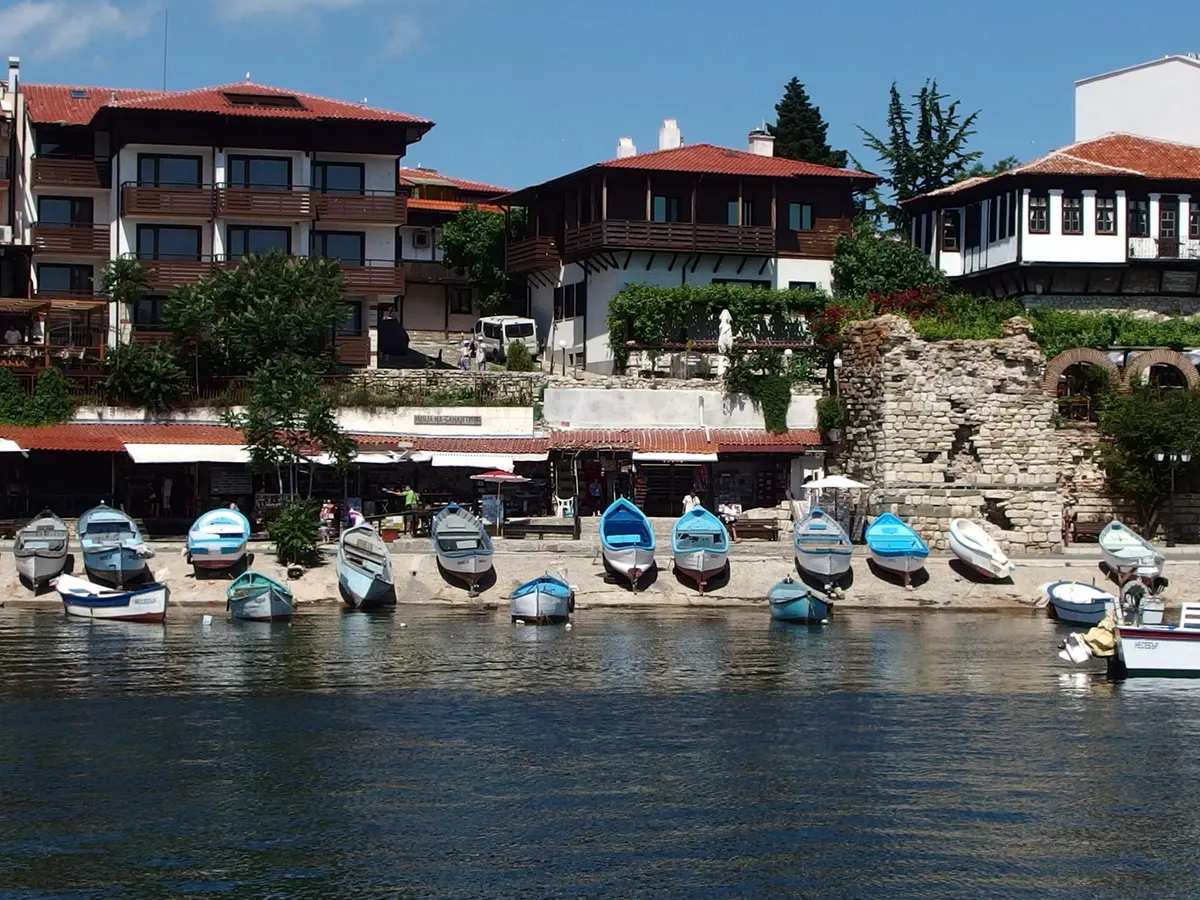
Varna’s neighbours are resorts rather than old towns. Golden Sands is 17 km north of the centre on that same bus 409, the rock-hewn Aladzha Monastery is cut into a cliff just inland from it, and Albena is about 30 km up the coast from Varna. Good coast, but the day trips are beaches with hotels on them rather than 2,600-year-old streets. If you’re asking which big resort to book, our head-to-head on Sunny Beach vs Golden Sands settles it, and the full ranking of Bulgaria’s resorts sets all of them against each other.
What each city costs
Burgas is the cheaper base, though less dramatically than the headline number suggests. Numbeo’s crowd-sourced index, refreshed at the end of July 2026, puts the cost of living in Burgas 12.2% below Varna excluding rent, with rent 20.3% lower but restaurant prices only 4% lower. You’ll want to read that split carefully: the gap sits almost entirely in what you pay for a roof, which is exactly the line a visitor pays. Beers, lunches and bus tickets cost much the same in both. The Varna figures come from 86 contributors and the Burgas ones from 30, so treat the decimals as a direction of travel rather than gospel.
Either way you’re in the cheapest country in the EU: 30 to 45 euro a day backpacking, 60 to 100 mid-range, broken down in full in whether Bulgaria is expensive. Everything is priced in euro now, at a fixed 1.95583 leva to the euro since 1 January 2026, and tags carried both currencies until the dual-price rule ended on 8 August 2026.
Fly into one, leave from the other
Here’s the answer nobody sells you, because no airline puts it on a landing page: book an open-jaw. Fly into Varna, take four nights in the north for the beach and the gold, ride the two-hour bus down the coast, spend three nights in Burgas for Nessebar, Sozopol and the salt lakes, and fly home from BOJ. Two airports, one coastline, no backtracking, and the two cities stop competing and start dividing the work. Buses run the gap roughly hourly for somewhere around 5 to 12 euro depending on the operator, so check the fare on the day.
Don’t do that leg by train. The railway doesn’t follow the coast, so almost every service runs inland and changes at Karnobat: the BDZ timetable for a working day at the end of July 2026 lists journeys of 3 hours 25 minutes to 4 hours 40 minutes, against two hours on the bus.
If the trip has to have one base, let the calendar choose. October to May, it’s Varna: that’s the airport still flying and the city that stays open around it. June to September with a British boarding pass and a beach agenda, it’s Burgas, where the flights are cheaper, the room is about a fifth less and the old towns are an hourly bus away. The Varna city guide and Burgas city guide go deep on each, where to stay in Varna picks the district, and Sofia to the Black Sea coast covers getting down here in the first place.
Good to know
Prices are in euro (Bulgaria joined the eurozone on 1 January 2026 at a fixed 1.95583 leva to the euro; dual price tags ran until 8 August 2026 and have ended). Airport figures are for the 2025 calendar year from the airports operator, and the cost-of-living gap is crowd-sourced from Numbeo - both move. Confirm fares, schedules and prices before you book. Checked 1 August 2026.
Details checked: August 1, 2026
Read also

Cities · 10 min read
Bulgaria's Spa Towns: Velingrad, Hisarya & More
Verified · August 31, 2026Compare Velingrad, Sandanski and Hisarya: water temps, climate, Roman walls, when to go year-round, and real 2026 spa-hotel rates.

Cities · 12 min read
Where to Stay in Pamporovo: Hotels & Chalets
Verified · August 22, 2026Pamporovo hotels, chalets and apartments by lift base: Malina vs Studenets, why "renovated" is not "new", and how to price a bed.

Cities · 14 min read
2 Days in Sofia: The Perfect Weekend Itinerary
Verified · August 20, 2026A 2-day Sofia itinerary for a Friday-to-Sunday trip: Nevsky, Serdica, Boyana Church, real euro prices, and what actually fits in one weekend.

Cities · 9 min read
Where to Stay in Burgas: Best Areas & Hotels
Verified · August 10, 2026Where to stay in Burgas: city centre for a first visit, Sea Garden for beach and park, Lazur for quiet value, or Sarafovo by the airport.