
North Macedonia vs Bulgaria: Lakes or Beaches?
Bulgaria vs North Macedonia: Bulgaria wins on beaches, cities and variety; North Macedonia on lakes, value and a compact trip. Or combine both.
If you only have time for one, choose Bulgaria for a first Balkan trip and North Macedonia for a second, more curious one. Bulgaria is the bigger country with far more range: a real Black Sea coast, higher mountains, more famous cities and a week’s worth of sights. North Macedonia is smaller, cheaper, quieter and built around one showpiece, Lake Ohrid, that Bulgaria has no answer to. Neither is a wrong choice, and because they share a border you don’t always have to pick.
Here’s the short version before the detail. Want a beach holiday, plenty of cities, skiing or simply the most to see in one country? Bulgaria. Want lake swimming, cobbled old towns, low prices and a trip you can do in four or five days? North Macedonia. Torn between them and have ten days or more? Fly into Sofia, do a Bulgaria loop, and tack on Ohrid at the end, because Skopje is only about four to five hours away by bus.
The one-line answer for each type of traveller
Different trips point at different countries, so start with what you actually want.
- Beaches and a summer sea holiday: Bulgaria. It’s the only one of the two with a coast, so if sand and swimming in the sea are the point, North Macedonia is out before you begin.
- Lakes, old towns and value: North Macedonia. Lake Ohrid, a compact set of UNESCO sights, and prices a notch below Bulgaria’s.
- Cities, history and variety: Bulgaria. More big towns, more layers of history, and enough ground to fill a week or two.
- A short trip with one strong highlight: North Macedonia. Ohrid plus Skopje plus Matka Canyon is a satisfying loop in four or five days.
- Skiing and mountains: a draw, slight edge Bulgaria. Both are mountainous; Bulgaria has the taller peaks and the bigger, better-known ski resorts.
- The most for the least effort: Bulgaria. More airports, more direct flights, more infrastructure, more written about it.
The rest of this guide backs each of those up, then explains how to link the two if you decide not to choose.
Size and geography: one has the sea, one has the lake
The single biggest difference is on the map. Bulgaria covers about 110,994 square kilometres; North Macedonia is roughly a quarter of that, which makes Bulgaria around four times larger. That size gap is why Bulgaria simply has more of everything, and it decides most of the choices below.
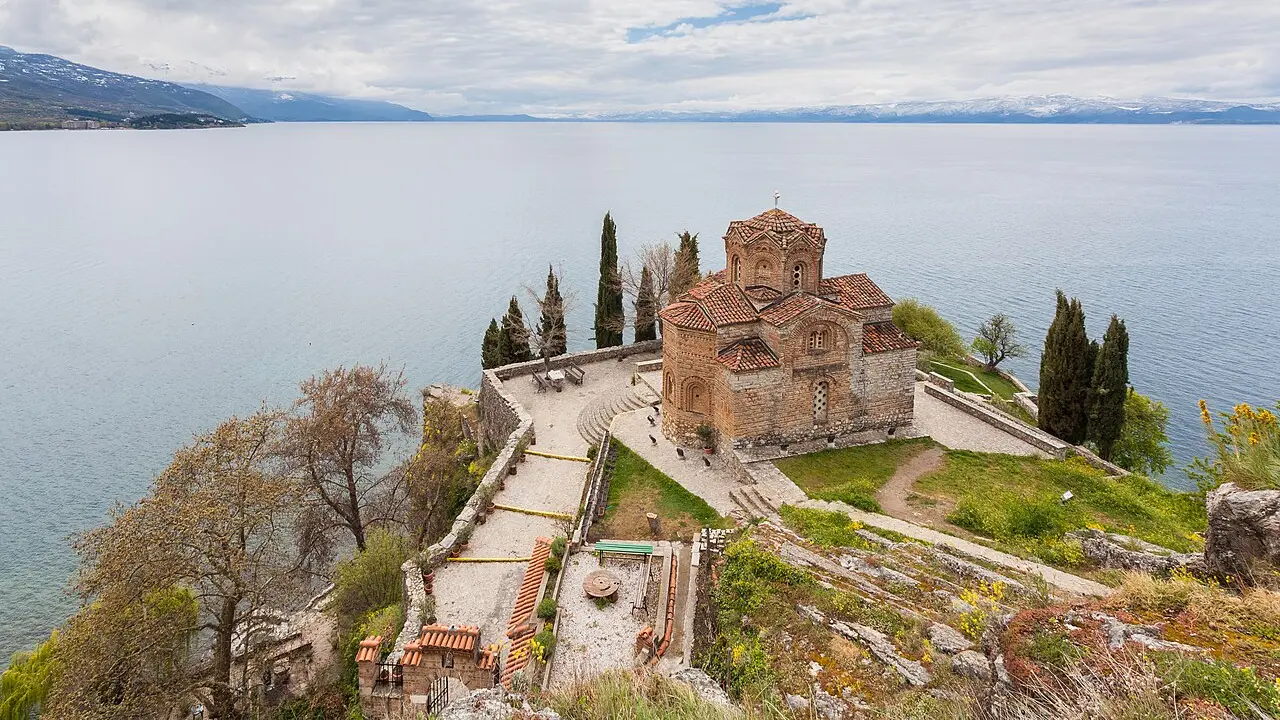
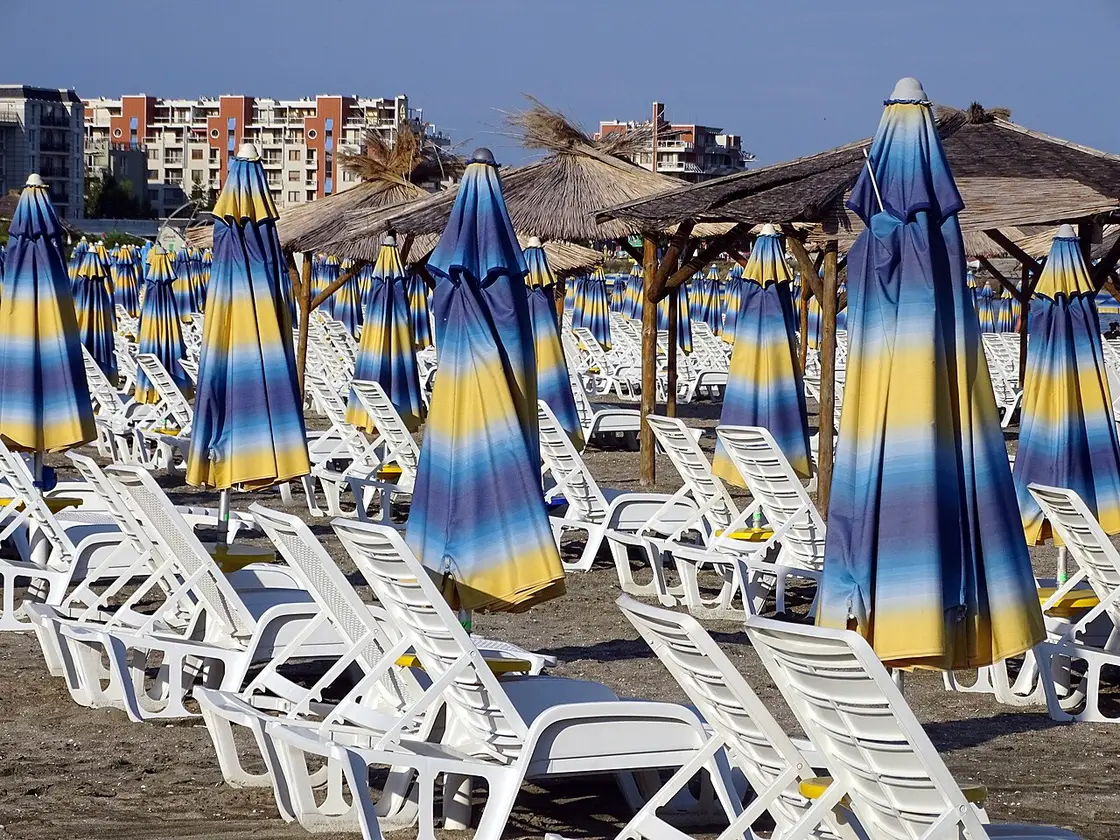
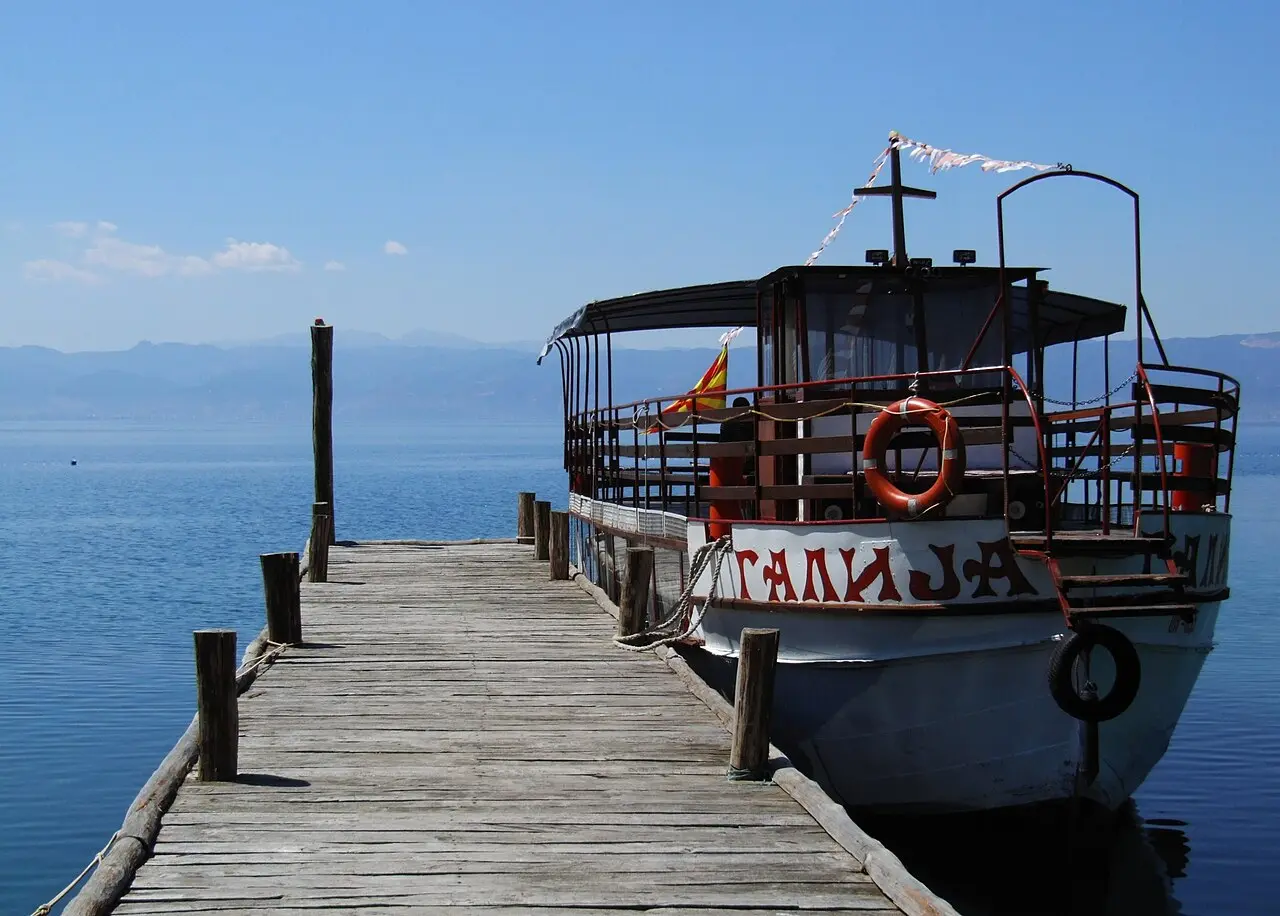
The headline consequence is water. Bulgaria has 378 kilometres of Black Sea coastline, with something like 130 kilometres of it sandy beach, and a summer resort season that runs from roughly May to October. North Macedonia is landlocked and has no sea at all. What it has instead is Lake Ohrid, and this is no consolation prize: it’s one of the oldest lakes on Earth, with sediments dated at three to five million years old, and at 288 metres it’s the deepest lake in the Balkans. People swim off its shore and its little town beaches in summer, and boats criss-cross it, so if a big beautiful lake scratches the same itch as the sea for you, Ohrid more than delivers. If you specifically want the sea, only Bulgaria has it.
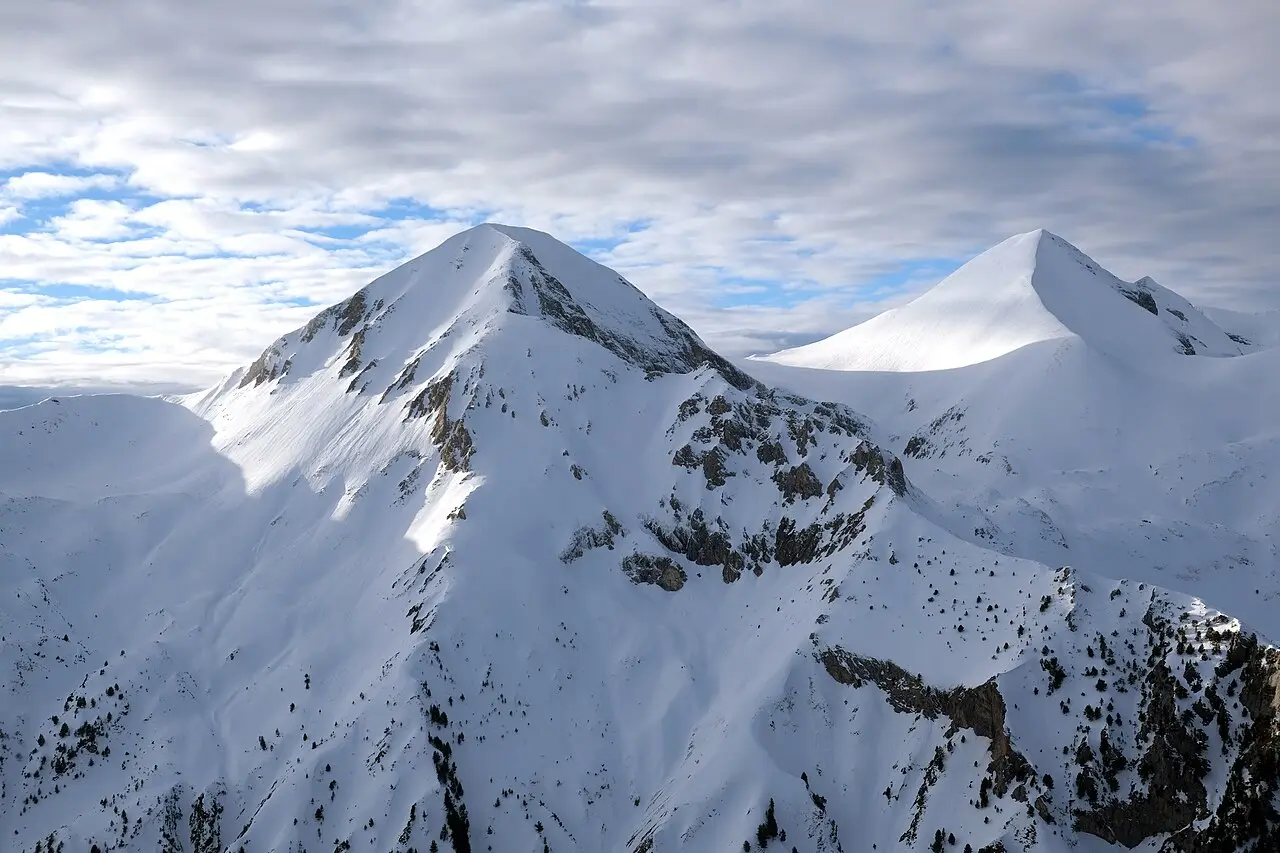
Both countries are seriously mountainous, so hikers win either way. Bulgaria edges it on sheer height: the Rila range tops out at Musala, 2,925 metres, the highest peak in the whole Balkan Peninsula, and Rila alone holds more than 200 glacial lakes, with Pirin and the Rhodopes adding more. North Macedonia is almost entirely mountains and basins, with the Šar and Baba ranges, but it doesn’t have Bulgaria’s alpine giants or the same density of marked long-distance trails.
What you actually go to see
Bulgaria’s list is longer, which is both its strength and, for a short trip, its problem. Sofia is a walkable capital of Roman ruins and gold-domed churches; Plovdiv is one of the oldest continuously inhabited cities in Europe, with a Roman theatre still in use; Veliko Tarnovo is the floodlit medieval capital on a river bend. Add the Rila Monastery, a UNESCO site since 1983 and the country’s spiritual heart, the Seven Rila Lakes high in the mountains, the ancient Black Sea towns of Nessebar and Sozopol, and ski resorts like Bansko, and you’ve far more than a week’s worth. The flip side is that Bulgaria is spread out; you’ll not see it all in one visit, and trying to will leave you on the road too much.
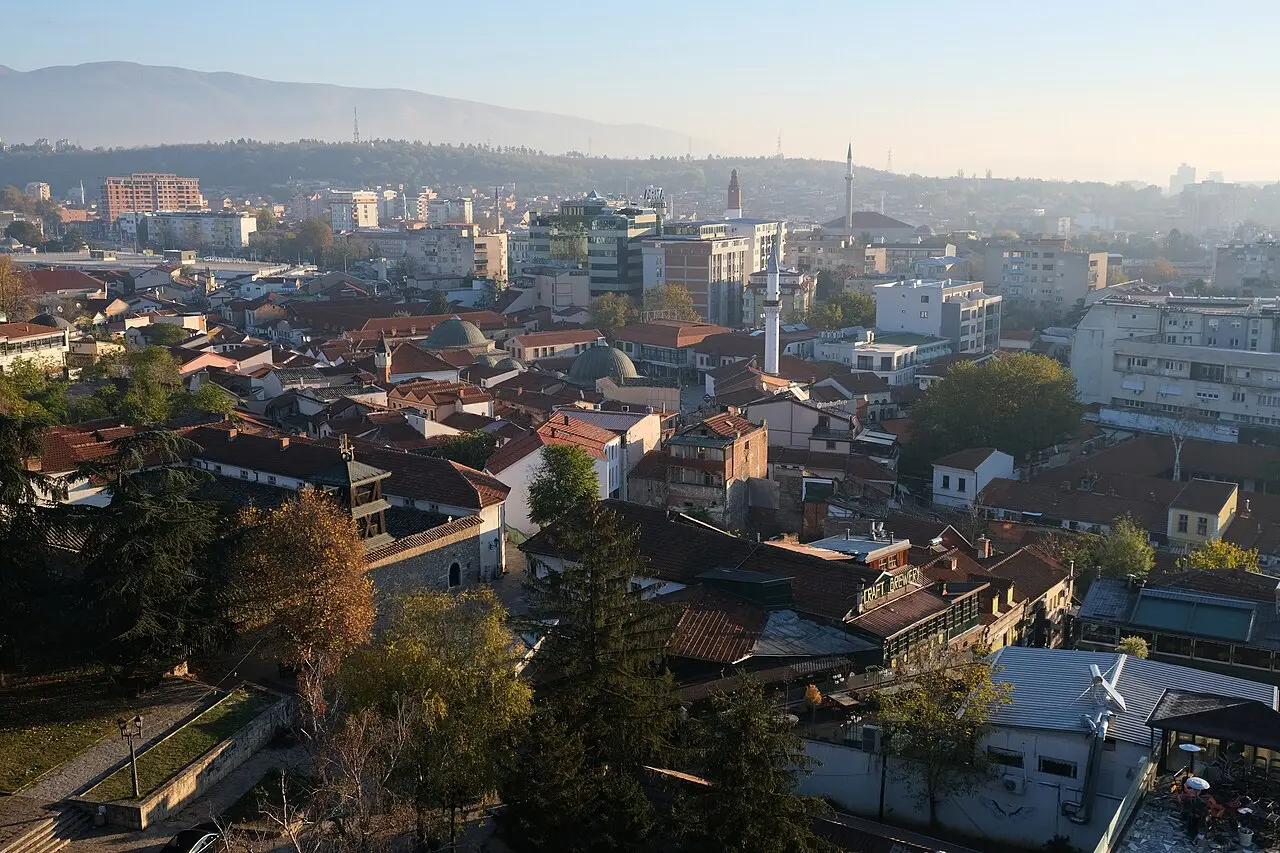
North Macedonia’s list is shorter but tighter, and that is the appeal. Almost every visit is built around three or four things. Ohrid is the star: a lakeside old town of cobbled lanes and small Byzantine churches, the most famous of them the tiny Church of St John at Kaneo perched on a cliff over the water, which is why Ohrid gets called the “Jerusalem of the Balkans”. Skopje, the capital, is a study in contrasts, with a genuinely atmospheric Ottoman Old Bazaar (Čaršija) on one bank, a 15th-century Stone Bridge and a hilltop fortress, and, on the other bank, a rebuilt centre stuffed with oversized statues and neoclassical facades from a 2010s makeover that visitors either find fun or faintly bizarre. Between the two sits Matka Canyon, thirty minutes from Skopje, where you can take a boat under emerald cliffs into caves. Add the neoclassical town of Bitola with the Roman ruins at Heraclea Lyncestis, and that’s most of the country’s greatest hits, all of it doable without rushing.
The honest way to frame it: Bulgaria gives you breadth, North Macedonia gives you a couple of unforgettable places without the driving. If you like ticking off a long list, Bulgaria. If you would rather go deep on a few spots and swim in a lake between them, North Macedonia.
Cost: both cheap, North Macedonia a little cheaper
Both are among the best-value countries in Europe, and you’ll not feel poor in either. Side by side, North Macedonia comes out cheaper on the ground, though by how much depends on who you ask. Crowd-sourced tools like Expatistan and Numbeo, built from users self-reporting what they paid rather than any operator’s price list, put the gap anywhere from under ten percent to a third - so treat that as a rough direction from traveller-submitted data, not a verified number. In practice, meals, coffee, local transport and small-town guesthouses tend to cost a bit less in North Macedonia, while the difference narrows in the busier Bulgarian resorts and central Sofia. For hard numbers rather than an index score, our Bulgaria cost guide breaks down real daily prices on the Bulgarian side.
The more useful thing to know is the money itself. Bulgaria switched to the euro on 1 January 2026, so prices there are now in euros and cards work everywhere a Western traveller expects. North Macedonia still uses the denar (MKD), not the euro. Euros are sometimes accepted informally in tourist spots, but you will get change in denari and you will need cash denari for buses, markets and smaller cafés, so plan to draw some from an ATM on arrival. It’s a small thing, but it catches people who assume the whole region is on the euro now. Bulgaria’s changeover is recent enough that it is worth reading up on; we cover what it means day to day in our guide to Bulgaria on the euro.
Getting in, and the border between them
Bulgaria is easier to reach and get around. It has three main airports taking international flights, Sofia, Plovdiv and Varna on the coast, a decent bus and train network, and far more budget routes from Western Europe. North Macedonia is served mainly through Skopje, with Ohrid’s small airport handling seasonal flights, so you’ll usually have fewer direct options and may connect. If effortless logistics matter, that tips towards Bulgaria; if you don’t mind a little more planning, it’s no barrier.
Here’s the part people get wrong, and it matters. Crossing between Bulgaria and North Macedonia is a real international border with passport control, and it is nothing like hopping between Bulgaria and its EU neighbours. Bulgaria became a full member of the Schengen area on 1 January 2025, so its borders with Greece and Romania are now internal and check-free. North Macedonia isn’t in the EU and not in Schengen (it’s a candidate for membership), so the frontier between the two is a genuine one, with your passport stamped and checked. For most Western travellers that is a formality rather than an obstacle: EU, UK, US, Canadian, Australian and many other nationalities enter North Macedonia visa-free for up to 90 days in any 180, and EU citizens can even use a national ID card. Rules can change and depend on your passport, so confirm your own entry conditions on the North Macedonian foreign ministry site (mfa.gov.mk) before you travel. Verified July 2026.
Doing both: the cross-trip that makes this a false choice
The best answer for a lot of people isn’t to choose. The two capitals are close: Sofia to Skopje is roughly 230 to 260 kilometres by road and takes about four to five hours by bus, with a handful of departures a day and fares starting around 26 euros. Buses cross at the Gyueshevo (Bulgaria) / Deve Bair (North Macedonia) checkpoint on the E871; there’s no useful direct passenger train, so the coach is the way. That short hop is what lets you combine a Bulgaria trip with an Ohrid extension without doubling your travel time. For tickets, stations and the border stop in detail, see Sofia to Skopje.
A ten-day plan that works: three or four days seeing Sofia and the Rila Monastery, a couple more in Plovdiv and, if you want the sea, a night or two on the coast, then the bus to Skopje for a day, on to Ohrid for two or three lakeside days, and back. If you would rather drive the whole thing and stop where you like, hiring a car in Sofia gives you that freedom, though check the rental firm allows taking the car into North Macedonia and that the insurance covers it, arranged when you book rather than at the desk; our car rental in Bulgaria guide explains how deposits and insurance excess work here. Whether you drive or bus it, a full Bulgaria leg slots neatly into our Bulgaria 7-day itinerary, which you can trim to make room for Ohrid. For the North Macedonia half, our neighbours over at Macedonia Guidebook have a thorough rundown of things to do in Skopje to start from.
When to go
Timing barely separates the two, since they share a climate: hot summers, cold and often snowy winters, and mild shoulder seasons. July and August are peak for both, and the only season when the Bulgarian coast and the shores of Lake Ohrid are in full swing, at the cost of crowds and higher prices. May, June and September are the sweet spot for either country if you’re there for cities, hiking and lakes rather than a beach tan, with warm days, thinner crowds and better value. Winter favours Bulgaria for skiing at resorts like Bansko, while North Macedonia goes quiet and Ohrid empties out. If you are building a trip around the weather, our month-by-month guide to the best time to visit Bulgaria applies almost as well to the North Macedonian side of the border.
So, which one?
Go to Bulgaria if you want a beach, a proper mix of cities and coast and mountains, skiing, or simply the most famous sights and the easiest logistics; it is the safer bet for a first trip to this corner of Europe and rewards a longer stay. Go to North Macedonia if you want Lake Ohrid, cobbled old towns and Ottoman bazaars, the lowest prices, and a rewarding trip you can finish in under a week. And if you can’t decide, remember that a four-to-five-hour bus is all that stands between them, so the real move is often to see Bulgaria and let Ohrid be the quiet, beautiful coda at the end.
Photos
Read also

Before you go · 12 min read
How Much Does a Bulgaria Ski Holiday Cost?
Verified · September 13, 2026A Bulgaria ski week usually lands around 770 to 1,170 EUR mid-range: lift pass, hire, bed, food and transfer from official 2025-26 tariffs.

Before you go · 9 min read
Day Trips from Sunny Beach: Nessebar & Beyond
Verified · August 28, 2026Day trips from Sunny Beach: Nessebar on the local bus, Sozopol via Burgas, Strandzha jeep days. Times, tickets and what fits in a day. 2026.

Before you go · 10 min read
Bulgaria or Greece: Which Beach Holiday Is Better?
Verified · August 27, 2026Greece wins on islands and water clarity; Bulgaria wins on price and sandy resort beaches. Who each suits, real 2026 costs and flights from the UK.

Before you go · 8 min read
Day Trips from Varna: Balchik, Kaliakra & Caves
Verified · August 26, 2026Day trips from Varna: Balchik Palace from €10, Cape Kaliakra cliffs, Aladzha rock monastery and Pobiti Kamani. Distances, buses and what fits in a day.