
Moving to Bulgaria: Residence, Taxes & the 10% Reality
UK, US, Canadian and Australian passports need a residence ground, not just a flight. Which routes fit, how 183 days works and what the 10% tax leaves out.
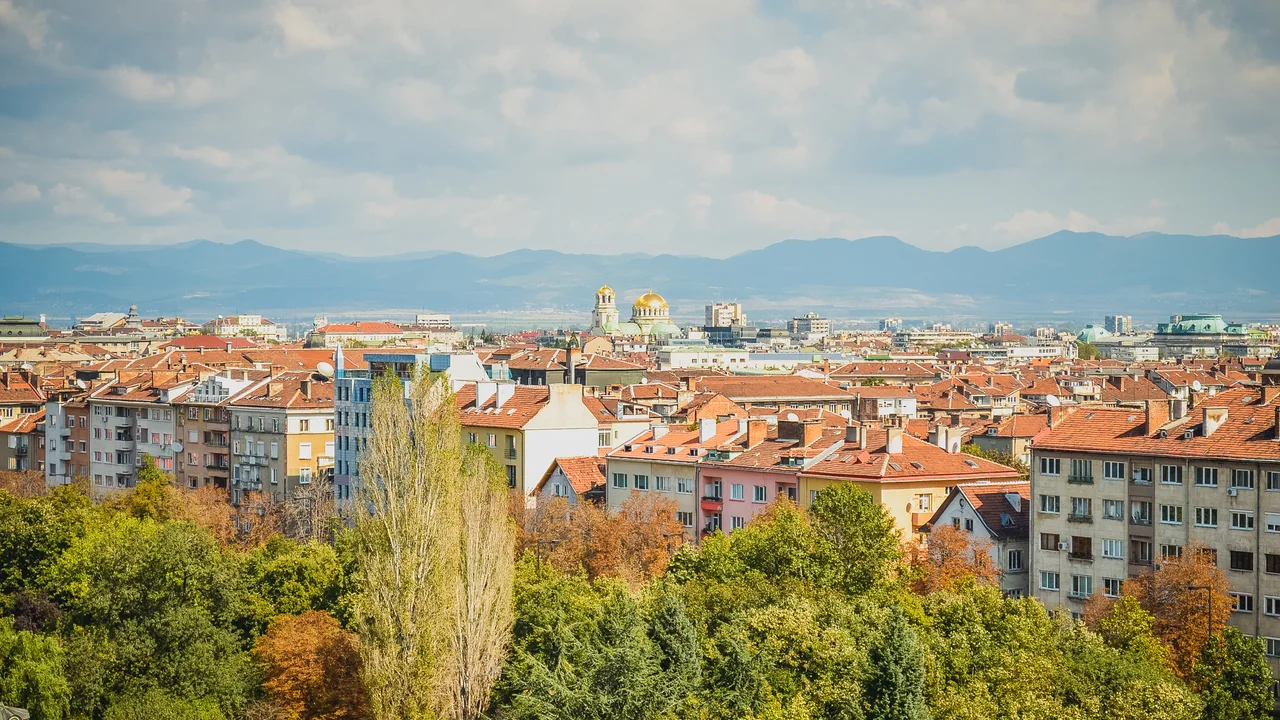
A UK, US, Canadian or Australian passport gets you 90 days in any 180 across the Schengen area, Bulgaria included, and nothing longer. To live here you need a residence permit on one of the grounds the Law on Foreigners lists, and that ground sets everything that follows: the paperwork, whether you may work, and when the clock to permanent residence starts. The flat 10% income tax is real, yet for anyone working for themselves inside Bulgaria it’s one of three bills, with social contributions and your old tax office queuing behind it. Everything below was checked on 27 October 2026 against official sources. It’s general information, not legal or tax advice, so confirm each step with the Migration directorate and a local accountant before you sign a lease.
Holders of EU, EEA or Swiss passports fall under a separate act, so the permit steps below are for everyone else. Our entry requirements guide covers short visits for all passports.
Which residence grounds fit a foreign adult
The Law on Foreigners lists a long run of grounds for a residence permit, from foreign journalists to relatives of refugees. For an adult from the UK (a third-country passport since Brexit), the US, Canada or Australia with no Bulgarian family, six come up in practice, and they’re all in the table below.
| Ground | Who it fits | What it asks for |
|---|---|---|
| Digital nomad permit | Remote employees of employers outside the EU, EEA and Switzerland, owners of such companies, and freelancers with at least a year of remote work for clients outside Bulgaria | Foreign income only; the nomad guide has the income formula and the steps |
| Pensioner | Anyone entitled to a pension from Bulgaria, the home country or elsewhere | Proof of the pension, a Bulgarian bank account that receives it, enough money to live on |
| Employee | Hired by a Bulgarian employer | A single residence and work permit that the employer applies for before your visa |
| Freelancer for Bulgarian clients | Self-employed inside Bulgaria | A separate freelance permit from the labour ministry |
| Company founder | Owns a business that employs locals | At least 10 full-time jobs for Bulgarian citizens, kept for the whole stay |
| Investor | Large property or company investment | A six-figure sum paid in full; the Foreign Ministry’s checklist words it as 600,000 leva, about 307,000 euro |
Two rows surprise people. Registering a Bulgarian company gives you no residence by itself: the business ground wants those ten jobs, and the startup route in the same law first needs an economy ministry certificate for an innovative or high-tech project. A flat in Sofia is no ticket either: the only property-linked ground is the investor line at the bottom, and it starts at a six-figure sum.
The pensioner route has a wrinkle in its order that’s easy to miss. The checklist asks for a letter from a Bulgarian bank confirming an account into which the pension will arrive, so the account has to exist before the visa, not after. Ask the bank ahead which papers it wants from a non-resident and whether you need to be there in person.
From the consulate to the Migration directorate
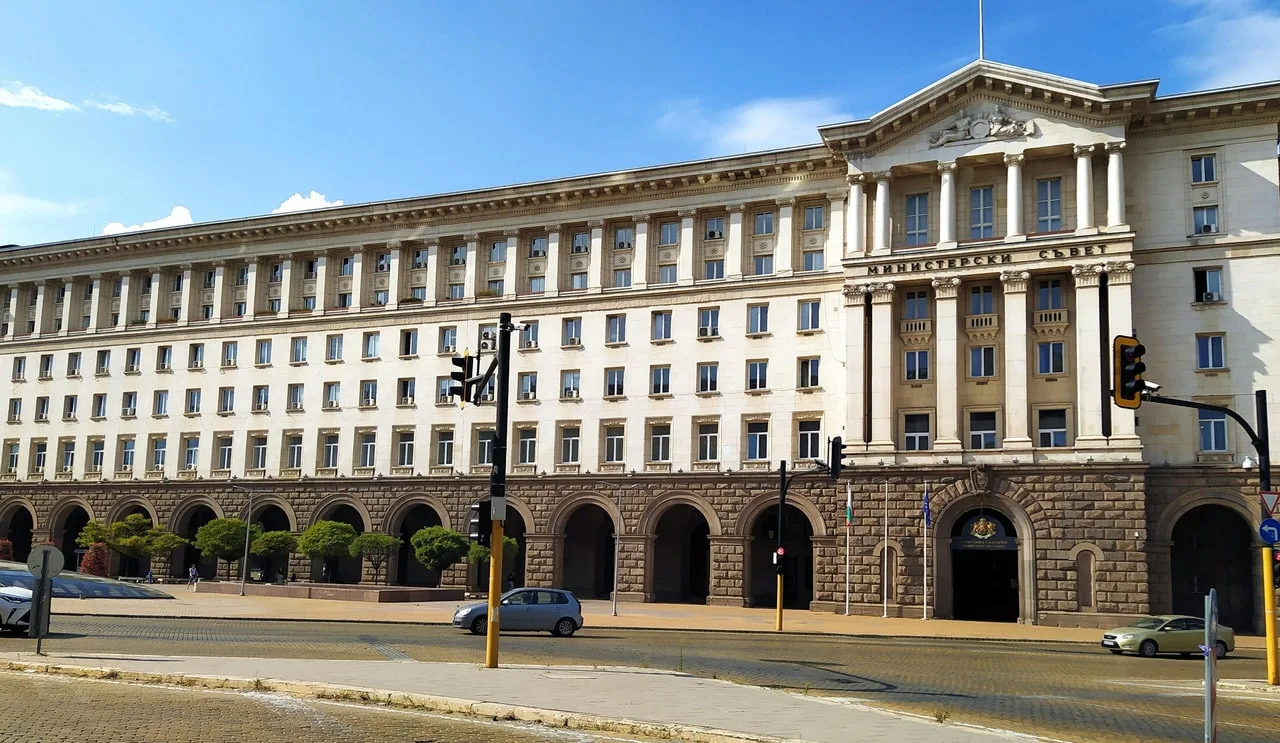
Every ground starts with a type D long-stay visa from a Bulgarian embassy or consulate, applied for no earlier than three months before you travel. The visa lasts up to six months and carries the right to stay up to 180 days. It’s your way in to the Migration directorate, where you apply for the permit itself in person, no later than 14 days before the visa expires. The law gives the directorate 14 days to decide, stretched by a month when the file needs more papers, and on most grounds the permit then runs for up to one year. A job with a Bulgarian employer works differently: the employer applies for a single residence and work permit, issued for up to three years, and has to come to the directorate with you within 14 days of your entry.
The Foreign Ministry’s checklist asks for the same core file in every case:
- a passport valid for at least 18 months, with two blank pages;
- an insurance policy for the whole stay from an insurer licensed in the EU, covering at least 30,000 euro including repatriation and emergency hospital treatment;
- proof of a home in Bulgaria and, for a rental, a notarised declaration from the owner that you may be registered at the address;
- a bank statement showing means to live on, which the checklist words as at least six monthly wages (pensioners show their pension);
- a police clearance certificate from your home country or the country where you live;
- Bulgarian translations and legalisation of the documents. Ask the consulate whether an apostille is enough.
The landlord line is the one that bites. A lease alone doesn’t do it: the owner has to state in front of a notary that they accept you being registered at their address. Ask for that before you pay a deposit, because a landlord who won’t sign it makes the lease useless for your application.
The means test deserves a sentence of its own. The law ties it to the minimum monthly wage (or minimum pension) for the length of your stay, and the consulate words it as six monthly wages. Either way it’s counted in minimum wages, which stand at 620.20 euro in 2026, so it’s a paper floor and says little about what you’ll spend. For a working budget, the nomad guide adds up a month in Sofia and Bansko, and is Bulgaria expensive covers the visitor side. Since 1 January 2026 prices are in euro, which Bulgaria on the euro explains.
Health insurance: private first, public later
On the permits above you’re a “continuous” resident in the law’s terms, which on most grounds means a permit of up to one year. The NRA states that foreigners on short-term or continuous residence owe no health contribution and pay the cost of their care themselves, unless a treaty says otherwise. Compulsory public insurance starts on the day you receive a long-term permit (a five-year term) or a permanent one. The exception is a job with a Bulgarian employer: the NRA lists holders of a single residence and work permit and of an EU Blue Card among the compulsorily insured, so their health contributions go through payroll from the start. For everyone else, your private policy is your health system at the start, and you’ll want to read it like one: hospital stays, repatriation, and every line of the consulate’s list.
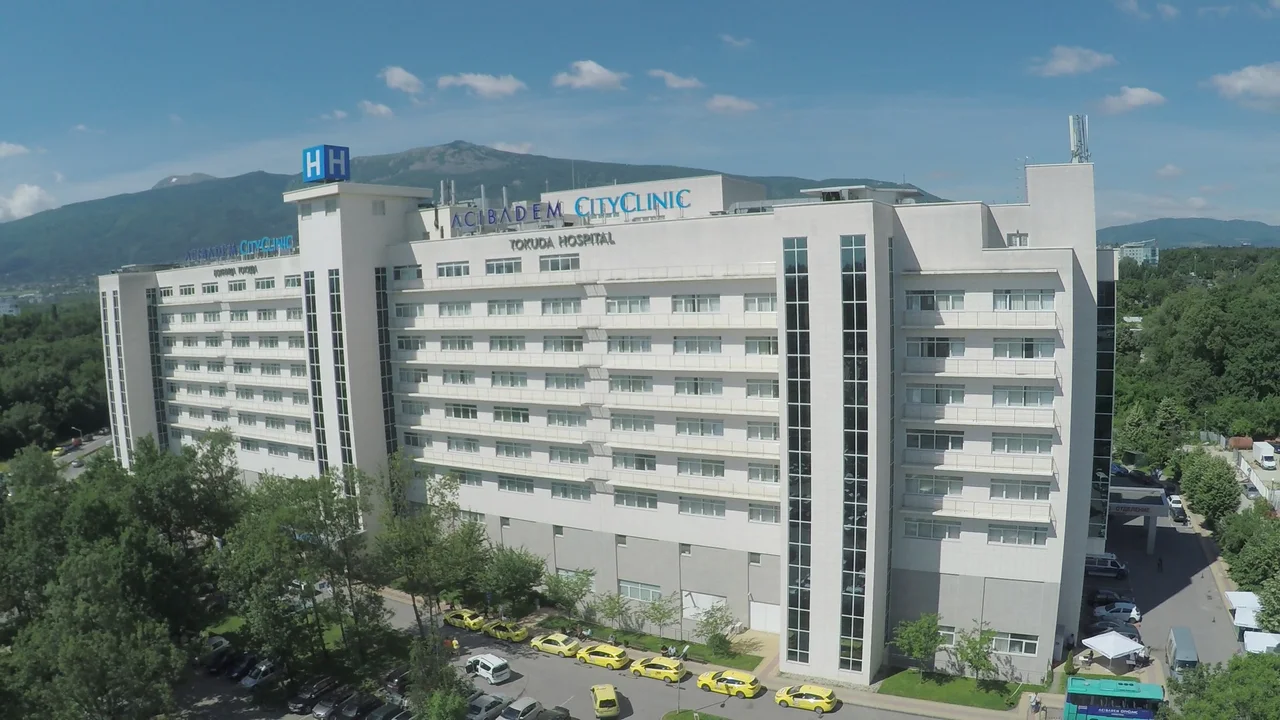
Cover billed every four weeks changes how you pay, not how long you need it. Unless a Bulgarian employer hires you, public insurance doesn’t begin until a long-term or permanent permit, so plan on private cover staying your health system until then, not just for the first months. Don’t buy any policy on the strength of a sales page, though; send the policy wording to the consulate’s visa desk and ask whether it meets their list. If you draw a UK State Pension, ask the NHS about an S1 form as well: GOV.UK says Bulgarian residents who receive one may be entitled to state healthcare paid for by the UK.
The long game is permanent residence, which the law opens after five years of lawful, uninterrupted residence, with limits on time spent abroad. That’s a reason to prefer a ground that keeps renewing for as long as it applies, such as work, a pension or family, over one with a built-in time limit like the nomad permit.
Tax residence runs on its own clock
The permit and tax residence are separate tests run by separate offices. The NRA treats you as a Bulgarian tax resident, whatever your citizenship, if any one of these holds:
- you have a permanent address in Bulgaria;
- you spend more than 183 days here in any 12-month period;
- your centre of vital interests is here, judged by family, property, where you work and where you manage what you own.
Three details change how you count. The window is any 12 months, rolling, not a calendar year, so don’t reset your count on 1 January: 120 days from September to December and 70 more the following March to May already cross the line, though neither calendar year comes near 183. Arrival and departure days count as separate days of stay, while a stay only for study or medical treatment doesn’t count. And a permanent address doesn’t make you a resident if your centre of vital interests is elsewhere. A permit isn’t on the list at all, so you can hold one and stay a non-resident, or cross 183 days without one.
Residents are taxed on income from Bulgaria and abroad; non-residents only on Bulgarian sources. Keep a day log from the day you land. A spreadsheet beats arguing about boarding passes later.
What the 10% leaves out
The rate is 10% on the annual tax base, and the NRA’s freelancer page says what goes into that base: income minus recognised costs (a flat 25% for freelance income) and the contributions you paid. That’s the whole income tax. The other bills sit right next to it.
Self-employed people, freelancers included, pay compulsory contributions on an insurable income they choose between a floor and a ceiling, which from 1 August 2026 are 620.20 and 2,300 euro a month. The full rate is 27.8%: 19.8% for pensions (including the second pension fund) and 8% for health. The health share follows the rule in the section above, so on a permit of up to one year you don’t owe it and your compulsory rate is 19.8%: about 123 euro a month at the floor and about 455 at the ceiling (our arithmetic from those figures). From a long-term permit the 8% joins it, which makes about 172 and 639 euro. Sickness and maternity cover is optional on top. If a Bulgarian employer hires you instead, the employer withholds tax and contributions through payroll, so ask for a gross-to-net breakdown before you accept an offer. Whether contributions apply to a nomad paid from abroad depends on the set-up, and that question goes to the accountant first.
Then there’s the tax office you thought you’d left. Moving doesn’t end your old residence on its own, and each country runs its own test:
- US: citizens stay taxed on worldwide income wherever they live, and the foreign earned income exclusion and foreign tax credit work only if you file a US return.
- UK: the Statutory Residence Test has automatic UK tests, automatic overseas tests and a sufficient-ties test.
- Canada: the CRA looks at residential ties, mainly a dwelling place, a spouse or common-law partner and dependants.
- Australia: four tests (resides, domicile, 183-day and Commonwealth superannuation), and the domicile test can keep you resident after you leave.
Whether a treaty with Bulgaria relieves double taxation depends on your country, and the NRA publishes its treaty list. Bring that to an adviser who knows both systems.
The first weeks, in order
- Land connected. A data SIM or eSIM sorted before the flight saves a hunt for a shop on day one; our Bulgaria eSIM guide compares the options.
- Apply for the permit. Go to the Migration directorate in person no later than 14 days before your visa expires, with the whole file from the consulate list; if a Bulgarian employer hired you, go with the employer within 14 days of entry.
- Start the day log. The tax clock counts presence, not paperwork.
- Open a bank account. Pensioners already have one from before the visa; everyone else, ask which papers the bank wants from a permit holder. Money in Bulgaria covers cards, ATMs and cash once you’re settled.
- Book an accountant before any deadline arrives. Freelancers pay advance tax by 30 April, 31 July and 31 October and file the annual return between 10 January and 30 April.
Questions worth paying a professional for
Four answers depend on your file, not on a guide:
- Which ground fits my income and plans, and may I work for Bulgarian clients on it?
- Do contributions apply to my foreign income, and from which month?
- Which country counts as my tax residence on each day of the first year, and what does my home tax office need to see?
- When does my ground let me move to a long-term or permanent permit, and what does the limit on time abroad mean for my travel?
The official starting points are the Migration directorate at the Interior Ministry, the Foreign Ministry’s consular pages for the visa and the National Revenue Agency for tax. This page was checked on 27 October 2026; check the dates again before you act.
Good to know
Residence, health-insurance and tax rules change, and this page is general information, not legal or tax advice. It was checked on 27 October 2026 against the Bulgarian National Revenue Agency (NRA) and National Social Security Institute pages, the Foreign Ministry's long-stay visa checklist, a government press release of 10 December 2025, the Law on Foreigners (consolidated text as amended to June 2026) and the Interior Ministry's service card for the permit (as archived in December 2025), so check each ground with the Migration directorate of the Interior Ministry and a Bulgarian accountant before you act. The euro figures for contributions are our arithmetic from the NRA rates and the 2026 insurable-income limits.
Details checked: October 27, 2026
Read also

Relocation · 14 min read
Bulgaria Digital Nomad Guide
Verified · August 9, 2026Bulgaria now has a digital nomad visa: the income rule, flat 10% tax, real living costs in euro and fast internet - a 2026 guide for remote workers.

Transport · 13 min read
Bulgaria Border Crossings by Car: Turkey, Serbia & EES
Verified · October 31, 2026Driving across Bulgaria's borders in 2026: where EES applies, Kapitan Andreevo works, Danube bridge tolls, rental permission and the green card.

Transport · 12 min read
Taxis in Bulgaria: No Uber or Bolt Cars, Real Fares
Verified · October 24, 2026Uber and Bolt send no cars in Bulgaria. Use TaxiMe or Yellow!, read the windscreen sticker, know Sofia's 2026 per-km caps and the airport taxi queue.

Before you go · 7 min read
Can You Stay at Rila Monastery? Rooms & Rules
Verified · October 10, 2026Yes, Rila Monastery rents rooms to overnight guests, by phone only, no online booking, no published rate. How to book, the house rules and the catches.