
Sofia to Skopje Bus 2026: From €27, 5.5 Hours
Sofia to Skopje by bus from €26.99 in about 5.5 hours, Citylines €29, transfer from $246. Which Sofia terminal, the border and the clock trap.
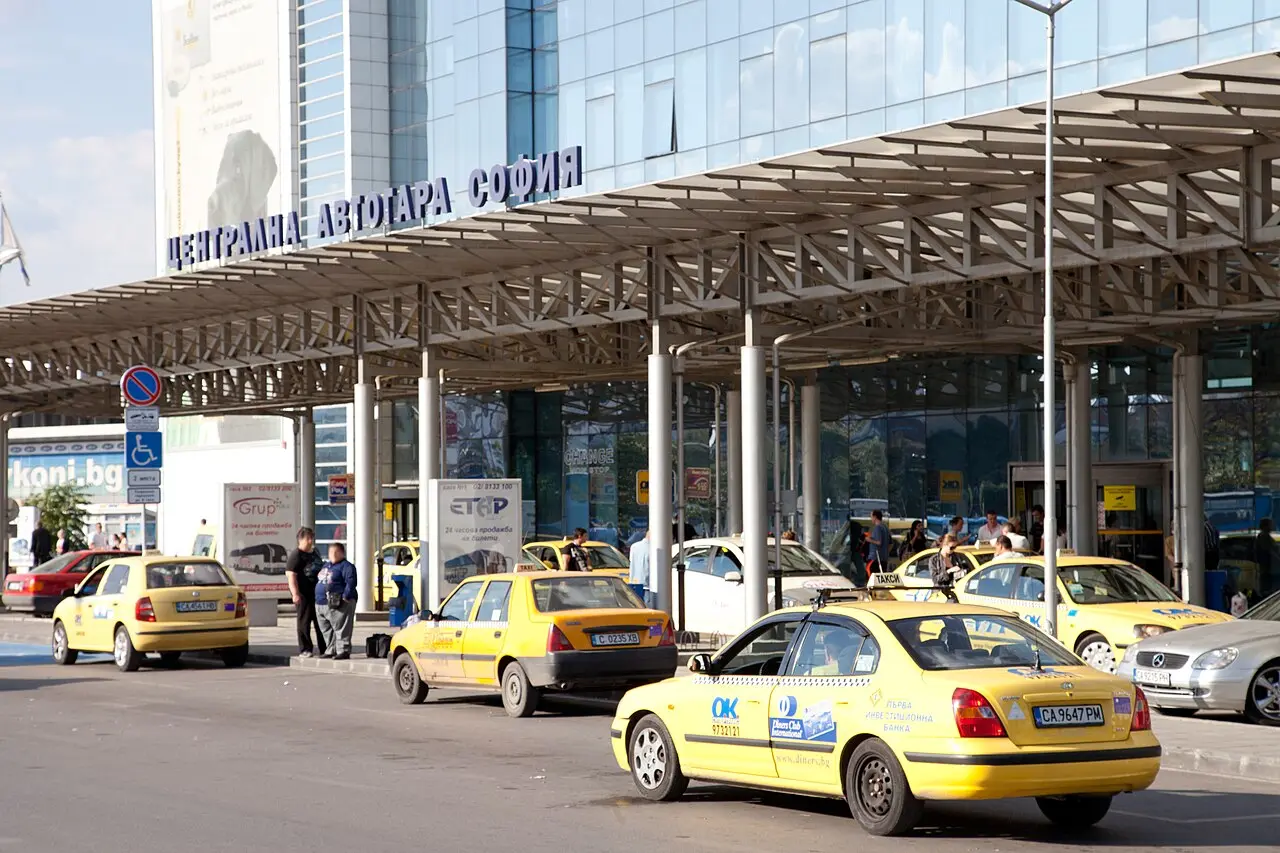
Sofia and Skopje sit about 230 km apart on the road, and the hop is simpler than the map suggests once you accept three truths: there’s no useful passenger train, you’ll clear a real passport border, and the coach is what almost everyone takes. On 12 August 2026 FlixBus published Sofia-Skopje fares from €26.99, Citylines showed €29 on its own booking page, and Kaleia’s public timetable lists two daily departures. Confirm anything time-sensitive before you travel - Balkan coach prices and platform numbers move with the season.
The short answer
| Option | Time (one way) | Price (one way) | Best for |
|---|---|---|---|
| Direct bus | about 5-5.5 h door to station | from about €27 (about $29 / £23); Citylines from €29 | almost everyone |
| Driving yourself | about 3.5 h driving + border | fuel + hire extras + BG e-vignette + MK motorway tolls (plazas - no vignette) | stops, luggage, your own clock |
| Private transfer | about 3.5-4 h door to door | from about $246 per vehicle (Kiwitaxi Business, 12 Aug 2026) | groups, late bags, hotel-to-hotel |
| Train | not a real option yet | n/a | wait for Corridor VIII around 2030 |
One corridor, two departure points, and this page is the Sofia one. The operators and the border are shared, so there is no point pretending otherwise - what changes is everything you do before boarding and after landing. From here you need to know which of Sofia’s four bus hubs your ticket actually means, that Platform 41 at Central is the loading bay, that you are leaving the euro for the denar rather than arriving into it, and that the clock runs backwards across this border so the arrival time flatters the journey. Travelling the other way, from Skopje, the practical questions invert - our neighbours at Macedonia Guidebook cover Skopje to Sofia from that side. If you’re still choosing which country to prioritise, start with North Macedonia vs Bulgaria.
The bus: who runs it and what it costs
FlixBus is the clearest public route card for English speakers. Its Sofia-Skopje page quotes fares from about €27 (live floor was €26.98-€26.99 on the writing date), lists the distance as 230 km, and shows a daily window from 07:00 to 17:30. The coach itself is operated as Kaleia line CBS905, and FlixBus notes that CBS905 leaves Sofia Central from Platform 41. That figure is the carrier network’s published floor, not a travel-search guess - book early and midweek if you want to land near it.
Citylines is the second seller worth opening from the Sofia side. A live search around mid-August 2026 showed the fare pinned at €29 (the price filter sat at min=max 29). That matches the sister listing for Skopje-Sofia on 11 August 2026: Citylines €29. Citylines’ own search UI can show a duration near 3h 40m on its clock; treat that as the operator’s display, not door-to-station wall-clock. With the border and the timezone footnote below, budget about five to five and a half hours the way Kaleia marks arrivals. Treat €29 as the solid “buy today” number when FlixBus’s cheapest seat has already gone - don’t assume last year’s leva price still applies.
Kaleia publishes the operator timetable in English. As of the 29 April 2026 update, Sofia to Skopje runs:
- 07:00 Sofia → 11:00 Skopje (Macedonian local time)
- 17:30 Sofia → 21:30 Skopje (Macedonian local time)
The double-star on those arrivals is Kaleia’s own footnote: times marked that way are in North Macedonian local time. Bulgaria runs on Eastern European Summer Time in August (UTC+3); North Macedonia sits on Central European Summer Time (UTC+2). When you cross the border the clock jumps back an hour, which is why a five-hour ride can look like four hours on a naive timetable. Budget about five to five and a half hours station to station, and don’t stack a tight evening connection in Skopje on the afternoon bus.
Stations: Central vs Serdika, and the Skopje fee
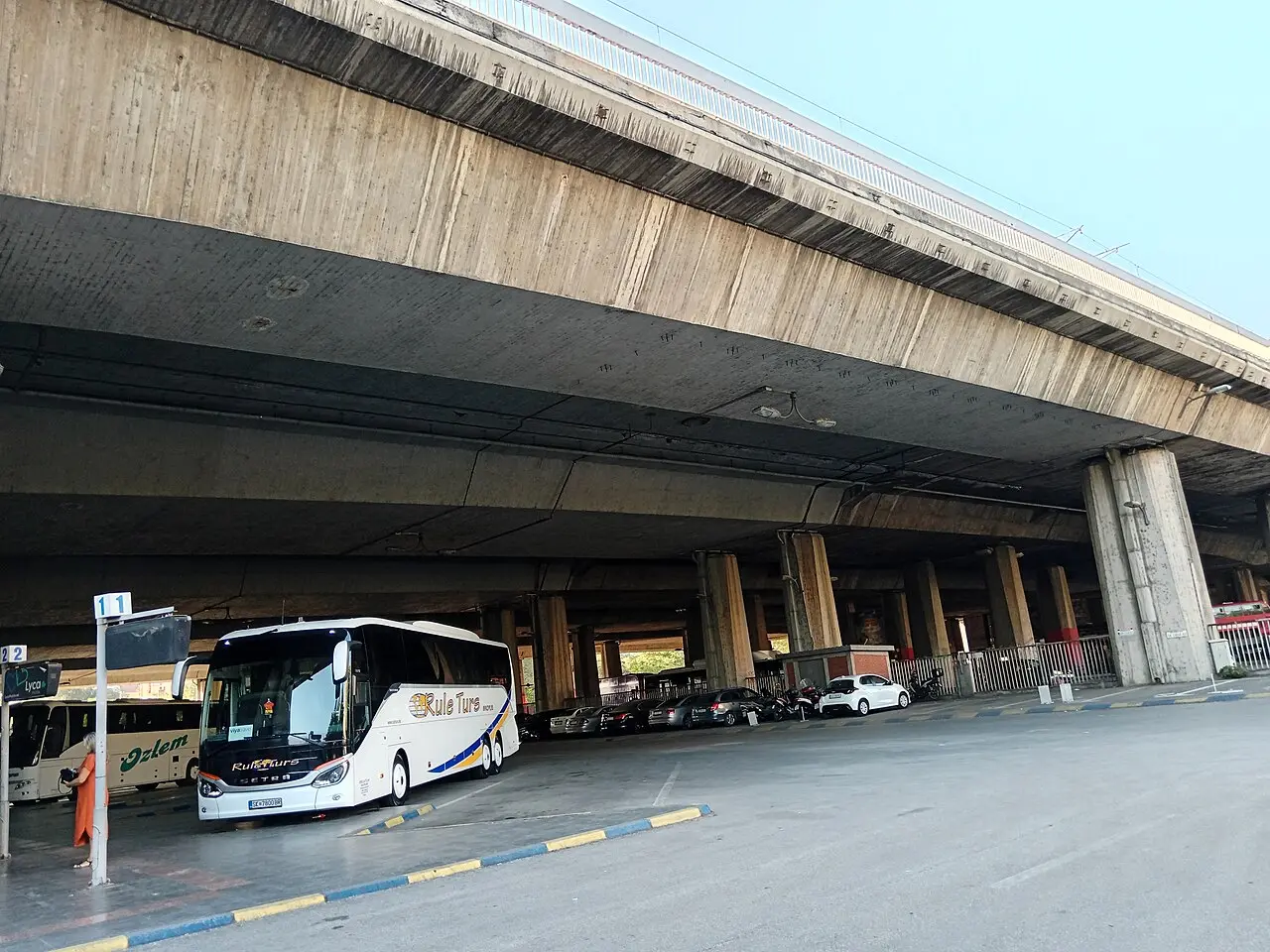
Kaleia’s schedule page puts it bluntly: Sofia-Skopje buses leave from the Central Bus Station, not Bus Station Serdika. The two hubs sit a short walk apart on Boulevard Knyaginya Maria Luiza, next to the railway station, so ending up at the wrong desk is annoying rather than fatal - but Platform 41 at Central is where CBS905 is supposed to load. FlixBus’s stop list also mentions Serdika (Maria Luiza 102) and Central, so trust the stop printed on your ticket, not a forum post from 2019.
On arrival you land at Skopje’s central bus station (FlixBus lists Nikola Karev 20). FlixBus also flags a small station entry fee of 50 MKD / about €0.85 - cash denar is the practical answer. This is the direction where the currency question bites, and it bites on the way out. Sofia has been a euro city since 1 January 2026, so you leave with a wallet full of euro and arrive somewhere that does not take it. North Macedonia runs on the denar. Pull a small amount at the Skopje station or your first ATM - enough for the station fee, a taxi and a coffee - and leave the rest on card.
Book online if the date is fixed. The 17:30 fills before the 07:00 does, and it fills first on summer Fridays when the diaspora heads west. Outside peak, buying at the desk usually works, but it’s the Friday you’ll regret turning up without a seat. For how coaches fit into the wider network inside Bulgaria, see getting around Bulgaria.
The Gyueshevo / Deve Bair border
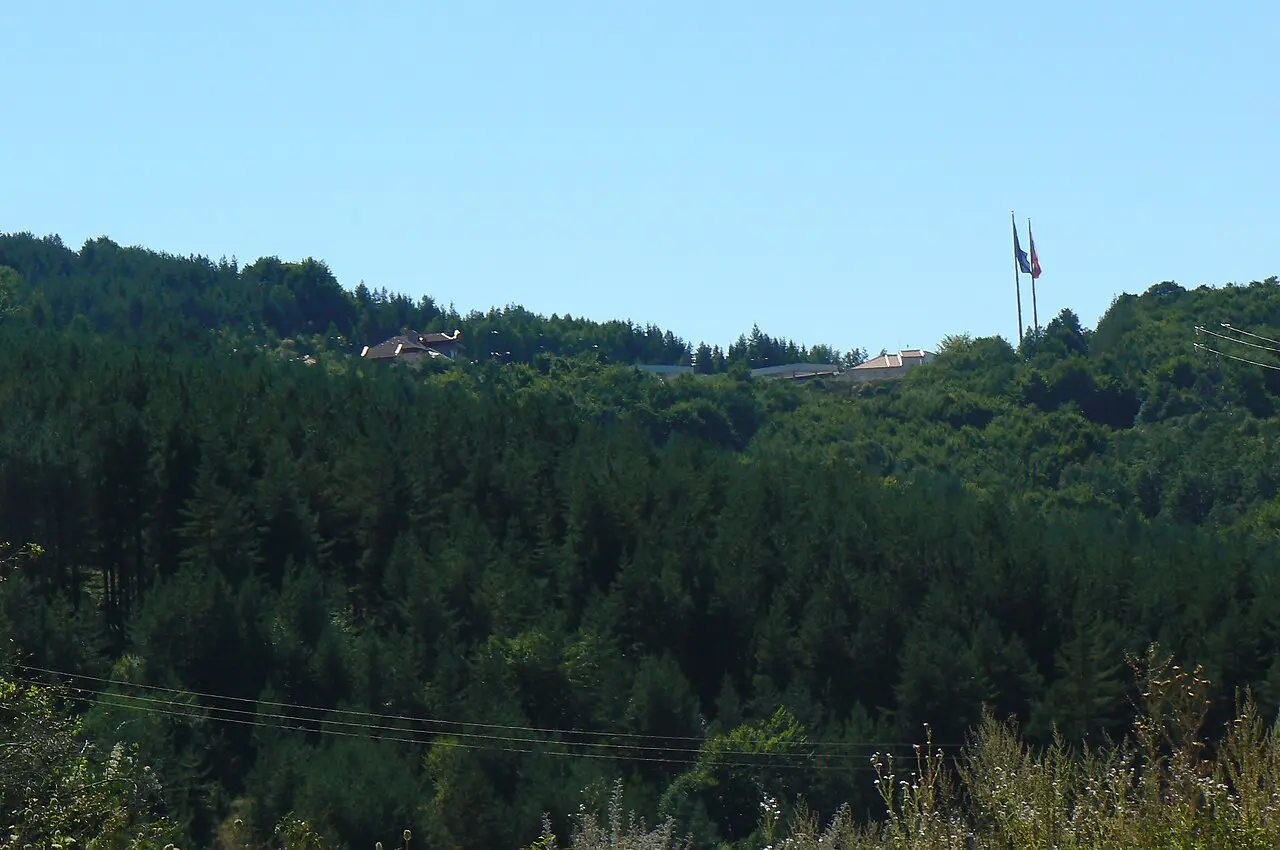
There is exactly one crossing on this road, so there is no route decision to make: Gyueshevo on the Bulgarian side, Deve Bair on the Macedonian side, both on the E871. This isn’t an internal Schengen hop. Bulgaria’s land borders joined full Schengen on 1 January 2025, but North Macedonia is outside the EU and Schengen, so you get a proper exit check leaving Bulgaria and an entry check into North Macedonia. Coaches usually collect passports or walk passengers through as a group. Quiet midweek mornings can take minutes; Friday evenings and summer Sundays can chew up the better part of an hour. Pad your plans.
Documents in short: most Western passports (US, UK, Canada, EU/EEA and many others) enter North Macedonia visa-free for up to 90 days in any 180, and EU citizens can often use a national ID card. Rules depend on your passport and they change - confirm on the North Macedonian foreign ministry site (mfa.gov.mk) before you go. Coming back into Bulgaria later, you are re-entering the Schengen external border, so biometric EES registration may apply on first entry; see Bulgaria entry requirements. Verified August 2026.
Driving it yourself
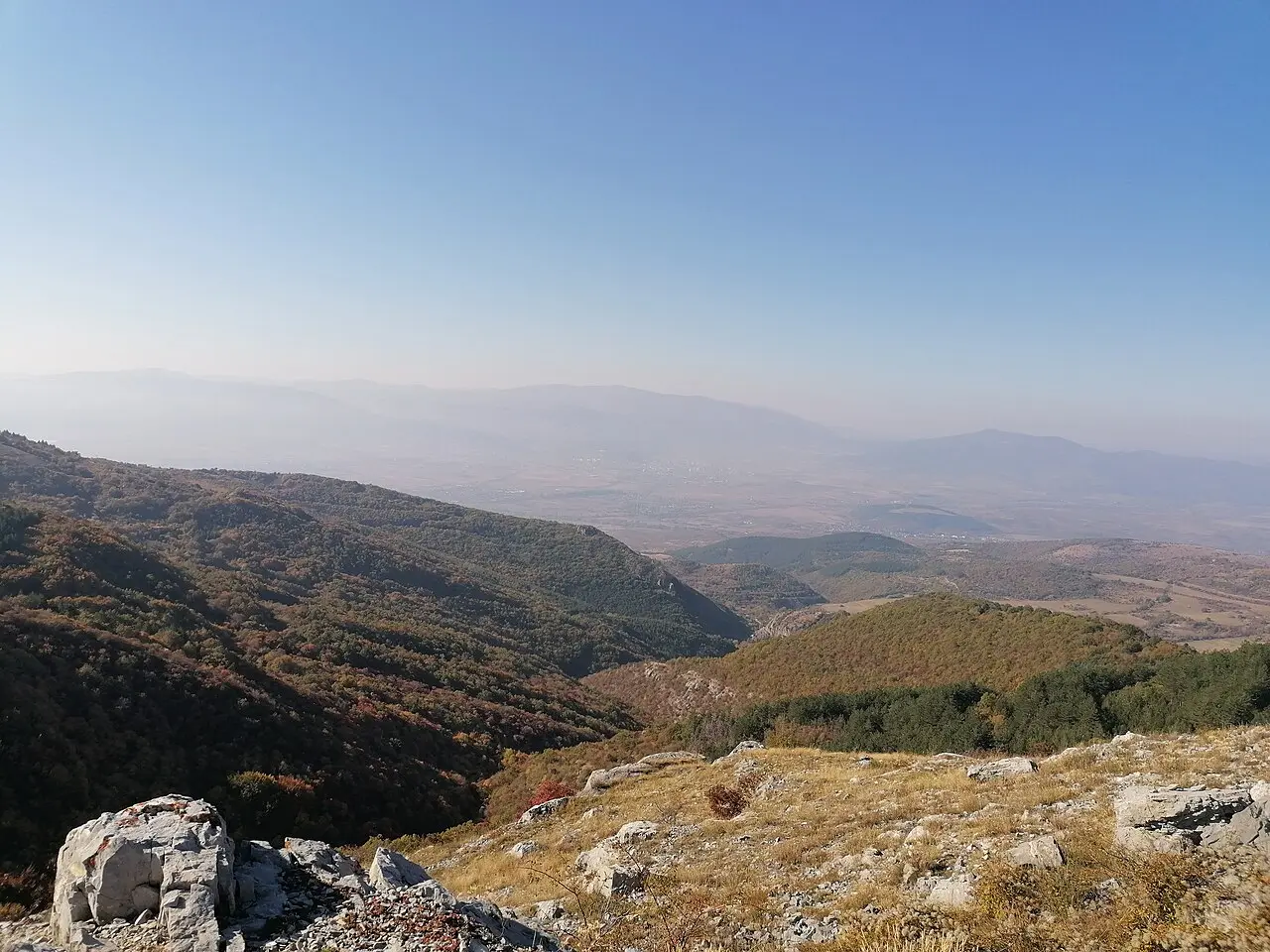
OSRM routing on OpenStreetMap puts Sofia to Skopje at about 229 km and 3 hours 21 minutes of pure driving with no border wait. FlixBus’s 230 km is the same corridor measured another way. On the ground you leave Sofia toward Kyustendil, climb to Gyueshevo / Deve Bair, then drop through Kriva Palanka and Kumanovo into Skopje. The half worth the drive is the climb out of Kyustendil: two lanes, pine and beech, and a pass that closes the conversation about winter tyres for you.
If the car is a Bulgarian hire, declare cross-border travel into North Macedonia at the booking stage. Raising it at the counter on departure morning is the version that fails. You’ll need the company’s written permission and a Green Card that lists North Macedonia; without both, the foreign leg can void the cover. How deposits and excess work here is in car rental in Bulgaria. Road rules, speed traps and the Bulgarian e-vignette for the motorway stretch out of Sofia are in driving in Bulgaria. Light-vehicle vignette prices in force from 1 August 2026: €5.30 daily, €6.60 weekend, €10.00 weekly (official BGTOLL table).
Spend leftover euro coins before you need denar for small station fees on the Macedonian side, or just use a card once you are through. A one-way hire (collect in Sofia, leave it in Skopje) is the plan that quietly dies at the counter: most Bulgarian desks either decline it outright or attach a repatriation charge that dwarfs the rental. Get any yes in writing before you build the trip on it.
Private transfer: when the bus is the wrong tool
A pre-booked car is not a coach with fewer seats - it is a different product at four times the price. What the money buys is a departure time you choose, a pickup at your Sofia address instead of Platform 41, and no repacking at the border. On Kiwitaxi’s live Sofia-Skopje page for 12 August 2026, the cheapest listed class was Business from $246 per vehicle (about €225 / £185), with a claimed run time of about 3 hours 35 minutes. Minivan and small-minibus quotes sat around $275; larger minibuses climbed from $563. Those are per-vehicle floors for that date, not per-person fares - split three or four ways it lands close to four bus seats, which is why groups with Bansko ski bags keep choosing it.
Before you pay, check whether the price is per vehicle, whether border waiting time is included, and where exactly the driver meets you in Sofia. Quotes move with the date, so price your own before deciding.
No train (yet)
Older maps still tease a Sofia-Skopje railway. There isn’t a through passenger service you can book today. Bulgaria and North Macedonia are building the missing Deve Bair cross-border link as part of Corridor VIII; official comments in early 2026 still point at around 2030 for a working connection. Until a timetable exists, don’t trust any “train” listing that pretends otherwise.
Which option to take
For almost everyone the bus is the right call: from about €27-29, two useful daily departures, and you only need a passport and a bit of patience at Gyueshevo. Take the 07:00 if you want daylight and an afternoon in Skopje; take the 17:30 if you’re fine arriving late and sleeping soon after. Choose the car if you want to stop in Kyustendil or Kriva Palanka, travel with awkward luggage, or dislike handing a border day to someone else’s timetable - just sort the hire paperwork first. Pick a private transfer when the group size or the bags make the coach feel silly, and expect a few hundred dollars for the vehicle, not a coach fare.
Heading a different way out of Sofia? The northern hop is Sofia to Belgrade (from about €38, a longer day and another real border), and the southern one is Sofia to Thessaloniki (Schengen, both on the euro, from €18.48). If Skopje is the start of a longer North Macedonia loop, land, drop the bag, and walk toward the Stone Bridge - the Old Bazaar is the payoff that makes the five hours feel short.
Read also

Transport · 12 min read
Sofia to Borovets: 70 km, ~1h, Bus from €5
Verified · September 5, 2026Sofia to Borovets (~70 km, 1-1.5h): public bus via Samokov from ~€5, seasonal shared shuttles from €8/pp, private transfer from ~€79.

Transport · 11 min read
Plovdiv to Pamporovo: Bus & Ski Transfer
Verified · September 3, 2026Plovdiv to Pamporovo is about 80 km via Chepelare. Bus from Rodopi station, winter airport transfer, or drive - how to choose.

Transport · 9 min read
Sofia to Sunny Beach: Bus, Train & Transfer
Verified · August 24, 2026Direct coaches Sofia to Sunny Beach year-round (~7h, from ~€21), train only to Burgas, or a fixed private transfer. Times, stops and when each wins.

Transport · 11 min read
Burgas to Sozopol Bus 2026: €3.37, 40-50 Min
Verified · August 21, 2026Burgas South Sector 5 to Sozopol: bus 3.37 euro, about 40-50 min; taxi/transfer about 30-40 min. Buses about every 30 min. Checked Aug 2026.