
Sofia to Thessaloniki Bus 2026: From €18.48, 4h40
Sofia to Thessaloniki by bus: from €18.48 in 4h40-5h45, no border stop since Schengen, both on the euro. Driving, tolls and the honest day-trip verdict.
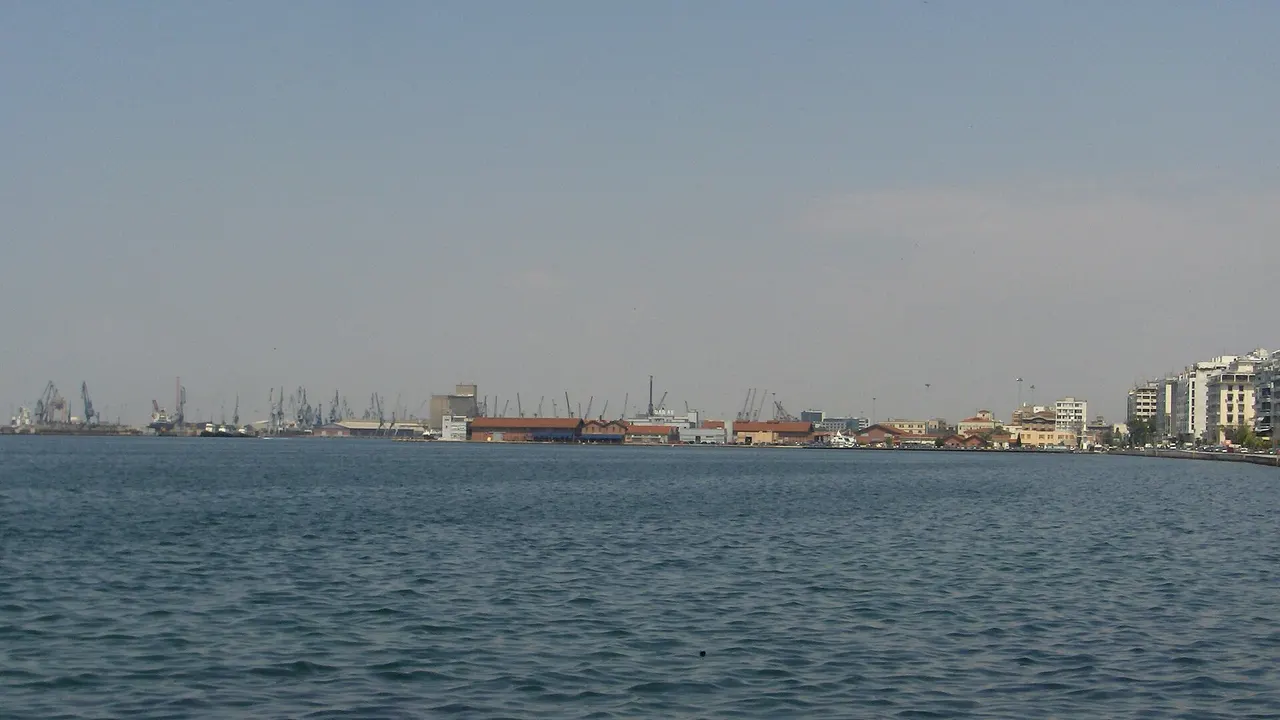
Sofia and Thessaloniki sit about 293 km apart, and the trip is easier than the map makes it look. Bulgaria’s land border went fully Schengen at the start of 2025, so there’s no passport queue at Kulata-Promachonas any more, and both countries now price everything in euro, so there’s no currency to juggle either. A direct bus covers the distance in well under five hours for less than 20 EUR, which makes it the obvious choice for almost everyone. A car buys you a couple of interesting stops along the way, and the train - despite what a few old timetables still claim online - isn’t currently part of the picture. Numbers below are checked as of 9 August 2026; confirm anything time-sensitive before you travel.
The short answer
| Option | Time (one way) | Price (one way) | Best for |
|---|---|---|---|
| Direct bus | 4h40-5h45 | from €18.48 (~$20 / £16) | almost everyone |
| Driving yourself | ~4-4.5h + fuel | ~€8.55 tolls and vignette | flexibility, stops en route |
| Private transfer | ~4-4.5h | quote on booking | door to door, heavy luggage |
| Train + bus combo | ~8h | ~€26-27 combined | rail fans only |
There’s no direct train, which is the one thing that trips people up when they’re planning this on paper. More on that below, plus the actual toll numbers for driving and an honest answer on whether this works as a day trip.
The bus, and who actually runs it
FlixBus is the easiest one to book in English and, on its own route page, quotes fares from 18.48 EUR for the fastest scheduled journey, which it lists at a minimum of 4 hours 40 minutes over 294 km, with at least a couple of direct departures a day. That’s the number worth anchoring on: it’s the carrier’s own published fare, not a travel-search estimate.
You’re not limited to FlixBus, though. Union Ivkoni, Bulgaria’s biggest domestic operator, runs the route too, along with ArdaTur and City Lines. On its own booking site, Union Ivkoni lists three daily departures - 07:30, 16:00 and 19:30 - taking 5h15 to 5h45 for a fare of €25 (checked 9 August 2026): a little slower and a little pricier than FlixBus’s quickest service. None of that’s a bad trade if the FlixBus times don’t fit your day; it just isn’t the cheapest way to make the trip.
Buses leave Sofia from the usual departure points - Serdika bus station and Sofia Central Bus Station on Knyaginya Maria Luiza Boulevard are the two you’ll see most on tickets, both a short walk from the metro. On the Thessaloniki end, FlixBus and most others drop you right by the Thessaloniki train station on Monastiriou, which puts you close to the centre without a second transfer.
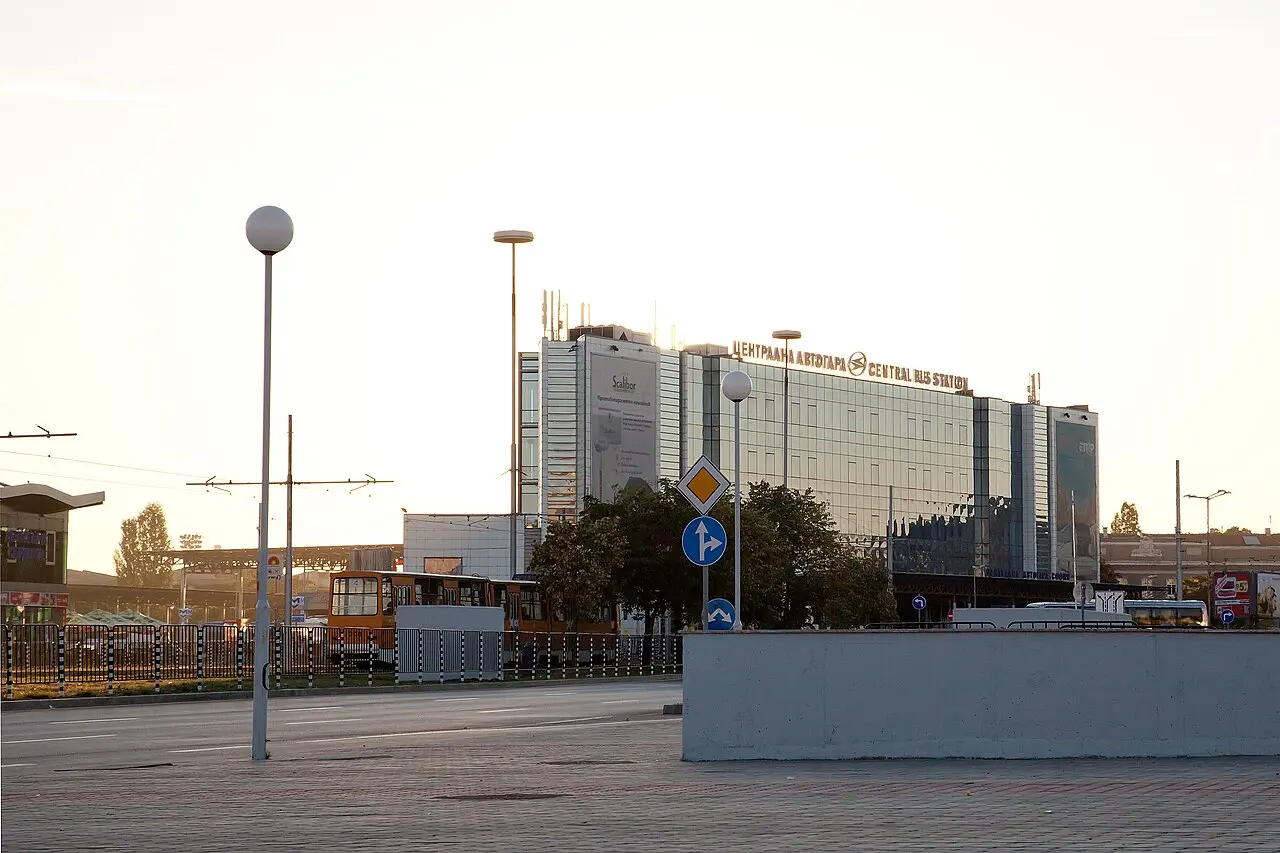
Book online with whichever operator suits your schedule, or turn up and buy at the counter - outside the July-August peak, seats aren’t hard to find. If a shared coach isn’t your idea of a good four hours, that’s exactly the gap a private transfer fills: you get picked up at your address, skip the station altogether, and land in Thessaloniki without changing seats.
What happened to the direct train
Older guides and a surprising number of still-live ticket sites will tell you there’s a daily 15:00 train from Sofia that reaches Thessaloniki by 23:30. There isn’t, not any more. According to seat61.com, the long-running independent reference for European rail, the Sofia-Thessaloniki service stopped running south of the Greek border around 2018 and hasn’t come back, so anything quoting that old timetable is simply out of date.
What’s left is a rail-plus-bus combination for people who genuinely prefer trains to buses. You’d ride a Bulgarian train from Sofia to Blagoevgrad (roughly 2h10-2h30, about €5), then pick up a bus for the Blagoevgrad-Thessaloniki leg. That leg isn’t the bargain some sites suggest: on their own booking pages, Union Ivkoni charges €21 and ArdaTur from €22 for it (checked 9 August 2026), roughly 3h45 to 4h20 depending on the departure. Stitched together, the whole combo runs about €26-27 and around eight hours door to door - slower than the direct coach’s 4h40-5h45 and pricier than it too, since FlixBus starts at €18.48. It’s a scenic option, not an efficient or a cheap one, and it only makes sense if the journey itself is the point.
There is a real train coming, just not yet. Bulgaria’s national news agency BTA reports that Bulgaria, Greece and Romania are working on modern passenger rail between Sofia and Thessaloniki, targeted for 2027. Until that’s actually running, treat any “direct train” listing you find online as leftover data from a route that closed years ago.
The border that mostly disappeared
This is the detail that changes the whole trip, and it’s recent enough that plenty of people haven’t caught up with it. Bulgaria completed full Schengen membership, land borders included, on 1 January 2025, and Greece has been in Schengen since 2000. That makes Kulata (Bulgaria) / Promachonas (Greece) an internal Schengen crossing: no routine passport checks in either direction, though a handful of drivers have reported occasional spot checks on the Struma motorway approaching the border. You’ll still want a passport or EU/EEA national ID card on you - it’s a border on the map even if nobody’s stamping anything - but the queue that used to define this crossing is largely gone.
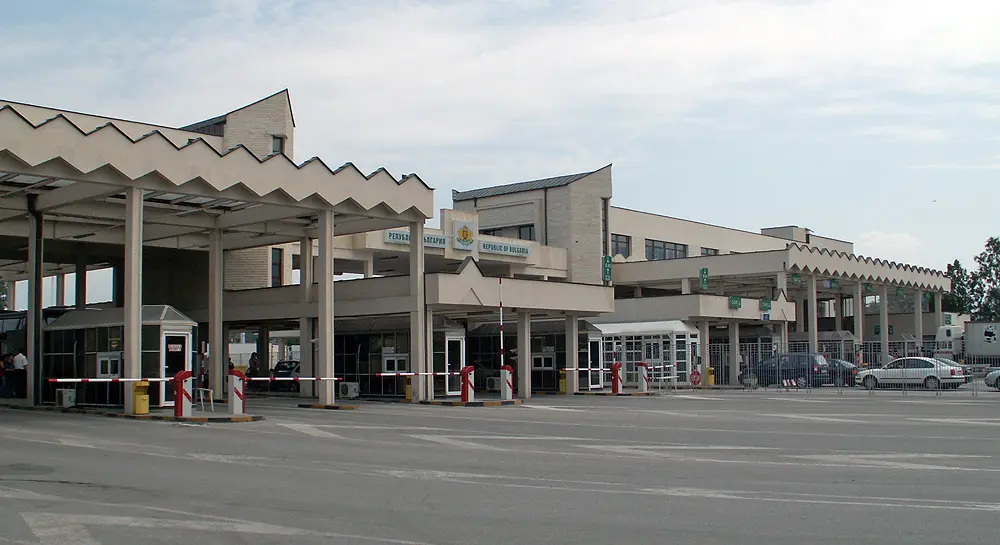
The other thing worth knowing, because it’s not obvious until you’re there: both countries price everything in euro. Greece has used the euro since 2002, and Bulgaria joined on 1 January 2026, so unlike almost every other cross-border run out of Sofia - Belgrade’s dinar, Bucharest’s leu, Skopje’s denar - there’s no exchange rate to think about on this one. Card or cash, the numbers on the menu mean the same thing on both sides. If Skopje is next on the board instead of Thessaloniki, the denar returns and the hop is covered in Sofia to Skopje.
If you’re travelling on a non-EU passport, roaming inside the EU works the same way it does anywhere else in the bloc: an EU/EEA SIM roams free between Bulgaria and Greece, while a US, UK, Canadian or Australian plan will bill this as ordinary international roaming unless you’ve sorted an eSIM first - our guide to the best eSIM for Bulgaria covers the options.
Driving it yourself, tolls included
The road is straightforward: A3/E79 south out of Sofia, through Blagoevgrad and Sandanski, over the border at Kulata-Promachonas, then onto Greece’s A25 and finally the A2 (Via Egnatia) into Thessaloniki. It’s the same corridor the buses use, and it’s mostly motorway-grade the whole way.
On distance and time, two independent checks agree closely: FlixBus’s own route data puts it at 294 km, and a direct routing query comes back at 292.9 km with 3 hours 45 minutes of pure driving time, no stops included. Add fuel, a break and the slower zone right around the border crossing, and a realistic door-to-door estimate is about 4 to 4.5 hours - which lines up with the bus’s own 4h40 minimum, since a coach with stops shouldn’t beat a car with none.

Tolls are cheap and worth knowing in advance so you’re not caught out at a gate. In Bulgaria you need an e-vignette: per the official BGTOLL site, a light vehicle’s one-day pass is about €5.30, a weekend pass (valid Friday noon to Monday noon) is about €6.60, and a full week is about €10.00 - prices that took effect 1 August 2026. On the Greek side, the road is run by Nea Egnatia Odos, whose published toll list charges a category-1 car €1.65 at the Promachonas station and €1.60 at Strimoniko further along toward the city - about €3.25 in tolls for the Greek stretch. All in, budget roughly €8.55 (one-day vignette plus the Greek tolls) for a one-way drive that fits inside a single day, on top of fuel. That’s the realistic number for a weekend there-and-back; if you’re driving down on a weekday and won’t be back through Bulgaria within 24 hours, the safer minimum to budget for is the weekly vignette at €10, which covers you either way.
If you’re renting rather than driving your own car, confirm with the hire company that cross-border travel into Greece is covered before you book - it usually is between two Schengen and EU countries, but it’s the kind of thing worth having in writing rather than assuming at the desk.
Is a day trip actually realistic?
Here’s the honest math. By bus, you’re looking at 4h40 to 5h45 each way, so a there-and-back day eats 9.5 to 11.5 hours in transit alone - that leaves almost nothing for actually seeing Thessaloniki, and it isn’t a trip most people would enjoy. The bus doesn’t work as a comfortable day trip.
By car, it’s a different story, if still a stretch. At roughly 4 to 4.5 hours each way, a round trip runs 8 to 9 hours of driving, which leaves you a real few hours in the city if you leave at dawn and treat it as one long day rather than a relaxed outing. It’s genuinely doable - people do it, especially for a specific event or a food run to the seafront - but it’s a marathon, not a holiday. If you can spare a night, you’ll enjoy Thessaloniki a lot more with one.
Bus, car or the rare train
For nearly everyone, the bus is the right call: it’s cheap, it’s frequent enough not to need much planning, and at 4h40-5h45 it beats the day-trip math that driving forces on you if you’re not staying over. Pick FlixBus for the fastest scheduled run and the lowest fare, or one of the other operators if the timing suits you better. Choose the car if you want to break the trip in Blagoevgrad or Sandanski, or if you’d rather not be on someone else’s timetable - just budget the toll money and treat a same-day return as an option for the fit and determined, not the default plan. Skip the train unless the ride itself is the reason you’re going; it’s slower than either alternative and dearer too, and, as of this year, it still needs a change in Blagoevgrad to work at all.
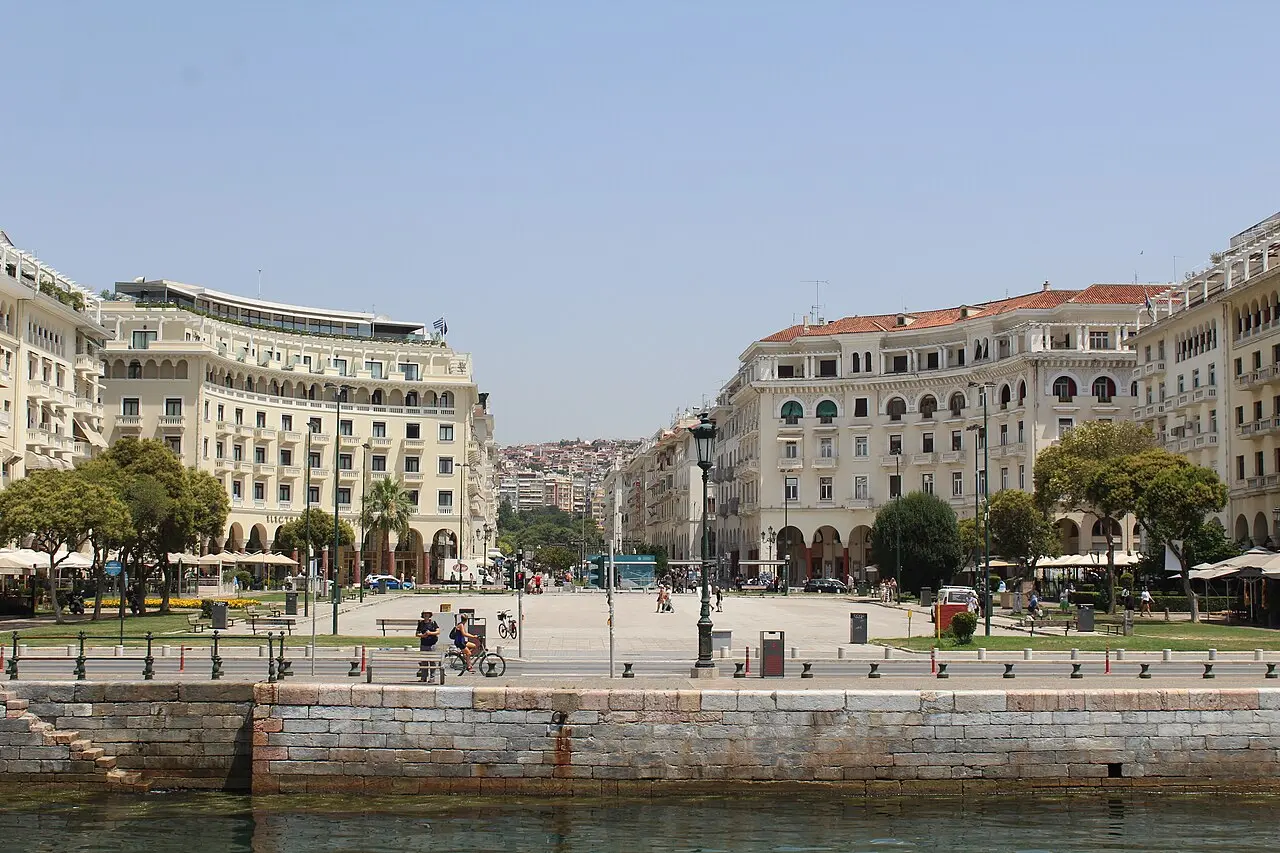
Once you’re across the border, Thessaloniki rewards the trip: a big, food-obsessed Greek city on the Thermaic Gulf, with a waterfront promenade that makes for an easy first evening. If this leg is part of a longer loop, our guides to Sofia to Belgrade and Sofia to Bucharest cover the other cross-border runs out of the capital, and getting around Bulgaria has the wider picture on buses, trains and driving inside the country. Flying in instead? Check which airport to use and Sofia airport transfers before you land, and if your trip involves more time in the Schengen zone, our guide to Bulgaria’s entry requirements covers what that means for your 90-day count.
Read also

Transport · 12 min read
Sofia to Borovets: 70 km, ~1h, Bus from €5
Verified · September 5, 2026Sofia to Borovets (~70 km, 1-1.5h): public bus via Samokov from ~€5, seasonal shared shuttles from €8/pp, private transfer from ~€79.

Transport · 11 min read
Plovdiv to Pamporovo: Bus & Ski Transfer
Verified · September 3, 2026Plovdiv to Pamporovo is about 80 km via Chepelare. Bus from Rodopi station, winter airport transfer, or drive - how to choose.

Transport · 9 min read
Sofia to Sunny Beach: Bus, Train & Transfer
Verified · August 24, 2026Direct coaches Sofia to Sunny Beach year-round (~7h, from ~€21), train only to Burgas, or a fixed private transfer. Times, stops and when each wins.

Transport · 11 min read
Burgas to Sozopol Bus 2026: €3.37, 40-50 Min
Verified · August 21, 2026Burgas South Sector 5 to Sozopol: bus 3.37 euro, about 40-50 min; taxi/transfer about 30-40 min. Buses about every 30 min. Checked Aug 2026.