
Easter in Bulgaria 2027: 2 May, Traditions and What Closes
Orthodox Easter in Bulgaria is on 2 May 2027, on top of Labour Day. The dates day by day, the midnight service, red eggs and what closes.
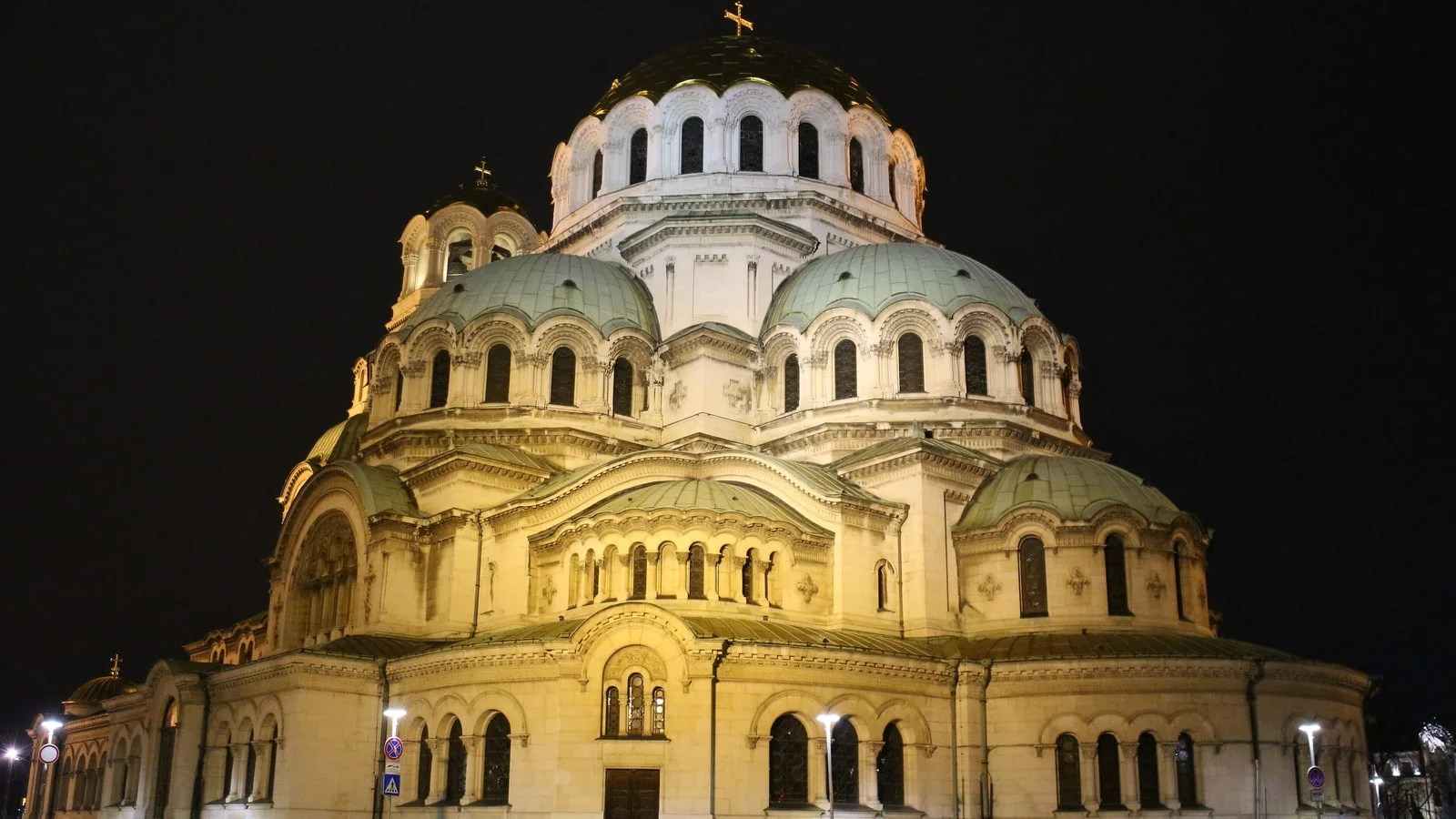
Orthodox Easter Sunday in Bulgaria is 2 May 2027, five weeks after the Western Easter of 28 March. The detail that changes plans: Holy Saturday falls on 1 May, which is also Labour Day, so the Easter block and the May holiday merge into one long run from Friday 30 April to Monday 3 May, and Tuesday 4 May is a day off too under the Labour Code’s weekend rule. For a visitor, that puts the midnight service, the red eggs and the family lunches inside a long weekend when Bulgarians are on the road too, so book your room early.
The dates for 2027
Easter moves with the Orthodox calendar, so don’t reuse the date you know from home. The dates below come from the Labour Code’s Easter rule, as laid out on our Bulgaria public holidays guide; we counted the three church days before Good Friday back from 2 May ourselves.
| Day | Date in 2027 | What it is |
|---|---|---|
| Saturday | 24 April | Lazarus Saturday (Lazarovden) |
| Sunday | 25 April | Palm Sunday (Tsvetnitsa) |
| Thursday | 29 April | Holy Thursday: eggs are dyed |
| Friday | 30 April | Good Friday, official holiday |
| Saturday | 1 May | Holy Saturday and Labour Day, official holiday |
| Sunday | 2 May | Easter Sunday, official holiday |
| Monday | 3 May | Easter Monday, official holiday |
| Tuesday | 4 May | Compensatory day off for Labour Day |
| Thursday | 6 May | St George’s Day, official holiday |
Good Friday through Easter Monday are all official holidays, and the Labour Code carves them out of the weekend-shift rule, because they already make their own block. Labour Day follows the ordinary shift rule, so its Saturday date pushes a day off onto the next working day after the weekend: Tuesday 4 May. The shift works on its own, without a government decision: Labour Code Art. 154(2) makes the first working day (or two) after a holiday that falls on a weekend a non-working day, and in 2021, when the calendar fell exactly the same way, Tuesday 4 May was a day off too.
If you’re coming from England or Wales, the calendar does you a favour: your Early May bank holiday is Monday 3 May 2027, the same day Bulgaria keeps Easter Monday, so a Friday-to-Monday trip needs one day less of annual leave. Western Good Friday and Easter Monday fall earlier, on 26 and 29 March.
What closes over Easter
Public offices and most bank branches close for the whole run from Friday 30 April to Tuesday 4 May. For visitors the useful part is how little changes at the places you’d go to:
- Churches and monasteries are at their busiest. Rila Monastery’s contacts page switches the church to its summer timetable “from Easter”, and our Rila Monastery guide carries the current times.
- Boyana Church in Sofia is closed on Orthodox Easter Sunday, per its operator’s hours on the Boyana Church guide. Plan its frescoes for another day.
- Supermarkets set their own holiday hours. On Easter Sunday 2026 (12 April) Lidl and BILLA closed all their Bulgarian stores and Kaufland opened on shorter hours, as reported on 9 April 2026; Lidl announced the Easter closure back in 2019. Check the 2027 hours in the week before Easter, and shop by Thursday 29 April rather than count on the holiday weekend.
- Restaurants and cafes set their own Easter hours; book a table if Easter Sunday lunch or dinner matters, and ask about Monday when you book.
For Easter 2026 the state railway BDZ announced extra seats on its main routes on 7 April, five days before the holiday, and warned that sales may stop once a train is full. Check bdz.bg and your bus operator in the week before Easter 2027, and buy tickets early.
From Holy Thursday to the kozunak
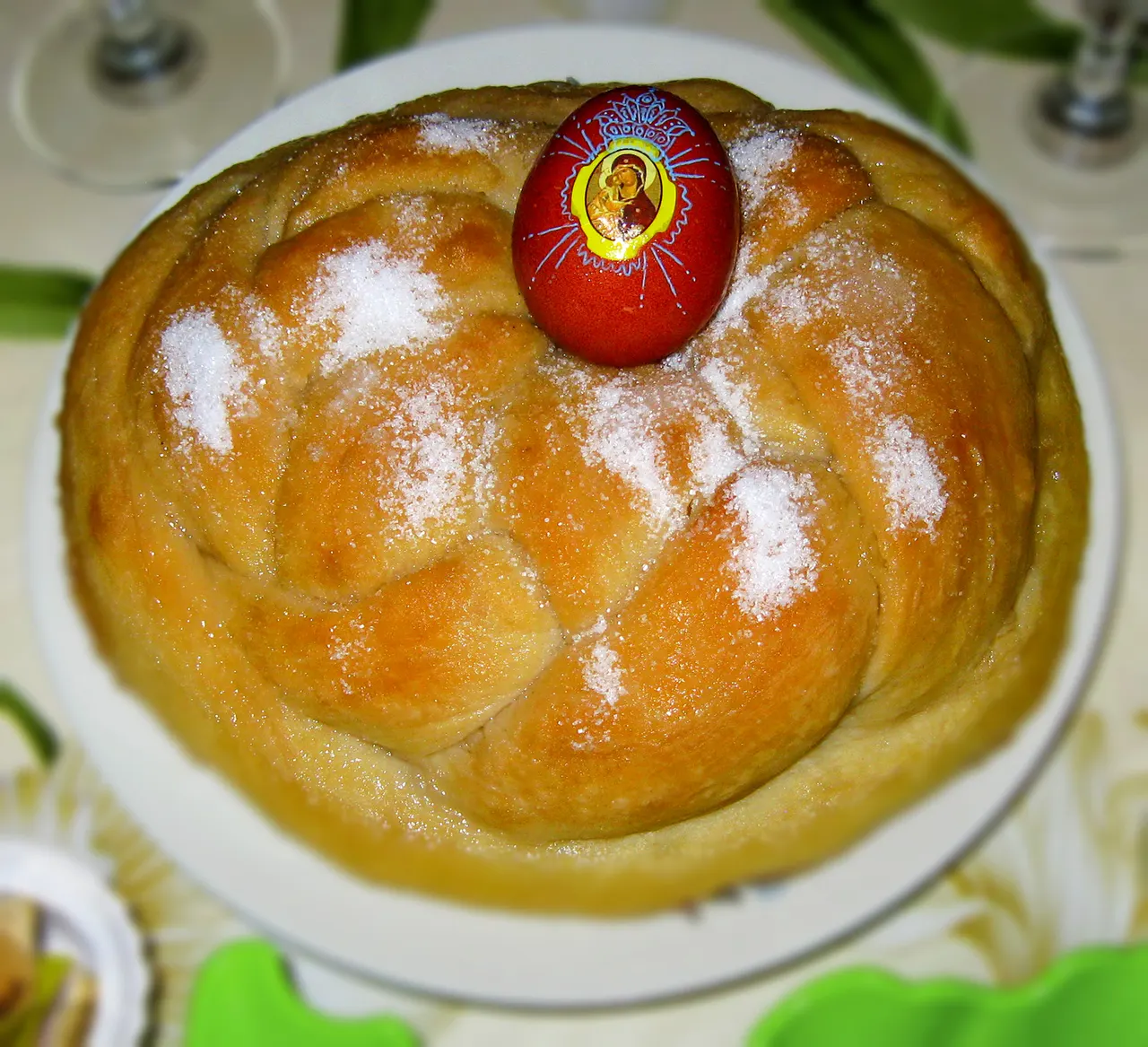
Bulgarian Easter is cooked, dyed and carried before it’s attended. The eggs are coloured on Holy Thursday, and the first one is always red. Many families keep that egg until the next Easter as a charm for the household. The sweet braided bread, kozunak, is baked for the same table, and in some houses one loaf is decorated with an odd number of red eggs; Good Friday itself is kept as a day of strict fasting when, by church tradition, no work is done. The Easter bread goes to church on Saturday evening together with the eggs.
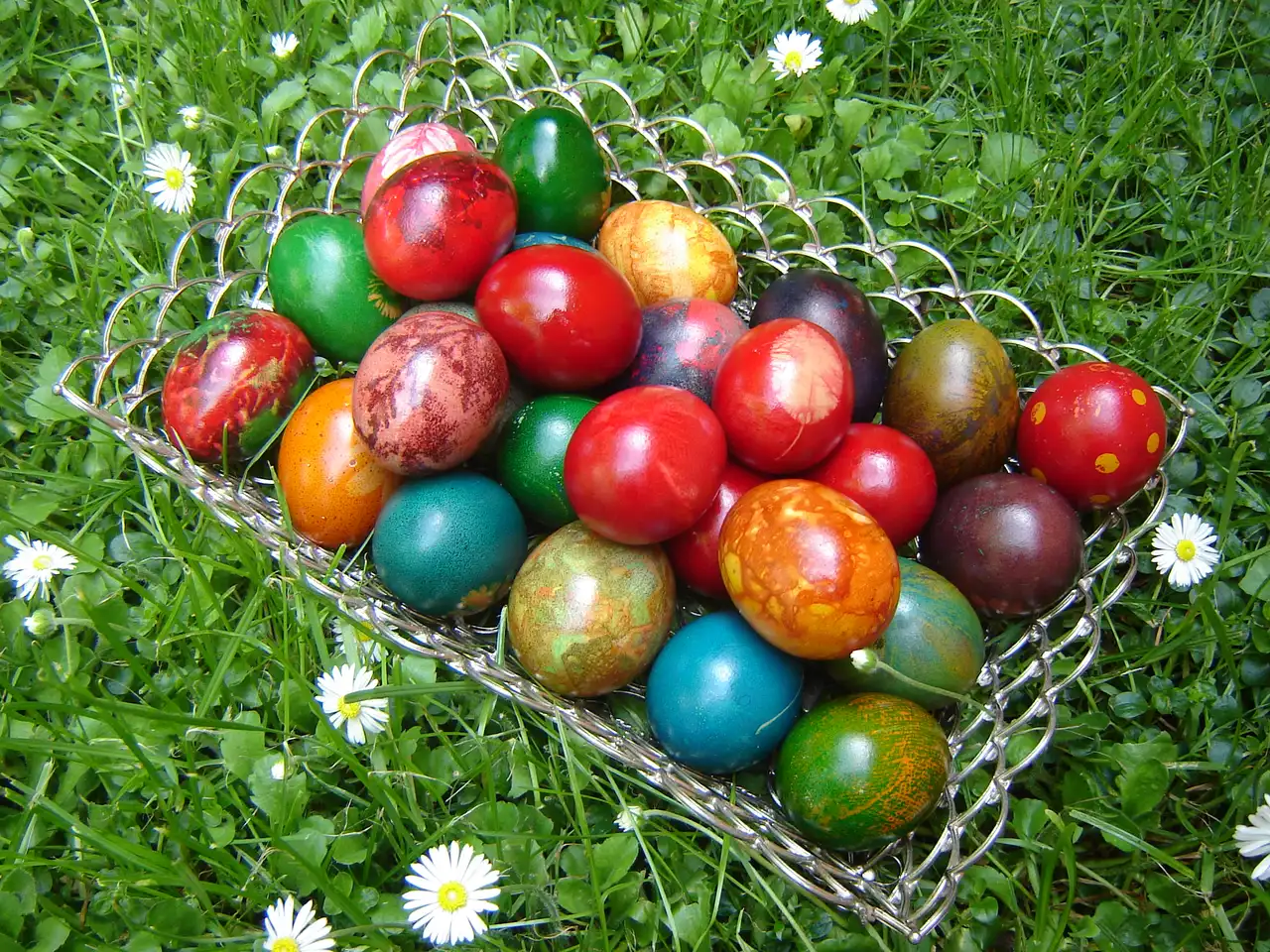
Easter lunch starts with the egg game. Everyone picks an egg and taps it against everyone else’s, and the person whose egg stays unbroken is said to have a year of luck. Before each tap, players exchange the greeting: “Hristos vazkrese!” (Christ is risen!), answered with “Voistina vazkrese!” (Truly He is risen!). Say it back and you’ve joined in.
The week before: Lazarus Saturday and Tsvetnitsa
A week before Easter, on the weekend of 24 and 25 April, come two feasts of their own. Lazarus Saturday, on 24 April, is a name day for everyone called Lazar and the day of lazaruvane, a village custom in which young girls go from house to house singing for health and a good year; in villages and small towns it’s still performed. Palm Sunday (Tsvetnitsa) the next day is the name day of everybody with a flower, shrub or tree name, such as Tsveta, Lilia or Boryana, so you’ll see bouquets in the street.
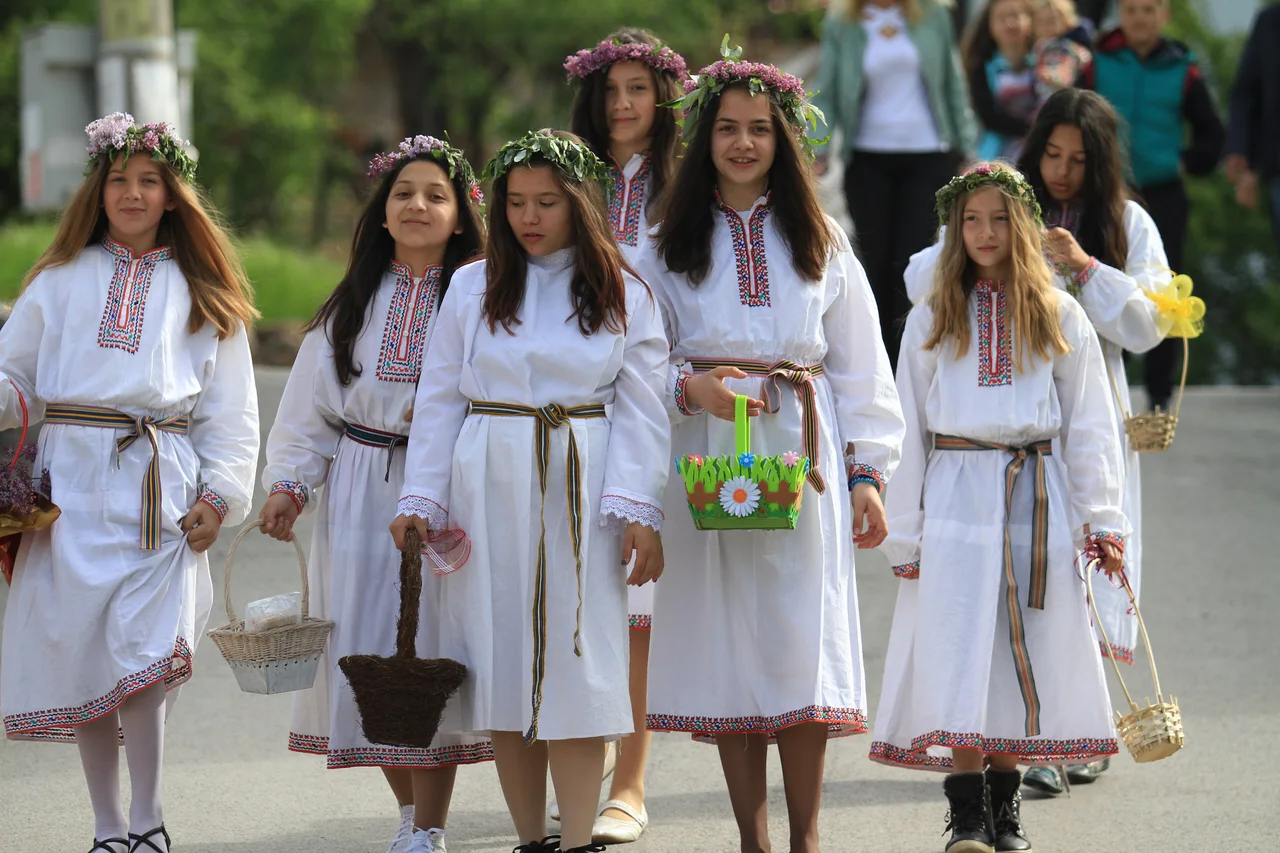
Neither is a day off, and neither needs a ticket. For lazaruvane, go to a village or small town.
Where to be on Easter night
The service on the night of Holy Saturday, 1 to 2 May in 2027, is the centre of the festival, and visitors are welcome. In both 2025 and 2026 the patriarchal service at Sofia’s Alexander Nevsky Cathedral began at 11:30 PM; in 2025 it opened with a flame of the Holy Fire, kept in the Synodal Chapel, carried in procession to the altar. At midnight the priest announces three times “Christ is risen!” and the congregation answers, and the clergy then bless the breads and eggs people have brought. In 2025 BNT broadcast the service live from 11:30 PM.
Expect a crowd. If you want to experience it, arrive well before 11 PM, dress for a church and stay quiet inside; don’t flash a camera during the liturgy. The cathedral sits in central Sofia, so you can walk back to most hotels, and if you need a ride back after midnight, book it before the service.
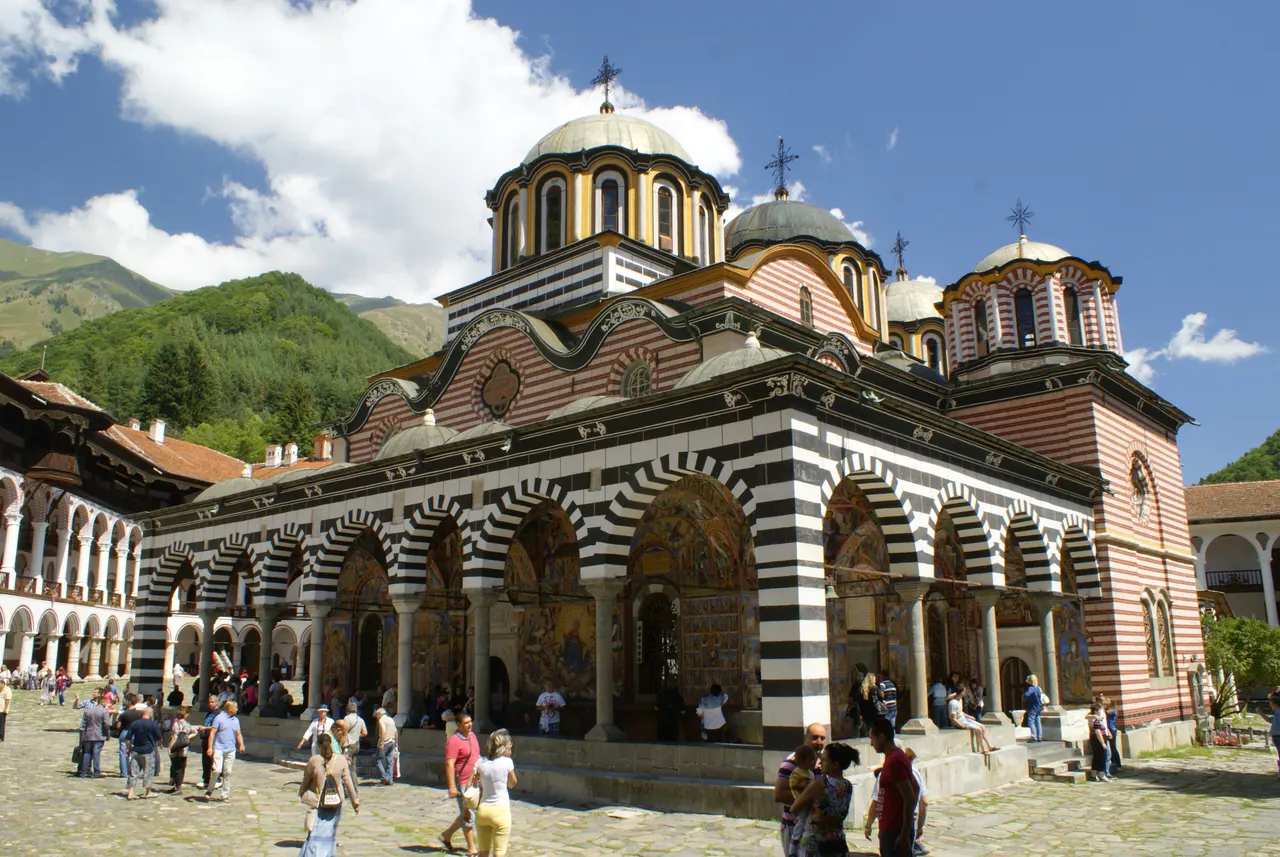
Outside Sofia, every parish church and monastery holds the same service. Rila Monastery draws pilgrims, though we couldn’t find a published Easter schedule for 2027 in November 2026; if you want to be inside its walls that night, it rents rooms by phone, as our guide to staying at Rila Monastery explains. On the outer wall of the refectory at Bachkovo Monastery is a panorama painted in 1846 that shows the monastery’s Easter Monday procession with its miraculous icon, a procession still held every year, so Monday 3 May 2027 is the day to see it live.
The May pile-up: rooms, borders and weather
In 2027 the Easter block sits on top of Labour Day. Bulgarians themselves travel on exactly these bridge weekends, so hotel rates in Sofia, Plovdiv and the mountain resorts move with the calendar, and our public holidays guide counts the Easter run among the two stretches of the year worth booking early. Holidays are the peak on the Trakia, Hemus and Struma motorways, enough for the Road Infrastructure Agency to propose holiday limits on heavy lorries there for 2026, so build slack into any drive at the start and the end of the 30 April-4 May break. If you cross a land border, read the border crossings guide before you set out, and keep a spare evening at the end of the break.
Weather is the second thing to plan for. Early May is spring on the plains and still cold on the high mountains, so Rila and Pirin trails can hold snow; see best time to visit Bulgaria for the month, and the events calendar for what else runs in April and May 2027.
Three checks before you book
- Plan around five days off, not four. Tuesday 4 May is a non-working day by law, so offices and most bank branches stay shut from Friday 30 April to Tuesday 4 May.
- Ask each place about Sunday and Monday. A restaurant, a museum and a tour operator can each choose differently; Boyana Church, for one, is closed on Easter Sunday.
- Book the night, not just the day. If you want the midnight service, choose a hotel within walking distance of your church, because the ride home after midnight is the part that gets forgotten.
Read also

Entertainment · 14 min read
Kukeri & Surva: Bulgaria's Masked Winter Rites
Verified · October 9, 2026Where and when to see kukeri in Bulgaria: Surva in Pernik (16-25 January in 2026, 2027 dates pending), village rites on 13-14 January, Razlog on 1 January.

Entertainment · 10 min read
Plovdiv Young Wine Festival: November 2026 Guide
Verified · October 6, 2026Plovdiv's Young Wine Festival is listed for 20-22 November 2026 in Old Town houses: how the tasting tokens work, hours, which day to go and where to stay.

Entertainment · 13 min read
Bansko Après-Ski: Bars, Mehanas & Nightlife
Verified · October 3, 2026Bansko after the lifts stop at 16:15: Happy End at the gondola, huts on the way down, Old Town mehanas with folk bands and kapama, bars open to 4am.

Entertainment · 9 min read
Music Festivals in Bulgaria: The Annual Guide
Verified · August 11, 2026Hills of Rock, PhillGood, SPICE, A to JazZ and Varna Summer 2026: dates, tickets, bases - and which fest fits your trip.