
Bulgaria Events Calendar: Month by Month 2026-2027
What's on in Bulgaria by month: Apollonia 27 Aug-6 Sep, Sofia Marathon 10-11 Oct, Surva masks in January and Orthodox Easter on 2 May 2027.
Upcoming events
- On now June 27 - October 14, 2026 Varna Summer, the centenary season
- October 10-11, 2026 Sofia Marathon
- December 24-28, 2026 Christmas (public holidays; offices shut from Thursday 24 to Monday 28 December in 2026)
All upcoming dates by month (13)
June 2026
- On now June 27 - October 14, 2026 Varna Summer, the centenary season
October 2026
- October 10-11, 2026 Sofia Marathon
December 2026
- December 24-28, 2026 Christmas (public holidays; offices shut from Thursday 24 to Monday 28 December in 2026)
January 2027
- Epiphany, the horo danced in the Tundzha river
February 2027
- Trifon Zarezan, the day of vine growers
March 2027
April 2027
- April 30 - May 3, 2027 Orthodox Easter (Good Friday to Easter Monday)
May 2027
- Labour Day (public holiday)
- St George's Day and Army Day (public holiday)
- Day of the Bulgarian Alphabet (public holiday)
June 2027
- June 3-4, 2027 Nestinarstvo fire dancing, feast of Saints Constantine and Helena
- June 4-6, 2027 Rose Festival (first weekend of June)
Dates marked "to be confirmed" follow the previous edition: the organiser had not announced the new ones when we last checked.
Dates checked: August 3, 2026
Bulgaria’s event year has two loud stretches and one long silence. The loud one is running: Beglika Fest camps by a Rhodope reservoir 12-16 August 2026, Apollonia fills Sozopol’s old town from 27 August to 6 September, the Sofia Marathon shuts the capital’s centre on 10-11 October, and Bansko Jazz wraps its 29th edition on 9 August. The other is January, when Pernik vanishes under horned masks and copper bells for Surva. Between them, spring has almost nothing in it.
The calendar itself is the trap. Bulgaria keeps Christmas on 25 December like the rest of Europe but counts Easter the Orthodox way, so in 2027 Easter Sunday lands on 2 May, five weeks after the Easter weekend most western visitors price flights around. And Sofia’s best Christmas market packs up around 21 December, days before Christmas Day. Either mistake lands you in the country during a perfectly ordinary week.
The year at a glance
| Month | The anchor event | Where |
|---|---|---|
| August | Bansko Jazz to 9 Aug, Beglika 12-16 Aug, Apollonia from 27 Aug (2026 dates) | Bansko, Rhodopes, Sozopol |
| September | Apollonia to 6 Sep, then two national days | Sozopol, Plovdiv, Veliko Tarnovo |
| October | Sofia Marathon 10-11 Oct, Varna Summer to 14 Oct | Sofia, Varna |
| November | Christmas markets open from mid-month | Sofia, Varna |
| December | Markets, ski season, New Year gala dinners | Sofia, Plovdiv, Bansko |
| January | Epiphany river dance 6 Jan, Surva masks in January, dates TBC | Kalofer, Pernik |
| February | Trifon Zarezan 14 Feb, Kukerlandia late Feb | Wine country, Yambol |
| March | Baba Marta, Liberation Day, Sofia Film Fest | Everywhere, Shipka |
| April | Low-tariff spring skiing, then the seam between seasons | Bansko |
| May | Orthodox Easter 2 May 2027, holidays 6 and 24 May | Everywhere |
| June | Rose Festival, fire dancing 3-4 Jun | Kazanlak, Bulgari |
| July | A to JazZ, Hills of Rock, Bansko Jazz starts | Sofia, Plovdiv, Bansko |
August: jazz in Bansko, then the coast takes it
Bansko Jazz takes the turn of July and August - 31 July to 9 August in 2026, its 29th edition, on Nikola Vaptsarov square, with a “jazz in the city” strand around town. Billy Cobham opened it on 31 July; Avishai Cohen’s Big Vicious closes the festival on 9 August. Bansko in August is a ski town out of season with cheap beds, which is half the reason to go: Bansko skiing covers what the same streets cost in February.
A week later, Beglika Fest 16 runs 12-16 August 2026 by the Beglika reservoir in the Rhodopes: three music stages and, by the organisers’ count, over 400 participants and events. It’s a camping festival high in the range with no hotel stock at all.
Then the coast. Apollonia, the arts festival at Sozopol, straddles late August and early September - 27 August to 6 September in 2026, its 42nd edition, over seventy events and seven hundred participants across concerts, theatre, film, exhibitions and literary evenings, anchored on the old town’s open-air amphitheatre. Sozopol is small and late August is already its peak: book the bed before the ticket. Our Sozopol guide covers the town outside festival season, and our dedicated Apollonia festival guide breaks down this year’s actual program, the golden-ticket option and where to sleep during it.
Quietly behind all of it, Varna Summer runs its centenary season: founded in 1926, it opened on 27 June and goes to 14 October, with eight European orchestras including the BBC Symphony. Reason enough to give Varna an evening rather than just an airport.
September and October: two national days, then Sofia runs
September splits between the coast and the flag. Apollonia finishes on the 6th, which is also Unification Day, for the 1885 union proclaimed in Plovdiv; 22 September is Independence Day, declared in Veliko Tarnovo in 1908. Both are public holidays, and the 22nd is one of the likeliest nights for the Sound and Light show over Tsarevets, which has no fixed schedule and otherwise runs by group booking. Watch it free from Tsar Asen I Square; the Veliko Tarnovo guide has more.
October’s fixed point is the Wizz Air Sofia Marathon, 10-11 October 2026: 5 km and 10 km on the Saturday, then the marathon, half and relay on the Sunday, closing streets across the centre.
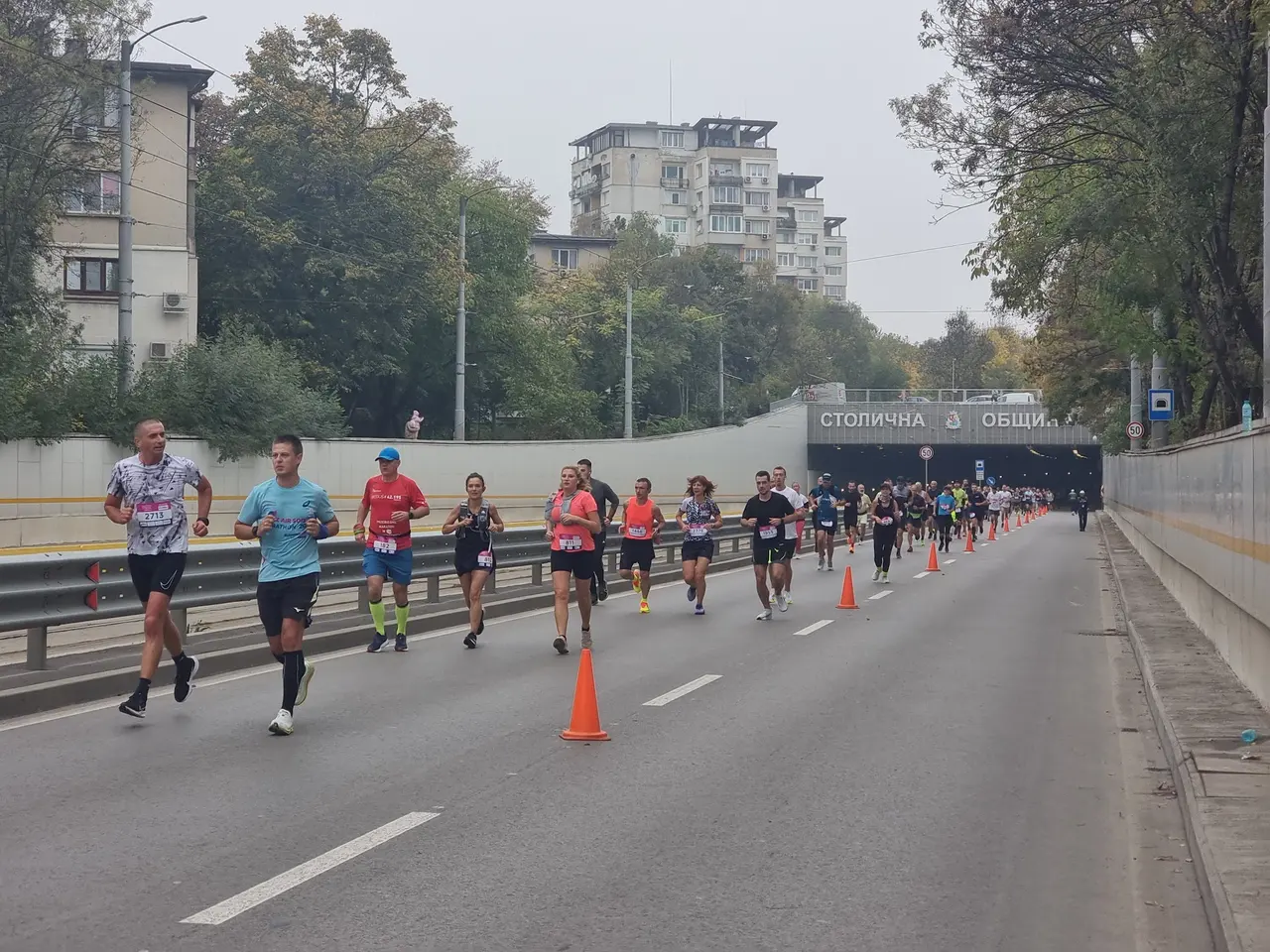
October has the best weather of the year and, beyond Varna Summer closing on the 14th, almost nothing on until the markets open.
November and December: markets open, lifts follow
These are the two months where the culture calendar and the ski calendar overlap, and both publish late: markets from mid-November, lifts from around mid-December, with dates and tariffs out only in the autumn. Pick the week with care, because Sofia’s flagship German market shuts several days before Christmas Day while Plovdiv trades on into New Year - the capital is the wrong market city for exactly the dates most people fly in on. Dates, hours and prices are in Christmas and New Year in Bulgaria; the calendar fact to carry is the shutdown of 24 to 26 December, when offices, banks and most museums close. In 2026 the 26th is a Saturday, so the Monday is given back and the country stops from Thursday 24 to Monday 28 December.
January: masks in Pernik, men in a frozen river
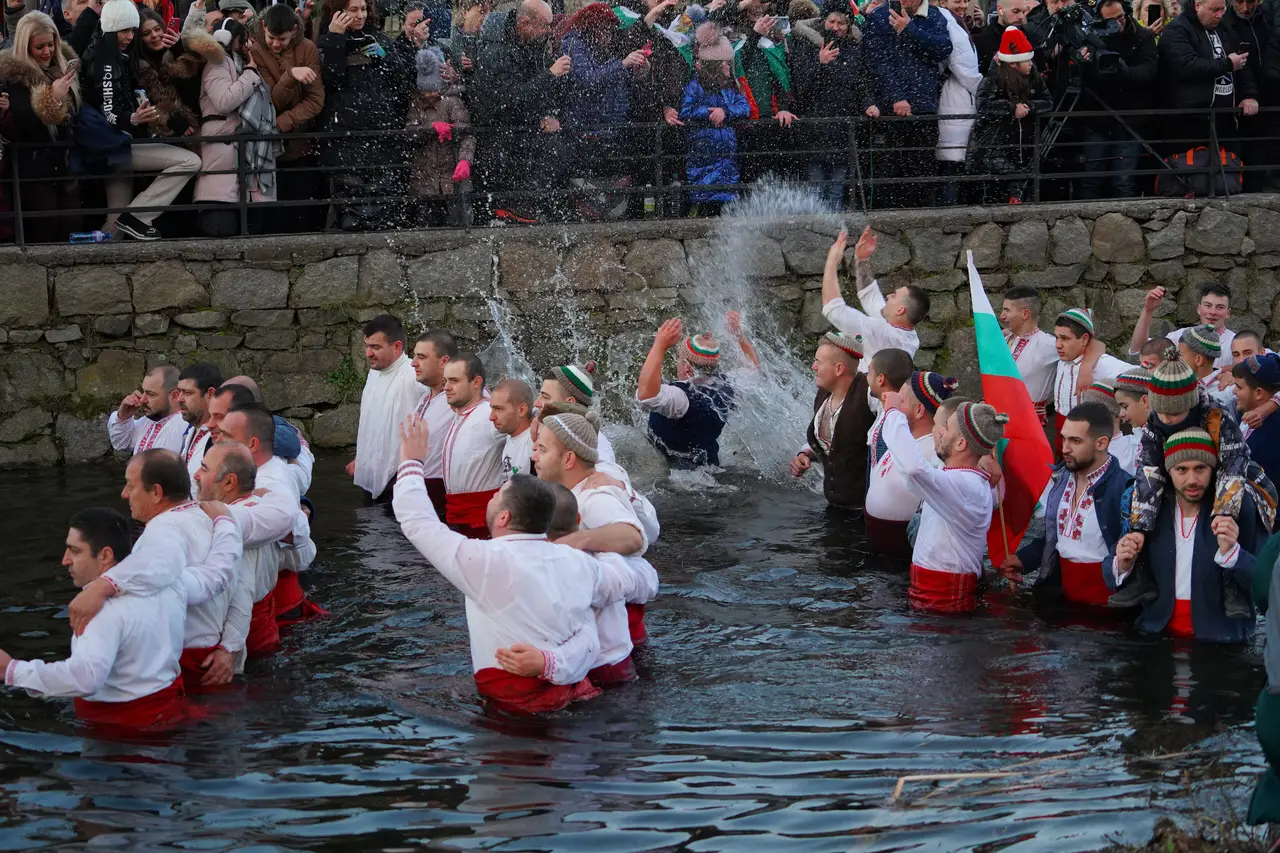
Epiphany, 6 January, is the strangest morning of the Bulgarian winter, and the place to see it’s Kalofer. Around 200 men wade into the Tundzha, arms locked, and dance a horo in the river after a priest blesses them at the bridge. There’s no scramble for the cross here: it goes to the youngest man in the chain.
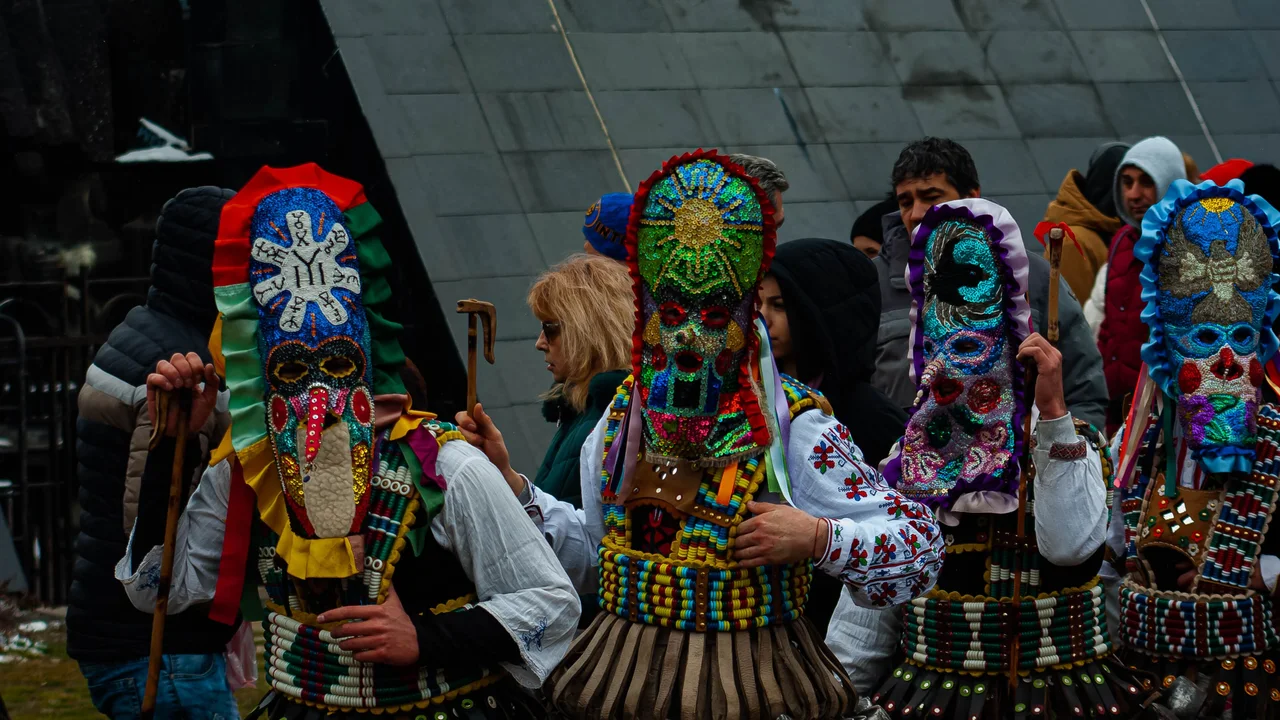
The bigger event is Surva in Pernik, about 30 km south-west of Sofia down the Struma motorway, the biggest of Bulgaria’s masquerade festivals and on the UNESCO intangible heritage list as the Surova folk feast of the Pernik region. Masked groups called kukeri parade through town in fur, beadwork and rows of copper bells. The 32nd edition ran 16 to 25 January 2026, spreading its parades over two consecutive weekends for the first time, 17-18 and 24-25 January, and drawing more than 13,000 participants and over 34 foreign groups.
The 2027 dates were not out in early August 2026, and the festival’s own website was offline, so take them from Pernik municipality or the Bulgarian News Agency at bta.bg, which covers it every January. Don’t assume the old pattern of the last weekend of the month: the 2026 edition started on the 16th. Pernik has almost no hotel stock for a crowd that size, so sleep in Sofia and come out for the day.
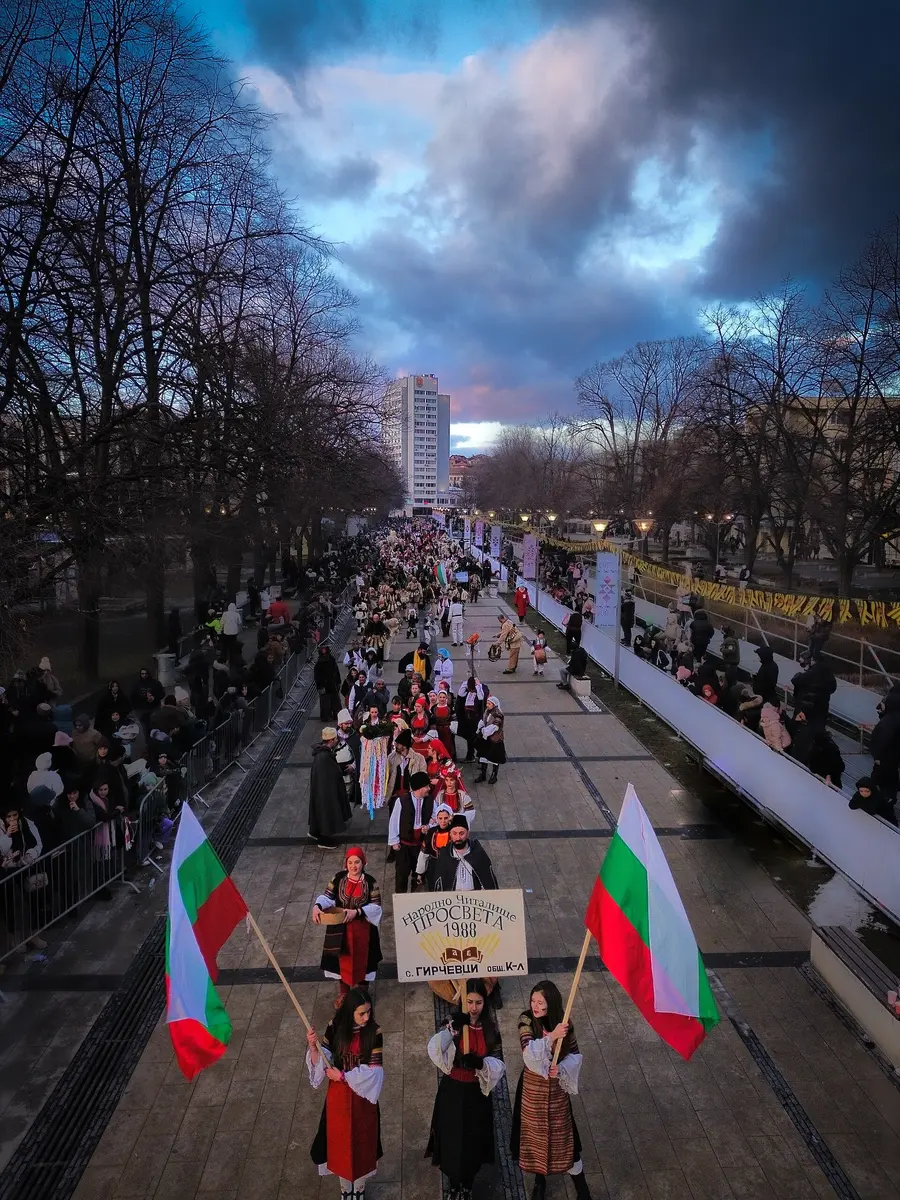
February and March: wine, more masks, then nothing
14 February is Trifon Zarezan, the day of vine growers and winemakers: three canes cut, roots watered with wine, a wine king crowned. It shares the date with Valentine’s Day, so half the country toasts love and the other half the vine. Some communities keep the church calendar’s 1 February date, but the programmes in wine towns follow the 14th.
Masks come back at the end of the month. Kukerlandia in Yambol held its 27th edition on 26 February to 1 March 2026, parades on the last two days, with groups from as far as Cameroon, Ghana and Japan. No 2027 dates yet. If Surva doesn’t fit your trip, this is the second chance.
March opens with Baba Marta on the 1st, when everyone hands out martenitsi, red and white woollen charms worn until you spot a stork or a blossoming tree. 3 March is Liberation Day, a full public holiday - our Bulgaria public holidays guide has the complete official list and which weekends earn an extra day off - with the main ceremony at the Freedom Monument on Shipka Peak, and Sofia Film Fest runs later in the month, 2027 dates unpublished. Then the calendar goes quiet, and it pays to be precise about that. What ends on 31 March is the high ski tariff, not the skiing: Bansko dropped to 45 euro a day from 1 April last season, against 59 in high season, and kept its lifts turning to 12 April. April is the seam between the two Bulgarias - lifts winding down, sea still months off, Easter gone to May - but it’s not the cheapest month of the year: best time to visit Bulgaria puts that in November, early December and March.
April and May 2027: the Easter that isn’t where you expect it
Orthodox Easter 2027 falls on Sunday 2 May, while western Easter is on 28 March, five weeks earlier. Fly in over the March weekend and you’ll land in an ordinary Bulgarian spring: shops open, nothing happening, no lamb. The real thing runs from Good Friday on 30 April to Easter Monday on 3 May and stacks onto Labour Day on 1 May, so the cities empty and the mountains and coast fill. The compensating non-working days around that pile-up are set by government decree each year, so check the official list before booking anything with a deadline. May fills up after that. 6 May is St George’s Day and Army Day, one of the biggest name days in a country where name days beat birthdays, and roast lamb is the point of it. 24 May is the Day of the Bulgarian Alphabet, when schools and universities march with flowers and portraits of Cyril and Methodius: the least official-feeling holiday of the year, and a Monday in 2027.
June and July: roses, embers and a lot of music
June belongs to Kazanlak. The Rose Festival crowns a Rose Queen, stages a picking ritual in the fields and closes with a parade through town; the 2026 edition ran 5 to 7 June, with village rituals on the last two weekends of May. The 2027 dates aren’t published yet, but the first weekend of June is the pattern. The catch: picking happens at first light, so this is a stay-the-night event, and Kazanlak is small enough that many people sleep in Stara Zagora or Plovdiv. Our Valley of the Roses guide covers the distilleries and the museum.
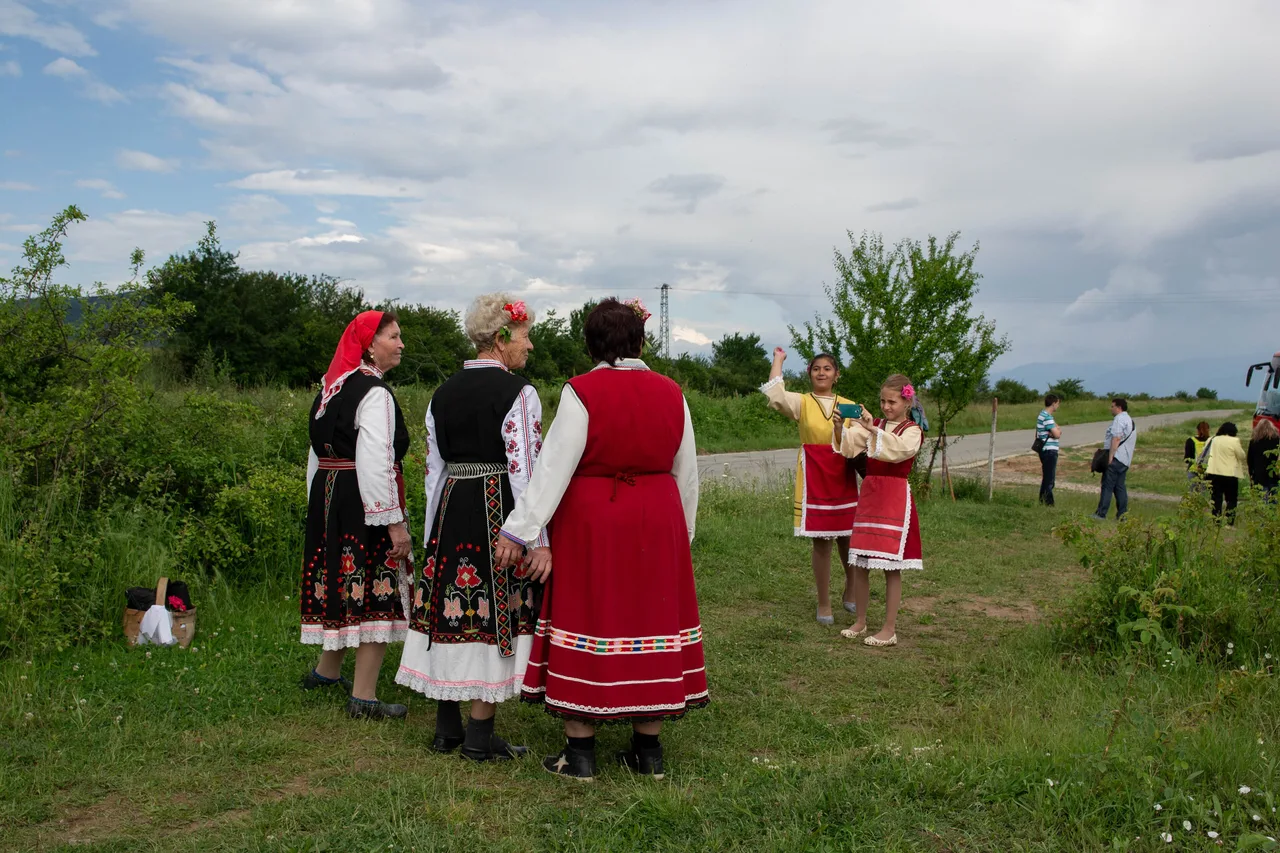
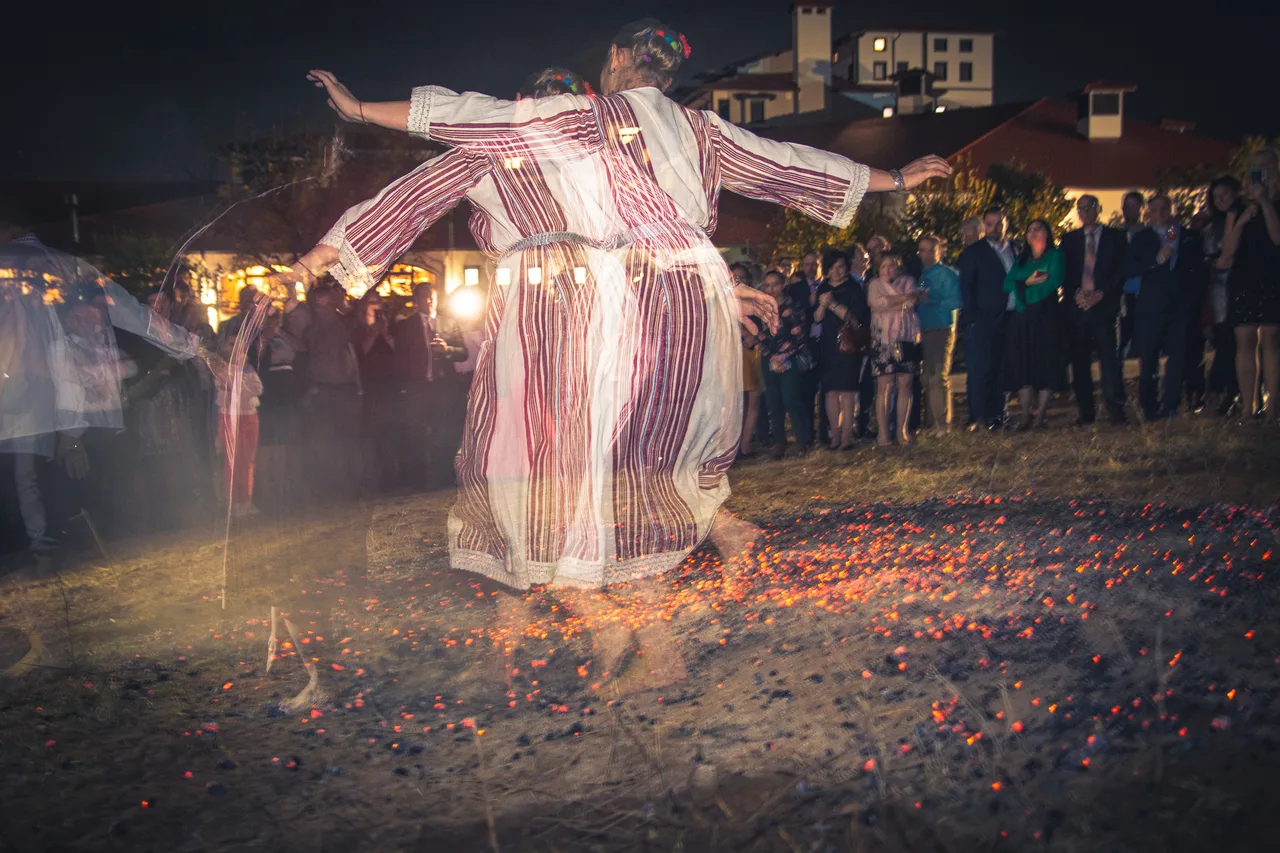
At the other end of the country, 3 and 4 June bring the feast of Saints Constantine and Helena to the village of Bulgari, deep in the Strandzha near the Turkish border: a morning procession with icons, drum and bagpipe to a holy spring, then the barefoot dance across the embers after dark. Bulgari is the last village holding folklore-reserve status for nestinarstvo, on the UNESCO list, and that matters because coastal hotels sell “fire dancing” as dinner entertainment all summer. Those are shows. The 3rd and 4th of June in Bulgari aren’t.
July is the loudest music month. A to JazZ filled South Park II in Sofia on 2-5 July 2026 for its 15th edition, with Dee Dee Bridgewater and the Miles Electric Band, and entry is free, rare for a bill like that. Hills of Rock took Plovdiv’s rowing canal on 24-26 July 2026: 46 bands over three stages, Marilyn Manson and Lamb of God at the top. Neither has 2027 dates yet. For tickets, bases and the rest of the music calendar - PhillGood, SPICE, Varna Summer - see the annual music festivals guide. For after the last set, see Sofia nightlife and things to do in Plovdiv.
What this costs you, and when to book
Most of this calendar is cheap to turn up to. These two aren’t.
Bansko over New Year is where the ski calendar turns into money. Last season the lifts opened on 13 December, the adult day pass was 33.23 euro from the 14th, then high season began on 27 December and the same pass cost 59 euro. A fortnight apart, near enough double, and the shape repeats every winter: the pre-Christmas week is the cheapest skiing of the year. Hotels also bolt a compulsory gala dinner onto 31 December, and Christmas and New Year in Bulgaria has what that runs to. Packages sell early: one Bansko resort was taking 20 per cent off bookings made by 30 September 2026 for the 2026-27 season, though those deadlines move, so check the hotel’s current terms.
Sozopol during Apollonia is the other one: a very small old town at the end of August with no spare beds, so two to three months ahead.
Everything else tightens one town for a few days without moving national prices, and Pernik, Kazanlak and Yambol are all solved by sleeping 30 to 60 minutes away. Prices are in euro since 1 January 2026: money in Bulgaria covers what changed at the till, and is Bulgaria expensive gives a baseline.
One habit is worth more than every date above: check the organiser’s own site for the year you’re travelling. Most 2027 dates here genuinely don’t exist yet, and Surva had no working site in August 2026, which is why Pernik municipality and bta.bg are its fallback. Then look up the public holiday list before building a museum day: the country closes on 1 January, 3 March, Good Friday through Easter Monday, 1 May, 6 May, 24 May, 6 September, 22 September and 24-26 December. The parade may be on; the museum may not.
Dates checked on 3 August 2026 against organisers’ own sites where those exist, and the Bulgarian News Agency where they don’t. Most 2027 editions were unannounced at the time of writing: confirm before booking flights.
Read also

Entertainment · 10 min read
Plovdiv Young Wine Festival: November 2026 Guide
Verified · October 6, 2026Plovdiv's Young Wine Festival fills Old Town houses on 20-22 November 2026: how the tasting tokens work, hours, which day to go and where to stay.

Entertainment · 13 min read
Bansko Après-Ski: Bars, Mehanas & Nightlife
Verified · October 3, 2026Bansko after the lifts stop at 16:15: Happy End at the gondola, huts on the way down, Old Town mehanas with folk bands and kapama, bars open to 4am.

Entertainment · 9 min read
Music Festivals in Bulgaria: The Annual Guide
Verified · August 11, 2026Hills of Rock, PhillGood, SPICE, A to JazZ and Varna Summer 2026: dates, tickets, bases - and which fest fits your trip.

Entertainment · 9 min read
Apollonia Festival in Sozopol: What to Expect
Verified · August 5, 2026Apollonia runs late August into early September in Sozopol: the 42nd edition program, the golden-ticket option, venues, concerts and where to sleep.