
Monasteries of Bulgaria: Rila, Bachkovo, Troyan & More
Which Bulgarian monastery to visit: Rila, Bachkovo, Troyan, Rozhen and Dragalevtsi compared, with free entry, dress code and the photo rules. 2026.
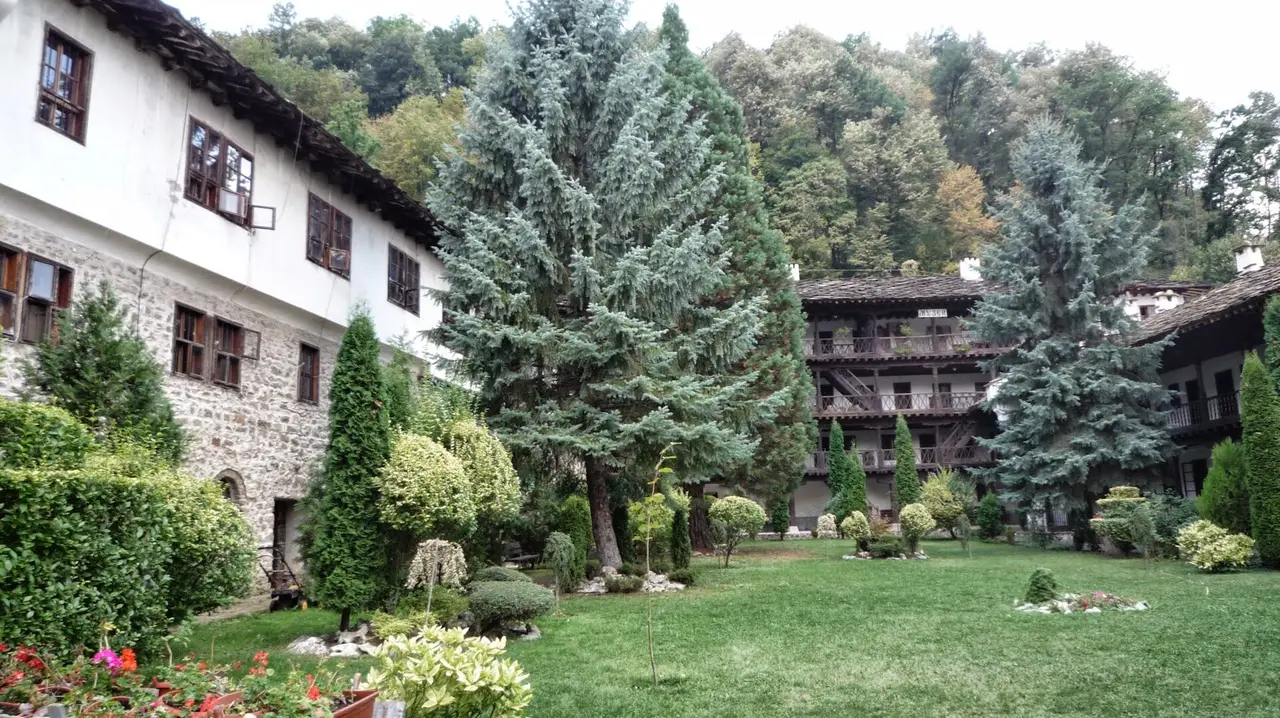
Bulgaria has roughly 120 working Orthodox monasteries, and five of them are worth building a day around. If you only get one, make it Rila: the UNESCO complex two hours south of Sofia is the one on every postcard. Walking into the courtyard and the church is free at all five monasteries here, and the only real ticket in the group is Rila’s 12 euro museum pass. Cover your shoulders and knees, and assume you can’t photograph anything indoors.
The awkward part is never the money, it’s the road. Bulgaria’s monasteries were built up valleys precisely so the Ottoman authorities wouldn’t bother with them, and that logic still holds: the better the monastery, the worse the bus. Rozhen has no public transport at all from the town below it. Once you know which ones you can reach on a timetable and which ones need a car, the rest of the planning takes ten minutes.
Which one should you actually visit?
- One day, no car, staying in Sofia: Rila Monastery. Nothing else comes close for a first visit, and the daily shuttle solves the transport.
- Staying in Plovdiv: Bachkovo, a half-day up the Rhodopes on a regular bus, and older than Rila by three centuries.
- Half a free morning in Sofia: Dragalevtsi, up on Vitosha, reachable on a city bus and back before lunch.
- Driving over the Balkan range, or into Revival painting: Troyan, where the country’s most famous 19th-century painter put his rowdiest work on an outside wall.
- Doing the Melnik wine country, or actively avoiding coaches: Rozhen, the medieval survivor with the best silence and the worst public transport.
One thread runs through three of them. Zahari Zograf (1810 to 1853), the Samokov master of the Bulgarian National Revival, painted at Bachkovo, at Rila and at Troyan, and he slipped mural self-portraits into three of his commissions, which scandalised his contemporaries. Follow his hand around the country and you get a proper thread to pull on rather than a checklist of courtyards.
Rila: the one everyone means
Rila sits at 1,147 m in a fold of the Rila mountains about 127 km south of Sofia, and it has been a UNESCO World Heritage Site since 1983. The complex and the main church are free, open Monday to Thursday 06:30-18:00, Friday to Sunday 06:30-18:30, and Friday to Sunday until 19:30 from 1 June to 30 September. What you pay for is the museums, and the monastery’s own site is clear about the terms: a combined ticket is 12 EUR (23.47 BGN) for all five expositions, the museums run 08:30-16:30 with no day off, extending to 08:30-19:30 from 1 June to 30 September, and tickets are sold only on monastery ground, so no online booking and cash is the safe bet.
Here’s the bit worth asking about at the desk: a 50-minute guided tour in English costs 15 EUR, and the monastery does not say whether that covers the group or one person. The answer decides whether two of you pay seven euros each or fifteen each, and the desk settles it in a second. Our full guide to a Rila Monastery day trip covers the shuttle, the driving route and what to see inside the walls.
Bachkovo: older bones, a Georgian start
Bulgaria’s second-largest monastery is a half-day from Plovdiv, about 30 km south into the Rhodopes, and it opens earlier and later than Rila: daily 07:00-20:00 in summer, 07:00-19:00 in winter, with the courtyard and main church free and small tickets for the museum and the old refectory. Regional buses climbing toward Smolyan and Madan leave Plovdiv’s Rodopi station and stop at Bachkovo in about 40 minutes, which makes this the easiest monastery in the country to reach without a car.
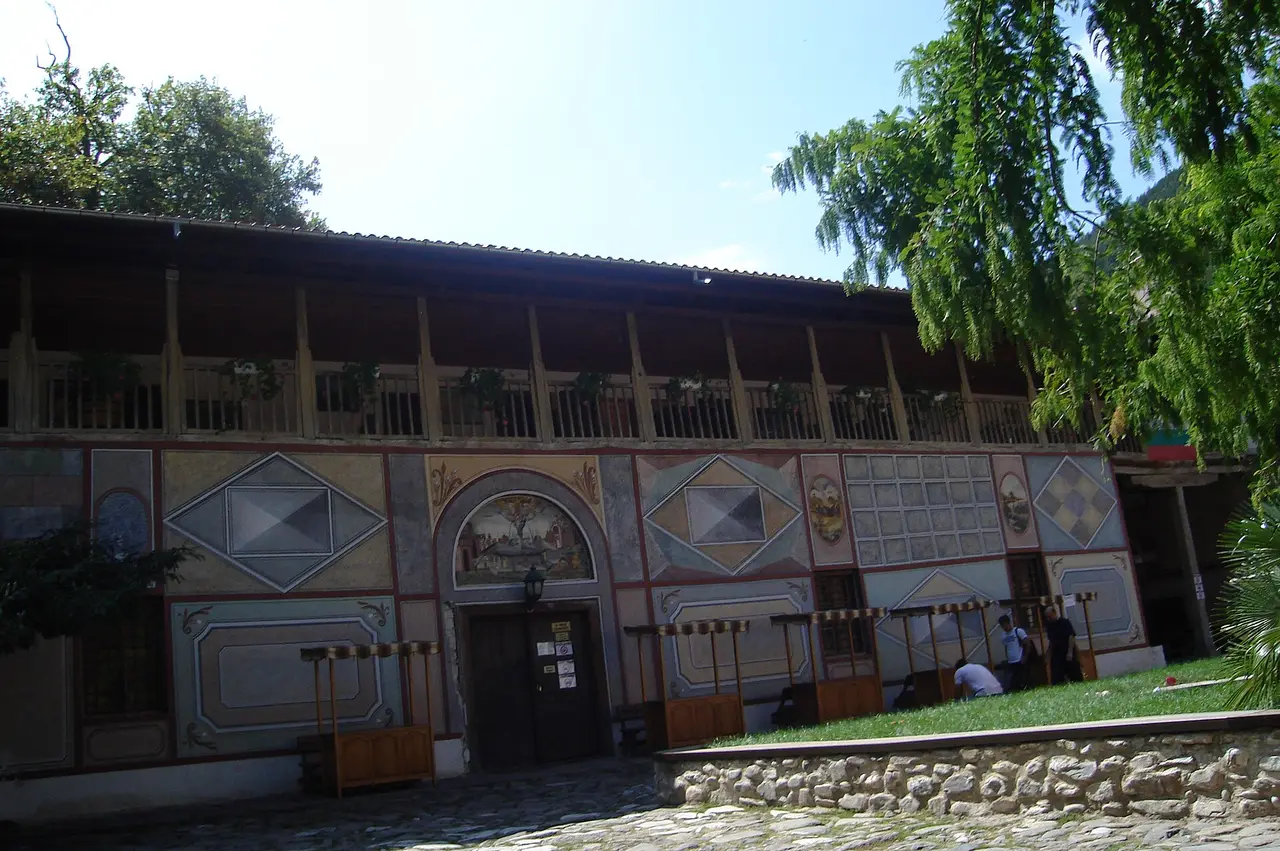
Its origin is what sets it apart. Bachkovo was founded in 1083 by Gregory Pakourianos, a Byzantine general of Georgian descent, and it began life as a Georgian monastery, with an ossuary that’s the only piece of the original complex still standing. Don’t skip the refectory: the long painted hall is the single best room in Bulgarian monastic art. Details, buses and the fortress next door are in our Bachkovo Monastery guide.
Troyan: the third one, and the painter’s boldest wall
Troyan is the country’s third-largest monastery, tucked into the Cherni Osam valley by the village of Oreshak, about 10 km from the town of Troyan, and the municipality states plainly that entrance is free. Tradition dates the founding to around 1600, when monks came over from Mount Athos, and the place has been stauropegial since 1830, meaning it answers directly to the Patriarchate rather than the local bishop. The five-storey bell tower went up in 1866.
You come for the painting. Zahari Zograf decorated the main church in 1847-1848, donor portraits and all, and he painted himself onto the northern interior wall. His Last Judgment, with its demons herding the damned, is on the outside of the church, which means you can stand in front of the best fresco cycle here without going in at all, useful if you’ve arrived underdressed or during a service. The monastery’s other treasure is its icon of the Three-handed Virgin (Troeruchitsa), a copy of the 14th-century original at Hilandar on Athos.
Rozhen: the medieval survivor with no bus
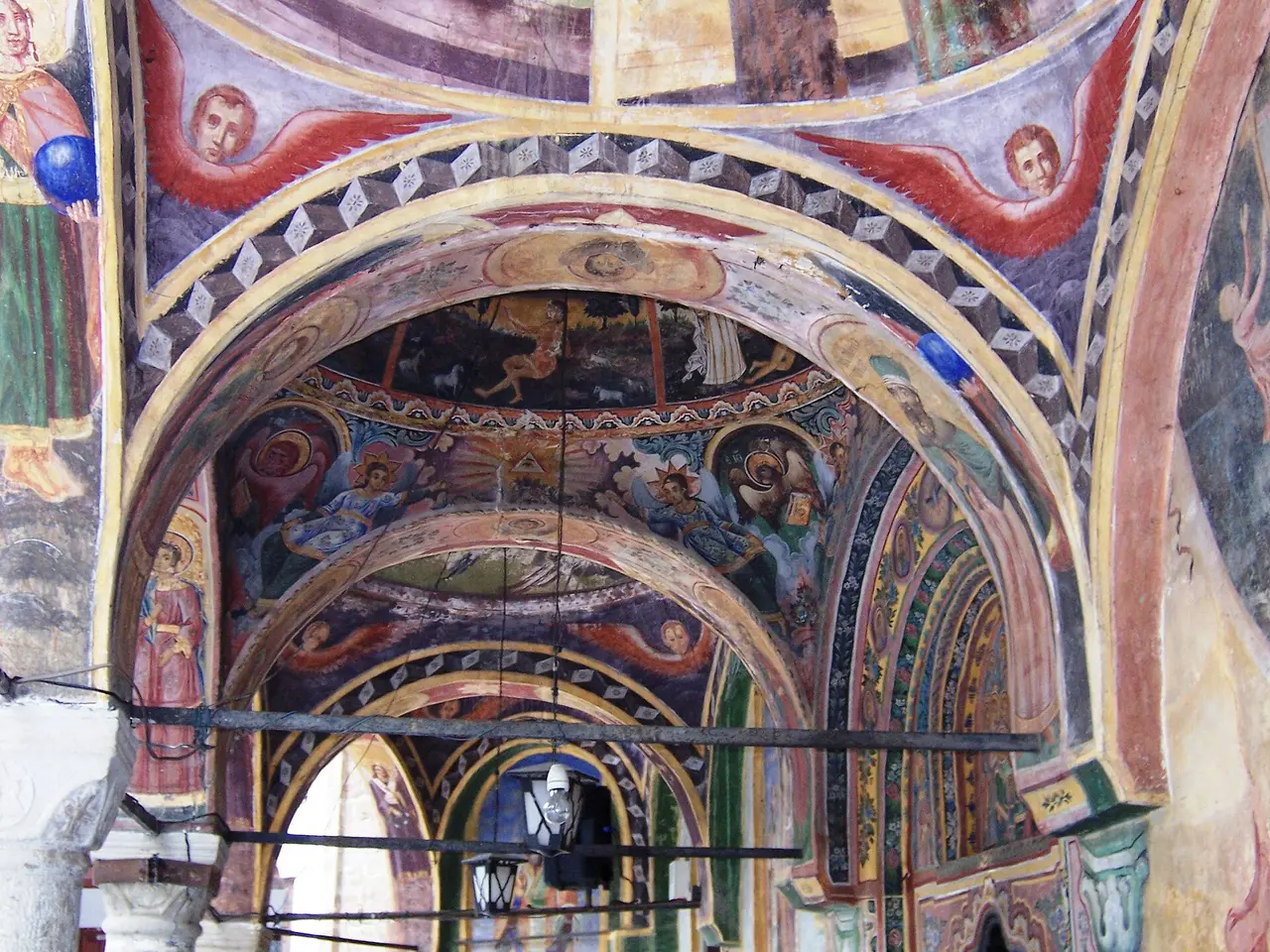
Rozhen is the largest monastery in the Pirin, and the one that feels least processed. It stands 1 km from Rozhen village, 6 km northeast of Melnik and 16 km from Sandanski, in the middle of the sandstone pyramids. There has been a monastery here since the 13th century, and its dates read like a survival log: frescoes from 1597, more painting on the south facade in 1611, a marble frieze above the church gate from the 13th or 14th century, a fire between 1662 and 1674 that took the library, and a rebuild finished in 1732. It’s one of very few Bulgarian monasteries restored during the early Ottoman centuries rather than in the 19th-century revival.
The catch is access. There’s no regular bus from Melnik, so it’s a car, a taxi or the marked footpath, about 7 km, that climbs over from the town. There’s no food or lodging inside; a guesthouse with a restaurant sits about 500 m downhill. Entry is free and it’s open to visitors year-round, roughly daylight hours, but nobody publishes a formal timetable, so treat 08:00 to 18:00 as a guide and not a promise. Combine it with a tasting of the region’s dark, dense reds in our Melnik wine guide, and pay your respects at the grave of the revolutionary Yane Sandanski nearby.
Dragalevtsi: a monastery inside the city
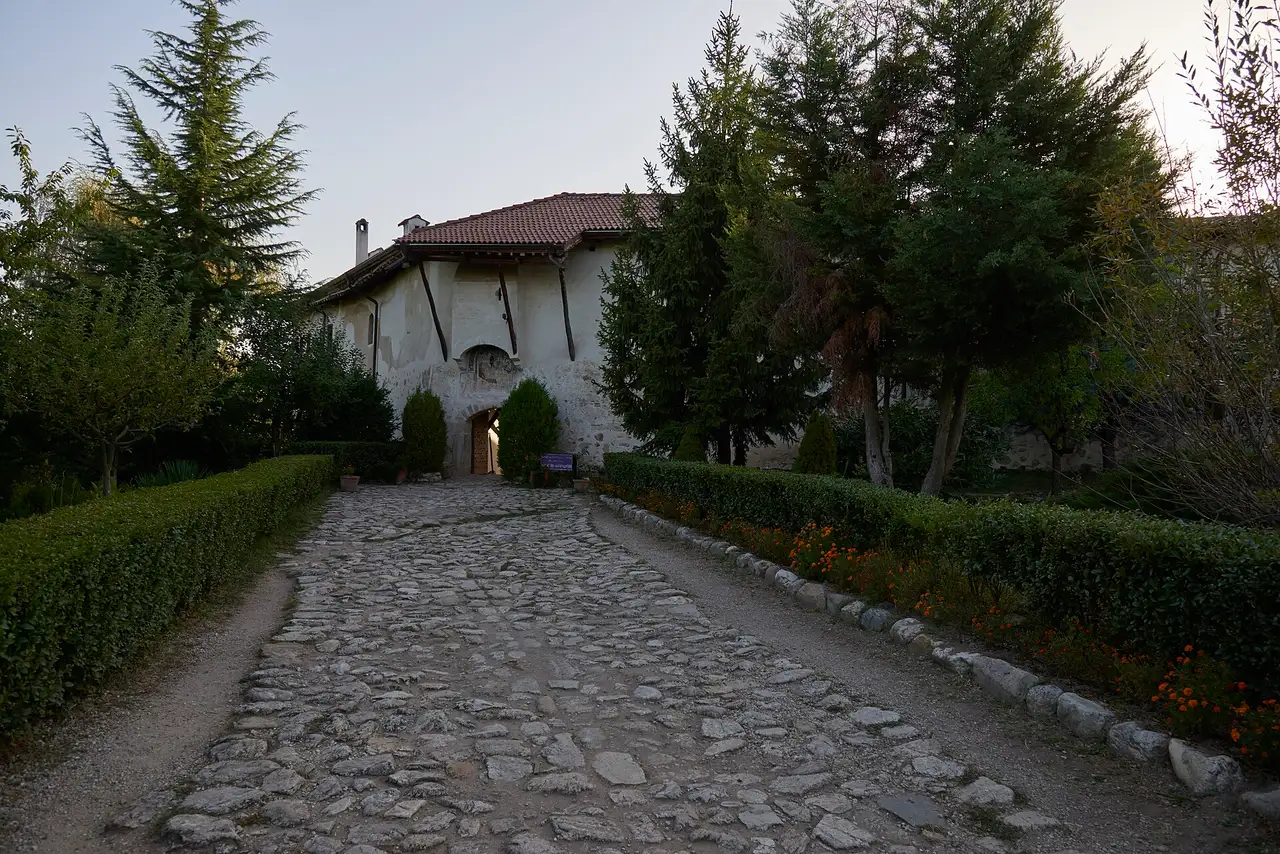
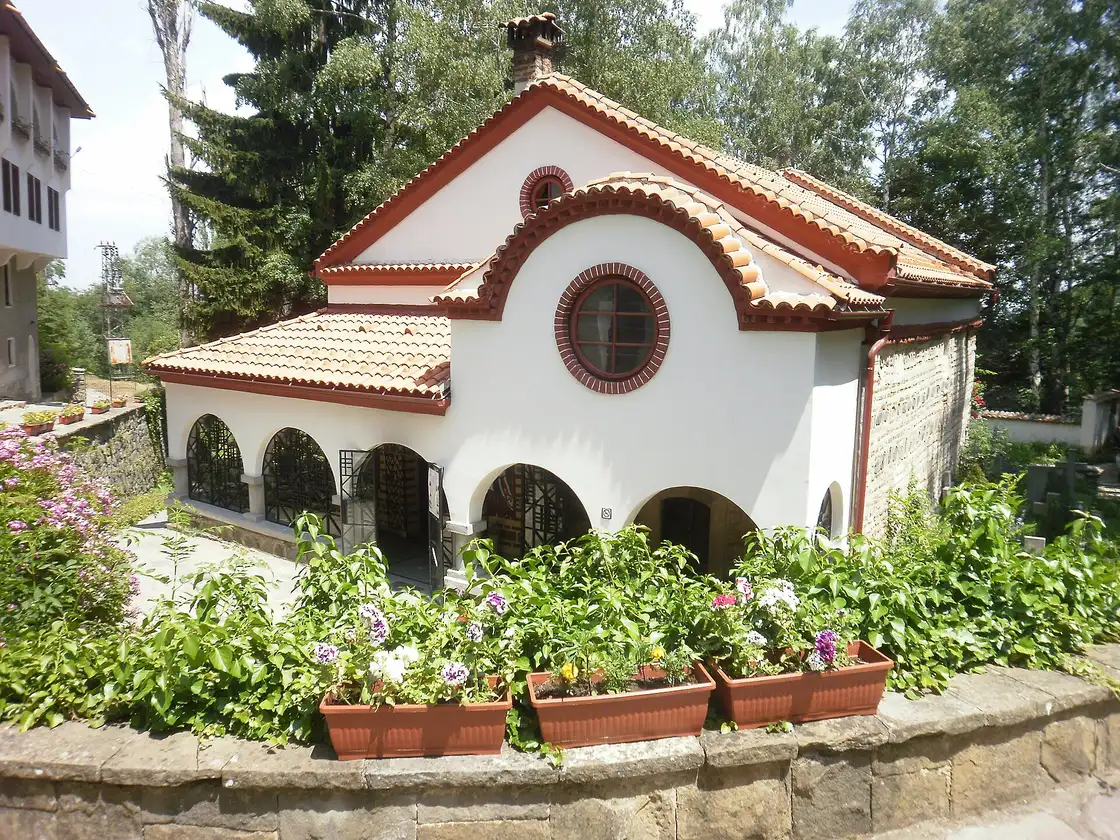
You can be at a 14th-century monastery 40 minutes after leaving central Sofia. Dragalevtsi Monastery sits on the northern slope of Vitosha above the Dragalevtsi quarter, founded in the mid-1300s by Tsar Ivan Alexander, abandoned after the Ottoman conquest, then revived in 1476 by a Sofia nobleman, Radoslav Mavar, who had himself and his family painted into the donor’s portrait in the little old church. The frescoes of the warrior saints Demetrius, George and Mercurius high on the west facade date to 1475-1476 and are the oldest surviving post-Byzantine murals of the ring of monasteries known as the Sofia Holy Mountain.
It’s a working convent, entry is free, and photography inside the church isn’t allowed. Getting there’s a city bus: line 66 runs from Vitosha metro station up toward the Moreni hotel and has a request stop about 150 m from the entrance (hourly on weekdays, every 20 to 30 minutes at weekends), while line 64 serves the Dragalevtsi quarter and the old chairlift base below, leaving you a walk uphill. Hours are the one messy thing: the city’s own listing gives 08:30-12:00 and 13:30-18:00 with Monday closed, other sources give a straight 07:00-18:00 in summer, so ring ahead or accept that you may only see the outside. The obvious pairing is a Vitosha afternoon on the same bus 66, which now carries everyone up since the mountain lifts from the city closed, or the frescoes of Boyana Church on the same southern edge of the city.
What it costs, and how you actually get there
You’ll budget for transport, not tickets.
- Rila: the morning shuttle from central Sofia, a day tour, or your own car down the A3/E79 and up road 62, about two hours each way.
- Bachkovo: a regional bus from Plovdiv’s Rodopi station, roughly 40 minutes, or a 40-minute drive through Asenovgrad.
- Troyan: intercity buses serve Troyan town, but the last 10 km up the valley to Oreshak needs a local bus or a taxi, so you’ll usually arrive by car. Check the onward connection at the station rather than assuming it.
- Rozhen: car or taxi from Melnik or Sandanski, or walk the marked path from Melnik.
- Dragalevtsi: Sofia city buses 64 and 66, tickets from the machine or the app.
For the three that punish you for not having wheels, a fixed-price car with a driver often costs less than a day tour once there are three or four of you, and it lets you set the hours instead of the coach doing it. If you’d rather drive yourself, our guides to car rental in Bulgaria and getting around Bulgaria cover the practicalities.
The rules that catch people out
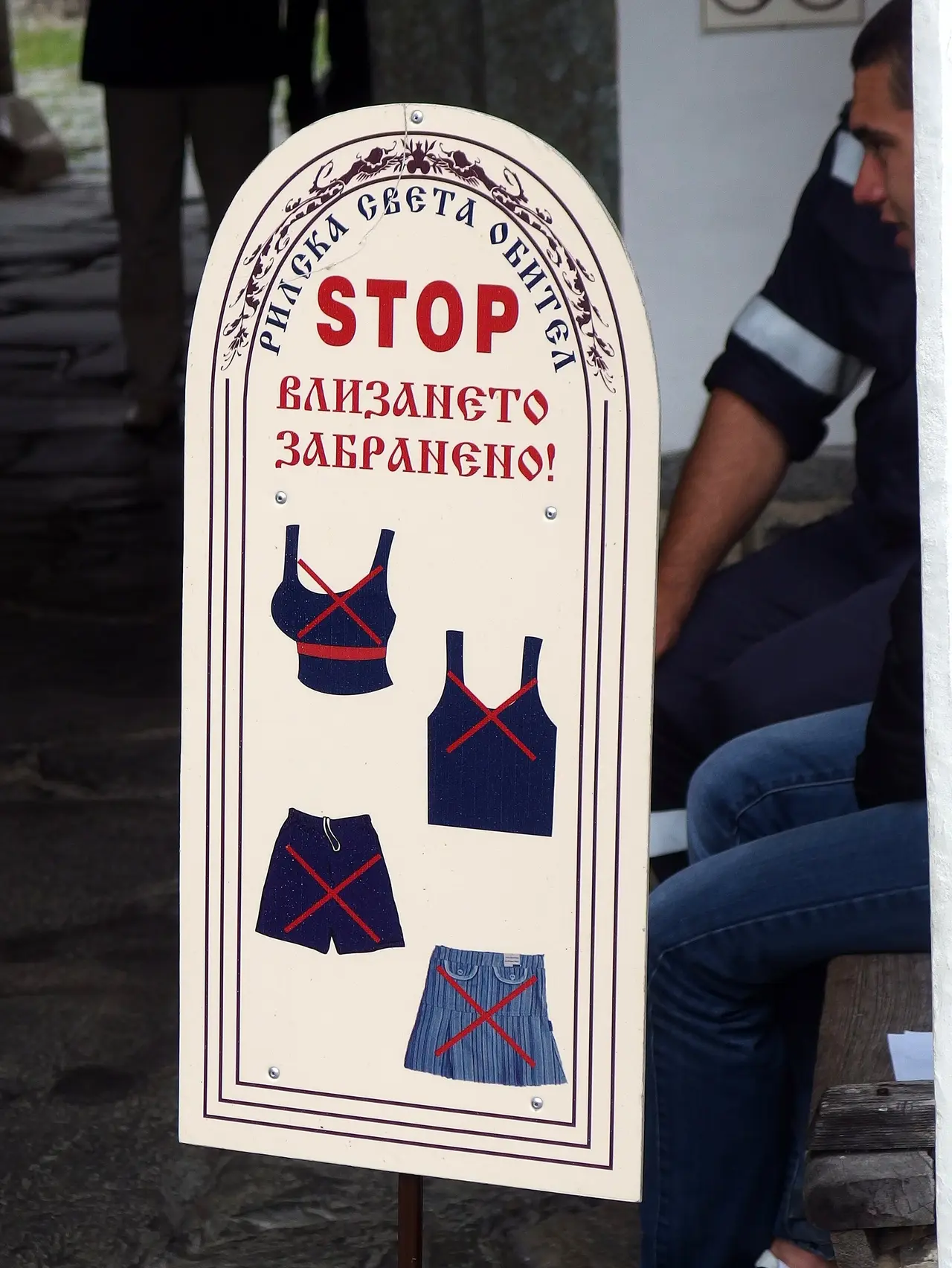
These are working houses of prayer, not museums with a monastic theme, and Rila publishes its expectations in writing. Dress code: no shorts, vests, short skirts or, in the monastery’s own phrase, “skimpy outfit”; shoulders and knees covered. Free shawls and wraps are handed out at the gate if you turn up unprepared - don’t count on finding a shop nearby.
Photography is the one that surprises people. At Rila, taking photographs and video is forbidden in the church and in the museum, not merely without flash, and the same ban applies inside the church at Dragalevtsi. The courtyards, galleries and exteriors are fine, which is where the famous shots come from anyway. The rest of Rila’s rules are the ones you would guess and a few you wouldn’t: silence inside the church, men take their hats off, no smoking anywhere on the grounds, no pets, no prams or large rucksacks inside the church, candles go in the holders rather than in your hand, and the upper floors of the residential wings are off limits to visitors.
Two more practical things. Bring cash: monastery desks aren’t card-friendly, and Rila sells tickets only on site. And keep out of the way during a service, which at these five is a daily event rather than a Sunday one.
Can you sleep in a monastery?
Yes, at several, and it’s the cheapest way to get a monastery courtyard to yourself at dawn. Troyan runs pilgrim rooms with two single beds, a fridge, a TV, an en-suite bathroom, free parking and heating in winter, booked by phone rather than online, and Bachkovo and Rila also take overnight guests. Nobody publishes a rate card, so call ahead; expect simple rooms, early quiet hours and no reception desk in the hotel sense.
Fitting them into a trip
Two monasteries in one day only works for Rila plus a stop on the way back, or Bachkovo plus Asen’s Fortress. The rest are spread across the country and pair better with the nearest city: Sofia for Dragalevtsi and the capital’s central churches, Plovdiv for Bachkovo, Melnik for Rozhen. If the Rila valley has you hooked, the Seven Rila Lakes sit in the same massif and make a natural second mountain day, and our 7-day Bulgaria itinerary strings the best of them into one loop. Browse the rest of Bulgaria’s top attractions for what else is nearby.
Admission and opening hours
- Admission price
- Courtyards and churches are free at all five. The only substantial ticket is Rila's combined museum pass, 12 EUR (23.47 BGN); a 50-minute guided tour in English there is 15 EUR. Bachkovo charges a few euros for its museum and old refectory.
- Opening hours
- Rila museums 08:30-16:30, and 08:30-19:30 from 1 June to 30 September, no day off. Bachkovo complex daily 07:00-20:00 in summer and 07:00-19:00 in winter. Troyan, Rozhen and Dragalevtsi keep daylight hours and can close for a midday break.
Tickets at Rila are sold only on the monastery grounds, so bring cash. Shoulders and knees covered at all of them; photography is banned inside the church and museum at Rila and inside the church at Dragalevtsi. Confirm hours on the day.
Details checked: July 24, 2026
Read also

What to see · 13 min read
Skiing in Bulgaria vs the Alps: Honest Verdict
Verified · September 13, 2026Bansko's last published 6-day pass was 341 EUR; Livigno's 2026-27 rate is 374.50 EUR. Real lift-pass, terrain and rental numbers, checked Sep 2026.

What to see · 12 min read
Pirin National Park: Vihren, Trails & Lakes
Verified · September 3, 2026Pirin National Park: the Vihren hut road closure, UNESCO peaks, 27 marked trails, glacial lakes and Bansko visitor centre hours.

What to see · 12 min read
Climbing Musala: The Balkans' Highest Peak
Verified · August 29, 2026Climbing Musala, the Balkans' highest peak at 2,925 m: the Yastrebets gondola schedule and price, the real hiking time from the top station, huts and gear.

What to see · 9 min read
Learning to Ski in Bansko: Schools & Lessons
Verified · August 25, 2026Bansko ski lessons: group and private prices in euros from official schools, Banderishka Polyana base, plus the lift pass you still need. Checked 2026.