
Day Trips from Sofia: Vitosha, Rila and Beyond
Day trips from Sofia compared: Vitosha by bus 66, Boyana Church, Rila Monastery, Koprivshtitsa by train. Travel times, euro costs and what fits in a day.
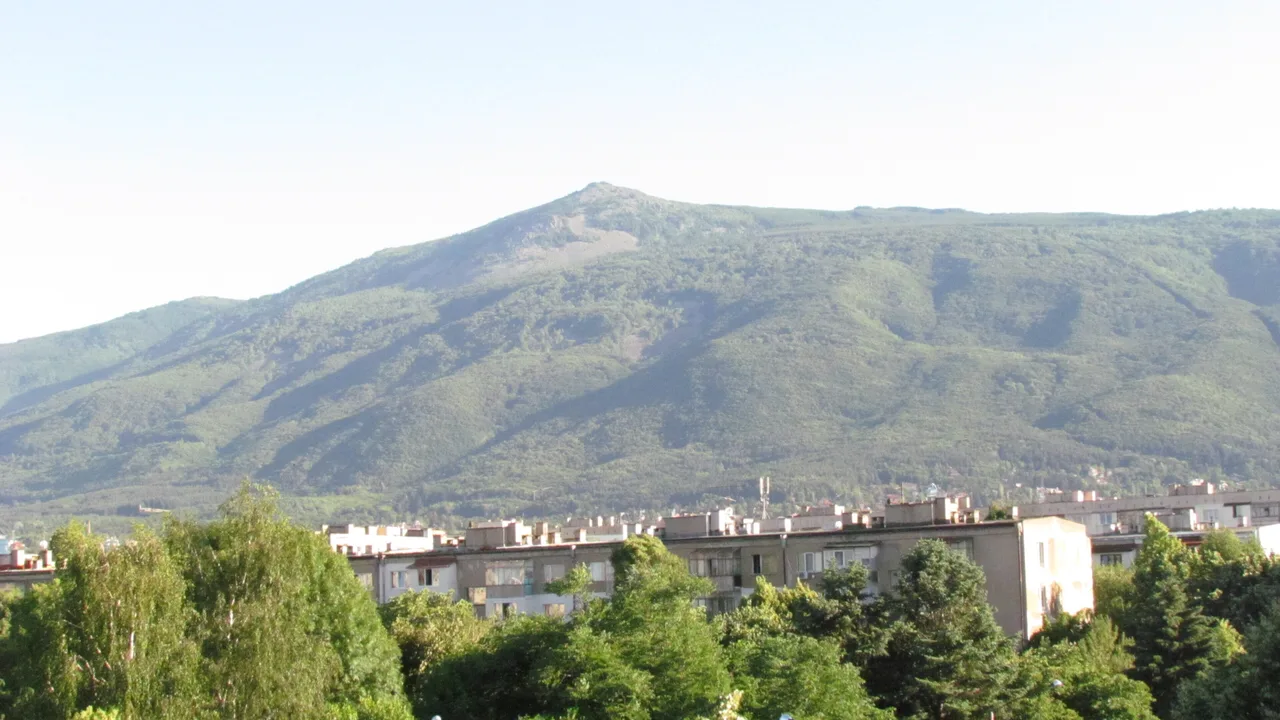
Four trips out of Sofia earn their place, and two more earn a long day. The way to choose between them is not scenery but arithmetic: how much of the day each one eats, and whether you have a car. Vitosha and Boyana Church are half-day outings you reach on a city bus ticket. Rila Monastery takes the whole day and hangs on a shuttle that leaves the monastery at 15:00. Koprivshtitsa is the only one on this list you can do properly by train.
The mistake almost everyone makes is planning around a cable car that no longer exists. The Simeonovo gondola, which used to lift people from the edge of the city to the ski area at Aleko, has been out of service since 2023 and was then written off for good, because the manufacturer stopped supplying parts and replacements have to come from the maker under EU rules. It was the last lift that carried anyone up from the city, and the operator now tells visitors to come by car or on bus 66. That single fact reshapes the day.
Sort them by the time they take
- Half a day, no car: Boyana Church (8 km, bus 64) or Vitosha (about 22 km, bus 66). Transport 0.80 euro a ride, or 2.00 euro for a day card covering both.
- Most of a day, no car: Koprivshtitsa by train, roughly 5 euro each way, with a shuttle van at the far end.
- A full day, transport booked in advance: Rila Monastery, 127 km, shuttle from 15 euro per person each way.
- A full day, easiest with a car: the Seven Rila Lakes, 100 km to the lift base, plus a 16 euro chairlift.
- A long day that still works: Plovdiv, 145 km, about two hours by bus.
Two of these can be stacked into one day. The rest can’t, whatever a tour desk tells you.
Vitosha: the mountain at the end of the metro line
Sofia has a 2,290 m summit inside its municipal boundary, and the bus that gets you closest calls at Metrostation Vitosha on metro line M2, so the trip out is a metro ride and one change. Bus 66 runs from the Zoopark terminus to the Aleko hut at 1,810 m, about 21 to 22 km from the centre and roughly 40 minutes by car. The summit is another 3 km on foot from there.
Read the timetable before you commit to the day. The first bus up leaves Zoopark at 07:30 whatever the day, but a weekday gets 12 departures and a weekend gets 21, and the last one down from Aleko is at 21:00. That gap is the whole difference: on a Tuesday you’re choosing between a handful of buses, on a Sunday you turn up and go. Check the departures on sofiatraffic.com the evening before, because this is the line the city adjusts when the weather turns.
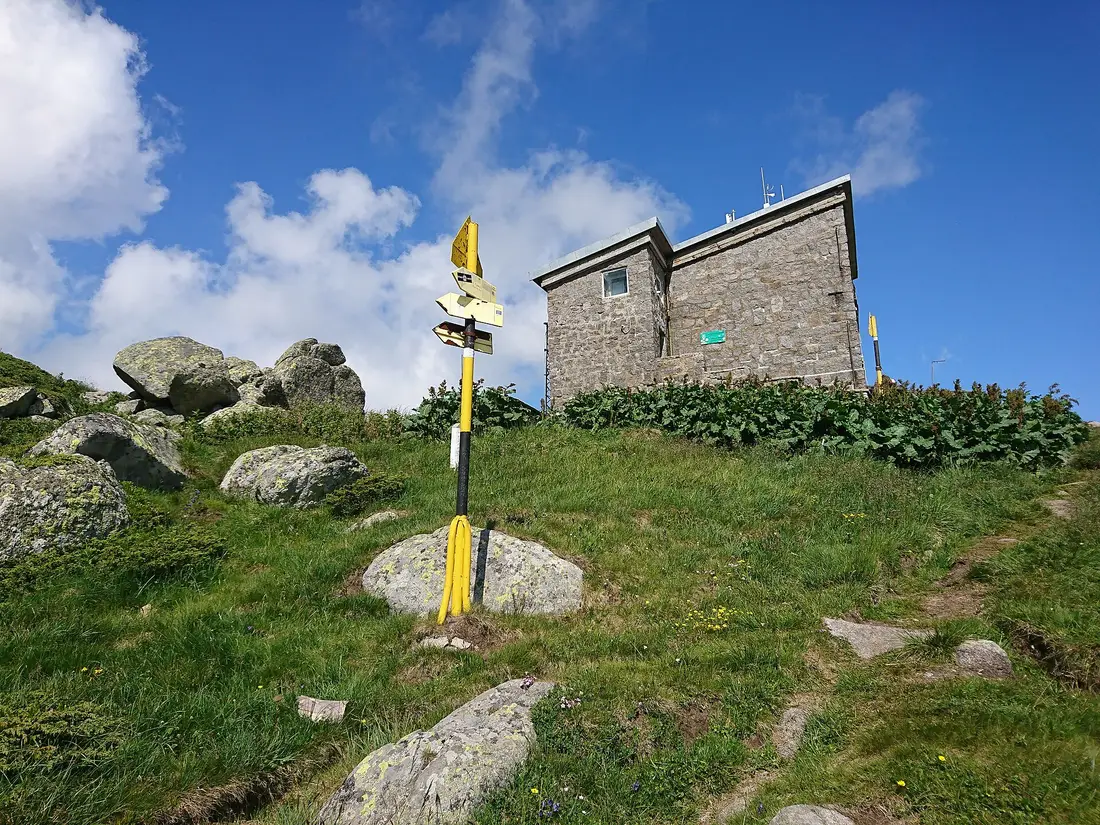
The lift situation up at Aleko is the detail that decides which day of the week you go. The Vitoshko lale 1 and 2 chairlifts run 09:00 to 16:30 on Saturdays, Sundays and public holidays only, weather permitting, with the summer season opening on 6 June; a single ride is 3.50 euro and a mountain-bike day card is 19 euro, or 16 euro at the concession rate. Turn up on a Wednesday and you will find them still. You don’t need any of it to have a good day, mind: the path to Cherni Vrah starts at the bus stop and climbs about 480 m.
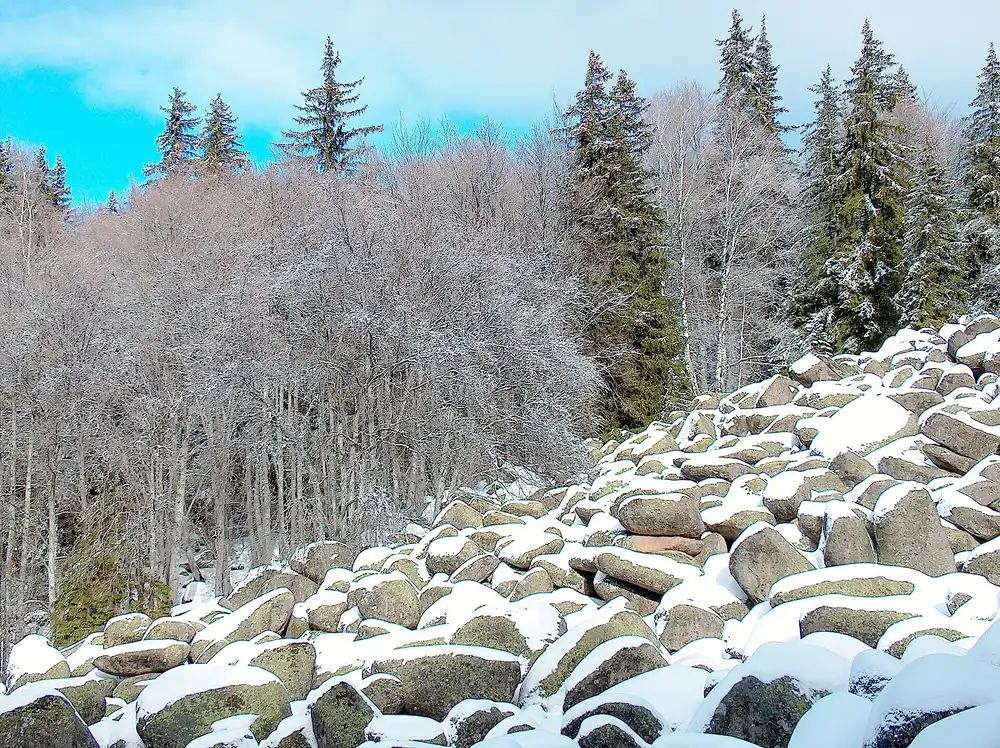
If a summit isn’t the point, take bus 63 to Zlatni Mostove (Golden Bridges) instead, where a river of grey boulders runs downhill between the trees. That line works the other side of the mountain, between Tsar Boris III Boulevard and the Golden Bridges car park, every 30 minutes at weekends and roughly hourly on weekdays.
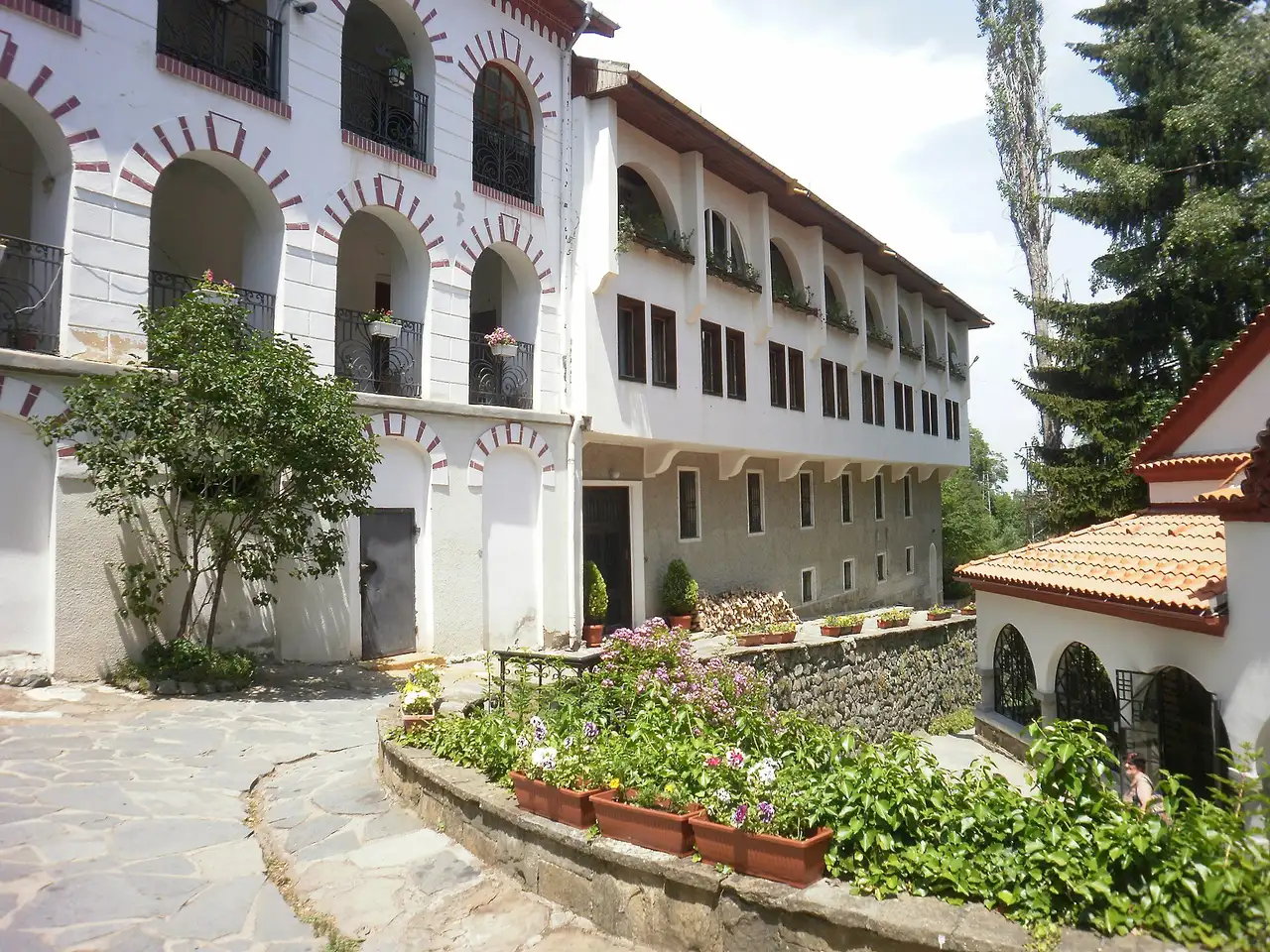
Two things locals know and visitors rarely do. First, several bus-66 stops are request stops, and one of them sits about 150 m from the gate of the Dragalevtsi Monastery, a 14th-century foundation with its warrior saints painted in the 1470s. Ask the driver for it on the way up and a mountain afternoon gains a medieval monastery for the price of the ticket you already have. Our guide to Bulgaria’s monasteries covers the opening hours, which are the awkward part.
Second, in the winter season from 1 December to 31 March, private cars are banned from the Boyana and Dragalevtsi mountain roads at weekends and public holidays between 11:00 and 16:00; in March 2026 the city widened that window from the earlier 10:00-15:00. Buses, mountain rescue and hut vehicles keep going. On a snowy Saturday the bus isn’t the budget option, it’s the only one.
Boyana Church: half a morning, and the queue is the whole trick
The UNESCO-listed frescoes at Boyana sit 8 km from the centre, about 30 to 40 minutes away on bus 64, which happens to start from the same Zoopark terminus as the Vitosha bus. That coincidence makes the best-value day out of Sofia: church first thing, then straight back to the same stop and up the mountain, all on one 2.00 euro day card.
The trick is that the queue, not the church, sets your timetable. A maximum of nine visitors go in at once and each slot lasts ten minutes, so the church admits a few dozen people an hour and the rest stand in the garden. There’s no online booking: you reserve on the spot after buying your ticket, or by email in advance, which is the move if you’re three or more and don’t fancy the wait. Adult entry is about 6 euro, doors at 09:30 in summer and 09:00 in winter. Block out two hours for a ten-minute look, go at opening or in the last hour, and the National Museum of History, about 2 km away, absorbs any slot you have to wait for if you walk over. Our Boyana Church guide has the detail on the paintings; the wider capital is covered in things to do in Sofia.
Rila Monastery: build the day around the 15:00 bus back
This is the trip people fly in for, and the only hard part is the return. There’s no scheduled public bus to the monastery. What runs is a private shuttle from the Vasil Levski Monument at 09:00, every day of the year, with an extra 07:00 departure on Mondays until 29 September. It comes back at 15:00, plus 17:00 on every day except Monday until the same date. The ride is about two and a half hours each way, the fare starts at 15 euro per person, and every ticket is one way, so a return is two bookings and roughly 30 euro.
Do the sums before you assume the shuttle is the cheap option: four one-way seats for two people cost from about 60 euro on somebody else’s timetable, so a car and driver is worth pricing before you book. The 15:00 departure also decides what you see, because the monastery museums shut at 16:30 and the shuttle has you on the road before that anyway. Our guides to Rila Monastery and to getting from Sofia to Rila Monastery go into both ends of that day properly.
Koprivshtitsa: the day trip that actually works by train
Bulgarian trains rarely win a race, but on this route they win the argument. A restored Revival town of painted houses sits about 110 km east of Sofia, and direct trains run there several times a day for around 5 euro. On the current timetable the useful pairing is the 07:55 from Sofia, in at 10:18, back on either the 14:19 (Sofia at 16:42) or the 18:37 (Sofia at 20:50). The two fast InterCity services do the run in about 1 hour 40 minutes, but their timings suit a night away better than a day out.
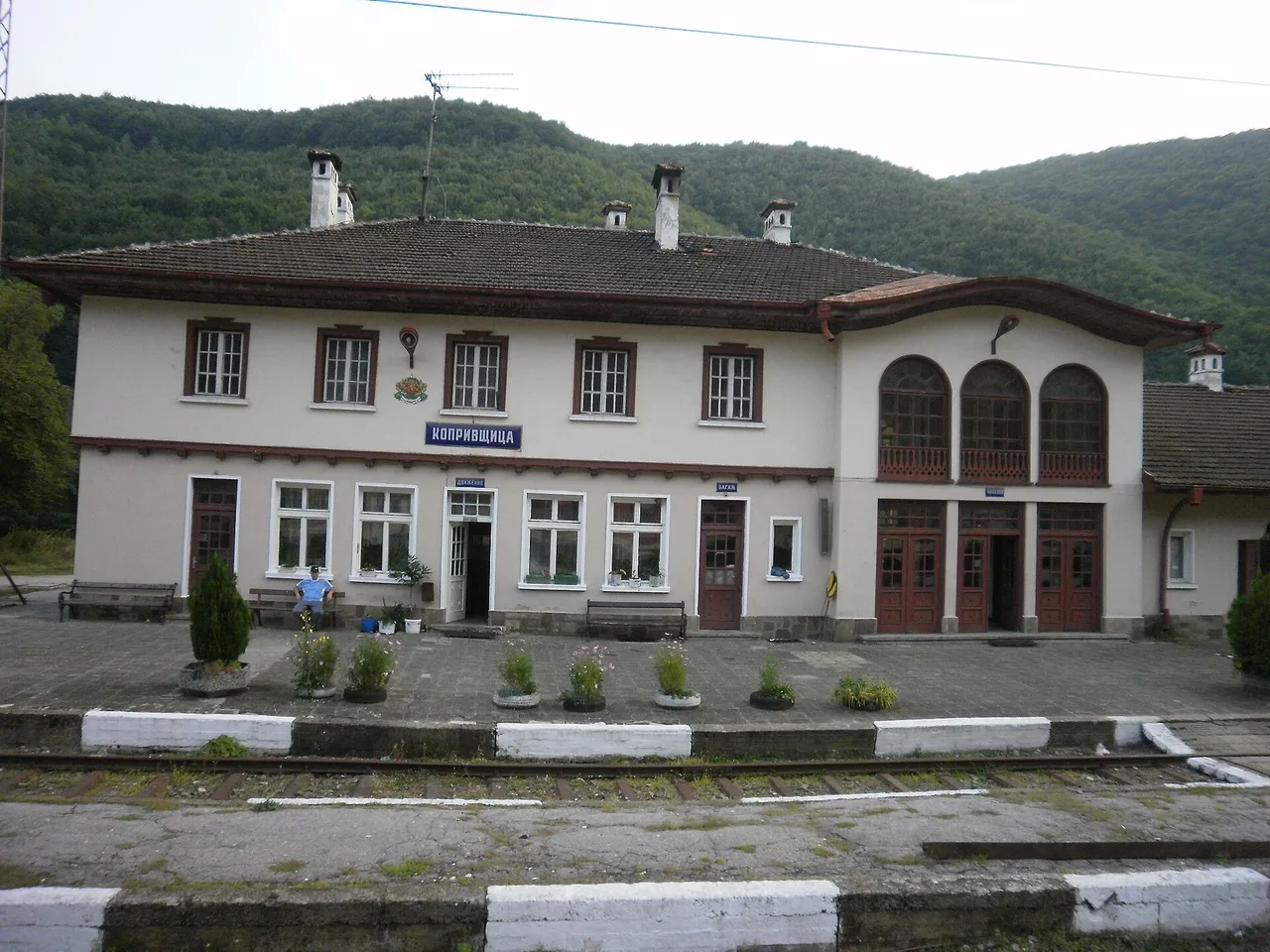
The catch is the last few kilometres. The station is out in the hills, 7 to 9 km from the town, and the link is a shuttle van that meets trains and takes a small cash fare. It works, and it has worked for years, but there is no timetable you can print at home. Ask about the return run when you arrive, and treat the driver’s answer as the real deadline for your day. Direct buses from Sofia exist on paper but are too thin to plan around. The full walk through the house-museums is in our Koprivshtitsa guide.
Two longer days: the Rila lakes and Plovdiv
The Seven Rila Lakes are the best mountain day in the country and the least friendly to people without a car. It’s 100 km to the lift base at Panichishte, then a chairlift at 16 euro return that lands you at about 2,150 m, and a loop of 10 to 11 km past the lakes, three to five hours at a walking pace. The lift closes on the last Monday of every month and for roughly two weeks in October and again in April or May, which is exactly the kind of detail that ruins a two-hour drive. There’s no single bus: the public chain is Sofia to Dupnitsa, then Sapareva Banya, then a taxi. Details are in our Seven Rila Lakes guide.
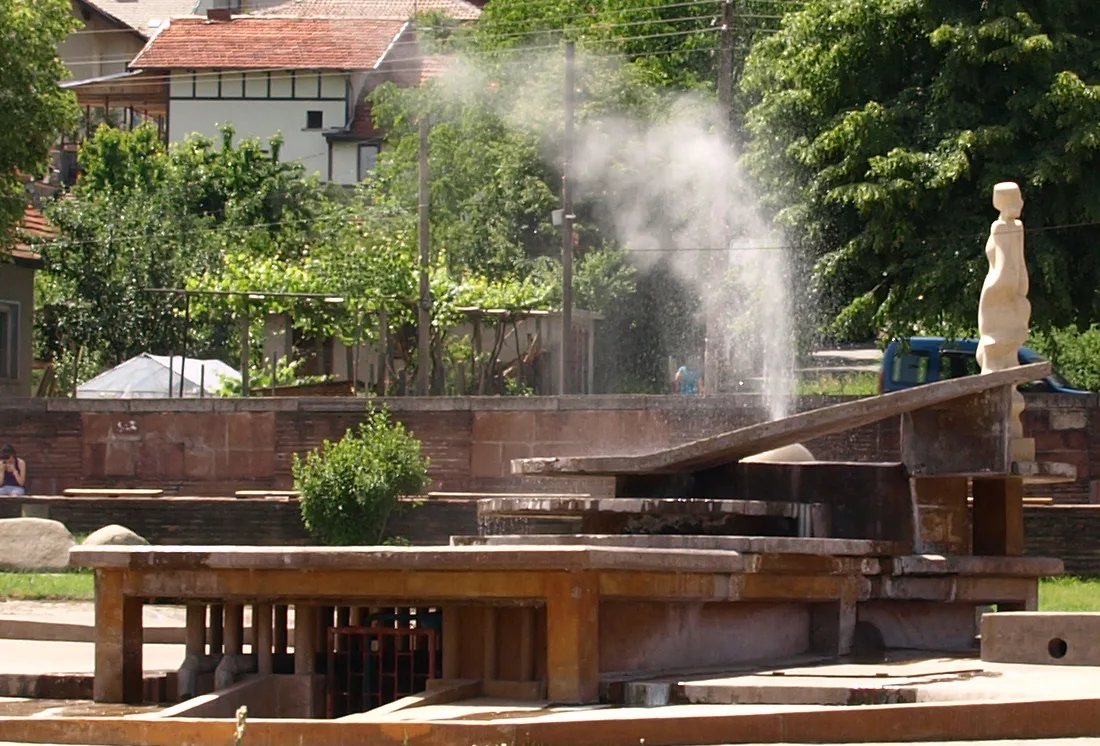
If you’re driving that road anyway, stop in Sapareva Banya. In the middle of the town a geyser fires a jet of 103 °C water about 18 m into the air, which is a strange thing to find in the middle of an ordinary spa town.
Plovdiv is the outlier: a city rather than a sight, 145 km away, about 1 hour 45 minutes to 2 hours by bus for 6 to 9 euro, or two and three-quarter hours by train. It’s a real day out and it works, but you’ll spend the evening wishing you’d booked a room. If it’s only ever going to be a day, read Sofia to Plovdiv first and go on the early bus.
What doesn’t work as a day trip, whatever you read
Bulgaria is small on a map and slow on the ground. Veliko Tarnovo is 230 km each way, about three hours by direct coach, so a day trip means six hours on a bus for an afternoon in the old town: see Sofia to Veliko Tarnovo and give it a night. The Belogradchik rocks are 200 km northwest with one direct bus a day. Kazanlak and the Valley of Roses are 170 km with two direct buses and four trains a day. And Buzludzha, the concrete flying saucer everyone wants a photograph of, has no public transport up the mountain at all; the guided runs from Sofia take about eleven hours door to door.
Stacking them over a long weekend
This works when you have three full days and nowhere else to be. If you’re on a shorter Friday-to-Sunday trip with a flight to catch, our 2-day Sofia itinerary explains why squeezing Boyana and the Vitosha summit into one Sunday morning is a different, much tighter call.
With three days and no car, the sequence that wastes the least time is this. Day one: Boyana Church at opening, then bus 64 back to Zoopark and bus 66 up to Aleko for the afternoon, one day card for the lot. Those two want opposite days of the week - the mountain wants a weekend for the chairlifts and 21 buses instead of 12, the church wants a quiet weekday morning - so make day one a Saturday and be at the Boyana gate for opening, ahead of the tour minibuses that turn up toward midday. Day two: the 09:00 shuttle to Rila Monastery, back in Sofia by about 17:30, dinner in the centre. Day three: the 07:55 train to Koprivshtitsa and the 18:37 back, which leaves you a good six hours in the town.
Add a car and the shape changes: the lakes become the obvious second day, the monastery loses its 15:00 curfew, and the winter weekend ban on the Vitosha roads becomes the thing to plan around rather than the bus timetable. Either way, book a bed near the centre so the 09:00 departures don’t start with a taxi: where to stay in Sofia breaks down the districts, and getting around Bulgaria covers the wider bus and rail network once the day trips run out.
Admission and opening hours
- Admission price
- City transport 0.80 EUR a ride or 2.00 EUR for a day card. Boyana Church around 6 EUR. Rila Monastery shuttle from 15 EUR per person each way, monastery museums 12 EUR. Koprivshtitsa train around 5 EUR each way. Seven Rila Lakes chairlift 16 EUR return.
- Opening hours
- Rila shuttle 09:00 out, 15:00 back (extra 07:00 Monday departure and 17:00 return on non-Mondays until 29 September). Boyana Church 09:30-18:00 in summer, 09:00-17:30 in winter. Bus 66 to Aleko: first bus up 07:30 any day, 12 runs on a weekday against 21 at a weekend, last one down at 21:00. Vitoshko lale chairlifts at Aleko: Saturdays, Sundays and public holidays only, 09:00-16:30, weather permitting.
Checked on 27 July 2026. City fares are the post-euro rates in force since 1 January 2026. Bus and train times shift with the season - confirm on sofiatraffic.com and razpisanie.bdz.bg the day before.
Details checked: July 27, 2026
Read also

Before you go · 12 min read
How Much Does a Bulgaria Ski Holiday Cost?
Verified · September 13, 2026A Bulgaria ski week usually lands around 770 to 1,170 EUR mid-range: lift pass, hire, bed, food and transfer from official 2025-26 tariffs.

Before you go · 9 min read
Day Trips from Sunny Beach: Nessebar & Beyond
Verified · August 28, 2026Day trips from Sunny Beach: Nessebar on the local bus, Sozopol via Burgas, Strandzha jeep days. Times, tickets and what fits in a day. 2026.

Before you go · 10 min read
Bulgaria or Greece: Which Beach Holiday Is Better?
Verified · August 27, 2026Greece wins on islands and water clarity; Bulgaria wins on price and sandy resort beaches. Who each suits, real 2026 costs and flights from the UK.

Before you go · 8 min read
Day Trips from Varna: Balchik, Kaliakra & Caves
Verified · August 26, 2026Day trips from Varna: Balchik Palace from €10, Cape Kaliakra cliffs, Aladzha rock monastery and Pobiti Kamani. Distances, buses and what fits in a day.